
The Myst Floor Plan Analysis (Quick Overview)
The Myst is structured as a suburban MRT-linked development, with layouts designed around practical family living, clear zoning, and long-term usability, rather than compact efficiency or design-led optimisation.
Layouts prioritise:
- straightforward spatial flow
- functional kitchen placement
- clear separation between living and private zones
This creates a layout strategy where usability and familiarity take precedence over architectural experimentation or aggressive space maximisation.
For most buyers, the key decision is not about identifying a single “best” layout, but understanding:
- which layouts support long-term living
- how stack orientation affects liveability
- how each unit performs after furnishing
Not sure which layout actually fits your situation? Most buyers narrow it down to 2–3 realistic options — not the full list.
Want the latest stack list + best available layouts?
Key Floor Plan Facts
- 408-unit mid-scale private residential development
- Layouts structured around owner-occupier demand rather than investor-driven compact design
- Strong concentration of 2-bedroom and 3-bedroom family layouts
- Clear zoning between living, sleeping and utility spaces across most unit types
- Mix of corridor, dumbbell and winged layouts depending on unit type
- Larger units include enclosed kitchens, yard spaces and utility areas
- Stack orientation plays a meaningful role due to road frontage and surrounding developments
- Layout usability depends more on real-world furnishing than raw square footage
Explore the Full The Myst Analysis
This article is part of the full The Myst cluster:
- The Myst Review – project positioning, buyer suitability, and planning context
- The Myst Price Guide – pricing structure, market positioning, and buyer entry analysis
- The Myst Showflat Guide – viewing strategy, location context, and buyer evaluation framework
Together, these articles provide a structured breakdown of how The Myst performs across pricing, layout design, buyer suitability, and long-term holding considerations.
Buyers who are still learning how Singapore new launches are typically evaluated may also find the New Launch Condo Guide helpful before comparing individual projects.
Current Available Units, Layouts & Unit Types (Live Snapshot)
Availability and stack selection may change depending on take-up and release phases.
| Unit Type | Size | Availability | Reserved |
|---|---|---|---|
| 1 Bedroom + Study | 517–657 sqft | Fully Sold | – |
| 2 Bedroom | 678–840 sqft | 3 units | – |
| 2 Bedroom + Study | 700–850 sqft | – | `1 unit |
| 3 Bedroom | 850–1,066 sqft | Fully Sold | – |
| 3 Bedroom Premium | 1,033–1,227 sqft | Fully Sold | – |
| 3 Bedroom Premium + Study | 1,163–1,378 sqft | Fully Sold | – |
| 4 Bedroom | 1,453–1,851 sqft | 19 units | – |
| 5 Bedroom | 1,690–2,034 sqft | 12 units | – |
Total Remaining Units: 34
Smaller and core family layouts are largely absorbed, with current availability concentrated in selected 2-bedroom units and a larger proportion of 4-bedroom and 5-bedroom layouts.
This reflects a typical pattern where:
- lower-quantum units are taken up earlier
- remaining supply becomes more selective
- buyers are choosing from specific stacks and layouts rather than the full mix
At this stage, stack selection and layout usability matter significantly more.
Want the latest stack list, best-facing units and remaining layouts?
The Myst Unit Mix Breakdown
| Unit Type | Size Range | Units | % | Positioning |
|---|---|---|---|---|
| 1 Bedroom + Study | 517–657 sqft | 48 | ~12% | Entry / non-core |
| 2 Bedroom | 678–840 sqft | 97 | ~24% | Entry family |
| 2 Bedroom + Study | 700–850 sqft | 48 | ~12% | Flexible core |
| 3 Bedroom | 850–1,066 sqft | 47 | ~12% | Core family |
| 3 Bedroom Premium | 1,033–1,227 sqft | 48 | ~12% | Larger family |
| 3 Bedroom Premium + Study | 1,163–1,378 sqft | 48 | ~12% | Extended family |
| 4 Bedroom | 1,453–1,851 sqft | 49 | ~12% | Upgrader |
| 5 Bedroom | 1,690–2,034 sqft | 23 | ~6% | High-commitment |
What the Unit Mix Reveals About The Myst
The Myst’s unit mix reflects a family-oriented, owner-occupier positioning, rather than a rental-driven or investor-heavy development.
Key characteristics include:
- strong representation of 2-bedroom and 3-bedroom layouts
- controlled supply of larger family units
- limited emphasis on compact investment units
This indicates that the project is structured to serve:
- HDB upgraders
- family households
- buyers prioritising long-term liveability
Layouts are generally:
- conventional and familiar
- easy to understand and furnish
- consistent across unit types
As a result, buyers are not comparing drastically different layout concepts, but evaluating:
- whether the space works after furniture is placed
- whether room proportions are usable
- whether the layout supports long-term needs
Layout Strategy and Positioning
The Myst’s layout strategy is centred on practical suburban living, where usability and predictability are prioritised over innovation.
Layouts are designed to:
- minimise complexity in movement
- provide clear functional zoning
- support everyday routines without adaptation
Rather than:
- maximising every square foot
- eliminating all inefficiencies
- introducing unconventional design elements
This results in layouts that:
- are easy to live in
- require minimal adjustment
- perform consistently over time
However, this also means:
- inefficiencies may be more noticeable
- space is not always optimised
- layout performance depends on real usage rather than design
Layout Characteristics by Unit Type
1-Bedroom + Study
- Corridor layout
- Study positioned near entrance
- Open kitchenette
These units function as entry layouts but are less aligned with long-term living due to limited usable space after furnishing.
2-Bedroom / 2-Bedroom + Study
- Dumbbell or corridor layouts
- Bedrooms separated across living area
- Open kitchen concept
These layouts offer the most efficient use of smaller space and are suitable for couples or small households, though long-term flexibility may be limited.
3-Bedroom / 3-Bedroom + Study
- Corridor layouts with internal hallway
- Enclosed kitchen and yard
- Some internal bathrooms
These units form the core family layouts, with usability depending on how well space is distributed across living and bedroom areas.
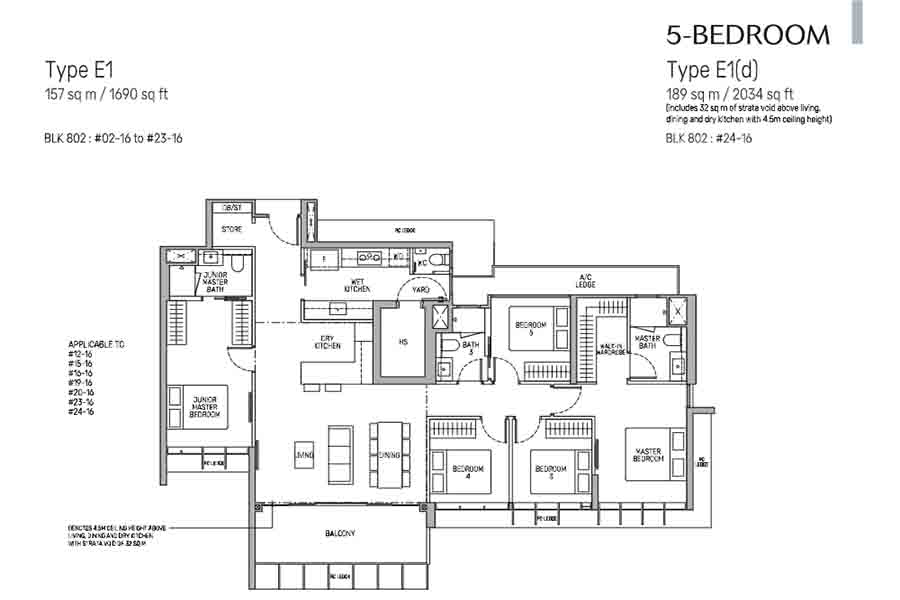
4-Bedroom / 5-Bedroom
- Winged layouts
- Separate wet and dry kitchens
- Utility yard and storage spaces
These layouts provide stronger separation and are designed for larger households, with a focus on long-term liveability rather than efficiency.
Best Layouts and Stack Considerations at The Myst
There is no universal “best layout”, but certain patterns tend to emerge based on usability and flexibility.
Layout Observations
- Mid-sized layouts typically provide the best balance between usability and flexibility
- Larger layouts offer stronger comfort but require higher commitment
- Smaller layouts prioritise entry affordability but may feel restrictive over time
The key is not identifying a “top layout”, but determining:
- whether the layout supports actual daily use
- whether space remains functional after furnishing
- whether the unit fits long-term plans
Stack Orientation, Facing & Real-World Implications
North / North-Northeast Facing Stacks
- Face Upper Bukit Timah Road and nearby developments
- Potential for greater exposure to road-facing elements
These stacks may appeal to buyers prioritising accessibility and openness toward the road-facing side, but involve trade-offs in terms of privacy and exposure.
South / South-Southwest Facing Stacks
- Face internal landscaping and surrounding residential developments
- Potential for more inward-facing environment
These stacks tend to provide a more contained and private setting, with differences depending on floor level and surrounding buildings.
What Buyers Typically Evaluate
- openness vs privacy
- road exposure vs internal-facing environment
- floor level impact
- surrounding building proximity
Stack selection plays a significant role in how the unit is experienced, often as much as the layout itself.
How to Choose the Right Unit at The Myst
Most buyers evaluate based on:
Budget and Financial Comfort
- total quantum
- long-term affordability
Household Needs
- number of occupants
- space requirements
Layout Usability
- furnishing practicality
- room proportions
- circulation space
Stack and Facing
- privacy vs openness
- environmental exposure
Holding Horizon
- short-term flexibility vs long-term liveability
Buyers who shortlist a few realistic options and evaluate them across these factors tend to make more confident decisions.
Need help narrowing down the best stacks and layouts?
The Myst Floor Plan FAQs
1. What unit types are available at The Myst?
The Myst offers a mix of 1-bedroom plus study, 2-bedroom, 3-bedroom, 4-bedroom and 5-bedroom layouts. The overall unit mix is structured around owner-occupier demand rather than investor-driven compact units. Larger layouts form a meaningful portion of the development. Buyers typically evaluate based on layout type, space requirements and intended use.
2. Which layout is most suitable for own-stay buyers?
Layouts with clearer separation between living and private spaces tend to be more suitable for own-stay buyers. Mid-sized and larger units typically provide better long-term usability and flexibility. These configurations support family routines and changing needs over time. The final decision depends on household size and lifestyle requirements.
3. Are The Myst layouts efficient?
The layouts are designed to be practical and functional rather than aggressively optimised. They prioritise usability, familiar zoning and ease of furnishing. This supports everyday living but may result in some inefficiencies compared to newer design-led layouts. Buyers should assess real-world usability instead of relying on size alone.
4. Does stack and facing matter at The Myst?
Yes, stack and facing influence how a unit is experienced in terms of privacy, openness and environmental exposure. Some stacks are more outward-facing while others are more inward-facing. Floor level and surrounding buildings also affect views and light. Buyers usually evaluate layout and stack together.
5. Are larger units better for long-term living?
Larger units generally provide better space, separation and flexibility for long-term living. They are more suitable for families or households with evolving needs. However, they also come with higher financial commitment. Buyers should match space requirements with long-term plans.
6. How important is layout selection at The Myst?
Layout selection is important because usability depends on how the space functions after furnishing. Differences in layout can significantly affect daily living comfort. Choosing the right layout improves long-term satisfaction. It is a key decision factor for buyers.
Conclusion
The Myst is structured around:
- practical, family-oriented layouts
- clear zoning and usability
- long-term liveability over design innovation
For most buyers, the decision is not about identifying the “best” unit in isolation.
It is about:
- how the layout performs in real use
- how stack orientation affects experience
- how the unit fits long-term plans
Buyers who approach the selection process with clarity around these factors tend to make more confident decisions.
Need a Clear Breakdown of the Best Units?
If you are considering The Myst and want a clearer breakdown of:
- which stacks offer better privacy, openness or lower exposure
- which layouts align more closely with your household needs
- how different unit types compare in real-world usability
- whether the unit fits your budget and long-term plans
You can leave your details below and receive a structured walkthrough based on your situation.