

Summary
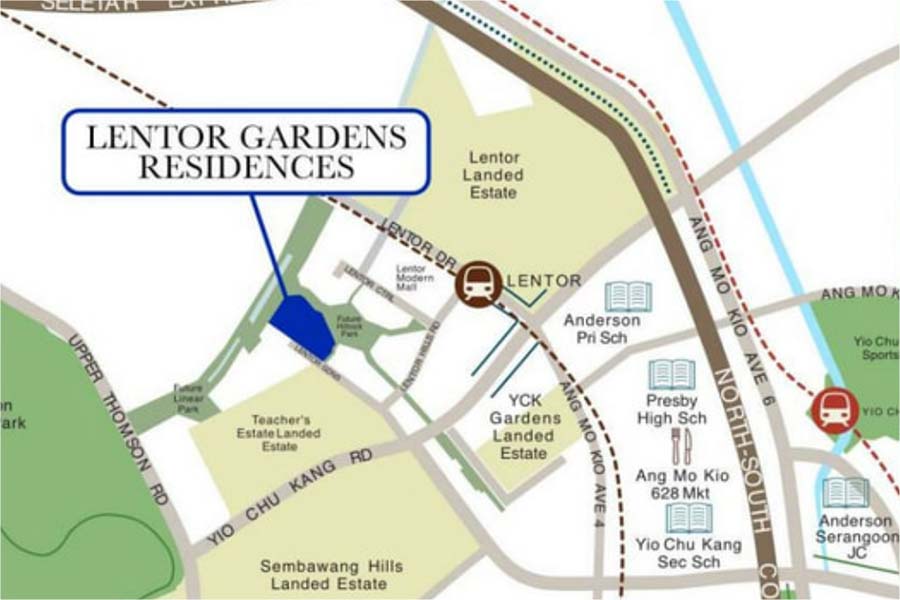
Lentor Gardens Residences is a 99-year leasehold condominium located along Lentor Garden in District 26, forming part of the rapidly expanding Lentor private housing precinct anchored by Lentor MRT (TE5) and the Thomson–East Coast Line.
However, unlike some of the earlier Lentor launches that entered the market when pricing expectations were still developing, Lentor Gardens Residences enters the precinct at a much later phase — after OCR pricing across Singapore and within Lentor itself has already moved up significantly.
This changes the decision framework for buyers.
Instead of evaluating the project purely through “growth story” narratives, buyers may increasingly need to assess:
- affordability sustainability
- entry quantum discipline
- future competing supply
- and long-term family resale liquidity within the precinct.
Personally, I think this is where Lentor Gardens Residences becomes more interesting.
Based on the latest project information, Lentor Gardens Residences appears to be positioned as a value-sensitive OCR new launch within the Lentor precinct, with a strong 2-bedroom base, meaningful 3-bedroom and 4-bedroom family supply, and several different stack-facing conditions based on the site plan.
The project is not currently presented as a 1-bedroom-heavy investor product. Instead, its unit mix suggests a broader attempt to preserve entry quantum while still appealing to HDB upgraders and family buyers comparing across the Lentor cluster.
This review therefore evaluates Lentor Gardens Residences less as a hype-driven launch and more as a later-phase family-oriented Lentor project where pricing discipline, unit selection, and long-term buyer positioning may eventually matter more than many buyers initially expect.
Explore the Full Lentor Gardens Residences Analysis
This review forms part of the full project cluster:
• Lentor Gardens Residences Price Guide – pricing positioning, land-cost logic, and entry quantum analysis
• Lentor Gardens Residences Floor Plan Analysis – unit mix, layout efficiency, and stack considerations
• Lentor Gardens Residences Showflat Guide – showroom location, viewing process, and what buyers should evaluate during a visit
Together, these articles provide a structured analysis of the project’s pricing framework, layout strategy, showroom considerations, and buyer decision factors.
Personally, I think buyers comparing Lentor projects today should probably evaluate more than just MRT distance or headline psf.
As more projects enter the precinct over time, differences in:
- entry pricing
- future competing supply
- family buyer liquidity
- and unit positioning
may eventually matter more than many buyers initially expect.
If you’re comparing Lentor Gardens Residences against the other Lentor launches, it may help to evaluate the trade-offs properly before committing.
Key details (at a glance):
99-year leasehold | 499 Residential Units + 3 Shops| Lentor MRT (TE5) ~0.5 km | Early 2026 launch (estimated) | TOP Q1 2029 (estimated) | Affordability-conscious OCR positioning | Strong 2-bedroom base | Meaningful family-size supply
Project Factsheet
| Item | Details |
|---|---|
| Project Name | Lentor Gardens Residences |
| Location | Lentor Garden, Singapore |
| District / Region | District 26 / OCR / Ang Mo Kio Planning Area |
| Tenure | 99 Years Lease with effect from 7 July 2025 |
| Developer | Kingsford Lentor Project Pte Ltd |
| Site Type | GLS (New Launch) |
| Site Area | 20,639.4 sqm |
| Plot Ratio | 2.1 |
| Total Units | 499 Residential Units + 3 Shops |
| Development Type | 3 blocks of 16-storey residential flats, 1 block of 8-storey residential flats, and 3 units of 2-storey strata terrace, with Early Childhood Development Centre and ancillary shops |
| Nearest MRT | Lentor MRT (TE5) |
| Preview Date | Starting from 4th July 2026 |
| Estimated TOP | Q1 2029 |
Unit Mix
| Unit Type | Units | Size Range |
|---|---|---|
| 2-Bedroom | 252 | 60–68 sqm |
| 3-Bedroom | 139 | 81–94 sqm |
| 4-Bedroom | 105 | 110–126 sqm |
| Terrace | 3 | 139 sqm |
| Shop | 3 | 43 sqm |
Lentor Gardens Residences is best understood as a suburban, family-centric new launch designed for long-term own-stay buyers rather than short-cycle investors.
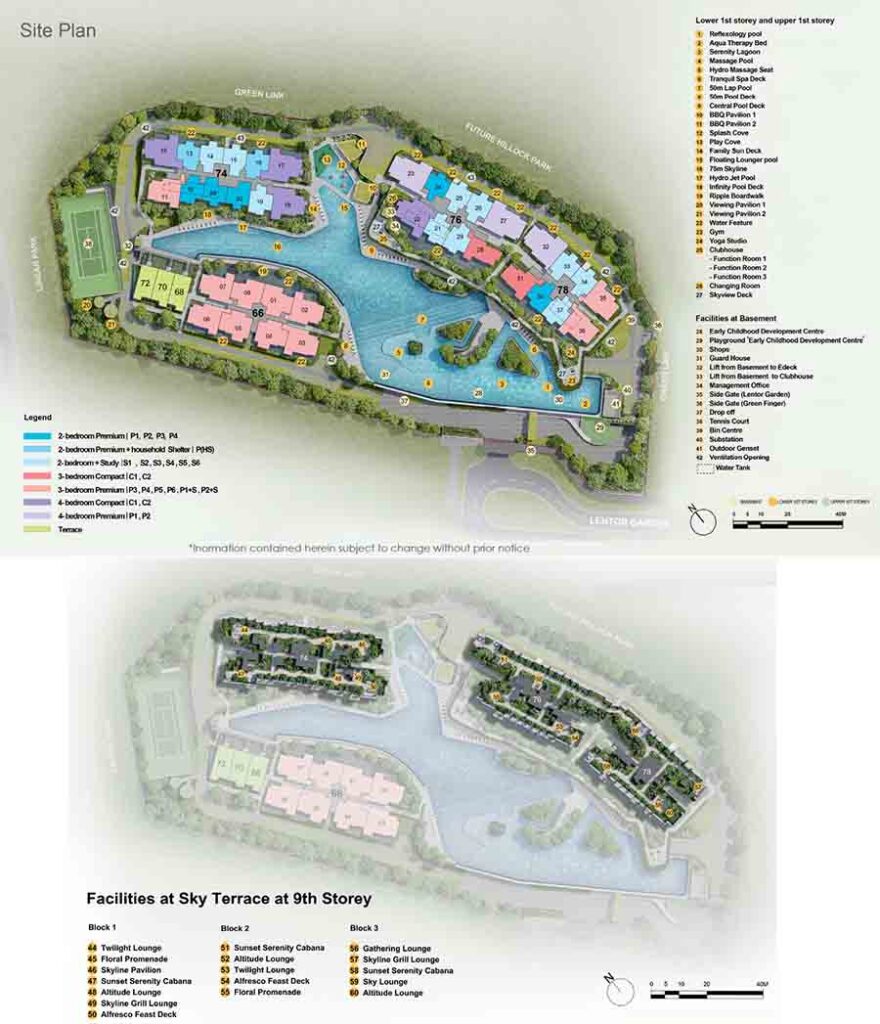
The site plan also shows why buyers should not evaluate Lentor Gardens Residences by floor plan alone. Some stacks appear to face the Future Hillock Park / Green Link side, some face the internal pool and facilities zone, while others sit closer to Lentor Garden, Linear Park or side boundary areas. This means stack selection may affect privacy, noise exposure, outlook and long-term resale appeal.
Location Context: Lentor as Ang Mo Kio’s New Private Housing Node
Lentor sits within the broader Ang Mo Kio Planning Area — one of Singapore’s most established and densely populated mature estates. Unlike traditional suburban new towns that evolve gradually, Lentor’s transformation has been rapid and concentrated, driven almost entirely by successive GLS parcels released along the Thomson–East Coast Line.
Lentor Gardens Residences benefits from proximity to Lentor MRT (TE5), located approximately 500 metres away, providing direct rail connectivity to Thomson, Orchard, the CBD, and the East Coast corridor. Daily conveniences are anchored by Lentor Modern, which functions as the precinct’s primary retail and supermarket hub.
However, Lentor remains a single-node precinct:
-
One MRT station
-
One integrated mall
-
Limited secondary commercial spillover
This structural simplicity is a defining feature.
Personally, I think buyers may underestimate how differently Lentor projects could eventually behave — despite sharing the same MRT station.
Earlier launches benefited from entering the market when Lentor pricing was still establishing itself. But as more projects continue entering the precinct, later-phase buyers may increasingly need to think more carefully about pricing discipline, future competing supply, and resale positioning.
This is where Lentor Gardens Residences may differentiate itself. Instead of positioning itself as a premium “headline” launch, the project appears more focused on preserving accessibility for upgrader families who still want entry into the Lentor precinct without stretching too aggressively.
It makes Lentor appealing to families who value predictability and quiet residential living, but less attractive to buyers seeking a multi-node lifestyle environment.
This structure limits lifestyle diversity but reinforces a quieter, more predictable residential environment.
As a result, buyer demand is primarily anchored by nearby upgrader families rather than discretionary lifestyle-driven buyers or investors seeking vibrancy.
From a planning perspective, Lentor is not intended to replicate town-centre intensity. Instead, it functions as a contained private housing enclave, drawing demand primarily from surrounding mature estates such as Ang Mo Kio, Bishan, Bright Hill, and Thomson.
Project Positioning: What Lentor Gardens Residences Is — and Is Not
What Lentor Gardens Residences Is
Personally, I think Lentor Gardens Residences may psychologically sit between buyers who still want exposure to the Lentor transformation story — but are becoming more cautious about absolute quantum after OCR pricing moved up materially across Singapore.
That positioning could become increasingly important as affordability sensitivity rises among upgrader households over the next few years.
-
A family-oriented OCR condominium designed primarily for own-stay living
-
Positioned to capture upgrader demand from nearby mature HDB estates
-
Part of a new, MRT-anchored private housing precinct within Ang Mo Kio
-
Likely to appeal to buyers priced out of Bishan, Ang Mo Kio, and Thomson new launches
What Lentor Gardens Residences Is Not
-
Not a city-fringe or CCR investment product
-
Not a scarcity-driven or boutique development
-
Not suited for short-term trading strategies
-
Not ideal for buyers seeking high rental yields or urban vibrancy
This distinction matters. Lentor Gardens Residences trades lifestyle breadth and investment velocity for stability, family functionality, and long-term liveability.
Amenities Around Lentor Gardens Residences
Transport Connectivity
-
Lentor MRT (TE5) – approximately 500–800 metres (depending on block placement)
-
Bus services (825) via Lentor MRT exits
Shopping & Daily Conveniences
-
Cold Storage Fresh (Lentor Modern) – approx. 0.5 km
-
Lentor Modern – approx. 0.5 km
-
AMK Hub – approx. 2.5 km
Primary & Secondary Schools
-
Anderson Primary School – approx. 1.0 km
-
CHIJ St. Nicholas Girls’ School – approx. 1.2 km
-
Mayflower Primary School – approx. 1.5 km
-
Presbyterian High School – approx. 1.2 km
Tertiary & Junior Colleges
-
Anderson Serangoon Junior College – approx. 1.7 km
-
Nanyang Polytechnic – approx. 1.9 km
Food & Lifestyle
-
Mayflower Shopping & Food Centre – approx. 1.3 km
-
Sembawang Hills Food Centre – approx. 1.3 km
-
The Grassroots’ Club – approx. 1.2 km
The amenity profile supports daily family routines, not destination-driven lifestyles.
The Real Question Buyers Should Probably Ask
The real question may not simply be whether Lentor Gardens Residences is “good”.
The more important question may be whether buyers believe:
- Lentor still has enough pricing room left
- family demand within the precinct remains sustainable
- and whether later-phase projects can still maintain resale differentiation once more supply enters the market over time.
Personally, I think this is where buyers should probably focus more attention — rather than relying purely on MRT proximity or broad “Lentor transformation” narratives alone.
Buyer Suitability: Who Lentor Gardens Residences Is For
1. HDB Upgrader Families (Primary Buyer Group)
Families living in Ang Mo Kio, Bishan, Bright Hill, and Thomson who want to remain within familiar school catchments and social environments, but move into a new private condominium.
This segment forms the structural demand base for the project and is likely to anchor both initial take-up and long-term resale liquidity.
2. Long-Term Own-Stay Buyers
Buyers planning a 7–12 year holding period or longer, prioritising stability, schools, and neighbourhood familiarity over speculative upside.
3. Buyers Priced Out of Bishan / Thomson
Lentor Gardens Residences acts as a pressure-release option for buyers who prefer central-north locations but find limited supply or higher pricing elsewhere.
4. Buyers Who May Want to Reconsider
-
Short-term investors seeking fast capital appreciation
-
Buyers focused on 1-bedroom rental strategies
-
Buyers expecting multi-node retail and lifestyle density
Buyers comparing Lentor Gardens Residences against other new launches may find it helpful to frame their decision using the New Launch Condo Guide, which outlines how pricing logic, buyer profile, and holding intent differ across project types.
Takeaway
Lentor Gardens Residences may ultimately appeal less to buyers chasing excitement — and more to buyers trying to enter the Lentor precinct without stretching too aggressively after pricing across the area already moved up significantly.
Personally, I think this is where the project’s real positioning may sit:
not necessarily as the “flashiest” Lentor launch, but potentially as one of the more affordability-conscious family-oriented entries within the later phase of Lentor’s transformation.
As more projects gradually enter the precinct over time, buyers may increasingly need to think beyond headline psf and evaluate:
- long-term family liquidity
- future competing supply
- unit mix positioning
- and overall affordability sustainability more carefully.
Pending Approval for Sale
If you’re comparing Lentor Gardens Residences against the other Lentor launches, it may help to evaluate the trade-offs properly before committing.
FAQs (Decision-Stage)
1) Where exactly is Lentor Gardens Residences located?
Lentor Gardens Residences is located along Lentor Garden in District 26, within the Ang Mo Kio Planning Area, inside the new Lentor private housing precinct that has formed around the Thomson–East Coast Line.
2) Is Lentor Gardens Residences walkable to Lentor MRT (TE5)?
Yes, it is generally considered walkable (around 0.5 km, estimated). However, buyers should evaluate the “last-mile” experience — shade, crossings, and route comfort — rather than relying purely on distance numbers.
3) Is Lentor Gardens Residences more for own-stay families or investors?
It is primarily an own-stay family-oriented project. Investor interest exists, but the project’s demand profile is more closely tied to upgrader households from nearby mature estates than to yield-first rental strategies.
4) What is the biggest risk buyers should watch for in Lentor?
The most practical risk is precinct supply concentration: Lentor is a single-node private housing cluster with multiple GLS parcels. This does not mean “no upside”, but it does mean pricing discipline and unit choice matter — especially if many similar units enter the resale/rental market around the same period.
5) What kind of buyer profile tends to fit Lentor best?
Lentor tends to suit buyers who value:
- a quieter, contained residential enclave
- MRT connectivity that supports commuting
- proximity to mature estates and schools
It is less suited to buyers who want multi-node lifestyle density or constant retail vibrancy.
6) How should buyers compare Lentor Gardens Residences with Lentor Modern?
Lentor Modern is integrated and sits as the precinct’s convenience anchor, while Lentor Gardens Residences should be evaluated as a more “pure residential” family product. Buyers should compare:
- entry pricing and quantum
- layout efficiency
- stack orientation/noise exposure
- household needs (integrated convenience vs residential feel)
7) What should buyers check first when floor plans and unit mix are released?
Start with three checks:
- 2–3 bedroom layout efficiency (family liveability)
- stack orientation (heat, traffic exposure, privacy)
- pricing-by-quantum vs nearby Lentor comparables
For this precinct, unit selection can matter as much as headline pricing.
8) Does Lentor’s planning story support long-term value?
Generally yes — but in an incremental way. Lentor’s value is driven more by transport anchoring + mature-estate spillover demand than by dramatic transformation narratives. Buyers should expect steadier, fundamentals-led behaviour rather than explosive “overnight” appreciation.
Pricing Logic, URA Planning Intent & Buyer Segmentation
Pricing Logic: Why Lentor Gardens Residences Is Not a Short-Term Play
Official pricing has not been released yet. Based on current market indications, Lentor Gardens Residences is expected to average around $2,350 psf, with selected entry units potentially starting from around $2,050 psf. Final pricing will still depend on unit type, stack, floor level, facing and launch-phase release.
Buyers should focus less on headline psf and more on total purchase quantum, affordability, and long-term holding comfort, as these factors tend to drive decision-making in family-oriented OCR projects.
Personally, I don’t think the project’s heavy 2-bedroom allocation is accidental.
The unit mix appears increasingly aligned towards preserving affordability and maintaining broader buyer accessibility within the Lentor precinct, especially after OCR pricing moved up materially over the past few years.
This may ultimately support:
- lower overall entry quantum
- broader future resale audience
- and potentially more stable upgrader liquidity compared to projects skewed too aggressively towards larger family layouts.
However, buyers should frame pricing through absolute quantum, not headline psf:
-
Family buyers are mortgage-sensitive
-
Larger units amplify total price impact
-
Exit liquidity depends on upgrader affordability
Lentor Gardens Residences will need disciplined pricing to remain competitive within the Lentor cluster, particularly against nearby developments such as Lentoria, Hillock Green, and other upcoming GLS launches within the same precinct.
Aggressive pricing may compress future upside, particularly for smaller units.
URA Planning Context: Ang Mo Kio’s Controlled Rejuvenation
URA’s planning intent for Ang Mo Kio emphasises renewal without disruption:
-
Remaking Our Heartland initiatives
-
Incremental transport upgrades (CRL, NSC)
-
Enhanced walkability and green spaces
Lentor’s role is clear: private housing supplementation, not town-centre reinvention. This planning stability supports long-term livability but limits speculative re-rating.
Buyer Segmentation Summary
-
Primary: Family own-stay upgraders
-
Secondary: Long-horizon investors in larger units
-
Low relevance: Short-term traders, 1-bedroom investors
Exit, Risks, Pros & Cons, and Buyer FAQs
Exit & Liquidity Analysis
Liquidity is strongest in:
-
2-bedroom and 3-bedroom units
-
Family-sized layouts
Smaller 2-bedroom units face:
- Higher internal competition because 2-bedroom units form the largest share of supply
- Greater sensitivity to entry price and rental assumptions
- Stronger need for stack differentiation, efficient layouts and quantum discipline
- Potential resale comparison against other 2-bedroom units across the Lentor cluster
Risk Scenarios
-
High interest rate environment: Favours own-stay buyers, not investors
-
Increased Lentor supply: Pricing discipline becomes critical
-
Stable family demand: Supports downside protection
Pros & Cons
Pros
-
Strong upgrader demand catchment
-
MRT connectivity via TEL
-
Established schools and mature estate support
-
Planning stability
Cons
-
Limited lifestyle diversity
-
Not investor-centric
-
Upside likely to be gradual
Frequently Asked Questions (FAQs)
-
Is Lentor Gardens Residences suitable for first-time private buyers?
Yes, especially for HDB upgraders prioritising schools and familiarity. -
Is this a good short-term investment?
No. It is better suited for long-term own-stay holding. -
Which unit types are most liquid?
2- and 3-bedroom units. -
Will Lentor become oversupplied?
Supply is concentrated but planned; pricing discipline matters. -
How important is MRT proximity here?
Moderately important; it supports daily commuting rather than lifestyle. -
Is rental demand strong?
Stable, but not premium. -
Does Ang Mo Kio planning support long-term value?
Yes, through incremental enhancement. -
Is Lentor suitable for retirees?
Potentially, if proximity to family is important. -
How does this compare to Bishan new launches?
Lower entry pricing, but less central. -
What holding period makes sense?
7–12 years or longer. -
Are smaller units risky?
They carry higher exit sensitivity. -
Is Lentor Gardens Residences family-centric?
Yes, by design. -
Will future transport upgrades boost prices?
Gradually, not dramatically. -
Is car ownership necessary?
Helpful, but not essential. -
Does this suit investors chasing yield?
Not primarily. -
How should buyers evaluate this project overall?
Through long-term livability and upgrader demand, not hype.
If you prefer a more structured walkthrough, you can leave your details below and we’ll follow up with you.