
The Orie Floor Plan Analysis (Quick Overview)
The Orie floor plans are structured around high-density, MRT-linked city-fringe living, with layouts designed for functional family usability, compact efficiency, and predictable daily routines rather than spatial generosity or boutique layout variation.
With a large proportion of units already absorbed, current availability is now selective and concentrated in specific larger layouts. This shifts buyer focus away from broad unit choice toward stack positioning, layout efficiency, and long-term usability.
At this stage, the decision is no longer just about unit type — it is about which remaining layouts still make sense, and which stacks offer better long-term liveability within a dense urban environment.
Not sure which layout actually fits your situation? Most buyers narrow it down to 2–3 realistic options — not the full list.
Want the latest stack list + best available layouts?
Key Floor Plan Facts
- 777 total units across two 40-storey towers (high-density development)
- Strong emphasis on 2-bedroom to 4-bedroom family layouts
- Layouts prioritise functional zoning and efficiency over spaciousness
- Wide mix from 1BR + Study to 5BR, but repetition across stacks is high
- Stack orientation plays a critical role due to PIE and surrounding HDB blocks
- Larger units incorporate yard, WC and enclosed kitchen configurations
- Premium layouts introduce better zoning, not necessarily significantly more space
- Layout performance depends heavily on post-furnishing usability
- Current availability is limited and stack-dependent rather than type-dependent
Explore the Full The Orie Analysis
This article is part of the full The Orie cluster:
- The Orie Review – project positioning, buyer suitability, and planning context
- The Orie Price Guide – pricing structure, market positioning, and buyer entry analysis
- The Orie Showflat Guide – viewing strategy, location context, and buyer evaluation framework
Together, these articles provide a structured breakdown of how The Orie performs across pricing, layout design, buyer suitability, and long-term holding considerations.
Buyers who are still learning how Singapore new launches are typically evaluated may also find the New Launch Condo Guide helpful before comparing individual projects.
Current Available Units, Layouts & Unit Types (Live Snapshot)
Availability may change depending on take-up and release phases.
| Unit Type | Size | Available |
|---|---|---|
| 1 Bedroom + Study | 517 sqft | 28 |
| 2 Bedroom | 592–646 sqft | Fully Sold |
| 2 Bedroom Premium | 678 sqft | Fully Sold |
| 2 Bedroom Premium + Study | 700 sqft | Fully Sold |
| 3 Bedroom | 850 sqft | Fully Sold |
| 3 Bedroom Dual Key | 1,130 sqft | 9 |
| 3 Bedroom Premium | 1,023–1,044 sqft | Fully Sold |
| 4 Bedroom | 1,216 sqft | Fully Sold |
| 4 Bedroom Premium + Study | 1,367 sqft | Fully Sold |
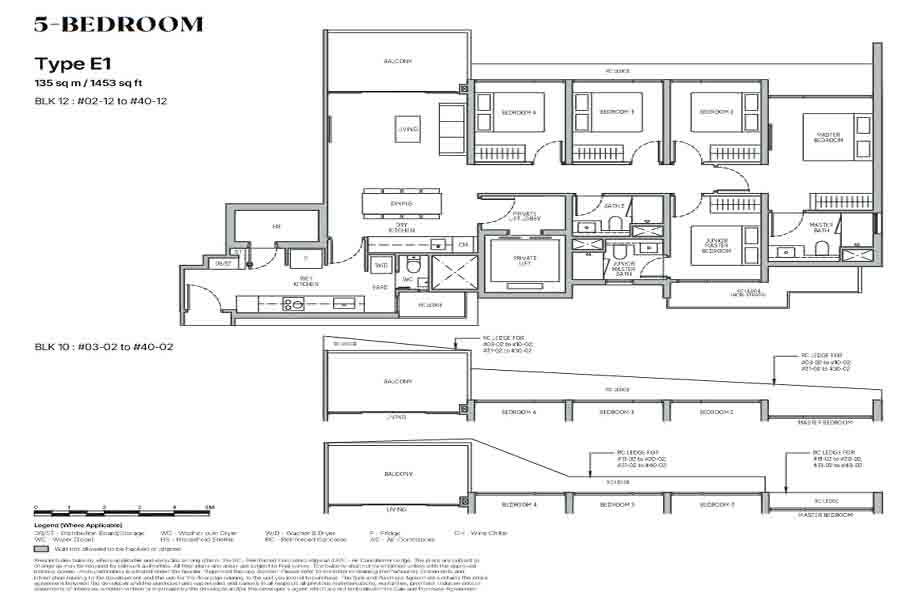
| 5 Bedroom | 1,453 sqft | Fully Sold |
Total Remaining Units: 37
What This Means
- Majority of compact and mid-tier layouts are fully absorbed
- Remaining supply is:
- Highly selective
- Stack-specific
- Often tied to larger or niche configurations
- Buyers are no longer choosing freely — they are choosing from:
- Specific stacks
- Specific levels
- Limited layout combinations
At this stage, stack + layout combination matters more than unit type alone
The Orie Unit Mix Breakdown
| Unit Type | Size Range | Units | % | Positioning |
|---|---|---|---|---|
| 1 Bedroom + Study | 517 sqft | 78 | ~10.0% | Entry / non-core |
| 2 Bedroom | 592–646 sqft | 155 | ~19.9% | Entry family |
| 2 Bedroom Premium | 678 sqft | 77 | ~9.9% | Core compact |
| 2 Bedroom Premium + Study | 700 sqft | 78 | ~10.0% | Flexibility segment |
| 3 Bedroom | 850 sqft | 78 | ~10.0% | Core family |
| 3 Bedroom Dual Key | 1,130 sqft | 39 | ~5.0% | Hybrid flexibility |
| 3 Bedroom Premium | 1,023–1,044 sqft | 78 | ~10.0% | Larger family |
| 4 Bedroom | 1,216 sqft | 78 | ~10.0% | Upgrader segment |
| 4 Bedroom Premium + Study | 1,367 sqft | 39 | ~5.0% | High-commitment segment |
| 5 Bedroom | 1,453 sqft | 77 | ~9.9% | Large-family segment |
Total Units: 777
What The Unit Mix Reveals
- Heavy weighting toward 2BR and 3BR layouts
- Designed for:
- HDB upgraders
- Owner-occupiers
- Less emphasis on:
- Investor-driven layouts
- Boutique positioning
This is a mass-family development, not a niche or design-led project.
Layout Characteristics by Unit Type
1-Bedroom + Study
- Corridor layout
- Open kitchenette
- Study positioned near entrance
These units prioritise entry price, but the study often compresses usable living space rather than expanding flexibility.
2-Bedroom / 2-Bedroom + Study
- Dumbbell or corridor layouts
- Bedrooms separated in dumbbell types
- Open-concept kitchen
Better layouts maintain functional separation, while weaker ones feel compressed once furnished.
3-Bedroom / 3-Bedroom + Study
- Corridor layouts with enclosed kitchen
- Yard + WC included
- Clear bedroom zoning
These form the core liveable segment, but efficiency depends on how well space is distributed.
4-Bedroom / 5-Bedroom
- Winged / premium layouts
- Landscape-oriented living areas
- Dry + wet kitchen separation
- Junior master (5BR)
These provide better zoning, but value depends on usability, not just size increase.
Stack Orientation & Facing Analysis
Group 1: North / NNW
Stacks: 01, 02, 03, 04, 05, 11, 12, 13, 14, 15
- Facing Lorong 1 Toa Payoh
- Potential:
- Internal pool-facing stacks
- HDB-facing stacks
Considerations:
- Closer proximity to surrounding buildings
- Possible road exposure
Group 2: South / SSE
Stacks: 06, 07, 08, 09, 10, 16, 17, 18, 19, 20
- Facing PIE / open areas
Potential:
- More open views (higher floors)
- Greater exposure
Risks:
- Traffic noise
- Expressway exposure
View & Exposure Analysis (Non-Definitive)
North / NNW Facing
- Internal-facing stacks → more contained environment
- External-facing stacks → HDB views
Trade-off:
- More privacy vs less openness
South / SSE Facing
- Potential for:
- Open skyline views
- Less obstruction
Trade-off:
- Better openness
- Higher exposure to noise
Best Layouts & Stack Considerations at The Orie
There is no single “best stack” or “best layout”.
The decision depends on:
- Layout efficiency
- Facing preference
- Noise tolerance
- Floor level
- Household needs
What Most Buyers Prioritise
- 3BR / 3BR Premium → most balanced
- 2BR Premium + Study → flexibility segment
- 4BR → long-term own-stay
At this stage:
Availability matters more than theory
How to Choose the Right Layout at The Orie
Most buyers narrow down based on:
- Budget comfort
- Household size
- Holding period
- Preferred facing
- Layout usability after furnishing
Practical Approach
Instead of reviewing all units:
- Shortlist 2–3 realistic options
- Compare:
- Layout flow
- Stack orientation
- Liveability
This reduces confusion and improves decision clarity significantly
Need Help Narrowing Down the Best Units?
Most buyers don’t need all layouts — they need the right few options.
Want a clear breakdown of:
- What actually fits your situationld focus on how the space functions after furnishing, rather than relying on size or room count alone.
- Best stacks currently available
- Which layouts still make sense
The Orie Floor Plan FAQs
1. What unit types are available at The Orie?
The Orie offers a wide range from 1-bedroom + study to 5-bedroom layouts, although current availability is concentrated in specific larger or niche configurations. The project is structured primarily around family-oriented layouts rather than investor-focused units. This reflects its positioning within a mature estate with strong upgrader demand. Buyers typically evaluate based on both layout type and remaining stack availability rather than full selection.
2. Which The Orie layout is best for own-stay?
3-bedroom and 4-bedroom layouts are generally more suitable for own-stay because they provide better spatial separation, functional zoning and long-term usability. These layouts align with the project’s family-oriented design approach and upgrader demand profile. However, layout efficiency varies across stacks, so selection should be based on actual usability rather than unit type alone. The final decision depends on layout flow, facing and floor level.
3. Are The Orie floor plans efficient?
The layouts are designed with a focus on functional usability within a high-density environment rather than maximising spaciousness. Most units provide clear zoning and practical circulation, but some layouts may feel compact once furnished. Efficiency is therefore not uniform across all units and depends on how space is distributed. Buyers should assess based on real living conditions rather than brochure dimensions.
4. Does stack and facing matter at The Orie?
Yes, stack and facing are critical factors because they influence view, privacy, noise exposure and overall liveability. In a high-density development, these differences become more noticeable over time, especially when surrounding buildings and roads are involved. Buyers should evaluate layout and stack together rather than separately. This is particularly important at later stages when availability is limited.
5. Are larger units a better long-term option?
Larger units generally offer better spatial comfort, flexibility and long-term usability, especially for families planning extended occupation. However, they also come with higher purchase cost and a more selective resale pool. The additional space should match actual household needs rather than perceived upgrade value. Suitability depends on financial comfort, lifestyle requirements and holding horizon.
6. How important is layout selection at The Orie?
Layout selection is one of the most critical decisions because small differences in design can significantly affect daily usability. In a high-density project, inefficient layouts become more noticeable over time. Choosing the right layout improves comfort, flexibility and long-term satisfaction. Buyers should focus on real-life functionality rather than just size or number of rooms.
Conclusion
The Orie floor plans are designed around functional, high-density family living, where layout efficiency and stack positioning matter more than unit type alone.
At this stage, availability is limited and selection is no longer broad. The decision is about identifying which remaining layouts and stacks still make sense, not comparing every option.
For most buyers, the right approach is to shortlist a few realistic units and evaluate based on:
- Layout usability
- Stack orientation
- Long-term fit
The difference between a good and poor choice here is rarely size — it is how well the unit actually works in daily living.
Need a Clear Breakdown of the Best Units?
If you are considering The Orie and want a clearer breakdown of:
- Which stacks currently offer better openness or reduced exposure
- Which layouts still make sense based on remaining availability
- How different unit types compare in real daily use
- Whether current options fit your budget and long-term plans
You may leave your details below for a structured walkthrough based on your situation.