
Faber Residence Floor Plan Analysis (Quick Overview)
Faber Residence is structured as a low-rise, family-oriented development, with layouts designed around internal space, privacy, and long-term usability, rather than compact efficiency or investor-led optimisation.
Layouts prioritise:
- clear separation between living and private zones
- functional kitchen and yard placement
- realistic bedroom sizing for actual daily use
This creates a layout strategy where liveability and space clarity take precedence over psf efficiency, which is consistent with its positioning within a landed-adjacent enclave environment.
Most buyers evaluating Faber Residence are not comparing dozens of layouts. They typically narrow down to 2–3 realistic unit types and stacks based on how the space actually functions after furnishing.
Want the latest stack list + best available layouts?
Key Floor Plan Facts
- 399-unit low-rise development (5-storey blocks)
- Layouts structured for family living, not investor compact units
- Strong concentration of 3-bedroom and 4-bedroom formats
- Larger average unit sizes compared to typical OCR launches
- Mix of corridor, dumbbell and winged layouts
- Enclosed kitchens and yard areas in most family-sized units
- Stack orientation matters due to river-facing vs road-facing exposure
- Layout performance depends more on usable space than raw size
Explore the Full Faber Residence Analysis
This article is part of the full Faber Residence cluster:
- Faber Residence Review – project positioning, buyer suitability, and planning context
- Faber Residence Price Guide – pricing structure, market positioning, and buyer entry analysis
- Faber Residence Showflat Guide – viewing strategy, location context, and buyer evaluation framework
Together, these articles provide a structured breakdown of pricing, layouts, buyer fit, and long-term considerations. layout design, buyer suitability, and long-term holding considerations.
Buyers who are still learning how Singapore new launches are typically evaluated may also find the New Launch Condo Guide helpful before comparing individual projects.
Current Available Units, Layouts & Unit Types (Live Snapshot)
Availability and stack selection may change depending on remaining inventory, with current options limited to selected larger-format units within the development.
| Type | Size | Available |
| 2 Bedroom (Standard) | 646 sqft | Fully Sold |
| 3 Bedroom (Basic) | 797 sqft | Fully Sold |
| 3 Bedroom (Plus) | 1033-1044 sqft | Fully Sold |
| 3 Bedroom (Standard) | 818-861 sqft | Fully Sold |
| 4 Bedroom (Basic) | 1119 sqft | Fully Sold |
| 4 Bedroom (Standard) | 1206-1270 sqft | 14 units |
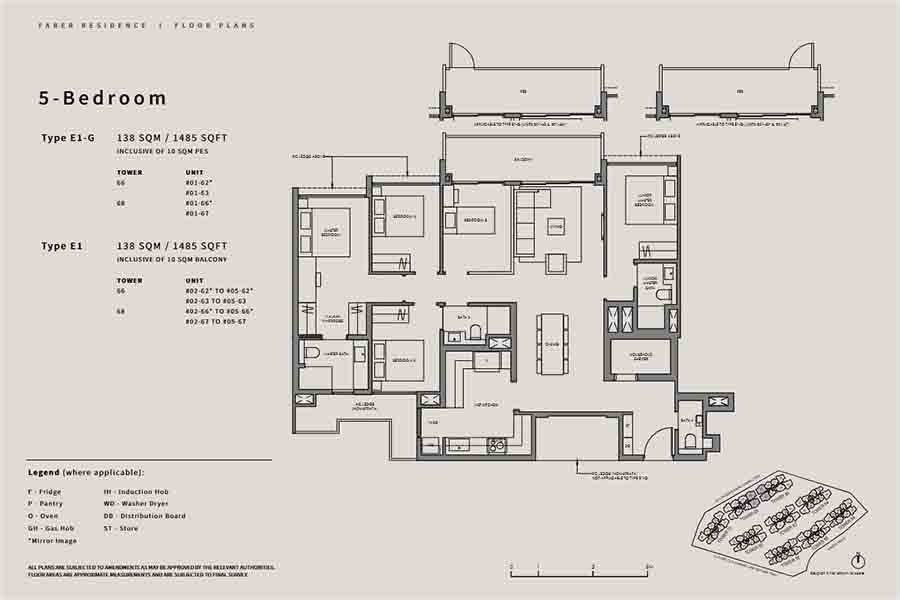
| 5 Bedroom (Standard) | 1485 sqft | 8 units |
Total Remaining Units: 22
All smaller and mid-sized unit types have now been fully absorbed, including all 2-bedroom and 3-bedroom configurations as well as selected 4-bedroom variants.
Current availability is now entirely concentrated in larger-format units, specifically 4-bedroom Standard and 5-bedroom layouts.
This reflects a clear late-stage transition where buyers are no longer comparing across different unit categories, but are instead evaluating whether the remaining higher-quantum units align with their household needs and financial comfort.
At this stage, selection is driven primarily by layout performance, stack positioning and long-term usability rather than unit type comparison, with most buyers working within a highly selective set of remaining options.
The absorption pattern indicates that both entry-level and core family segments have already been fully taken up, leaving only larger-format units in the current inventory.
As a result, remaining selection is no longer category-driven, but focused on evaluating specific layouts, stack positions and overall suitability within the higher-quantum segment.
Want the latest stack list, best-facing units and remaining layouts?
Faber Residence Unit Mix Breakdown
| Unit Type | Size Range | Units | % | Positioning |
|---|---|---|---|---|
| 2 Bedroom | 646 sqft | 80 | ~20% | Entry family |
| 3 Bedroom Basic | 797 sqft | 93 | ~23% | Core family |
| 3 Bedroom Standard | 818-861 sqft | 56 | ~14% | Core family |
| 3 Bedroom Plus | 1,033–1,044 sqft | 50 | ~13% | Larger family |
| 4 Bedroom Basic | 1,119 sqft | 40 | ~10% | Upgrader |
| 4 Bedroom Standard | 1,206–1,270 sqft | 60 | ~15% | Upgrader |
| 5 Bedroom | 1,485 sqft | 20 | ~5% | High-commitment |
What the Unit Mix Reveals About Faber Residence
The unit mix clearly reflects a space-driven, owner-occupier development, rather than a compact, investor-focused project.
Key observations:
- strong concentration of 3-bedroom and 4-bedroom units
- limited supply of smaller entry units
- multiple tiers within the same unit category
This indicates that the project is structured for:
- families upgrading from HDB or older condos
- buyers prioritising internal space over entry pricing
- long-term own-stay rather than short-term flexibility
Layouts are designed with:
- less compression
- more predictable space allocation
- gradual improvements across unit tiers rather than drastic variation
As a result, buyers are not simply choosing based on size, but evaluating:
- whether additional space improves daily usability
- whether layout justifies higher quantum
- whether the unit aligns with long-term needs
Layout Strategy and Positioning
Faber Residence adopts a space-first layout strategy, where:
- internal comfort is prioritised
- room proportions are more generous
- separation between zones is clearer
Rather than:
- maximising efficiency
- compressing layouts
- optimising for entry pricing
This results in layouts that:
- are easier to furnish
- support daily routines more naturally
- remain usable over longer holding periods
However, this also means:
- efficiency on paper may appear lower
- some space may feel underutilised
- value depends on real usage rather than size alone
Layout Characteristics by Unit Type
2-Bedroom
- Dumbbell or corridor layouts
- Bedrooms separated across living area
- Open kitchen concept
These layouts provide functional entry options but do not fully reflect the project’s space-driven positioning.
3-Bedroom Units
- Corridor layouts with internal hallway
- Enclosed kitchen and yard
- Dedicated utility areas
These units form the core of the project and are most aligned with family living requirements.
4-Bedroom Units
- Winged layouts with stronger zoning
- Separate wet and dry kitchens
- Larger living and dining areas
These layouts prioritise separation, privacy and long-term usability.
5-Bedroom Units
- Largest configurations with full spatial separation
- Multi-generational suitability
- Strong internal flexibility
These layouts are designed for households requiring maximum space rather than efficiency.
Best Layouts and Stack Considerations at Faber Residence
There is no single “best layout”, but certain patterns emerge:
Layout Observations
- 3-bedroom and selected 4-bedroom layouts provide the most balanced usability
- larger layouts offer stronger comfort but require higher commitment
- smaller layouts function as entry options rather than long-term solutions
The key is determining:
- whether space is usable after furnishing
- whether layout supports daily routines
- whether unit aligns with long-term plans
Stack Orientation, Facing & Real-World Implications
North / North-Northeast Facing Stacks
- Face Faber Walk and landed enclave
- More outward-facing environment
These stacks offer a quieter landed-facing outlook, with considerations around road exposure.
South / South-Southwest Facing Stacks
- Face Sungei Ulu Pandan and park connector
- Potential for more open views
These stacks may offer stronger openness, but come with exposure toward the AYE at a distance.
What Buyers Typically Evaluate
- openness vs privacy
- river-facing vs road-facing trade-offs
- floor level impact
- surrounding environment
Stack selection plays a critical role alongside layout choice.
How to Choose the Right Layout at Faber Residence
Most buyers evaluate based on:
Budget and Financial Comfort
- total quantum
- long-term affordability
Household Needs
- number of occupants
- space requirements
Layout Usability
- furnishing practicality
- room proportions
- circulation
Stack Selection
- privacy vs openness
- environmental exposure
Holding Horizon
- short-term flexibility vs long-term stability
Buyers who shortlist a few realistic options and evaluate them properly tend to make more confident decisions.
Need help narrowing down the best stacks and layouts?
Faber Residence Floor Plan FAQs
1. What unit types are available at Faber Residence?
Faber Residence offers a mix of 2-bedroom, 3-bedroom, 4-bedroom and 5-bedroom layouts. The unit mix is heavily weighted toward family-sized units rather than compact entry units. This reflects a development designed for owner-occupiers prioritising space and long-term usability. Buyers typically shortlist based on household needs and layout type.
2. Which Faber Residence layout is best for own-stay buyers?
3-bedroom and 4-bedroom layouts tend to be the most suitable for own-stay buyers as they provide better space separation and usability. These configurations support family routines and long-term living more effectively than smaller units. Larger households may consider 5-bedroom units where space requirements are higher. Final selection depends on layout and stack.
3. Are Faber Residence floor plans efficient?
The layouts prioritise space and usability rather than maximising efficiency. This results in clearer zoning and more comfortable room sizes. However, compared to compact developments, they may appear less efficient on a psf basis. Buyers should evaluate based on actual daily use.
4. Does stack and facing matter at Faber Residence?
Yes, stack and facing significantly influence liveability. Some stacks face landed housing while others face the river and park connector. These differences affect openness, privacy and environmental exposure. Buyers typically evaluate layout and stack together.
5. Are larger units better for long-term living?
Larger units generally provide better space, flexibility and separation, making them more suitable for long-term living. They support family needs more effectively over time. However, they also come with higher financial commitment. Buyers should align space requirements with budget.
6. How important is layout selection at Faber Residence?
Layout selection is critical because the project’s value is closely tied to internal space and usability. A well-selected layout improves long-term comfort, while a poor choice may result in underutilised space. This is especially important in a space-driven development. Unit choice matters as much as project selection.
Conclusion
Faber Residence is fundamentally a space-driven, family-oriented development.
Layouts prioritise:
- internal comfort
- clear zoning
- long-term usability
The key decision is not identifying a “best unit” universally.
It is determining:
- how the layout performs in real use
- how stack orientation affects experience
- how the unit fits long-term plans
Buyers who evaluate these factors clearly tend to make more confident decisions.
Need a Clear Breakdown of the Best Units?
If you are considering Faber Residence and want a clearer breakdown of:
- which stacks offer better privacy or openness
- which layouts align with your household needs
- how different unit types compare in real use
- whether the unit fits your budget and long-term plans
You can leave your details below and receive a structured walkthrough based on your situation.