
Summary
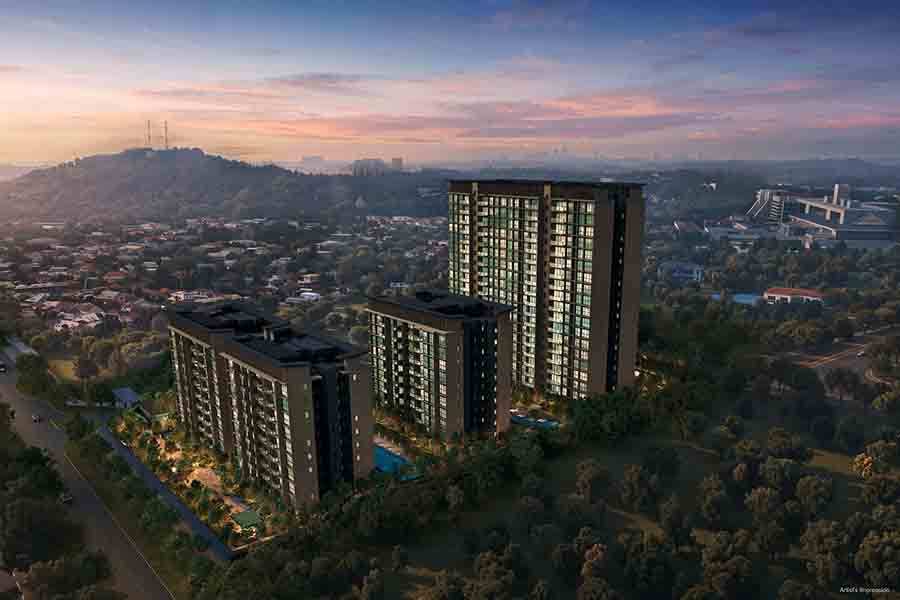
Dunearn House is an upcoming new launch condominium along Dunearn Road within Singapore’s evolving Turf City precinct in District 11. Developed through a joint venture between Frasers Property, Sekisui House and CSC Land Group, the project is planned with 380 residential units across two 19-storey blocks and three 10-storey blocks within the Bukit Timah / Swiss Club subzone.
What makes Dunearn House particularly interesting is not simply the Bukit Timah address alone, but its positioning as the first non-landed residential launch in the District 11 Swiss Club area in more than three decades, alongside its role as an early private residential project within the broader Turf City transformation.
At the same time, the project is unlikely to appeal equally to every buyer profile. While proximity to Sixth Avenue MRT, established schools and future masterplan improvements may strengthen its long-term positioning, buyers may also need to evaluate trade-offs involving leasehold tenure, future construction activity, traffic intensification and long-term competition from future Turf City supply.
For buyers seeking a modern Bukit Timah lifestyle with future transformation potential, Dunearn House may emerge as one of the more closely watched District 11 launches.
Explore the Full Dunearn House Analysis
- Dunearn House Price Guide – pricing logic, market positioning, and entry analysis
- Dunearn House Floor Plan Analysis – layout efficiency, unit mix, and liveability considerations
- Dunearn House Showflat Guide – viewing strategy and buyer evaluation framework
Together, these articles provide a structured breakdown of how the project performs across pricing, layout design, buyer suitability, and long-term holding considerations.

Download the Dunearn House FYVE Checklist
Before choosing a unit at Dunearn House, review the project-level Fair Value, Yield, Vacancy Risk and Exit Potential checks.
Already comparing a specific unit?
Key Details (At a Glance)
- Project Type: 99-year leasehold private condominium within the future Turf City precinct
- Location: Dunearn Road, District 11, Bukit Timah / Swiss Club subzone
- Positioning: First non-landed residence in the District 11 Swiss Club area in 33 years
- Development Form: Two 19-storey blocks and three 10-storey blocks with basement carpark and communal facilities
- Total Units: 380 residential units
- Unit Mix: 2-bedroom to 4-bedroom Premium + Study units
- Target Buyer: Families, school-belt buyers, Bukit Timah owner-occupiers and long-term Turf City believers
- Main Trade-Off: 99-year leasehold tenure within a traditionally freehold Bukit Timah environment
- Investment Profile: More suited for longer-term positioning rather than short-term speculative flipping
- Key Consideration: Future Turf City supply, construction activity, traffic changes and stack selection
Dunearn House Project Factsheet
| Project Detail | Information |
|---|---|
| Project Name | Dunearn House (达恩・豪庭) |
| Developer | Phoenix Dunearn Pte Ltd |
| Joint Venture | Frasers Property, CSC Land and Sekisui House |
| Location | Dunearn Road |
| District | District 11 |
| Planning Area | Bukit Timah / Swiss Club subzone |
| Region | Core Central Region (CCR) |
| Tenure | 99-year leasehold from 30 September 2025 |
| Site Area | 13,491.9 sqm / 145,255.6 sq ft |
| Plot Ratio | 2.4 |
| Residential Units | 380 units |
| Development Form | 2 blocks of 19-storey and 3 blocks of 10-storey residential buildings |
| Carpark | 1 basement carpark |
| Facilities | Swimming pool and communal facilities |
| Unit Types | 2 Bedroom to 4 Bedroom Premium + Study |
| Architect | Ong & Ong Pte Ltd |
| Landscape Architect | EcoPlan Asia Pte Ltd |
| Builder | China Construction (South Pacific) Development Co. Pte. Ltd. |
| Nearest MRT | Sixth Avenue MRT |
| Future MRT Context | Turf City MRT on the Cross Island Line |
| Development Type | Private residential condominium |
A Different Type of Bukit Timah Launch
Dunearn House is unlikely to be viewed as a typical luxury Bukit Timah condominium launch despite carrying a District 11 address.
Instead, much of the project’s identity may eventually revolve around its role as one of the earliest private residential developments within the future Turf City transformation precinct. Buyers are not simply purchasing a completed mature estate environment today. They are effectively entering a district that may continue evolving over the next 20 to 30 years.
The developer’s preliminary positioning also frames Dunearn House as the first non-landed residence in the District 11 Swiss Club area in 33 years. This makes the project more than just another Bukit Timah launch; it is also a test of whether buyers will value a new leasehold condominium entry point in a location traditionally associated with landed homes, freehold holdings and long-term family ownership.
That creates a very different decision framework compared to many traditional Bukit Timah projects.
Some buyers may see this as an opportunity to enter the precinct earlier before future GLS plots potentially launch at higher land costs. Others may remain cautious due to the scale and timeline of the wider transformation.
This “first-mover” positioning will likely become one of the defining themes surrounding Dunearn House.
District 11 Positioning and Bukit Timah Psychology
District 11 continues to carry strong long-term appeal among both local owner-occupiers and investors.
For many buyers, Bukit Timah remains associated with:
- established landed housing
- school accessibility
- greenery
- lower-density living
- long-term prestige
Dunearn House enters this environment differently from surrounding freehold boutique developments.
Its larger 380-unit scale also makes it different from many boutique Bukit Timah projects. This gives the project more facilities and market visibility, but it also means buyers should assess whether the eventual pricing, stack selection and unit mix provide enough differentiation against both older resale projects and future Turf City supply.
Rather than positioning itself as a traditional legacy freehold asset, the project may instead appeal to buyers seeking:
- a lower entry quantum into Bukit Timah
- MRT accessibility
- future transformation potential
- modern condominium facilities
- a lock-up-and-go lifestyle
This distinction matters because buyers comparing Dunearn House against nearby freehold projects are often evaluating two very different ownership philosophies.
Sixth Avenue MRT Connectivity Could Become a Key Advantage
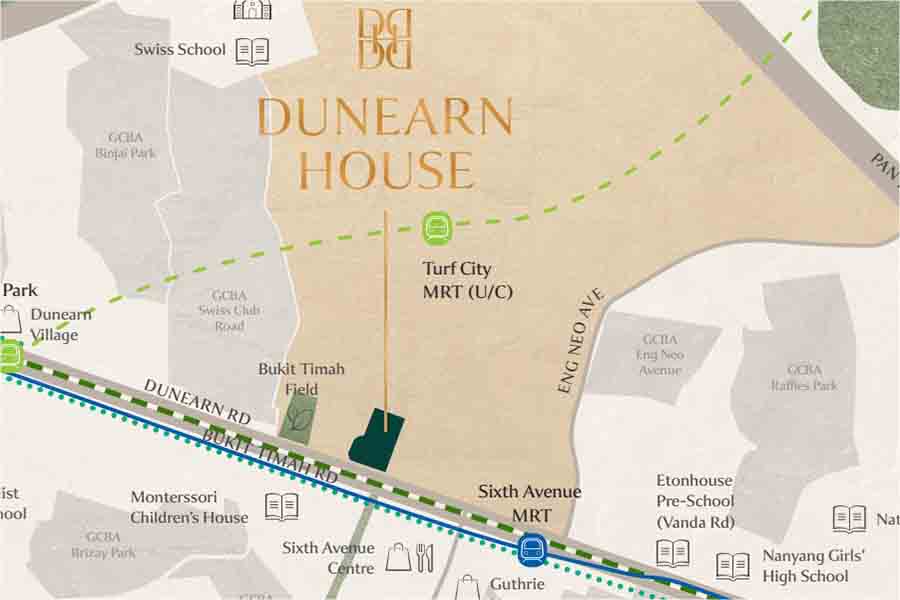
One of the project’s stronger practical advantages is its stated proximity to Sixth Avenue MRT station on the Downtown Line, with the preliminary material positioning it as approximately 4 minutes’ walk from the station.
Unlike some future Turf City plots that may depend more heavily on longer-term infrastructure completion, this particular site already benefits from relatively established MRT connectivity from day one.
For many buyers, this reduces uncertainty substantially.
A walkable connection to Sixth Avenue MRT may potentially improve:
- daily commuting convenience
- rental attractiveness
- long-term exit flexibility
- resilience during slower market conditions
This could become increasingly important later when more residential supply eventually enters the Turf City area.
School Accessibility Will Likely Remain One of the Main Buyer Drivers
Education-driven demand may eventually become one of the strongest demand pillars supporting Dunearn House.
The surrounding Bukit Timah area already carries strong school-related demand psychology among local family buyers.
Schools and institutions highlighted around the project include:
Primary Schools
- Methodist Girls’ School (Primary)
- Nanyang Primary School
- Pei Hwa Presbyterian Primary School
- Raffles Girls’ Primary School
- Henry Park Primary School
Secondary Schools
- Nanyang Girls’ High School
- Hwa Chong Institution
- Methodist Girls’ School (Secondary)
- St. Margaret’s Secondary School
- Singapore Chinese Girls’ School
- St. Joseph’s Institution
Junior Colleges & Tertiary Institutions
- National Junior College
- Ngee Ann Polytechnic
- Anglo-Chinese Junior College
- National University of Singapore (NUS)
- Singapore Institute of Management (SIM)
International Schools
- Swiss School
- Holland International School
- Singapore Korean International School
- Chatsworth International School
- ACS (International)
- Hwa Chong International School
However, buyers should still independently verify final school distance eligibility closer to launch and registration periods rather than relying solely on preliminary assumptions.
For many families, Dunearn House may eventually become less about short-term investment narratives and more about long-term family planning and educational positioning.
Turf City Transformation — Opportunity or Long Construction Cycle?
The broader Turf City transformation may ultimately become both the project’s greatest strength and biggest uncertainty.
URA’s long-term plans for the area include:
- approximately 15,000 to 20,000 future homes
- new parks and green corridors
- future MRT connectivity
- heritage integration
- pedestrian-friendly planning
- future retail and community spaces
From a positive perspective, buyers may see:
- future upside potential
- stronger infrastructure
- improved amenities
- increased lifestyle convenience
- long-term district rejuvenation
At the same time, early buyers may also need to realistically accept:
- years of nearby construction
- future road widening works
- evolving traffic patterns
- future residential competition
- changing estate density
This is why Dunearn House may ultimately appeal more strongly to buyers with longer intended holding horizons.
Leasehold Tenure May Become a Psychological Friction Point
One of the recurring market discussions surrounding Dunearn House will likely involve its 99-year leasehold tenure.
Bukit Timah traditionally carries strong freehold psychology, especially among wealthier local families and long-term asset holders.
Projects such as:
- Watten House
- Royalgreen
- nearby landed properties
naturally reinforce this expectation.
As a result, some buyers may question whether a 99-year project can maintain long-term pricing resilience within this environment.
However, another group of buyers may instead view the lower relative entry quantum as the trade-off that makes the Bukit Timah lifestyle more accessible.
This tension between:
- freehold prestige
- versus
- lower quantum and transformation upside
will likely become one of the core buyer decision points for Dunearn House.
Dunearn House Site Plan: Why Stack Selection May Matter More Than Buyers Expect
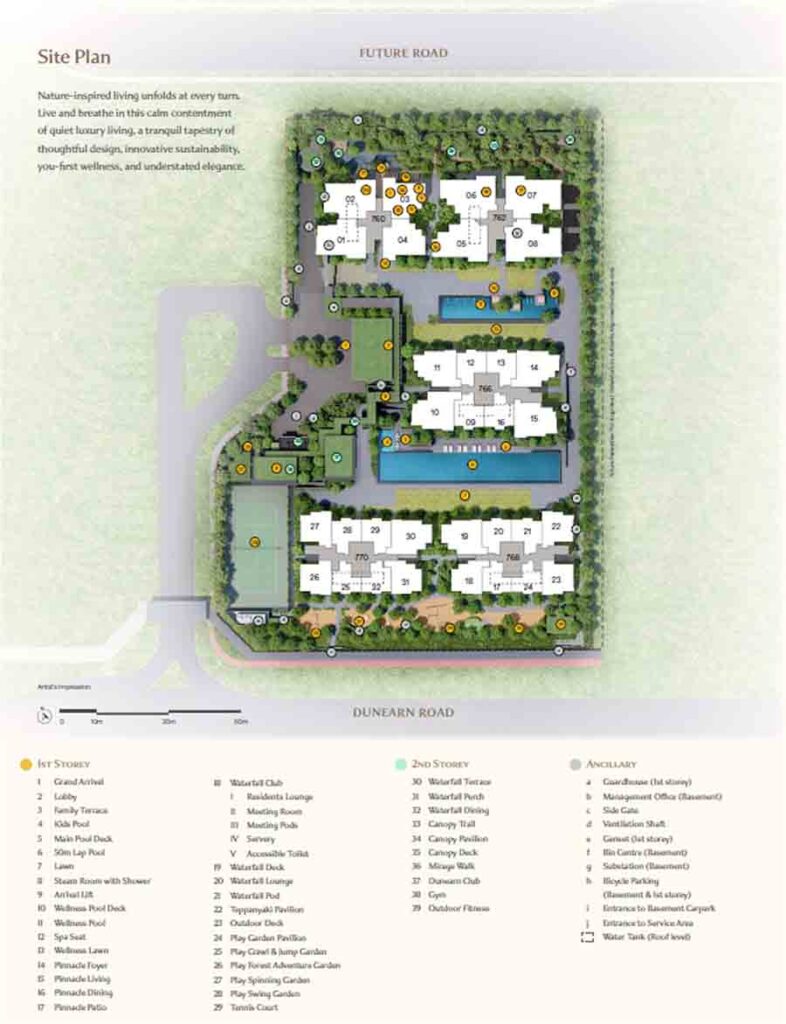
The official site plan makes one thing clear: Dunearn House should not be evaluated only by unit type and PSF. Stack position may have a meaningful impact on privacy, road exposure, facility noise, future-facing conditions and long-term buyer appeal.
Based on current planning parameters, portions of the site are expected to remain within lower-rise height controls to transition into nearby landed housing areas.
This creates several possible implications:
- varying view quality
- differing privacy conditions
- potential future road exposure
- differing traffic noise exposure
- future construction visibility
This becomes more relevant because the preliminary material positions Dunearn House as possibly the tallest residential development between Yarwood Avenue and Stevens Road. Higher-floor units may therefore carry stronger view potential, but buyers should still evaluate exact stack orientation, future surrounding development, road exposure and whether the view premium is worth the eventual price gap.
Buyers may eventually find that stack selection becomes particularly important for this project.
Especially for:
- Dunearn Road-facing units
- lower-floor units
- units exposed to future road widening
- units facing future adjacent development plots
Not all units are likely to carry the same long-term livability characteristics.
What the Dunearn House Site Plan Reveals
The official site plan is important because Dunearn House is not a simple “choose any stack” type of project.
At first glance, buyers may focus on the Bukit Timah address, Sixth Avenue MRT access, school-belt appeal and the future Turf City transformation story. But once the site plan is studied more carefully, the actual unit decision becomes more specific.
Some stacks are positioned closer to Dunearn Road. Some are closer to the future road side. Some face more internally towards the pools and landscaped areas. Others may be more affected by future movement patterns, facility activity or surrounding changes as the wider Turf City precinct continues to evolve.
This matters because Dunearn House is an early project within a long-term transformation area. Buyers are not only choosing a unit for today’s showflat impression. They are also choosing how comfortable the unit may feel after future roads, pedestrian links, neighbouring plots and estate activity become clearer.
From the site plan, buyers should pay attention to:
- Dunearn Road-facing stacks
- future road-facing stacks
- internal pool-facing stacks
- stacks near the tennis court, children’s play areas and club facilities
- stacks near side gates, carpark/service access and ancillary areas
- height differences between the 19-storey and 10-storey blocks
- whether the stack has stronger privacy, noise or future-facing considerations
This is why stack selection should not be treated as a minor detail for Dunearn House. Two buyers may purchase the same unit type, but their long-term living experience could differ depending on facing, floor level, road exposure, facility proximity and future surrounding development.
Before committing to a unit, buyers should compare the site plan together with the floor plan, price list, facing direction and future Turf City context.
Who May Consider Dunearn House?
Dunearn House may potentially appeal more strongly to:
Young Local Families
The confirmed unit mix also supports this family-oriented reading, with 3-bedroom and 4-bedroom layouts forming more than half of the project.
Particularly buyers prioritising:
- school accessibility
- MRT connectivity
- long-term owner occupation
- District 11 positioning
Existing Bukit Timah Residents
Some right-sizers from nearby landed estates may appreciate:
- lower maintenance living
- security
- modern facilities
- lock-up-and-go convenience
Long-Term Strategic Buyers
Some buyers may view the project as an early-positioning play within the wider Turf City transformation story.
Who May Need to Think More Carefully?
The project may not suit every buyer profile equally.
Some buyers may hesitate due to:
- 99-year tenure concerns
- extended transformation timeline
- uncertainty surrounding future supply
- future traffic intensification
- possible pricing sensitivity if launch prices become aggressive
Buyers seeking immediate mature-estate tranquility may also find the evolving nature of Turf City less suitable during the earlier years of transformation.
Takeaway
Dunearn House is unlikely to be a simple “good or bad” project decision.
Instead, the project appears more dependent on whether buyers personally believe in the long-term Turf City transformation narrative and whether the eventual entry point sufficiently compensates for the longer development horizon and leasehold trade-offs.
Its strongest advantages may ultimately come from:
- first-mover positioning
- Sixth Avenue MRT accessibility
- Bukit Timah school-belt psychology
- future masterplan integration
At the same time, future supply, construction timelines and tenure sensitivity will remain important considerations.
For buyers already comparing Dunearn House against projects such as Watten House, The Reserve Residences or future Turf City GLS launches, the eventual decision may depend less on headline pricing alone and more on long-term positioning, stack selection and future exit strategy alignment.
If you’re weighing city-core quantums against OCR alternatives and trying to avoid being misled by psf comparisons, the New Launch Condo Guide helps clarify which metrics matter for your holding intent.
If you are currently comparing Dunearn House against other Bukit Timah or future Turf City launches, we can help you evaluate the trade-offs more carefully based on location positioning, school accessibility, stack selection and long-term buyer suitability considerations.
FAQs (Decision-Stage)
1. What makes Dunearn House different from other Bukit Timah new launches?
Dunearn House is likely to stand out because it is positioned as one of the earliest private residential launches within the future Turf City transformation precinct. Unlike many traditional Bukit Timah projects that are already surrounded by mature amenities and established neighbourhood dynamics, Dunearn House is entering an area that may continue evolving over the next two to three decades. Buyers are therefore not only evaluating the project itself, but also whether they believe in the long-term transformation potential of the wider Turf City masterplan. This creates a very different buying psychology compared to a conventional District 11 launch.
2. Is Dunearn House mainly targeted at investors or owner-occupiers?
Based on the current positioning, Dunearn House may appeal more strongly to owner-occupiers and longer-term buyers rather than purely short-term investors. Much of the project’s appeal appears tied to future district transformation, school accessibility and longer-term lifestyle positioning rather than immediate flipping potential. Buyers entering the project may need to be comfortable with a longer holding horizon as the wider Turf City precinct continues developing over time. Families planning around education and long-term owner occupation may therefore form a significant portion of the eventual buyer pool.
3. Does the 99-year leasehold tenure become a concern in Bukit Timah?
This will likely become one of the main discussion points surrounding the project. Bukit Timah traditionally carries strong freehold psychology due to the surrounding landed housing environment and nearby freehold developments. Some buyers may therefore hesitate when comparing Dunearn House against nearby freehold alternatives. At the same time, other buyers may instead view the lower relative entry quantum as the trade-off that allows them to enter the Bukit Timah area at a more accessible price point compared to freehold neighbours.
4. How important is the proximity to Sixth Avenue MRT?
The MRT connectivity may eventually become one of the project’s strongest practical advantages. Unlike some future Turf City plots that may depend more heavily on longer-term infrastructure completion, Dunearn House already benefits from relatively established access to Sixth Avenue MRT station on the Downtown Line. For many buyers, this reduces uncertainty significantly because the transport convenience is already functional from day one rather than dependent entirely on future planning completion. Over time, this may also support rental demand and long-term exit flexibility more effectively compared to deeper plots within Turf City.
5. Will future Turf City supply affect Dunearn House later on?
Future supply will likely become one of the key long-term considerations buyers evaluate carefully. URA’s broader Turf City transformation plans involve a substantial number of future homes over the coming decades, including both public and private housing. While Dunearn House benefits from being an earlier entrant into the precinct, buyers should also recognise that future competing projects may eventually create more pricing and resale competition later. The long-term success of the project may therefore depend partly on whether its earlier positioning, MRT proximity and school accessibility remain sufficiently differentiated over time.
6. Is Dunearn House mainly attractive because of nearby schools?
For many local families, the surrounding education belt may become one of the strongest reasons to consider the project. Bukit Timah has long been associated with school-driven housing demand, particularly among buyers planning for primary and secondary school access. Schools commonly discussed around the area include Methodist Girls’ School, Hwa Chong Institution, National Junior College and several well-known primary schools. However, buyers should still independently verify final school distance eligibility closer to launch and registration periods rather than relying purely on preliminary assumptions.
7. Could the long Turf City transformation timeline become a downside?
Some buyers may indeed view the longer transformation timeline cautiously. While the future masterplan may eventually introduce new amenities, parks, MRT connectivity and lifestyle improvements, early residents may also need to live through years of ongoing construction activity and infrastructure upgrading. Traffic patterns, surrounding density and nearby developments may continue changing for a long period after TOP. Buyers prioritising immediate tranquility and a fully mature estate environment may therefore need to evaluate whether they are comfortable with this evolving district dynamic.
8. Who may find Dunearn House most suitable?
Dunearn House may potentially suit buyers seeking a longer-term Bukit Timah lifestyle rather than purely short-term speculative upside. Families prioritising school accessibility, MRT convenience and lower-density surroundings may find the project attractive despite the leasehold tenure. Some right-sizers from nearby landed estates may also appreciate the lock-up-and-go lifestyle while remaining within a familiar neighbourhood environment. Ultimately, the project may appeal most strongly to buyers who are comfortable taking a longer-term view on the future Turf City transformation story.
Pricing Positioning, Buyer Psychology and Long-Term Exit Considerations
Pricing Will Likely Determine Whether Buyers Accept the Leasehold Trade-Off
At the time of writing, official pricing for Dunearn House has not yet been released. However, based on the land bid of approximately $1,410 psf ppr, market expectations are already circulating around a possible launch range of roughly:
- mid-$2,600 psf
- to potentially high-$2,700 psf or beyond
This is where buyer psychology may become extremely important.
Because the project is entering a part of Bukit Timah traditionally associated with:
- freehold housing
- landed enclaves
- legacy family wealth
- long-term asset holding
buyers are unlikely to evaluate Dunearn House purely on headline psf alone.
Instead, many buyers will subconsciously compare:
- what they are paying
- versus what type of Bukit Timah positioning they are receiving in return
That may become the project’s central pricing challenge.
The Project Is Probably Not Competing Against OCR Buyers
One mistake some buyers may make is comparing Dunearn House too directly against OCR launches purely based on psf.
Psychologically, the project is likely competing in a very different buyer pool.
Many buyers evaluating Dunearn House are probably also cross-shopping:
- Watten House
- The Reserve Residences
- Fourth Avenue Residences
- nearby freehold resale projects
- landed homes within Bukit Timah
That means buyers may focus less on:
“Is this cheap?”
and more on:
“Does this justify the trade-offs compared to other Bukit Timah options?”
This distinction matters significantly.
Why the “First-Mover” Narrative Matters So Much
The first-mover positioning is likely one of the strongest psychological drivers supporting Dunearn House.
Some buyers may believe:
- later Turf City plots could launch higher
- MRT connectivity may become more valuable over time
- early entrants may benefit from future district transformation
- school-driven demand may strengthen later
However, this strategy also comes with risk.
Because buyers entering earlier are effectively taking on:
- future planning uncertainty
- long-term precinct transformation
- future supply competition
- construction disruption
- evolving traffic patterns
This is why the project may appeal more naturally to buyers comfortable with:
- longer holding periods
- gradual district transformation
- delayed upside narratives
rather than immediate short-term gains.
The Reserve Residences Comparison Will Probably Continue
Many buyers are likely to compare Dunearn House against The Reserve Residences despite the projects offering very different lifestyles.
The Reserve Residences appeals strongly through:
- integrated convenience
- mall access
- interchange connectivity
- immediate mature estate utility
Dunearn House appears to lean more heavily towards:
- greenery
- lower-density living
- school-belt positioning
- heritage-influenced planning
- future transformation upside
This means the eventual buyer decision may become less about:
“Which project is better?”
and more about:
“Which lifestyle framework fits my intended holding strategy better?”
Watten House Will Likely Become the Freehold Benchmark
Watten House will probably remain one of the most important comparison points.
This is because Watten House reinforces:
- freehold Bukit Timah prestige
- lower-density luxury positioning
- long-term family wealth preservation psychology
Dunearn House cannot realistically compete on tenure prestige alone.
Instead, its positioning may depend more heavily on:
- lower entry quantum
- MRT accessibility
- future district growth
- first-mover Turf City positioning
This creates an interesting buyer divide.
Some buyers may strongly prioritise:
- tenure
- scarcity
- legacy holding
while others may instead prioritise:
- accessibility
- affordability relative to Bukit Timah
- future transformation upside
The Future Supply Question Cannot Be Ignored
One of the more important long-term considerations surrounding Dunearn House is future supply.
URA’s broader Turf City plans involve:
- approximately 15,000 to 20,000 future homes
- both public and private housing
- future commercial/community spaces
- ongoing precinct expansion
This creates both:
- opportunity
- and future competition
In the earlier years, Dunearn House may benefit from:
- scarcity
- first-mover attention
- lower immediate private competition
But over time, buyers should also recognise that future GLS plots may eventually:
- offer newer facilities
- different pricing structures
- stronger integrated components
- newer layouts
- different MRT positioning
This means future resale differentiation could become increasingly important.
Stack Selection Could Matter More Than Buyers Initially Expect
For Dunearn House, not all stacks are likely to carry equal long-term positioning.
This is especially important because of:
- future road widening studies
- nearby future developments
- varying exposure to Dunearn Road
- low-rise transition zones
- future construction visibility
Some buyers may eventually place stronger emphasis on:
- quieter internal-facing stacks
- units further from major traffic exposure
- stacks with stronger privacy positioning
- layouts aligned with family owner-occupation
This is one reason why some buyers may eventually find physical site understanding more important than simply comparing brochure pricing alone.
Family-Sized Units May Eventually Form the Core Exit Market
Based on the preliminary unit mix, Dunearn House will include 176 units of 2-bedroom / 2-bedroom + study layouts, 96 units of 3-bedroom / 3-bedroom + study layouts, and 108 units of 4-bedroom / 4-bedroom + study layouts.
This means 46% of the project is made up of 2-bedroom formats, while 54% is made up of 3-bedroom and 4-bedroom formats. That balance is important because Dunearn House is not positioned only as a pure investor-led project; the larger formats should remain relevant to families, school-belt buyers and longer-term Bukit Timah owner-occupiers.
This is because:
- school accessibility is likely to remain a major theme
- Bukit Timah traditionally attracts family owner-occupiers
- MRT convenience supports daily commuting
- lower-density environments often appeal to longer-term residents
As a result, larger practical layouts may eventually align more closely with the likely future buyer pool.
Smaller investor-focused layouts may potentially face:
- greater rental competition
- future supply pressure
- yield sensitivity
- narrower differentiation later
However, final conclusions should still depend on eventual pricing and layout efficiency upon launch.
The Project May Ultimately Reward Patience More Than Momentum
Dunearn House does not currently appear positioned as a rapid-flip momentum project.
Instead, much of its narrative seems tied to:
- gradual precinct transformation
- future infrastructure maturation
- school-driven demand resilience
- long-term Bukit Timah positioning
That means buyers expecting:
- immediate explosive upside
- short-term speculative momentum
- rapid resale arbitrage
may eventually find the project less aligned with those expectations.
The project may instead suit buyers comfortable with:
- slower district evolution
- long-term owner occupation
- strategic early positioning
- future neighbourhood maturation
URA Master Plan, Pros & Cons and Final Verdict
URA’s Turf City Transformation Will Redefine This Entire Area
The future of Dunearn House cannot really be evaluated in isolation from the broader Turf City transformation.
URA’s long-term plans for the former Bukit Timah Turf City precinct include:
- approximately 15,000 to 20,000 new homes
- public and private residential districts
- future MRT connectivity
- green corridors and parks
- conserved heritage integration
- retail and community spaces
- pedestrian-friendly planning
This is effectively one of Singapore’s next major long-term residential transformation projects.
For buyers entering Dunearn House, the purchase decision may therefore depend partly on whether they believe this transformation eventually succeeds in creating:
- a desirable family-oriented district
- a greener city-fringe environment
- stronger future connectivity
- sustainable long-term demand
The Future MRT Story Could Become Increasingly Important
Today, Sixth Avenue MRT likely forms the project’s main practical transport anchor.
However, over time, the future Turf City MRT station on the Cross Island Line may potentially reshape:
- commuting patterns
- district accessibility
- buyer perception
- future convenience levels
This may become particularly important once the wider precinct becomes more populated later.
Projects positioned nearer to both established and future MRT connectivity may eventually enjoy stronger long-term resilience compared to deeper plots lacking immediate accessibility.
Heritage Integration Could Become a Unique Differentiator
One of the more interesting aspects of the Turf City masterplan is URA’s intention to preserve portions of the former racecourse and stables environment.
This creates a different atmosphere compared to many newer high-density estates.
The broader planning direction appears to focus on:
- greenery
- heritage integration
- lower-rise transitions
- walkability
- community-oriented spaces
If executed well, this could eventually give Turf City a more distinctive neighbourhood identity compared to more generic large-scale residential precincts.
However, much still depends on:
- execution quality
- future commercial integration
- infrastructure rollout
- density management over time
Traffic and Road Upgrading Remain Important Considerations
At the same time, buyers should not ignore the practical realities accompanying large-scale transformation.
Road improvements around:
- Dunearn Road
- Bukit Timah Road
- Eng Neo Avenue
are already under study or expected to continue evolving.
As future residential density increases, some buyers may eventually become more sensitive towards:
- traffic congestion
- noise exposure
- construction timelines
- peak-hour accessibility
This makes stack positioning and road-facing exposure potentially more important for long-term owner-occupier comfort.
Dunearn House Pros and Cons
Pros
1. First-Mover Advantage Within Turf City and Swiss Club
Dunearn House benefits from being positioned as an early private residential launch within the Turf City transformation, as well as the first non-landed residence in the District 11 Swiss Club area in 33 years. This gives the project a stronger scarcity narrative than a typical leasehold condominium launch.
2. Established MRT Connectivity
The project already benefits from relatively established access to Sixth Avenue MRT station rather than relying entirely on future infrastructure completion.
3. Strong School-Belt Psychology
Bukit Timah’s long-standing education-driven demand may continue supporting family interest over the longer term.
4. Clearer View Differentiation
With the project positioned as possibly the tallest residential development between Yarwood Avenue and Stevens Road, selected higher-floor units may carry stronger view appeal. This could support stack-level differentiation if the final pricing gap remains reasonable.
5. Lower-Density Bukit Timah Environment
Compared to more urban integrated developments, the project may appeal to buyers preferring greenery and lower-density surroundings.
6. Future Masterplan Upside
If Turf City eventually develops successfully into a highly desirable district, earlier entrants may potentially benefit from stronger long-term positioning.
Cons
1. Leasehold Tenure Within a Freehold Environment
Some buyers may continue preferring freehold alternatives nearby, especially within Bukit Timah.
2. Long Transformation Timeline
Residents may need to live through years of nearby construction and infrastructure upgrading.
3. Future Supply Competition
The wider Turf City precinct will eventually introduce substantial future residential supply.
4. Larger Project Scale Than Some Bukit Timah Buyers Expect
At 380 units, Dunearn House is not a small boutique Bukit Timah project. Some buyers may prefer a more exclusive low-density freehold environment, while others may appreciate the broader facilities and stronger project visibility.
4. Potential Future Traffic Intensification
Road widening and future population growth may gradually alter traffic conditions around the area.
5. Pricing Sensitivity
If launch pricing becomes too aggressive, some buyers may question whether the leasehold trade-off remains sufficiently attractive.
Final Verdict — A Long-Term Turf City Positioning Play
Dunearn House appears less like a conventional Bukit Timah launch and more like a long-term positioning decision surrounding the future Turf City transformation story.
Its strongest strengths likely come from:
- first-mover positioning
- MRT accessibility
- school-belt demand
- future masterplan integration
- lower-density surroundings
At the same time, buyers may also need to accept:
- leasehold tenure friction
- future construction disruption
- long-term supply competition
- evolving district density
Ultimately, Dunearn House may suit buyers who:
- take a longer-term view
- prioritise family positioning
- believe in the Turf City transformation narrative
- value Bukit Timah accessibility without paying full freehold pricing
For buyers seeking immediate mature-estate stability or purely short-term upside, the project may require more careful evaluation.
However, for buyers comfortable entering a district still in transition, Dunearn House may eventually emerge as one of the more strategically interesting Bukit Timah launches within the next property cycle.
Frequently Asked Questions About Dunearn House
1. Could Dunearn House benefit from future Turf City MRT connectivity later on?
Beyond Sixth Avenue MRT, the future Turf City MRT station on the Cross Island Line may eventually strengthen overall connectivity within the precinct. Over the longer term, this could potentially improve commuting flexibility and make the wider Turf City area more integrated with other parts of Singapore. However, buyers should also recognise that the full transformation timeline may take many years to materialise completely. Much of the eventual upside will still depend on how successfully the broader precinct develops over time.
2. Will future Turf City developments reduce the exclusivity of Dunearn House?
This is a possibility some buyers are already discussing. While Dunearn House currently benefits from being one of the earlier private launches within the precinct, the wider Turf City masterplan will eventually introduce a significant number of future homes over the coming decades. The preliminary unit mix also suggests a balanced buyer profile, with 46% of units in 2-bedroom formats and 54% in 3-bedroom and 4-bedroom formats. As density gradually increases, the overall district environment may become more urbanised compared to today’s relatively quieter surroundings. Buyers who strongly prioritise long-term exclusivity may therefore need to evaluate whether they are comfortable with the future scale of transformation planned for the area.
3. How does Dunearn House compare against integrated developments nearby?
Integrated developments typically compete through convenience, retail access and transport connectivity concentrated within a single project ecosystem. Dunearn House appears positioned differently, focusing more on lower-density living, greenery and the broader Bukit Timah residential environment instead. Buyers comparing these project types are often evaluating different lifestyle priorities rather than simply comparing psf pricing alone. Some may prioritise immediate convenience, while others may value privacy, greenery and a less commercialised living environment more heavily.
4. Could future road widening works affect living conditions around the project?
Road and infrastructure improvements around Dunearn Road and Bukit Timah Road are expected to form part of the broader precinct transformation over time. Depending on stack orientation and future traffic conditions, some units may potentially experience varying levels of traffic exposure and construction activity later. Buyers may therefore eventually place greater emphasis on internal-facing stacks or layouts positioned further from major roads. This is one reason why detailed stack selection could become particularly important for this project.
5. Is Dunearn House likely to appeal more to locals or foreign buyers?
The project may naturally appeal more strongly to local owner-occupiers and Singapore-based family buyers due to its school-belt positioning and long-term Bukit Timah lifestyle appeal. Buyers prioritising educational access, MRT convenience and family-oriented living may form a significant portion of the eventual demand pool. While foreign interest may still exist due to the Bukit Timah address, the project’s overall positioning appears less investment-speculative compared to some ultra-prime luxury developments. Much may ultimately depend on final pricing and unit mix upon launch.
6. Could the low-rise planning controls become an advantage later on?
Potentially yes. Compared to very high-density estates, lower-rise transitions and height restrictions may help preserve a more open and less compressed living environment around portions of the project. Some buyers may eventually appreciate the softer integration with nearby landed housing rather than a purely high-rise urban environment. However, lower-rise planning may also result in differing view dynamics and varying levels of openness depending on stack orientation. Buyers may therefore eventually pay closer attention to specific facing and block positioning.
7. How important is the Bukit Timah address psychologically for buyers?
Bukit Timah has historically carried strong prestige and long-term residential appeal within Singapore’s private property market. Even buyers who are not purely investment-driven often associate the area with education, greenery, landed housing and family-oriented living. This psychological positioning may continue supporting demand resilience over the longer term despite the project’s leasehold tenure. For some buyers, the opportunity to enter the Bukit Timah environment at a lower relative quantum compared to nearby freehold properties may remain attractive.
8. What type of holding horizon may suit Dunearn House better?
Dunearn House may potentially align more naturally with medium- to longer-term holding strategies rather than short-term speculative approaches. Much of the project’s positioning appears tied to the gradual maturation of the wider Turf City precinct rather than immediate transformation upon TOP. Buyers entering the project may therefore need to remain comfortable with a longer timeline involving evolving infrastructure, future residential supply and gradual neighbourhood development. Those seeking immediate mature-estate stability may view the project differently from buyers willing to participate in a longer-term district transformation story. The 3-bedroom and 4-bedroom supply is especially relevant because these layouts are likely to form an important part of the future family-owner-occupier buyer pool.
9. Could Dunearn House eventually face stronger resale competition later?
As more future GLS plots within Turf City are progressively launched, resale competition may naturally increase over time. Future projects could potentially introduce newer layouts, updated facilities and different pricing strategies that compete for similar buyer pools later on. This means Dunearn House may eventually need to rely on factors such as MRT proximity, stack positioning and first-mover identity to maintain differentiation. Buyers should therefore avoid assuming that early entry alone automatically guarantees stronger resale performance.
10. Will Dunearn House appeal to tenants in the future?
Dunearn House may potentially attract tenants seeking a greener Bukit Timah environment with MRT accessibility rather than a highly urban city-centre lifestyle. The 2-bedroom and 2-bedroom + study layouts, which make up 46% of the project, may be more relevant to rental-focused buyers, while larger units may lean more owner-occupier driven. Working professionals, expatriate families and education-focused households may eventually form part of the potential tenant pool. However, long-term rental dynamics will still depend on future Turf City supply and competing projects nearby.
11. Could future HDB developments nearby affect buyer perception?
URA’s plans for Turf City include future public housing developments, which will significantly reshape the district over the coming decades. Some buyers may view this positively because a larger resident population could eventually support stronger amenities, retail activity and community vibrancy. Others may worry about increasing density and traffic intensity compared to today’s quieter environment. Ultimately, much will depend on how successfully the broader masterplan balances growth, greenery and liveability over time.
12. How does Dunearn House compare against older Bukit Timah resale condos?
Older Bukit Timah resale projects may offer larger unit sizes, established landscaping and in some cases freehold tenure. Dunearn House, however, may appeal through newer facilities, modern layouts, future MRT integration and the broader Turf City transformation narrative. Buyers comparing these options are often balancing lifestyle preferences against future planning potential. Some may prioritise mature estate stability, while others may prefer entering a district still undergoing long-term rejuvenation.
13. Could launch pricing become a major decision factor for the project?
Yes, pricing will likely become one of the most important factors determining market reception. Because the project carries a 99-year leasehold tenure within a traditionally freehold Bukit Timah environment, buyers are likely to become highly sensitive towards perceived value positioning. If launch pricing is viewed as too close to nearby freehold alternatives, some buyers may hesitate more significantly. The eventual pricing structure may therefore strongly influence whether buyers view the first-mover Turf City positioning as sufficiently attractive.
14. Is Dunearn House more of a “future potential” project than an immediate lifestyle project?
To some extent, yes. While the project already benefits from MRT connectivity and Bukit Timah positioning today, much of the longer-term narrative still revolves around future transformation potential within Turf City. Buyers are therefore not simply purchasing into a fully completed mature environment immediately upon TOP. The project may appeal more strongly to buyers comfortable participating in a district that continues evolving gradually over time.
15. Could stack orientation matter more here compared to some other projects?
Potentially yes. Factors such as future road widening, adjacent future developments, low-rise transition zones and differing traffic exposure may create more noticeable variations between stacks later on. Some buyers may therefore eventually prioritise quieter inward-facing units or stacks positioned further from major road exposure. This may become especially important for long-term owner-occupiers seeking stronger privacy and day-to-day comfort. Detailed stack evaluation could therefore become more significant than headline pricing alone.
16. Who may ultimately find Dunearn House the most compelling?
Dunearn House may ultimately appeal most strongly to buyers who believe in the long-term Turf City transformation story while still valuing Bukit Timah’s educational and lifestyle positioning. Families seeking MRT accessibility, greener surroundings and a lower-density environment may potentially find the project attractive despite the leasehold tenure. Buyers comfortable with a longer holding horizon and evolving district conditions may also view the first-mover positioning positively. However, those prioritising immediate maturity, complete stability or freehold tenure may evaluate the project differently.
If you are currently comparing Dunearn House against other Bukit Timah, Sixth Avenue or future Turf City launches, it may help to evaluate the project more carefully based on pricing, tenure, school accessibility, stack selection, future supply and long-term exit positioning before making a decision.