

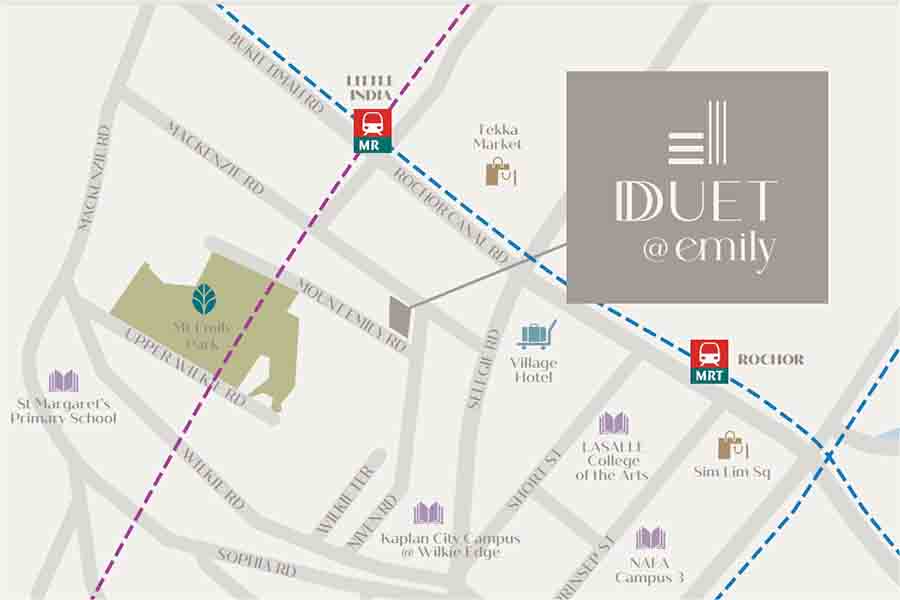
Summary
Duet @ Emily is a freehold boutique development in District 9 with only 20 units, positioned within the Mount Emily enclave near Dhoby Ghaut. It combines a conserved heritage block with a modern rear extension, creating a low-density project that stands apart from the typical high-rise launches in the Core Central Region.
From a buyer’s perspective, this is not a mass-market product. The appeal lies in its privacy, location, and architectural identity rather than facilities or scale. This also means it naturally caters to a narrower buyer pool, particularly those who value low-density living in a central location and are comfortable with the trade-offs that come with boutique developments.
As a result, Duet @ Emily sits in a very specific segment of the market — one that can work well for the right buyer profile, but is unlikely to suit those prioritising liquidity, full facilities, or conventional condo living.
Explore the Full Duet @ Emily Analysis
- Duet @ Emily Price Guide – pricing logic, market positioning, and entry analysis
- Duet @ Emily Floor Plan Analysis – layout efficiency, unit mix, and liveability considerations
- Duet @ Emily Showflat Guide – viewing strategy and buyer evaluation framework
Together, these articles provide a structured breakdown of how the project performs across pricing, layout design, buyer suitability, and long-term holding considerations.
If you’re considering this project, you might want to check how it actually compares and what most buyers tend to overlook — before deciding.
Key Details (At a Glance)
- Project Type: Freehold boutique apartment (20 units only)
- Location: Mount Emily enclave, District 9 (near Dhoby Ghaut)
- Positioning: Low-density, heritage-integrated city living
- Development Form: Conserved frontage + new rear extension
- Target Buyer: Owner-occupiers prioritising privacy, character, and central location
- Main Trade-Off: Limited facilities, boutique scale, and narrower resale pool
- Investment Profile: More suited for long-term hold than short-term exit
- Key Consideration: Mechanical parking and non-standard boutique living dynamics
Project Factsheet
| Project Detail | Information |
|---|---|
| Project Name | Duet @ Emily |
| Developer | ZACD Property Pte. Ltd. |
| Tenure | Freehold |
| District | District 9 (Rochor Planning Area) |
| Address | 2, 4 & 6 Mount Emily Road |
| Site Area | ~5,549 sqft |
| Total Units | 20 |
| Unit Types | 1BR, 2BR, 2BR Loft |
| Unit Sizes | ~409 sqft to 1,335 sqft |
| Carpark | Mechanical system (limited lots) |
| Expected TOP | 31 Dec 2028 |
A boutique freehold in District 9 — but not in the way most buyers expect
Duet @ Emily is best understood as a niche alternative to the typical District 9 offering. Instead of a high-rise development with extensive facilities, it presents a low-density, boutique living environment built around a conserved frontage and a new rear extension.
This distinction matters more than it appears. In the current market, most new launches in central locations tend to prioritise scale, visibility, and comprehensive facilities. Duet @ Emily takes the opposite approach — it trades those elements for privacy, character, and a quieter residential experience within the city.
For buyers who are used to evaluating projects based on facilities, scale, or perceived “completeness,” this can feel like a limitation. But for others, particularly those who value a more restrained and low-traffic living environment, this difference is exactly the point.
Location context: Mount Emily is central — but with a hidden trade-off
On paper, the location is straightforward: District 9, within reach of Dhoby Ghaut, Orchard Road, and the broader city centre. The surrounding area connects easily to major MRT lines and is close to a wide range of amenities, including Plaza Singapura and the Bras Basah cultural district.
However, Mount Emily itself is a slightly different environment compared to the typical flat, high-traffic parts of the city.
The enclave sits on elevated terrain, which creates a quieter, more tucked-away atmosphere. At the same time, this also introduces a practical consideration — access involves an incline, particularly when walking to and from the MRT.
This is one of those details that does not always show up clearly in marketing materials, but becomes noticeable during actual day-to-day use. For some buyers, this is negligible. For others, especially those who prioritise seamless walkability, it becomes a meaningful factor in how the location is experienced.
Project positioning: what Duet @ Emily is — and what it is not
Understanding what this project is trying to be is critical before evaluating whether it makes sense.
What it is
- A low-density, freehold development in a central location
- A project with architectural character, combining conservation and modern elements
- A relatively private residential environment with minimal foot traffic
What it is not
- A full-facility condominium with multiple pools, gyms, and shared spaces
- A high-liquidity project with frequent resale comparables
- A development optimised for short-term flipping or broad investor appeal
This distinction is important because many buyer expectations are shaped by larger projects. Applying those same expectations here often leads to a mismatch.
Amenities and facilities: sufficient, but not the focus
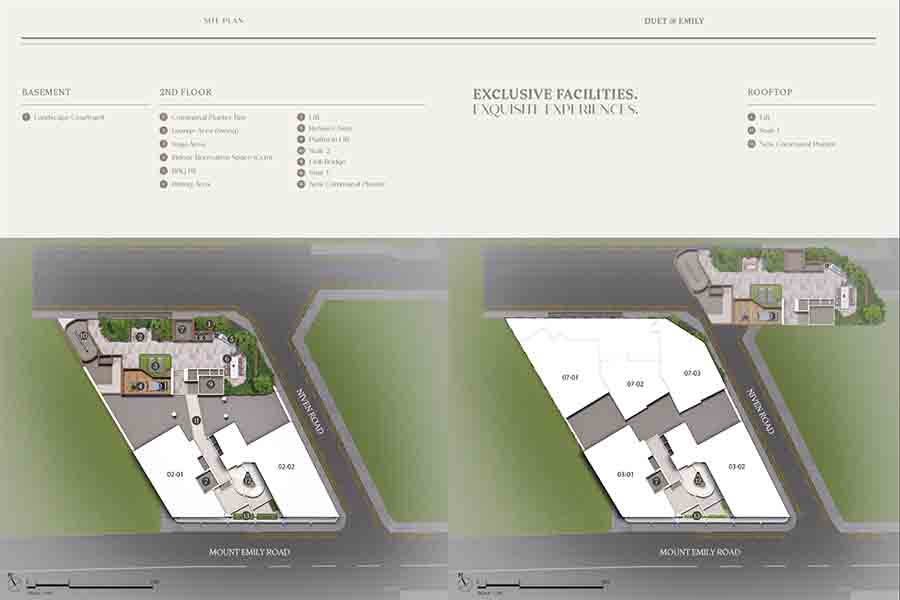
The facilities at Duet @ Emily are intentionally limited. They include essentials such as a small gym, dining areas, and a rooftop space, but do not attempt to compete with larger developments in terms of scale or variety.
This is consistent with the overall positioning of the project. With only 20 units, extensive facilities would not only be difficult to justify spatially, but would also result in higher maintenance costs per unit.
As such, the development leans towards a “functional plus lifestyle-lite” approach rather than a comprehensive condo experience.
For buyers who actively use facilities, this may feel restrictive. For those who rarely rely on shared amenities, it is unlikely to be a deciding factor.
A structural consideration most buyers will need to think about
One of the more practical aspects of this development is the parking arrangement.
With a limited number of mechanical parking lots relative to the unit count, car usage here is structurally different from larger developments with conventional carparks. This is not necessarily a dealbreaker, but it does require a level of comfort with how access and retrieval works in a boutique setup.
For buyers who rely heavily on daily car usage, this is something that should be considered carefully upfront rather than treated as a minor detail.
Buyer suitability: who this project actually makes sense for
This is where Duet @ Emily becomes clearer.
More suitable for:
- Buyers who prioritise privacy and low-density living
- Those who value a central location without high-rise density
- Individuals who appreciate architectural character and heritage integration
- Owner-occupiers planning for long-term holding rather than short-term exit
Less suitable for:
- Buyers focused on liquidity and ease of resale
- Investors looking for broad tenant appeal and yield optimisation
- Those who expect full-scale condo facilities
- Buyers who require conventional parking and high convenience in daily logistics
Takeaway
Duet @ Emily sits in a niche segment of the District 9 market that will not appeal to the majority of buyers — and that is intentional.
It is neither designed nor positioned to compete with larger, more visible developments. Instead, it offers a specific type of living environment defined by low density, architectural identity, and central proximity.
For buyers who align with these priorities, it can represent an overlooked option in a market dominated by scale-driven projects. For those who do not, the limitations will likely outweigh the benefits.
If you’re weighing city-core quantums against OCR alternatives and trying to avoid being misled by psf comparisons, the New Launch Condo Guide helps clarify which metrics matter for your holding intent
If you’re trying to decide whether a boutique project like Duet @ Emily actually fits your criteria — or how it compares against other District 9 options — you can request a structured breakdown below.
FAQs (Decision-Stage)
1. Is Duet @ Emily a good investment property?
Duet @ Emily can function as an investment, but it is not structured as a typical yield-driven or high-turnover asset. Its appeal is more niche, which naturally limits the breadth of tenant and resale demand compared to larger developments. This means investors need to be comfortable with a longer holding horizon and a more selective exit pool. It works better as a stability-focused asset rather than one designed for quick capital rotation.
2. Who is Duet @ Emily best suited for?
The project is best suited for buyers who prioritise privacy, low-density living, and a central location with character. It tends to appeal more to owner-occupiers or long-term holders rather than short-term investors. Buyers who value architectural identity and a quieter environment within the city are more likely to find it suitable. Those looking for a conventional full-facility condo experience may find it less aligned with their expectations.
3. What are the main downsides of Duet @ Emily?
The main considerations include its small scale, limited facilities, and a narrower resale market due to having only 20 units. Mechanical parking also introduces a different day-to-day experience compared to conventional developments. These are not necessarily dealbreakers, but they require buyers to be clear about their lifestyle preferences. It is a project designed for a specific segment rather than broad market appeal.
4. How does Duet @ Emily compare to other District 9 condos?
Compared to larger District 9 projects, Duet @ Emily offers greater privacy and a more distinctive architectural identity, but with fewer facilities and less transaction liquidity. Larger developments typically attract a wider buyer and tenant pool, which can support resale activity. Boutique developments like this rely more on specific buyer preferences. The comparison ultimately depends on whether a buyer values exclusivity over scale.
5. Is the Mount Emily location convenient for daily living?
The location is central and within reach of Dhoby Ghaut, Orchard Road, and surrounding amenities, making it well-connected overall. However, Mount Emily sits on elevated terrain, which introduces a slight incline when walking to and from the MRT. This may not affect all buyers, but it becomes more noticeable in daily routines. The trade-off is a quieter, more tucked-away environment within the city.
6. Will the small number of units affect resale potential?
A smaller unit count generally results in fewer transactions, which can reduce pricing transparency during resale. This may lead to longer marketing periods compared to larger developments with more active transaction volumes. However, it can also create a sense of rarity if demand exists within a specific buyer segment. Buyers should approach this as a niche asset rather than a high-liquidity one.
7. Is Duet @ Emily suitable for own stay?
For own stay, the project can work well for buyers who prefer a quieter, low-density environment in a central location. The scale of the development reduces foot traffic and creates a more private residential setting. However, those who rely heavily on facilities or prefer larger community-style living may find it limiting. Suitability depends largely on lifestyle preferences rather than just location.
8. What makes Duet @ Emily different from other boutique developments?
What sets Duet @ Emily apart is the combination of freehold tenure, a conserved heritage component, and its extremely low unit count. While there are other boutique projects in District 9, few integrate architectural character in the same way. This gives it a more distinct identity compared to purely modern developments. For some buyers, this differentiation is a key part of its appeal.
Pricing Positioning, Market Context, Exit Dynamics)
Pricing positioning: what buyers are really paying for here
For a project like Duet @ Emily, pricing cannot be evaluated purely based on absolute PSF or entry quantum.
Instead, the more relevant question is:
What is the buyer actually paying for relative to nearby alternatives?
In this case, the premium — if any — is not tied to scale, facilities, or integrated convenience. It is tied to a combination of:
- Freehold tenure in a central location
- Extremely low-density living (20 units only)
- A conserved architectural component that gives the project a distinct identity
This is a different value proposition from most new launches in the area, which are typically positioned around accessibility, convenience, or large-scale amenities.
As a result, pricing here tends to sit in a more subjective range — where perception of value depends heavily on how much the buyer values these specific traits.
How Duet @ Emily compares within the Mount Sophia / Dhoby Ghaut micro-market
Within this micro-market, there are three main reference points that buyers typically consider.
1. Boutique leasehold alternative (Sophia Meadow)
Sophia Meadow offers a slightly larger boutique development with more conventional modern positioning, but on a leasehold tenure.
From a buyer’s perspective:
- Duet @ Emily → prioritises tenure permanence + architectural identity
- Sophia Meadow → prioritises entry accessibility + modern layout consistency
This creates a clear split in buyer decision-making. Those who place stronger weight on tenure and character may lean towards Duet @ Emily, while those focused on entry positioning and flexibility may find Sophia Meadow more straightforward.
2. Freehold boutique comparison (Sophia Regency)
Sophia Regency represents a more conventional freehold boutique option with a modern design approach.
Compared to Duet @ Emily:
- Sophia Regency → more standardised layouts and positioning
- Duet @ Emily → more niche, with a stronger identity tied to conservation
This difference may not matter to all buyers, but for those specifically looking for something distinctive, the contrast becomes more meaningful.
3. Large-scale benchmark (One Sophia)
One Sophia serves as a pricing and convenience benchmark rather than a direct competitor.
It offers:
- Integrated development scale
- Immediate proximity to MRT without elevation
- Larger tenant and buyer pool
Against this, Duet @ Emily positions itself differently:
- Less about convenience maximisation
- More about living in a quieter, low-density enclave just outside the main flow
This creates a clear trade-off between accessibility and exclusivity.
URA planning direction: why this area continues to evolve
The Mount Emily / Dhoby Ghaut / Rochor corridor is part of a broader transformation towards a more integrated live-work-play environment.
Key long-term themes include:
- Stronger connection between Orchard Road, Dhoby Ghaut, and the Bras Basah cultural district
- Increased emphasis on walkability and green connectivity
- Continued development of mixed-use nodes in the surrounding areas
For Duet @ Emily, this positioning is relevant because it sits at the edge of these activity zones rather than directly within them.
This means:
- It benefits from proximity to amenities and future improvements
- While retaining a degree of separation from higher-density developments
This “edge positioning” is often overlooked, but it plays a role in how the area is experienced over time.
Buyer segmentation: who actually ends up buying here
Based on how similar projects perform, the buyer pool tends to cluster into a few key segments.
1. Owner-occupiers seeking central but low-density living
These buyers typically:
- Work in or near the city
- Want proximity without high-rise density
- Prefer a quieter residential environment
For them, Duet @ Emily offers a balance that is difficult to find in larger developments.
2. Long-term holders prioritising tenure stability
This group focuses more on:
- Freehold status
- Holding over extended periods
- Preservation of value rather than maximising yield
They are generally less concerned with short-term market fluctuations.
3. Niche investors targeting specific tenant profiles
This segment is more selective and typically targets:
- Single professionals
- Academic or arts-related tenants
- City-fringe lifestyle renters
However, compared to larger developments, the tenant pool here is narrower and less volume-driven.
Exit and liquidity: the trade-off most buyers underestimate
One of the most important considerations for boutique developments is liquidity.
With only 20 units:
- Transaction frequency is naturally low
- Comparable sales may be limited
- Resale timelines can be less predictable
This does not necessarily mean weaker outcomes, but it changes how exits work.
Instead of relying on broad demand, resale often depends on:
- Matching with the right buyer profile
- Market timing within a smaller pool
For buyers who are aware of this dynamic, it becomes part of the decision framework rather than a hidden risk.
Risk Analysis, Scenarios, and Final Assessment
Key risks to be aware of
1. Boutique scale and limited transaction volume
With only 20 units, pricing transparency over time can be limited. This may affect how future buyers and banks assess value, especially when there are fewer recent comparable transactions.
2. Practical living considerations
Mechanical parking and the compact nature of the site introduce a different day-to-day experience compared to larger developments. This is less about right or wrong, and more about whether it aligns with the buyer’s lifestyle.
3. Competition from larger developments nearby
Projects with larger scale and stronger convenience factors may attract a broader audience, especially in periods where buyers prioritise accessibility and ease of living.
4. Niche positioning
The same factors that create uniqueness — low density, conservation integration, boutique scale — also limit the overall buyer pool.
This means:
- Strong fit for some buyers
- But less flexibility across the broader market
Best-case vs base-case vs conservative scenarios
Best-case scenario
- Strong demand from niche buyers who value privacy and character
- Limited competing supply in similar format
- Stable long-term value supported by freehold tenure
Base-case scenario
- Moderate demand with selective buyer pool
- Longer holding period required for optimal exit
- Performance tied more to location stability than rapid appreciation
Conservative scenario
- Slower resale due to limited transaction activity
- Greater competition from more conventional developments
- Buyers prioritising liquidity choose alternatives
Pros and Cons
Pros
- Freehold tenure in a central location
- Extremely low-density environment
- Distinct architectural identity (conservation + modern)
- Quiet enclave within proximity to city amenities
Cons
- Limited facilities compared to larger developments
- Smaller resale and tenant pool
- Mechanical parking considerations
- Less conventional layout and living experience
Final investment outlook
Duet @ Emily is best understood as a defensive niche asset rather than a broad-market opportunity.
Its strength lies in:
- Scarcity (freehold + low unit count)
- Differentiation (heritage integration)
- Location (central but slightly removed from density)
However, its performance is unlikely to be driven by:
- Mass-market demand
- High transaction volume
- Short-term market momentum
Instead, it depends on:
The continued presence of buyers who specifically value what it offers — and are willing to accept what it does not.
FAQs
1. Is Duet @ Emily freehold?
Yes, Duet @ Emily is a freehold development, which means ownership is not limited by a lease period. This can appeal to buyers who prioritise long-term holding and legacy considerations. Freehold properties in central locations are relatively limited in supply. However, tenure alone should still be assessed alongside other factors such as liquidity and usability.
2. How many units are there in Duet @ Emily?
The development consists of only 20 residential units, making it an ultra-low-density project. This significantly reduces foot traffic and creates a more private living environment. At the same time, it also limits the number of transactions in the future. Buyers should view this as a defining characteristic rather than a neutral detail.
3. What unit types are available at Duet @ Emily?
The project offers a mix of 1-bedroom, 2-bedroom, and 2-bedroom loft units. Unit sizes range from compact layouts to larger loft configurations. This allows for some variation in buyer profiles, although the overall mix remains relatively focused. It is not designed for large family configurations.
4. Is Duet @ Emily suitable for investment?
It can be suitable for investment, but primarily for buyers with a longer-term perspective. The narrower tenant and buyer pool means it is less aligned with high-turnover strategies. Investors should be comfortable with more selective demand dynamics. It is better viewed as a niche holding rather than a volume-driven asset.
5. How is the location of Duet @ Emily?
The project is located in the Mount Emily enclave within District 9, near Dhoby Ghaut. This provides access to multiple MRT lines and key city areas. However, the elevated terrain introduces a slight incline when walking. The trade-off is a quieter and more private environment.
6. What are the main risks of buying Duet @ Emily?
The key risks relate to its boutique scale, limited transaction volume, and narrower buyer pool. These factors can influence resale timelines and pricing visibility. In addition, practical considerations such as mechanical parking should be evaluated. Buyers should approach it with a clear understanding of its niche positioning.
7. How does Duet @ Emily compare to Sophia Meadow?
Duet @ Emily offers freehold tenure and a stronger architectural identity, while Sophia Meadow provides a more conventional modern development format. The choice depends on whether the buyer prioritises tenure and uniqueness or layout consistency and accessibility. Both cater to slightly different buyer segments. Direct comparison is more about preference than superiority.
8. Is Duet @ Emily good for own stay?
It can be suitable for own stay, particularly for buyers who value privacy and a quieter environment in a central location. The low unit count contributes to a less crowded living experience. However, those who prefer extensive facilities or a larger community may find it less suitable. Lifestyle fit is a key consideration.
9. Will resale be difficult for boutique developments?
Resale can take longer compared to larger developments due to a smaller buyer pool. However, this does not automatically mean lower value outcomes. It depends on matching with the right buyer segment. Understanding this dynamic helps set realistic expectations.
10. What is the main appeal of Duet @ Emily?
Its main appeal lies in the combination of freehold tenure, low density, and architectural character. Few projects in the area offer this specific combination. This creates a distinct positioning within the market. For some buyers, this uniqueness is the primary draw.
11. Are there many facilities in Duet @ Emily?
Facilities are relatively limited compared to larger developments. They are designed to meet basic lifestyle needs rather than provide a full suite of amenities. This is consistent with the boutique nature of the project. Buyers who prioritise facilities may need to adjust expectations.
12. Is Duet @ Emily near MRT stations?
Yes, it is within reach of Dhoby Ghaut and nearby MRT stations, which provide connectivity across multiple lines. This supports accessibility to key parts of the city. However, the walking route includes an incline due to the terrain. This is a practical consideration for daily commuting.
13. What kind of tenants are likely for this project?
The tenant profile is likely to consist of single professionals or individuals working in nearby city areas. Proximity to educational institutions may also attract certain niche segments. However, the tenant pool is more selective compared to larger developments. This aligns with its boutique positioning.
14. Is Duet @ Emily a rare type of development?
Yes, developments combining freehold tenure, conservation elements, and such a low unit count are relatively uncommon. This contributes to its distinct identity within the market. However, rarity alone does not determine performance. It must still align with buyer demand.
15. Should buyers be concerned about mechanical parking?
Mechanical parking is not inherently a negative feature, but it changes how daily parking is experienced. Buyers should be comfortable with retrieval processes and system usage. It is best assessed during actual viewing rather than assumed. For some buyers, it is a non-issue, while for others it is a key factor.
16. What is the overall verdict on Duet @ Emily?
Duet @ Emily is a niche, low-density freehold development that will not suit every buyer. Its appeal is specific and depends on individual priorities such as privacy, character, and location. It is best approached as a long-term holding rather than a short-term opportunity. For the right buyer, it can make sense within a broader strategy.
If you want a structured breakdown of how Duet @ Emily compares against other District 9 options — including which types of units tend to make more sense based on your situation — you can indicate your preferences below.