
Summary
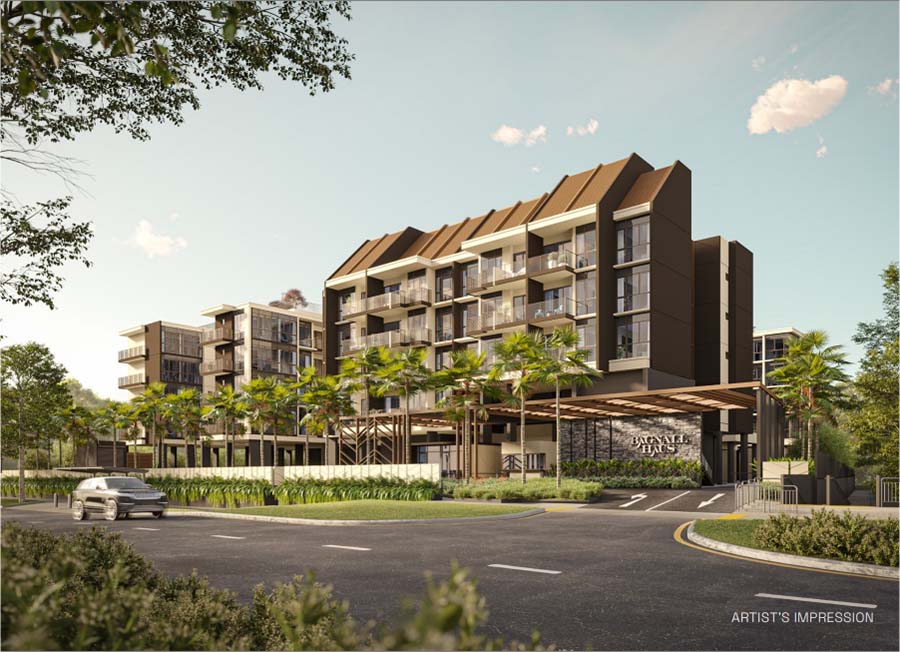
Bagnall Haus is a freehold, low-density condominium along Upper East Coast Road in District 16, positioned as a boutique, MRT-adjacent development rather than a facilities-led family project. Its core value lies in tenure permanence, proximity to the upcoming Sungei Bedok MRT interchange, and the limited supply of new private housing within the enclave.
The project is intentionally selective. Its boutique scale limits facilities and parking provision, while pricing behaviour reflects a narrowing buyer pool as absolute quantum rises. It does not compete on lifestyle breadth or short-term price momentum.
Bagnall Haus works best for buyers prioritising long-term defensibility, MRT access, and tenure security. It is less suited for those seeking integrated convenience, extensive facilities, or high-liquidity exit conditions.
In practical terms, this is a filtering project. Alignment with holding horizon and lifestyle expectations matters more than entry timing.
Bagnall Haus Pricing, PSF and Investment Positioning (Quick Answers)
What is the price of Bagnall Haus?
Bagnall Haus pricing is positioned within the OCR range but reflects a premium for freehold tenure and MRT proximity. Buyers are effectively paying for long-term defensibility and transport access rather than integrated convenience or large-scale facilities. Absolute quantum becomes the primary decision factor, especially for larger units.
What is the PSF of Bagnall Haus?
The PSF of Bagnall Haus is competitive against newer OCR developments but typically higher than older resale projects. However, PSF alone is not the main decision driver due to its boutique nature and limited unit count. Buyers tend to evaluate total entry price rather than purely PSF comparison.
Is Bagnall Haus worth buying?
Bagnall Haus makes sense for buyers prioritising freehold ownership, MRT access, and long-term holding. It is less suitable for buyers focused on lifestyle facilities or short-term price appreciation. Suitability depends on whether the buyer values structural defensibility over convenience.
Is Bagnall Haus a good investment?
Bagnall Haus functions as a defensive investment rather than a growth-driven asset. Rental demand is supported by MRT connectivity, but capital appreciation is likely to be moderate. It is more aligned with long-horizon investors than yield-focused buyers.
Explore the Full Bagnall Haus Analysis
This article is part of the full Bagnall Haus cluster:
- Bagnall Haus Price Guide – pricing structure, market positioning, and buyer entry analysis
- Bagnall Haus Floor Plan Analysis – layout efficiency, unit mix, and stack considerations
- Bagnall Haus Showflat Guide – viewing strategy, location context, and buyer evaluation framework
Together, these articles provide a structured analysis of the project’s positioning, pricing framework, layout strategy, and viewing considerations.
If you’re considering this project, you might want to check how it actually compares and what most buyers tend to overlook — before deciding.
Key Details (At a Glance)
-
Freehold | Boutique, low-density residential-led development
-
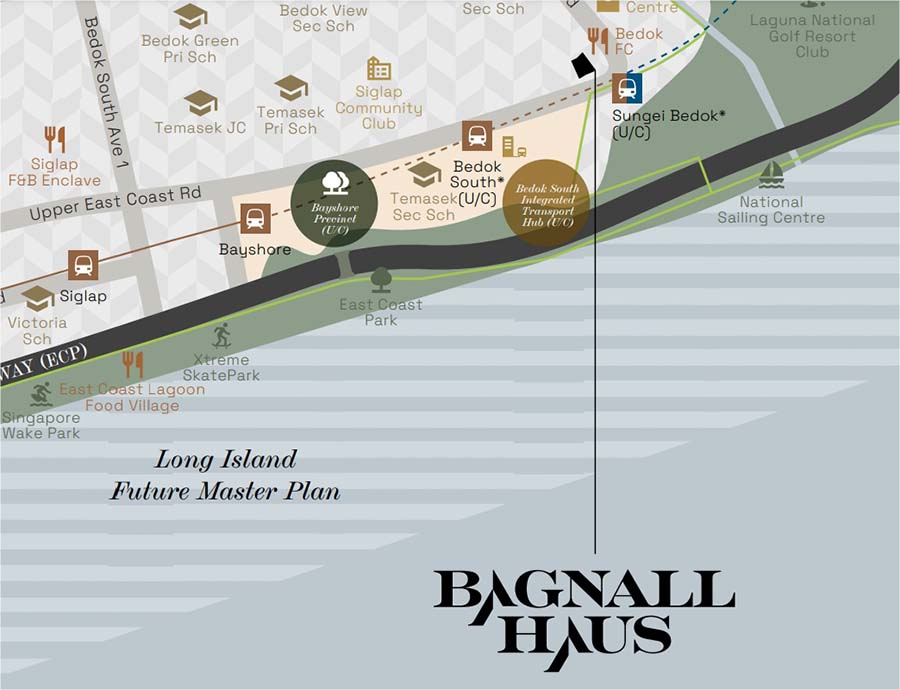
811–815 Upper East Coast Road, District 16 (Bedok Planning Area)
-
Outside Central Region (OCR)
-
Walkable access to Sungei Bedok MRT (TEL / DTL interchange)
-
Positioned for long-horizon owner-occupiers and asset-preservation buyers
Project Factsheet
| Item | Details |
|---|---|
| Project Name | Bagnall Haus |
| Location | 811, 813 & 815 Upper East Coast Road |
| District / Region | District 16 / OCR (Bedok Planning Area) |
| Tenure | Freehold |
| Developer | Roxy-Pacific Holdings |
| Site Type | En-bloc redevelopment (former Bagnall Court) |
| Development Type | Residential-led with limited commercial |
| Site Area | 6,906.1 sqm |
| Plot Ratio | 1.4 |
| Total Residential Units | 113 |
| Retail Units | 2 |
| Nearest MRT | Sungei Bedok MRT (TEL / DTL Interchange), walkable |
| Launch Status | Launched |
| Expected TOP | 31 December 2028 |
Location Context: Upper East Coast Today vs Long-Term
Upper East Coast occupies a distinct position within District 16. Unlike Bedok Central or Tampines, it is not structured around a dense commercial core or town-centre convenience. Instead, it is characterised by low-rise housing, institutional uses, and arterial road connectivity, with daily amenities accessed through short walks or short drives rather than integrated retail podiums.
In the near term, the defining anchor is Sungei Bedok MRT, which will serve as a dual-line interchange on the Thomson-East Coast Line and Downtown Line. This materially changes the transport profile of the area, shifting it from car-reliant to transit-capable for city-bound and airport-bound commuters. For Bagnall Haus, this MRT adjacency is not a peripheral benefit but a core structural pillar.
Over the longer term, the Upper East Coast corridor sits adjacent to broader eastern transformation narratives, including the Bayshore precinct and long-range coastal planning initiatives. However, these are district-level evolutions rather than site-specific catalysts. Buyers should treat them as background reinforcement rather than near-term value triggers.
Development Character: Why Boutique Scale Shapes the Experience
Bagnall Haus is deliberately compact.
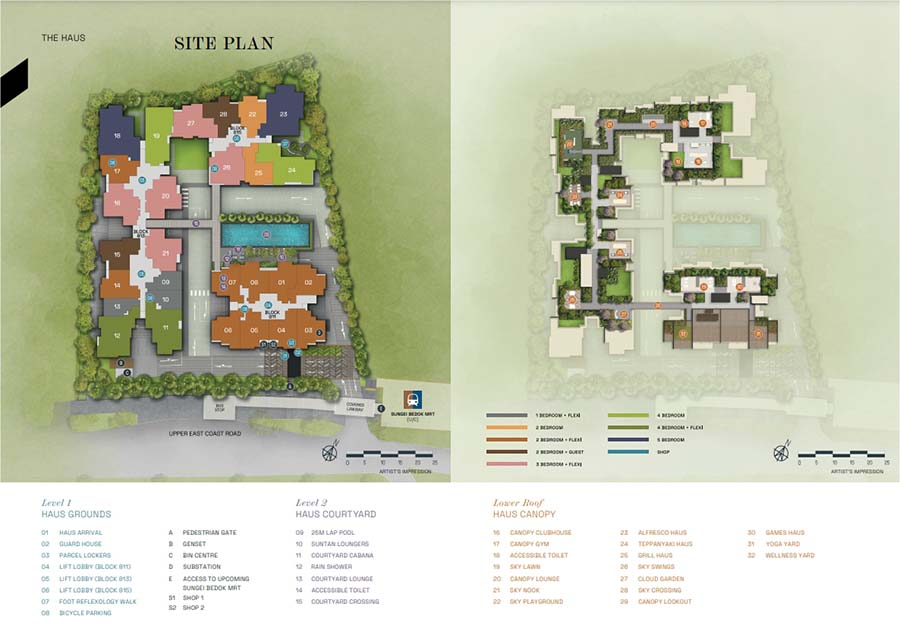
With 113 residential units spread across three low-rise blocks capped at five storeys, the development sits well below the density of most new OCR launches. This translates into quieter common areas, lower resident traffic, and a more controlled living environment, but also limits the scale and diversity of on-site facilities.
The site’s rectangular geometry and absence of a basement carpark result in surface parking and a carpark-to-unit ratio below 1:1. This is not an incidental detail; it materially affects day-to-day convenience and future resale perception in a suburban district where car ownership remains common.
Facilities are functional rather than expansive, reinforcing the project’s residential focus instead of creating a resort-style setting. This aligns with the project’s positioning but narrows its appeal to buyers who are comfortable trading amenity breadth for tenure and location logic.
Amenities & Facilities: Bagnall Haus Condo Facilities and Living Experience
Bagnall Haus is not positioned as a facilities-heavy development. Instead, its amenities are designed to support low-density residential living, with a focus on functionality rather than large-scale lifestyle programming.
Core Facilities
- Swimming pool and leisure deck supporting basic recreational use
- Landscaped communal spaces integrated across the site
- Gymnasium and fitness areas for daily usage
- Function spaces for small-group use rather than large events
Facility Positioning
Unlike larger suburban condominiums, Bagnall Haus does not emphasise:
- Extensive playground zones
- Multiple themed pools
- Large clubhouse environments
Instead, the facilities reflect:
- Controlled density and quieter living
- Lower resident traffic within shared spaces
- Practical usage rather than lifestyle variety
What Buyers Should Evaluate
When assessing Bagnall Haus amenities, buyers typically consider:
- Whether facility scale matches daily lifestyle needs
- The trade-off between privacy and amenity breadth
- How the boutique environment aligns with long-term own-stay expectations
This positions the development as a residential-first project, rather than a lifestyle-led condominium.
Freehold Positioning: Stability Over Optionality
Freehold tenure is central to Bagnall Haus’s value proposition.
For buyers planning to hold across multiple decades, freehold removes lease decay considerations and provides long-term optionality that 99-year OCR developments cannot replicate. This is particularly relevant in a district where future private supply is expected to be predominantly leasehold.
However, freehold does not override structural constraints. Boutique developments typically experience lower transaction volumes, and resale liquidity is more episodic than continuous. Exit outcomes depend heavily on finding a buyer aligned with the same priorities, rather than relying on broad market momentum.
As such, freehold here functions as a stabiliser rather than a performance accelerator. It supports downside protection over time but does not guarantee faster exits or superior short-term pricing.
Pricing Behaviour: Early Acceptance, Later Resistance
At launch, Bagnall Haus attracted attention for offering freehold tenure at price points comparable to or below several leasehold OCR peers. Early buyers framed the decision around replacement cost, MRT proximity, and long-term defensibility rather than immediate value comparisons.
As the sales cycle progressed, buyer behaviour shifted. Resistance increased as absolute quantum rose for larger units, particularly four- and five-bedroom configurations. At these levels, buyers begin benchmarking not just tenure, but lifestyle completeness, parking adequacy, and resale flexibility.
This is a familiar pattern for boutique developments. Sales do not stall due to mispricing alone, but because the buyer pool narrows to those who explicitly prioritise tenure security and MRT adjacency over scale and convenience.
What Bagnall Haus Is — and Is Not
What It Is
A low-density freehold residential development
MRT-adjacent with walkable access to a dual-line interchange
Structured for long-horizon ownership and asset preservation
Suited for buyers comfortable with boutique-scale living
What It Is Not
Not a lifestyle-led or amenity-rich family condominium
Not a car-optimised development with surplus parking
Not a high-liquidity or momentum-driven investment vehicle
Not designed for short-term trading or flipping
Understanding this distinction early prevents expectation mismatch.
Buyer Suitability: Who This Project Works For
Most Suitable For
Owner-occupiers prioritising MRT access and tenure permanence
Right-sizers from the Upper East Coast landed enclave
Parents purchasing for children with long holding horizons
Investors seeking defensive rental demand near transport nodes
Least Suitable For
Families requiring extensive facilities and parking abundance
Buyers sensitive to road exposure and surface parking layouts
Short-term investors seeking rapid repricing
Lifestyle-driven buyers comparing integrated developments
Buyers comparing Bagnall Haus against other upcoming launches may find it helpful to frame their decision using the New Launch Condo Guide, which outlines how pricing logic, buyer intent, and holding horizon differ across project types.
Key Considerations Before Buying
Before proceeding, buyers should be clear on three structural factors:
– Whether MRT proximity meaningfully offsets parking limitations in daily use
– Whether boutique scale aligns with lifestyle expectations over time
– Whether holding horizon is long enough to benefit from freehold tenure
Misalignment in any of these areas tends to surface later rather than immediately.
Takeaway
It rewards buyers who value freehold tenure, MRT proximity, and controlled density, and filters out those expecting scale, parking abundance, or fast resale optionality. For aligned buyers, it offers long-term defensibility in a supply-constrained enclave.
Clarity of intent matters more than timing.
If you’re seriously considering this project, it’s worth checking how it actually compares and what most buyers tend to overlook — before deciding.
FAQs (Decision-Stage)
1) Is Bagnall Haus overpriced for an OCR project?
Bagnall Haus may appear expensive when compared purely on OCR psf benchmarks. However, pricing reflects freehold tenure and walkable access to a dual-line MRT interchange, which are not typical for most OCR projects. Buyers who prioritise long-term ownership and transport access tend to find the pricing more justifiable. The project is less suitable for buyers focused purely on price efficiency.
2) Does the boutique scale limit long-term resale prospects?
Yes, but mainly in terms of speed rather than outright value destruction. Boutique projects usually transact less often, which means fewer pricing references and a smaller resale pool at any given moment. That can lengthen exit timelines, especially in slower market phases or for larger, higher-quantum units. Buyers should therefore treat resale liquidity here as episodic and selective, not broad-based and constant.
3) How significant is the carpark shortfall in practice?
It is a real structural consideration, not a cosmetic issue. In District 16, many owner-occupiers still assume a car remains part of daily life, so a sub-1:1 parking ratio can affect convenience, household planning, and later resale conversations. This matters more for larger households and buyers who compare Bagnall Haus against more car-friendly suburban projects. Anyone seriously considering the project should treat parking practicality as part of the purchase decision, not as an afterthought.
4) Is MRT proximity enough to offset limited facilities?
For some buyers, yes — but only if transport efficiency is genuinely one of their top priorities. Walkable access to Sungei Bedok MRT meaningfully improves commuting flexibility and supports car-lite living more than many suburban projects can. However, MRT convenience does not replace the lifestyle value of larger pool decks, broader family facilities, or integrated retail convenience. The offset works best for buyers who care more about movement and access than resort-style breadth.
5) Who is the ideal owner-occupier for Bagnall Haus?
The most natural owner-occupier is someone who values quiet living, lower density, and long-term tenure security over visible lifestyle scale. This includes right-sizers, east-side households wanting to remain within the broader enclave, and buyers who place a premium on MRT access without wanting a much larger mass-market environment. These buyers usually accept the project’s narrower positioning because it matches how they intend to live. Problems tend to arise when buyers want boutique privacy but still expect large-project convenience.
6) How resilient is rental demand for this project?
Rental demand should be reasonably defensible because MRT accessibility remains one of the clearest tenant filters in the East. Proximity to Changi-side employment nodes and the broader eastern corridor also supports practical leasing interest. That said, higher acquisition cost limits yield appeal, so this is not the kind of project investors should frame as a pure income-maximisation play. It is better understood as a defensive, transport-supported rental hold than an aggressive cashflow asset.
7) Does freehold materially improve long-term outcomes?
Freehold matters most over longer holding periods because it removes lease-decay pressure that eventually affects 99-year assets. That improves ownership optionality and can strengthen long-term value defensibility, especially in an enclave where future private supply is unlikely to be predominantly freehold. However, freehold does not solve every issue; it does not eliminate liquidity constraints, pricing sensitivity, or practical buyer objections such as parking. It should therefore be viewed as a structural stabiliser, not an automatic performance guarantee.
8) Who should avoid Bagnall Haus altogether?
Buyers looking for extensive facilities, abundant parking, or short-cycle upside should usually eliminate Bagnall Haus early. The project is also poorly matched to anyone who wants an integrated lifestyle proposition or expects resale to be broad, fast, and frictionless. In other words, it is not a bad project — it is simply a selective one. The main risk is not buying wrongly, but buying with the wrong expectations.
PRICING LOGIC, PLANNING CONTEXT & BUYER SEGMENTATION
Summary
This section explains how pricing behaves in boutique freehold projects with MRT adjacency, why resistance typically appears beyond certain quantum thresholds, how Bedok’s planning direction frames long-horizon demand, and which buyer segments are structurally aligned versus misaligned with Bagnall Haus.
Pricing Logic: Scarcity Acceptance First, Trade-Off Scrutiny Later
Bagnall Haus follows a familiar boutique pricing pattern. Early acceptance is driven by scarcity framing rather than value optics. Buyers respond to the combination of freehold tenure, walkable MRT access, and the lack of comparable new private supply in the immediate enclave. The decision is anchored on optionality rather than discount.
As the sales cycle progresses, buyer behaviour shifts. Attention moves away from tenure and towards ownership trade-offs: parking adequacy, facility scale, unit practicality, and resale liquidity. This transition is not a sign of weak pricing discipline; it reflects a narrowing buyer pool that evaluates the project on lived experience rather than headline attributes.
Resistance becomes most visible at higher absolute quanta. At this stage, buyers are no longer asking whether the project is defensible, but whether the compromises remain acceptable relative to their lifestyle expectations and holding horizon. Boutique projects do not stall; they become selective.
Why Absolute Quantum Matters More Than PSF
In boutique developments, price sensitivity is driven less by per-square-foot metrics and more by absolute commitment. Once purchase decisions move beyond certain quantum bands, buyers widen their comparison universe and become more demanding on convenience, parking, and scale.
Smaller and mid-sized units tend to clear more consistently because they sit within a broader affordability band and appeal to both owner-occupiers and long-hold investors. Larger configurations face slower decision cycles because substitutes increase and tolerance for friction decreases. This is a structural reality, not a pricing error.
The implication for decision-stage buyers is simple: resale ease is shaped more by who can afford the unit comfortably than by headline pricing narratives.
Planning Context: Demand Reinforcement, Not Event-Driven Uplift
The Bedok Planning Area is structured for gradual strengthening rather than abrupt transformation. Transport connectivity improvements and incremental residential intensification expand the long-term buyer base, particularly among households seeking to remain in the eastern region.
For Bagnall Haus, the planning relevance lies in demand continuity rather than price acceleration. A larger surrounding population and improved mobility increase the pool of future buyers who value familiarity, MRT access, and tenure permanence. This supports long-horizon ownership logic without relying on discrete redevelopment milestones.
Buyers should interpret planning direction as a stabilising backdrop. It reinforces the project’s relevance over time but does not override its boutique constraints or guarantee repricing.
Buyer Segmentation: Who Converts — and Who Does Not
Primary Segment: East-side Owner-Occupiers
These buyers prioritise staying within District 16 and nearby enclaves. MRT access reduces daily friction, and boutique density is often perceived as a benefit rather than a drawback. Their focus is long-term liveability, not transactional speed.
Secondary Segment: Right-Sizers from Landed Homes
Privacy, security, and reduced maintenance are key motivators. Facility breadth is less important than quiet living and tenure clarity. For this group, boutique scale aligns naturally with lifestyle downsizing.
Tertiary Segment: Long-Horizon Investors
This segment values defensibility over yield optimisation. MRT proximity supports baseline rental demand, while freehold tenure provides long-term optionality. Liquidity expectations are measured rather than aggressive.
Low-Conversion Segment: Lifestyle-Led Families
Families seeking extensive amenities, abundant parking, and playground-driven environments tend to hesitate. For them, the project feels constrained rather than focused, which explains selective conversion at larger unit types.
EXIT, LIQUIDITY, RISK SCENARIOS, PROS & CONS + 16 MAX-AUTHORITY FAQs
Summary
This section evaluates exit behaviour, liquidity characteristics, and structural risks inherent in boutique freehold developments, and explains how buyers can reduce regret by aligning unit choice, holding horizon, and expectations.
Exit Behaviour: Liquidity Is Episodic, Not Absent
Bagnall Haus is not illiquid, but it does not trade continuously. With a limited number of units, resale activity tends to occur in clusters rather than as a steady stream. Transaction outcomes depend more on unit attributes and market sentiment alignment than on project-wide momentum.
Liquidity is strongest for units that appeal to the widest buyer base: practical layouts, manageable quanta, and minimal daily friction. Larger units and those with perceived compromises require more patience, particularly during cautious market phases.
The risk at exit is rarely sharp repricing. It is time risk — the need to wait for the right buyer.
MRT Proximity: A Durability Factor, Not a Cure-All
Walkable MRT access materially widens the buyer pool by supporting car-lite living and rental viability. It also helps the project remain competitive when newer supply emerges elsewhere.
However, MRT proximity does not erase all constraints. Buyers still evaluate parking convenience, facilities, and overall living experience. MRT access ensures relevance, not speed.
Structural Constraints Buyers Must Acknowledge
1) Sub-1:1 Carpark Ratio
In OCR locations, parking is often treated as a default expectation. A shortfall narrows demand among multi-car households and can resurface as a negotiation point at resale. This is a permanent characteristic, not a temporary inconvenience.
2) Boutique Scale and Facility Limits
Smaller developments offer privacy but fewer lifestyle anchors. During resale, some buyers will gravitate toward larger developments with more visible amenities, even if tenure differs. This shapes buyer filtering rather than outright rejection.
3) Absolute Quantum Sensitivity
As unit prices rise, buyer expectations increase disproportionately. Higher-quantum units face more substitutes and slower decision cycles, making patience a necessary part of the exit strategy.
4) Benchmark Clarity Risk
Fewer transactions mean wider valuation ranges. This can lead to conservative valuations or longer negotiations, especially in cautious markets.
Time-Phased Exit Expectations
Early Occupation Phase
New-build condition and warranty comfort support demand. The narrative is easiest to communicate: freehold, boutique, MRT-adjacent.
Mid-Cycle Environment
Buyer scrutiny intensifies as newer options appear. Decisions become more comparative, and unit-level attributes matter more than project positioning.
Long-Horizon Holding
Tenure permanence becomes more salient as leasehold alternatives age. Value preservation tends to dominate over speed of exit.
Pros and Cons (Decision-Stage Framing)
Pros
-
Freehold tenure supports long-horizon value defensibility
-
Walkable MRT access enhances daily usability and rental baseline
-
Low density appeals to privacy-oriented buyers
-
Limited new supply in the immediate enclave sustains consideration
Cons
-
Sub-1:1 parking ratio can constrain family demand
-
Limited facilities reduce lifestyle differentiation
-
Boutique transaction volume lengthens exit timelines
-
Larger units face higher resistance due to quantum sensitivity
FAQs
1) What are the main risks of buying Bagnall Haus?
The main risks include limited parking provision, boutique scale constraints, and slower resale liquidity. These are structural characteristics rather than temporary issues. Buyers must be comfortable with longer holding periods and selective exit conditions. Expectation mismatch is the biggest risk.
2) How does Bagnall Haus compare to other OCR new launches?
Bagnall Haus differs from typical OCR launches by offering freehold tenure and MRT proximity in a low-density format. Most OCR projects focus on scale, facilities, and integrated convenience. Buyers are choosing between tenure security and lifestyle breadth. The comparison is structural rather than purely pricing-based.
3) Will Bagnall Haus face resale competition in the future?
Yes, particularly from newer developments with more facilities or better parking ratios. However, its freehold status and MRT access provide differentiation. Competition will depend on buyer priorities rather than direct substitutes. Not all buyers evaluate projects on the same criteria.
4) Is Bagnall Haus suitable for families?
It can work for smaller families prioritising MRT access and quiet living. However, larger families may find the limited facilities and parking constraints restrictive. It is less suited for buyers expecting a full lifestyle environment. Suitability depends on lifestyle needs.
5) How important is MRT proximity for this project?
MRT proximity is one of the strongest demand drivers for Bagnall Haus. It supports both own-stay convenience and rental demand. However, it does not fully offset limitations such as parking or facilities. It should be seen as a key advantage, not a complete solution.
6) Are smaller units more liquid?
Yes. Smaller units typically have a broader buyer pool due to lower quantum and rental flexibility. They are generally easier to exit compared to larger units. Liquidity varies significantly by unit type. This is a structural pattern across most developments.
7) Are larger units worth considering?
Larger units make sense for long-term own-stay buyers who prioritise space and privacy. However, they come with higher absolute quantum and a narrower resale pool. Buyers should be prepared for longer exit timelines. These units are not suited for short-term investment strategies.
8) How does freehold impact long-term value?
Freehold tenure removes lease decay, which supports long-term value stability. It provides more flexibility for holding across decades. However, it does not guarantee capital appreciation or liquidity. It should be viewed as a defensive advantage.
9) Is Bagnall Haus good for rental income?
Rental demand is supported by MRT connectivity and proximity to eastern employment nodes. However, higher purchase prices limit rental yield. It is not ideal for yield-focused investors. It is better suited for long-term rental holding.
10) How does parking affect buyer demand?
Parking availability is a key consideration in OCR locations. A lower parking ratio can reduce appeal for multi-car households. It may also affect resale discussions. Buyers should factor this into their decision early.
11) Is Bagnall Haus a high-liquidity project?
No. Liquidity is selective rather than broad. Transactions may take longer compared to larger developments. Exit depends on finding the right buyer profile. This is typical for boutique projects.
12) How does unit selection affect value?
Unit selection plays a significant role in both liveability and resale. Factors such as facing, noise exposure, and layout efficiency matter. Not all units perform equally within the same project. Buyers should evaluate carefully.
13) Will future developments affect pricing?
Future developments may introduce competition, especially those with more facilities or better convenience. However, Bagnall Haus retains differentiation through tenure and MRT access. Impact depends on market conditions and buyer preferences.
14) Is Bagnall Haus suitable for first-time buyers?
It can be suitable for first-time buyers prioritising MRT access and long-term ownership. However, pricing and lifestyle trade-offs must be considered. It is not a typical entry-level project. Buyers must be clear on priorities.
15) What type of buyer is best suited for this project?
The project is best suited for owner-occupiers and long-horizon investors. Buyers who value tenure, MRT access, and lower density are more aligned. It is less suitable for lifestyle-driven or short-term buyers.
16) Should buyers wait or enter early?
Timing is less critical than alignment for this project. Entry decisions should be based on long-term suitability rather than short-term pricing movements. Waiting does not eliminate structural trade-offs. Clarity of intent is more important.
If you prefer a more structured walkthrough, you can leave your details below and we’ll follow up with you.