
Summary
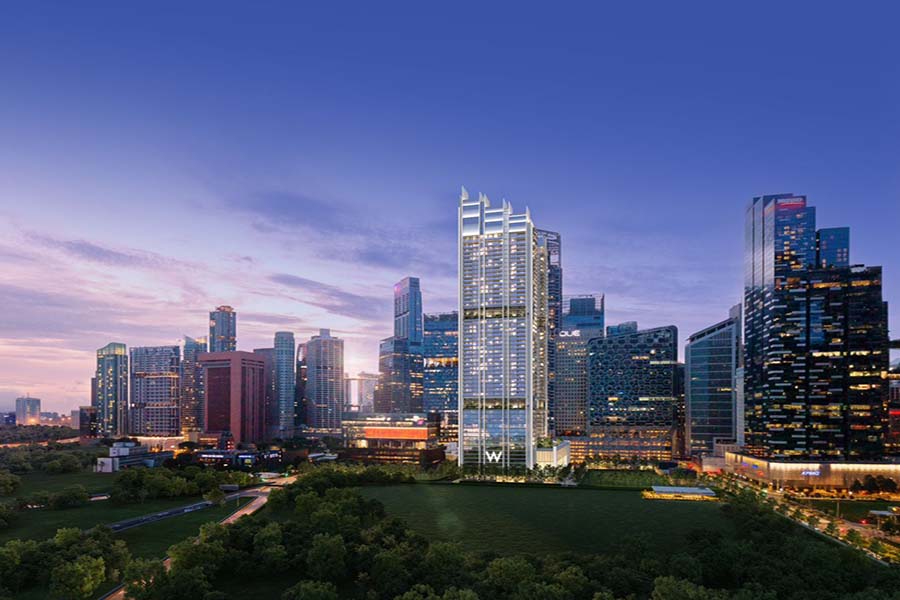
W Residences Marina View Singapore is a 99-year leasehold branded residential development located at Marina View within Singapore’s Downtown Core. Developed by IOI Properties Group in partnership with Marriott International under the W brand, the project sits within a high-density, mixed-use precinct shaped by long-term URA planning for Marina Bay and the Greater Southern Waterfront corridor.
Unlike conventional CCR developments, W Residences is positioned around brand identity, service expectations, and address symbolism, rather than pure tenure strength or lifestyle breadth. Buyers are effectively paying for branded living in a landmark CBD location, while accepting structural trade-offs such as 99-year tenure, high density, elevated maintenance costs, and a narrower resale buyer pool.
This review assesses W Residences Marina View Singapore from a decision-stage perspective, focusing on who the project realistically works for, who should eliminate it early, and how its positioning differs from both freehold CCR homes and non-branded city residences.
W Residences Marina View Singapore is a 99-year branded residence in the Downtown Core, primarily suited for high-net-worth buyers who value brand affiliation, CBD address prestige, and long-term urban positioning over tenure longevity or rental yield. It is not designed for value-driven buyers or those seeking flexible exit liquidity.
W Residences Marina View Singapore is a 99-year branded CBD residence designed for buyers prioritising brand identity and Downtown Core presence, not for those seeking tenure strength, yield optimisation, or short-cycle resale flexibility.
For buyers assessing whether W Residences Marina View aligns with their financing comfort, holding horizon, and exit assumptions, a structured project breakdown covering entry positioning, pricing logic, stack considerations, and buyer suitability may provide additional clarity before arranging any viewing.
Key Details (at a glance)
99-year leasehold | Downtown Core (CCR)
Branded residence under the W Hotels & Resorts name
High-density mixed-use development at Marina View
Primarily lifestyle- and brand-driven buyer profile
Project Factsheet
| Item | Details |
|---|---|
| Project Name | W Residences Marina View Singapore |
| Location | 22 Marina View, Singapore |
| District / Region | District 1 (Downtown Core / Core Central Region) |
| Tenure | 99-year leasehold |
| Developer | IOI Properties Group |
| Site Type | GLS (Government Land Sales) |
| Development Type | Branded Residences / Integrated Mixed-Use Development (W Hotel & Residences) |
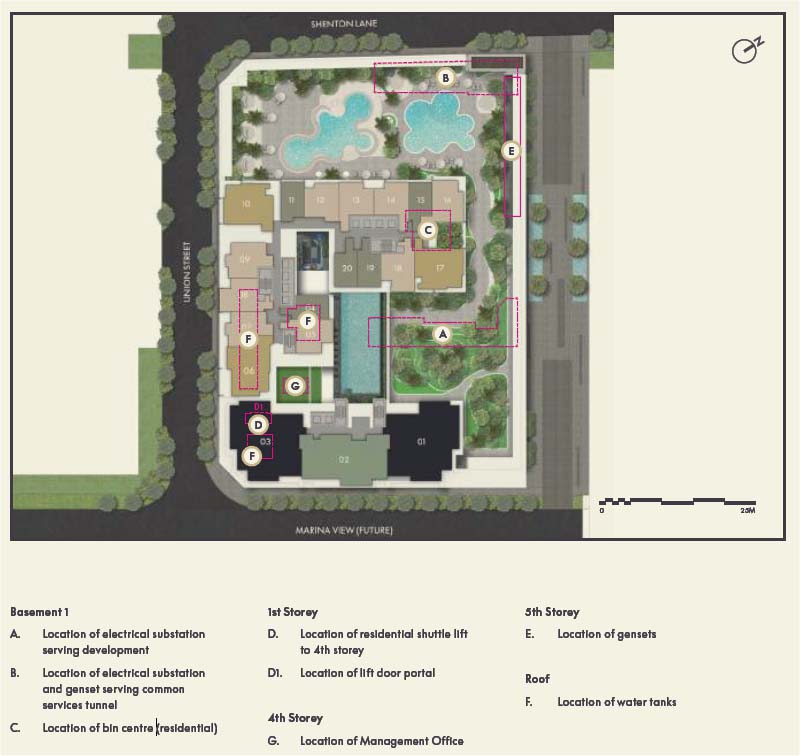
| Site Area | Approximately 7,817.6 sqm |
| Plot Ratio | 13.0 |
| Total Units | 683 residential units |
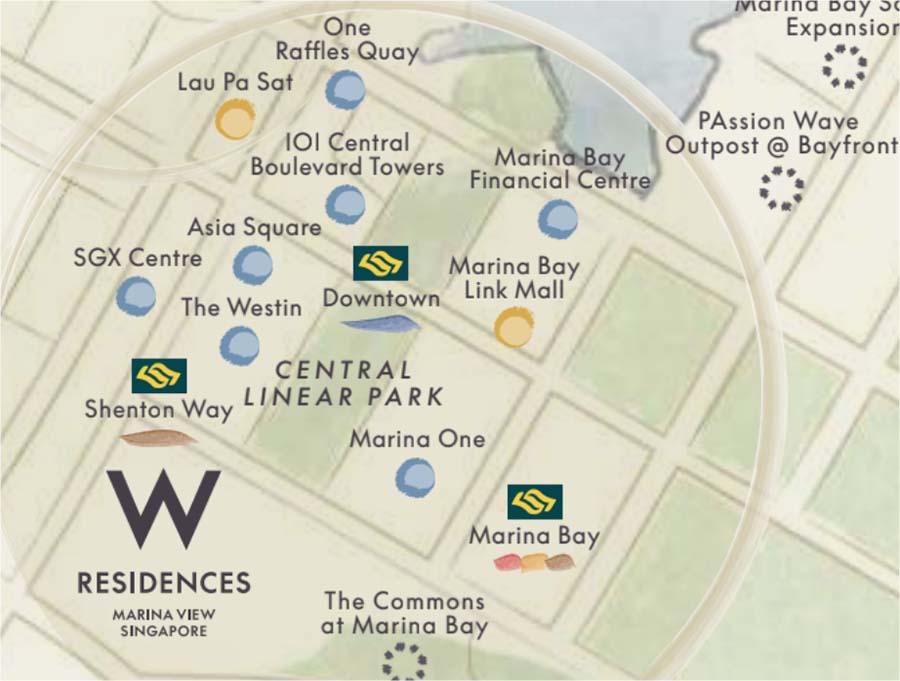
| Nearest MRT | Shenton Way MRT (TE19) |
| Launch Status | Launched (July 2025) |
| Expected TOP | 31 March 2029 (estimated) |
Location Context: Marina View Within the Downtown Core
W Residences Marina View Singapore sits within Marina View, a precinct shaped less by residential tradition and more by commercial density, skyline symbolism, and long-term urban planning. Unlike Orchard or River Valley, Marina View’s appeal is not neighbourhood familiarity, but proximity to the financial district and its role in Singapore’s global city narrative.
For buyers, this translates into address prestige and convenience, but also a more urban, vertical living environment. Day-to-day liveability is defined by connectivity, security, and services rather than greenery, schools, or community intimacy.
Buyers comparing W Residences Marina View Singapore against other prime developments may find it helpful to contextualise its positioning within the broader Core Central Region (CCR) new launch landscape, where tenure, density, and buyer intent differ materially across projects.
Brand-Led Positioning: What the W Name Really Means
The W brand is central to this project’s value proposition.
Buyers are effectively purchasing:
-
Brand recognition and hospitality-style positioning
-
Service expectations aligned with luxury hotels
-
A globally recognisable address in the CBD
However, branding does not override fundamentals. It does not:
-
Change tenure length
-
Guarantee resale demand
-
Improve rental yields structurally
Brand value is experiential and symbolic, not financial by default.
Density & Design Reality: Urban Living With Trade-Offs
As a Downtown Core project, W Residences operates within high plot ratios and dense surroundings.
This brings:
-
Immediate access to transport and employment nodes
-
Strong urban connectivity
But also:
-
Limited spatial openness
-
Less residential calm compared to traditional CCR estates
-
Greater sensitivity to noise, traffic, and maintenance considerations
This density is a feature, not a flaw — but only for the right buyer.
What W Residences Is — and Is Not
What it is
-
A branded residential tower in the CBD
-
A lifestyle and identity-driven home
-
A long-term urban holding aligned with Marina Bay planning
What it is not
-
A value-driven CCR purchase
-
A tenure-focused asset
-
A yield-optimised rental play
-
A low-density or family-centric home

Buyer Suitability: Who This Project Works For
1. Brand-Conscious High-Net-Worth Buyers
Buyers who value global branding, service expectations, and symbolic addresses over tenure or price efficiency.
2. CBD-Centric Owner-Occupiers
Individuals whose work and lifestyle are anchored in the Downtown Core and prioritise proximity above all else.
3. Asset Collectors With Long Holding Horizons
Buyers comfortable holding niche assets without reliance on fast resale liquidity.
Buyers Who Should Eliminate W Residences Early
This project should be eliminated early by buyers who:
-
Prioritise freehold or long lease security
-
Expect strong rental yields
-
Are sensitive to monthly maintenance costs
-
Rely on broad resale buyer pools
These constraints are structural and cannot be “fixed” by unit selection.
Buyers comparing W Residences Marina View Singapore against other upcoming launches may find it helpful to frame their decision using the New Launch Condo Guide, which outlines how pricing logic, buyer intent, and holding horizon differ across project type
Takeaway
W Residences Marina View Singapore works best for brand-driven buyers seeking a long-term CBD address and lifestyle symbolism, but performs poorly for buyers prioritising tenure strength, value efficiency, or flexible exit options.
If W Residences Marina View is on your shortlist and being compared against nearby alternatives, a structured review of capital commitment differences, downside exposure scenarios, liquidity positioning, and realistic exit pool dynamics may help clarify the decision framework before any commitment is made.
FAQs (Decision-Stage)
1) Is W Residences Marina View Singapore a good investment property?
W Residences Marina View Singapore is not structured as a yield-driven or short-term investment. Its high entry pricing, 99-year leasehold tenure, and branded premium compress rental yields and limit short-cycle upside. Buyers should approach it as a long-horizon lifestyle or asset-holding choice rather than a return-optimised investment.
2) Who is the typical buyer profile for this project?
The project primarily attracts brand-conscious, high-net-worth buyers who value CBD address symbolism and hotel-style positioning. These buyers tend to prioritise identity, convenience, and long-term city exposure over tenure longevity or price efficiency. Financial optimisation is usually a secondary consideration.
3) Does the W brand justify the pricing premium?
The W brand adds experiential value through recognition, service expectations, and global branding. However, branding alone does not guarantee superior resale performance or rental income. The premium only makes sense for buyers who personally value brand affiliation rather than those seeking financial outperformance.
4) Is the project suitable for families?
Generally no. The Downtown Core setting, high-density environment, and unit mix are not designed around family living needs. Buyers seeking schools, community-oriented spaces, or lower-density surroundings are likely to find better alignment elsewhere.
5) How important is tenure in evaluating this project?
Tenure is a critical consideration given the high absolute pricing. Buyers must be comfortable holding a 99-year asset in the CBD, where exit liquidity is more selective. Those prioritising long-term tenure security may find freehold CCR alternatives more suitable.
6) Is rental demand strong?
Rental demand exists, particularly from expatriates and corporate tenants working in the CBD. However, high entry prices limit yield efficiency, and rental performance should be viewed as supplementary rather than a core justification for purchase.
7) Will Marina Bay planning uplift prices significantly?
Urban planning supports long-term relevance and connectivity rather than rapid repricing. Buyers should not assume that future infrastructure or district upgrades will translate into outsized capital appreciation in the near term.
8) What is the biggest risk for buyers?
The primary risk is misaligned expectations. Buyers who enter expecting strong financial returns, flexible exit options, or tenure-driven security may find that the project does not deliver on those fronts.
Pricing Logic, URA Planning Intent & Buyer Segmentation
Summary
W Residences Marina View Singapore should be evaluated as a brand-led, Downtown Core residential asset, not as a conventional CCR value play. Its pricing behaviour reflects brand positioning, CBD scarcity, and mixed-use integration, rather than tenure strength or scale efficiency. Buyers are paying for address symbolism and lifestyle alignment, while accepting structural constraints in yield, exit flexibility, and buyer pool breadth.
Pricing Logic: What Buyers Are Really Paying For
Pricing Context (Launched Project, Observed Market Behaviour)
W Residences Marina View Singapore launched at price levels that clearly position it in the upper band of 99-year CCR developments, driven by:
-
Branded residence premium under the W name
-
Downtown Core / Marina View address
-
Mixed-use integration with hospitality components
At the same time, pricing already internalises several constraints:
-
99-year tenure at a high absolute quantum
-
Dense, commercial-centric surroundings
-
Elevated maintenance expectations
This places the project in a brand-anchored pricing band, rather than a tenure- or value-anchored one.
How Pricing Behaves (Not Just What It Is)
Pricing for W Residences behaves differently from typical CCR projects:
-
Less sensitive to psf comparisons with non-branded condos
-
More sensitive to buyer perception of brand value
-
Moderately resilient in stable markets, but not momentum-led
Demand is driven by buyer identity and lifestyle alignment, not by price discovery dynamics.
Absolute Quantum vs PSF: The Correct Lens
For this project, absolute quantum matters more than psf optics.
Why:
-
Buyers are typically high-net-worth individuals, not leveraged upgraders
-
Mortgage optimisation is secondary to lifestyle fit
-
Comparable alternatives include other branded or trophy assets
Buyers who anchor decisions purely on psf risk misjudging suitability.
Explicit Pricing Decision Rules
-
If you value brand identity and CBD presence, pricing logic is coherent.
-
If you prioritise tenure longevity or yield efficiency, pricing will feel restrictive.
-
Buyers expecting price momentum similar to mass CCR launches should recalibrate early.
URA Planning Intent: Downtown Core Stability, Not Transformation
Marina View sits within URA’s long-term Downtown Core planning framework, which emphasises:
-
Mixed-use intensity
-
Employment proximity
-
Pedestrian connectivity and transport efficiency
While future infrastructure (e.g. CCL6, GSW connectivity) enhances long-term relevance, it does not materially change the residential character or pricing ceiling of the immediate precinct.
This is evolutionary planning, not a catalytic rezoning story.
Buyer Segmentation: Who This Project Truly Serves
1. Brand-Driven High-Net-Worth Buyers (Primary Segment)
Profile
-
Strong brand affinity
-
Comfortable with niche assets
-
Long holding horizon
Why It Works
-
Lifestyle and identity alignment
-
CBD address symbolism
-
Hotel-adjacent service expectations
2. CBD-Anchored Owner-Occupiers (Secondary Segment)
Profile
-
Work and lifestyle centred in the CBD
-
Value proximity over neighbourhood character
Limitations
-
Must accept dense, urban living environment
-
Less lifestyle breadth than Orchard or River Valley
3. Yield-Focused or Tenure-Driven Buyers
Suitability: Low
-
Entry price compresses yields
-
99-year tenure limits long-term optionality
-
Better alternatives exist for financial optimisation
Interim Assessment
W Residences Marina View Singapore should be assessed as:
A branded, identity-driven Downtown Core residence designed for lifestyle alignment and long-term urban holding — not for return optimisation or tenure security.
Exit & Liquidity, Risk Scenarios, Pros & Cons
Summary
Exit performance for W Residences Marina View Singapore is governed by buyer selectivity rather than transaction volume. Liquidity exists, but it is narrow and brand-dependent, making entry discipline and expectation alignment critical.
Exit & Liquidity Analysis
Liquidity Profile of Branded CBD Residences
Typical characteristics include:
-
Smaller, niche buyer pools
-
Longer resale timelines
-
Higher dependence on market sentiment toward branding
Resale success relies on finding the right buyer, not broad market demand.
Unit-Type Sensitivity
-
Smaller units tend to transact more consistently
-
Larger units face a narrower resale audience
-
Views and floor height often outweigh layout differences
Timing Sensitivity
More sensitive to:
-
Global luxury sentiment
-
Interest rate environment
Less sensitive to:
-
Local mass-market housing cycles
-
Launch-phase marketing intensity
Risk Scenarios
Scenario 1: Prolonged High Interest Rates
→ Buyer pool narrows further; holding horizon becomes critical
Scenario 2: Strong CCR Rally
→ Underperforms scale-driven or tenure-led CCR projects
Scenario 3: Market Correction
→ Brand appeal provides some buffer, but pricing remains sticky
Scenario 4: Weak Luxury Sentiment
→ Liquidity slows materially due to niche positioning
Structural Pros & Cons
Pros
-
Strong brand recognition
-
Downtown Core address
-
Lifestyle and service differentiation
-
Long-term urban relevance
Cons
-
99-year tenure at high quantum
-
Narrow resale buyer pool
-
Yield compression
-
High sensitivity to brand perception
Final Investment & Own-Stay Assessment
W Residences Marina View Singapore performs best when viewed as:
A lifestyle-driven, branded CBD residence for buyers who prioritise identity, address symbolism, and long-term city exposure — not financial optimisation or exit flexibility.
FAQs
1) How is W Residences Marina View Singapore priced relative to other Downtown Core projects?
W Residences Marina View Singapore is priced at the upper end of 99-year Downtown Core developments due to its branded positioning and Marina View address. However, it does not compete directly with freehold CCR homes, and buyers should not equate brand premium with tenure-driven value appreciation. Pricing reflects lifestyle symbolism more than structural scarcity.
2) Is W Residences Marina View Singapore expensive for a 99-year leasehold project?
For buyers comparing purely on tenure, it will appear expensive. For buyers valuing brand identity and CBD symbolism, pricing aligns with expectations. The disconnect arises when buyers expect freehold-style behaviour from a leasehold branded asset.
3) What affects pricing the most for this project?
Brand perception, Downtown Core desirability, and absolute quantum sensitivity are the key drivers. Market sentiment toward luxury and branded residences also plays a larger role than typical CCR projects. Tenure, while important, is already priced in rather than being a differentiator.
4) How does absolute quantum influence buyer demand here?
Absolute quantum is a major filter because buyers are entering at a high price point regardless of unit size. This narrows the resale and secondary buyer pool significantly. Demand becomes selective rather than broad-based.
5) Does branding improve resale liquidity?
Branding can help attract a specific niche of buyers, but it does not guarantee liquidity. In weaker luxury markets, branded projects can actually experience slower transactions due to reliance on perception rather than fundamentals. Liquidity depends heavily on timing and buyer alignment.
6) Is rental yield a realistic justification for buying this project?
Rental yield should be viewed as supplementary rather than primary. High entry prices and ongoing maintenance costs compress net returns. Buyers relying on rental income as the main justification may find outcomes underwhelming.
7) Who is the most likely tenant profile for W Residences Marina View Singapore?
Tenants are likely to be expatriate executives, corporate assignees, or brand-conscious individuals working in the CBD. These tenants prioritise location and brand experience over rental efficiency. Demand is stable but not yield-maximising.
8) How does this project compare with freehold CCR alternatives?
Freehold CCR projects generally offer stronger long-term tenure security and broader resale appeal. W Residences differentiates itself through branding and CBD symbolism, not ownership longevity. Buyers must decide which value system matters more to them.
9) How sensitive is W Residences to interest rate environments?
High interest rates disproportionately affect high-quantum, niche assets. Buyer pools shrink faster compared to mass-market projects. This makes holding horizon and financial resilience critical.
10) What happens to resale demand during a market downturn?
In downturns, discretionary purchases such as branded residences tend to slow first. While price floors may hold due to wealthy ownership, transaction volumes can fall sharply. Exit timelines may lengthen significantly.
11) Does Marina Bay or Greater Southern Waterfront planning materially reduce risk?
Planning supports long-term relevance but does not eliminate short- to medium-term market risk. These are gradual, structural enhancements rather than catalysts for immediate repricing. Buyers should not overestimate their short-term impact.
12) How does maintenance and management cost affect ownership experience?
Branded residences typically come with higher management and service fees. While this supports service quality, it reduces net rental yield and increases holding cost. Buyers must be comfortable paying for experience rather than efficiency.
13) Is this project suitable for legacy or generational holding?
A 99-year tenure makes it less suitable for multi-generational legacy planning compared to freehold assets. It is better positioned as a long-cycle lifestyle or city exposure holding rather than a perpetual family asset.
14) What is the realistic holding period for buyers?
A medium- to long-term holding horizon is more appropriate. Short holding periods increase exposure to market sentiment and liquidity risk. Buyers should be prepared for a patient exit strategy.
15) What is the biggest mismatch that leads to buyer regret?
Buyer regret typically arises when branding is mistaken for financial superiority. Expecting strong capital appreciation or easy resale often leads to disappointment. Alignment of intent is critical.
16) How should buyers ultimately evaluate W Residences Marina View Singapore?
It should be evaluated as a branded, identity-driven CBD residence with long-term urban relevance. Buyers prioritising lifestyle symbolism and address prestige may find it compelling, while value- or tenure-driven buyers should look elsewhere.
If a structured discussion is preferred over WhatsApp, or if detailed floor plans, pricing breakdowns, or showflat arrangements are required, your details may be left below for a follow-up.