
Summary
River Modern is a 99-year leasehold residential development located at River Valley Green (Parcel B) in District 9, developed by GuocoLand under the Government Land Sales (GLS) programme. Positioned directly next to Great World MRT (TE15) and within walking reach of Orchard and River Valley amenities, River Modern is best understood as a city-centre lifestyle project designed for urban convenience and rental relevance, rather than a traditional family-centric own-stay enclave.
This River Modern review focuses on likely CCR pricing behaviour in the Great World / River Valley micro-market, layout efficiency trade-offs typical of city-centre launches, and whether the project’s Great World MRT (TE15) doorstep connection supports long-hold rental relevance rather than short-term speculation.
River Modern entered the market as one of the more prominent prime-CCR lifestyle developments within the Great World / River Valley micro-market, introducing a high-density MRT-fronting residential concept designed around connectivity and urban convenience. The project comprises 455 residential units and 6 retail units. Its appeal is likely strongest among urban professionals, lifestyle-driven buyers, and long-term investors who prioritise connectivity, walkability, and proximity to Orchard over tenure or low-density living.
This review examines River Modern from a decision-stage perspective, focusing on who the project is realistically designed for, how its positioning aligns with URA planning intent for Orchard and River Valley, and what buyers should expect — without relying on promotional assumptions or unreleased marketing details.
River Modern is a 99-year leasehold, MRT-fronting residential development by GuocoLand at River Valley Green in District 9, positioned directly beside Great World MRT (TE15). With 455 units, the project is designed as a high-density, prime CCR, MRT-anchored urban residence prioritising walkability, connectivity, and rental relevance rather than low-density family living or tenure scarcity. Its appeal is strongest for urban professionals, couples, and long-horizon investors seeking Orchard-adjacent convenience and sustained tenant demand, with pricing and long-term performance expected to hinge on unit efficiency, absolute quantum discipline, and MRT-anchored liquidity rather than speculative upside.
River Modern is best understood as a city-centre, MRT-anchored lifestyle development, where convenience and accessibility take precedence over low density or long-term land scarcity narratives.
Additional River Modern Guides
• River Modern Price Guide
• River Modern Floor Plan Analysis
• River Modern Showflat Guide
If you’re considering this project, you might want to check how it actually compares and what most buyers tend to overlook — before deciding.
Key details (at a glance):
99-year leasehold | 455 units + 6 retail units | Great World MRT (TE15) ~100m | Prime CCR lifestyle positioning (Orchard/River Valley) | Prime CCR MRT-fronting development beside Great World MRT (TE15)
Project Factsheet
| Item | Details |
|---|---|
| Project Name | River Modern |
| Location | River Valley Green, Singapore |
| District / Region | District 9 (Orchard / River Valley) |
| Tenure | 99 years with effect from 13 May 2025 |
| Developer | GuocoLand |
| Site Type | GLS – River Valley Green (Parcel B) |
| Site Area | 11,736 sqm |
| Plot Ratio | 3.5 |
| Total Units | 455 residential units + 6 retail units |
| Nearest MRT Station | Great World MRT (TE15) |
| Launch Status | Sales Launched |
| Expected TOP | Estimated 2030 (subject to final construction timeline) |
Pricing Context: Entry Positioning Within the River Valley Micro-Market
Pricing at River Modern reflects payment for MRT immediacy and urban relevance, rather than tenure scarcity or low-density exclusivity. Buyers are paying primarily for doorstep access to Great World MRT, walkable proximity to Orchard and the CBD, and the long-term rental and resale liquidity that typically accompanies well-connected District 9 (CCR) developments.
As a result, price acceptance is likely to be strongest among buyers who value connectivity, car-light living, and rental resilience, and weakest among those benchmarking primarily against freehold tenure, boutique River Valley projects, or lower-density residential environments. River Modern should therefore be evaluated through a pricing discipline and efficiency lens, where absolute quantum, layout optimisation, and MRT-anchored demand matter more than headline psf optics or prestige narratives.
Location Context: River Valley Green at the Edge of Orchard
River Valley Green occupies a transitional pocket between Orchard’s commercial core and River Valley’s established residential neighbourhood, giving River Modern a hybrid identity that is neither purely retail-centric nor purely residential in character.
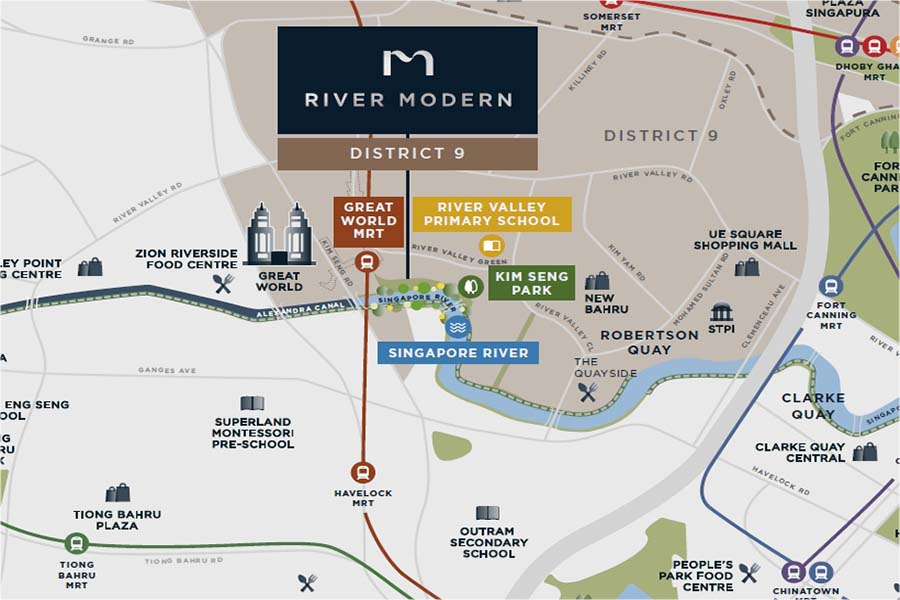
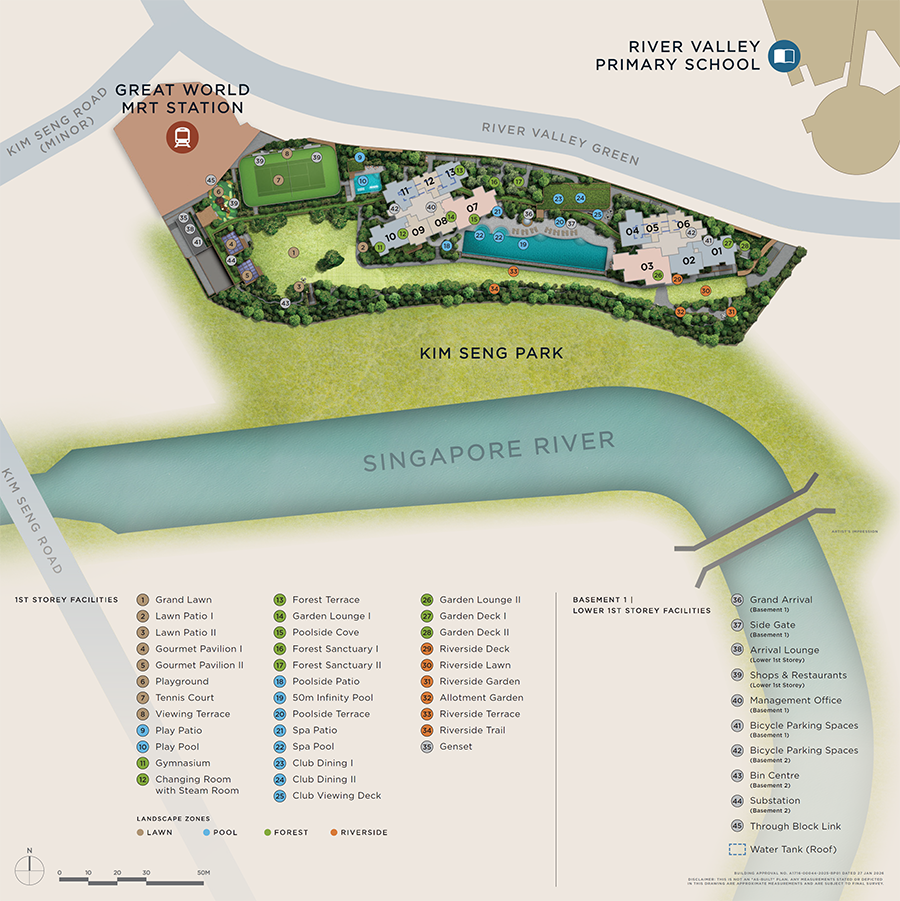
The defining locational advantage is Great World MRT (TE15), located approximately 100 metres from the site. This provides direct connectivity along the Thomson–East Coast Line while significantly reducing car dependency — a key factor for both owner-occupiers with urban routines and tenants working in the CBD, Orchard, or Marina Bay areas.
Daily amenities cluster tightly around the project. Great World City sits within a short walk, offering supermarkets, dining, and essential services, while Valley Point provides an alternative neighbourhood mall option. Orchard Road’s major retail nodes — including 313@Somerset, Ngee Ann City, and Wisma Atria — remain easily accessible without requiring residents to live directly along Orchard Road itself.
From a planning perspective, River Modern benefits from being close enough to Orchard to enjoy its revitalisation, while remaining slightly removed from its traffic intensity. This micro-location distinction matters more than the District 9 label alone, as it shapes everyday liveability rather than just address prestige.
Although located within District 9, River Modern should be assessed within the broader context of the Core Central Region (CCR), where pricing behaviour and buyer expectations differ materially from suburban and OCR developments.
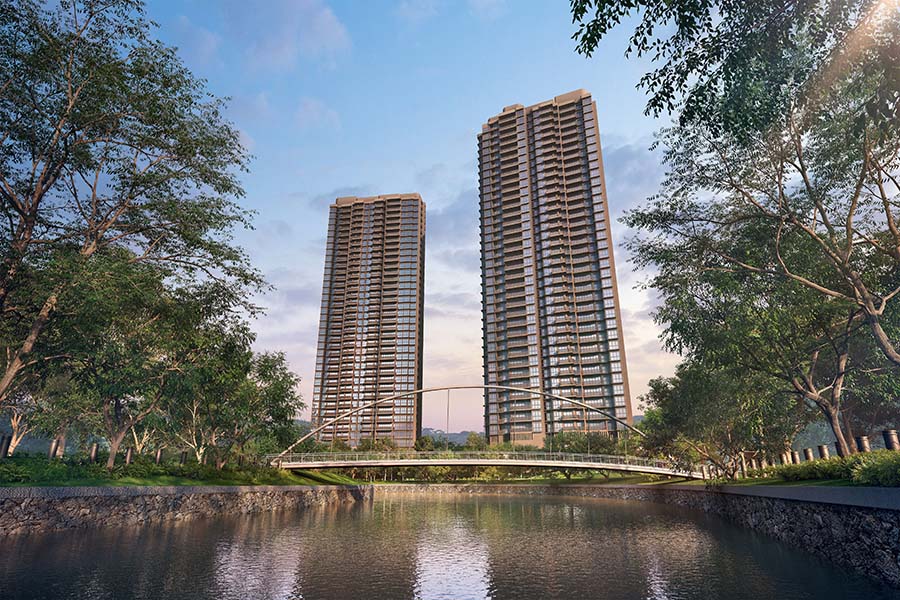
A significant proportion of units are oriented toward the Singapore River corridor, which may offer open views depending on stack positioning and floor level. However, buyers should still assess individual stack orientation, elevation, and potential future sightline conditions rather than assuming permanent open river views across all outward-facing units.
This broader locational context also places River Modern within a well-established stretch of the Singapore River residential belt.
How River Modern Fits Within the Singapore River Residential Corridor
River Modern sits within a stretch of the Singapore River that has gradually evolved into a distinct residential lifestyle corridor linking Robertson Quay, Clarke Quay, and the Great World precinct. Developments in this belt typically attract buyers who prioritise walkable urban living, proximity to dining and retail amenities, and convenient MRT connectivity. As a result, demand in this micro-location is often driven less by traditional suburban family considerations and more by lifestyle convenience and rental resilience.
Project Positioning: What River Modern Is — and Is Not
What River Modern Is
- A city-centre lifestyle condominium prioritising MRT access and walkable convenience
- Designed as a high-efficiency residential project, aligned with urban land optimisation principles
What River Modern Is Not
- Not a low-density or boutique residential development
- Not a quiet, enclave-style family project
- Not a freehold or legacy-driven long-term land hold
- Not suited for buyers seeking suburban tranquillity or large family-oriented layouts
This distinction is critical. River Modern trades serenity and exclusivity for connectivity, convenience, and relevance, which will shape both buyer expectations and long-term value behaviour.
Amenities Around River Modern
River Modern benefits from one of the most amenity-dense environments among upcoming 2026 launches, with retail, dining, education, and lifestyle options concentrated within a short radius.
Transport Connectivity
- Great World MRT (TE15) – approx. 0.1 km
- Bus services along River Valley Road and Kim Seng Road
Supermarkets & Daily Conveniences
- Cold Storage (Great World City) – approx. 0.1 km
- FairPrice (Valley Point) – approx. 0.7 km
Shopping & Retail
- Great World City – approx. 0.3 km
- Orchard Road retail belt – approx. 0.9–1.1 km
Education
- River Valley Primary School – approx. 0.2 km
- School of the Arts (SOTA) – approx. 1.7 km
- Singapore Management University – approx. 1.7 km
Food & Lifestyle
- Zion Riverside Food Centre – approx. 0.4 km
- Robertson Quay & Singapore River dining belt – short drive / walk
While the range of amenities is extensive, it is important to note that amenity abundance does not automatically translate into family suitability. Density, traffic flow, and likely unit sizing will play a larger role in determining day-to-day comfort for households with children.
Buyer Suitability: Who River Modern Is For
1. Urban Professionals & Lifestyle-Driven Buyers
Buyers who value MRT access, walkability, and proximity to Orchard, the CBD, and lifestyle nodes — and who prioritise convenience over space or tenure.
2. Rental-Focused Investors
Investors looking for longer-horizon rental resilience rather than short-term yield optimisation. River Modern’s location supports tenant demand from professionals, expatriates, and small households.
3. Urban Own-Stay Buyers (Selective Fit)
Own-stay buyers with urban lifestyles and smaller household sizes may find River Modern suitable, particularly if daily convenience outweighs the desire for a quieter, lower-density environment.
4. Buyers Who May Want to Reconsider
Families seeking space, greenery, or long-term legacy tenure may find better alignment in OCR or freehold developments rather than a dense city-centre project.
Buyers comparing River Modern against other upcoming launches may find it helpful to frame their decision using the New Launch Condo Guide, which outlines how pricing logic, buyer profile, and holding intent differ across project types.
How River Modern Compares With Other Central Launches
For buyers comparing River Modern against other central-region launches, the decision often comes down to how strongly MRT adjacency, lifestyle location, and unit efficiency are prioritised.
Developments positioned along the Singapore River corridor tend to attract buyers who value walkability and tenant depth, while projects in nearby precincts may appeal to buyers prioritising different lifestyle environments or price structures.
Buyers evaluating these trade-offs may find it useful to compare River Modern with other nearby launches before making a decision framework.
A deeper breakdown of pricing structure, buyer profile differences, and capital commitment considerations can be found in the River Modern vs Promenade Peak comparison analysis.
Takeaway
River Modern is not positioned as a broad-appeal, family-first launch. Its strength lies in connectivity and MRT-anchored urban relevance, supported by Orchard adjacency.
For buyers assessing River Modern through a lifestyle and rental relevance lens, its positioning is coherent. For those evaluating it primarily as a long-term family home or legacy asset, the trade-offs should be considered carefully.
As more details on pricing, unit mix, and layouts emerge closer to launch, River Modern’s true competitiveness will ultimately be determined by how well it balances density, pricing discipline, and urban liveability.
If you’re seriously considering this project, it’s worth checking how it actually compares and what most buyers tend to overlook — before deciding.
FAQs (Decision-Stage)
1) What makes River Modern different from other District 9 condominiums?
River Modern stands out primarily because of its direct MRT adjacency and its position within the Great World / River Valley lifestyle corridor. While many District 9 developments rely on boutique scale or freehold tenure as their main selling points, River Modern’s value proposition is based on connectivity, walkability, and proximity to Orchard and the CBD.
This positioning places it closer to an urban lifestyle residence rather than a quiet residential enclave. Buyers who prioritise transport convenience, access to dining and retail amenities, and sustained tenant demand often view MRT-fronting developments in this micro-location as structurally resilient despite their higher density compared with boutique River Valley projects.
2) Is River Modern mainly for own-stay buyers or investors?
River Modern is positioned as a hybrid lifestyle and rental-relevance project, rather than a pure own-stay or investor-only launch.
Own-stay demand is most likely to come from urban professionals, couples, and smaller households who prioritise MRT access, walkability, and proximity to Orchard and the CBD. Investor interest is more likely to be long-horizon and rental-focused, rather than short-term trading driven by scarcity or tenure narratives.
3) Is River Modern considered “city-centre” or “city fringe”?
River Modern is officially located in District 9 and classified under the Core Central Region (CCR).
Functionally, however, it behaves more like an inner-CCR / city-fringe lifestyle development anchored by Great World MRT. It sits close enough to Orchard and the CBD for everyday convenience, while being slightly removed from Orchard Road’s most congested stretch — a distinction that affects daily liveability more than the District label alone.
4) How important is Great World MRT (TE15) to River Modern’s value?
Great World MRT is a core value driver for River Modern.
For inner-city and CCR-adjacent projects, MRT walkability materially affects:
- daily convenience and car-light living
- tenant demand and rental resilience
- long-term resale liquidity
In dense urban developments, MRT adjacency often plays a larger role in value preservation than branding or tenure alone.
5) Is River Modern suitable for families?
River Modern is not positioned as a family-first project.
While schools such as River Valley Primary are nearby, the more relevant considerations are density, traffic environment, and likely unit sizing, which are typical of integrated or MRT-fronting prime CCR lifestyle launches. Families prioritising space, quieter surroundings, or long-term legacy tenure may find stronger alignment in RCR or OCR developments.
6) What are the biggest trade-offs buyers should accept?
The trade-offs at River Modern are clear and structural:
You gain MRT access, walkability, Orchard/CBD proximity, and rental relevance
You give up low-density quietness, larger layouts, and freehold or legacy-driven tenure narratives
River Modern should be evaluated through an urban convenience and efficiency lens, not against suburban or boutique low-density expectations.
7) What should buyers watch for when pricing and layouts are released?
With indicative launch pricing now available, buyer evaluation should centre on three practical factors:
Pricing discipline versus CCR comparables, especially on absolute quantum rather than headline psf
Layout efficiency, particularly for 2-bedroom and compact 3-bedroom configurations
Stack orientation, which affects privacy, noise exposure, and long-term liveability in a dense urban setting
These factors will matter more than launch-day optics or short-term sales momentum.
8) Is River Modern likely to have strong rental demand?
Rental demand should be structurally supported by Great World MRT adjacency and proximity to Orchard and the CBD, particularly from professionals and expatriates.However, rental performance will still depend on entry pricing, unit efficiency, and surrounding supply within the Great World / River Valley micro-market. River Modern is better viewed as a rental-resilient asset rather than a yield-maximisation play.
River Modern: Pricing Logic, URA Planning Intent & Buyer Segmentation
Summary
River Modern is not positioned as a scarcity-driven or prestige-led District 9 launch. Its value logic is anchored in urban efficiency, MRT adjacency, and rental relevance, rather than freehold tenure or low-density exclusivity. As a relatively high-yield GLS site at River Valley Green, its competitiveness will ultimately depend on pricing discipline, unit efficiency, and alignment with URA’s incremental planning intent for Orchard and River Valley.
This section evaluates whether River Modern’s positioning holds up once pricing logic, planning context, and buyer segmentation are considered together — without relying on unreleased marketing claims.
Pricing Logic: Why River Modern Competes on Efficiency, Not Scarcity
Pricing Context: Entry Positioning Within the River Valley Micro-Market
River Modern’s pricing logic reflects the economics typical of MRT-fronting prime-urban developments, where buyers are primarily paying for connectivity, location efficiency, and rental relevance rather than land scarcity or tenure-driven prestige.
Developments located directly beside MRT stations within the Core Central Region tend to command a structural premium due to their long-term accessibility and tenant depth. However, buyer evaluation in such projects is rarely based on headline psf comparisons alone.
Instead, the more relevant lens is absolute quantum and layout efficiency.
For many urban buyers and investors, affordability is assessed through monthly holding cost and long-term rental sustainability rather than through psf optics. Compact layouts with efficient floor plans often play a critical role in keeping entry pricing within manageable thresholds despite prime-district land values.
This positioning places River Modern in a distinct niche within the River Valley and Great World micro-market. It is neither a boutique freehold enclave competing on scarcity nor a suburban development competing on value pricing.
Instead, it operates as a connectivity-driven urban residence, where MRT proximity, walkable amenities, and central-city accessibility form the core of its value proposition.
In this context, pricing competitiveness is less about headline psf positioning and more about whether the project maintains quantum discipline relative to comparable central-location developments.
Absolute Quantum vs PSF: The More Relevant Lens Here
For River Modern, absolute quantum matters more than headline PSF, particularly for its two core buyer groups:
urban own-stay buyers and rental-focused investors.
Key reasons:
-
Buyers are not purchasing for land scarcity, but for location utility
-
Smaller unit sizes amplify sensitivity to total price, not PSF optics
-
Investors prioritise rental maths and exit liquidity, not paper gains
River Modern’s pricing strategy therefore needs to:
-
Remain competitive against recent River Valley / Zion Road GLS launches
-
Avoid crossing psychological quantum thresholds for urban buyers
-
Justify density through connectivity and convenience, not branding
If priced too aggressively on “District 9” optics alone, resistance from informed buyers should be expected.
This pricing approach reinforces that River Modern’s competitiveness hinges more on absolute quantum discipline than on headline District 9 psf optics. While psf figures sit within the expected urban CCR-adjacent range, entry price points for 2- and 3-bedroom units remain within thresholds that are accessible to urban own-stay buyers and rental-focused investors.
For this buyer pool, affordability is assessed through monthly holding cost and rental sustainability rather than through land scarcity narratives. As a result, River Modern’s pricing logic aligns more closely with efficiency-driven GLS developments than with boutique freehold River Valley projects.
Where River Modern Sits Relative to the Urban CCR Market
A broader market trend also shaping buyer evaluation is the gradual narrowing price gap between some prime central developments and projects in the Rest of Central Region (RCR). As suburban launch prices rise, certain buyers begin reassessing whether central locations with stronger MRT connectivity and lifestyle infrastructure provide better long-term utility despite higher headline psf levels.
Within the broader prime CCR and central-edge landscape, River Modern occupies a distinct niche:
-
Not a prestige Orchard Road address
-
Not a boutique River Valley freehold enclave
-
Not a suburban value play
Instead, it is positioned as value-through-access, not value-through-scarcity.
Its success depends on buyers recognising that:
-
MRT adjacency is a structural advantage
-
Density is a deliberate trade-off for location
-
Rental relevance supports long-term liquidity
These are structural attributes, not marketing narratives.
URA Planning Analysis: Incremental Urban Enhancement, Not Transformation
Orchard Planning Area: Lifestyle Repositioning Over Residential Expansion
URA Master Plan 2025 frames Orchard’s future around diversification and liveability, not large-scale residential intensification.
Key initiatives include:
-
A new mixed-use hub at Paterson integrating residential, retail, office, and public spaces
-
A green corridor linking Dhoby Ghaut Green, Istana Park, and Orchard Road
-
Enhanced pedestrian and cycling connectivity
-
Rejuvenation of older strata malls via the Strategic Development Incentive (SDI) scheme
For River Modern, these initiatives provide indirect uplift rather than immediate price catalysts. Residents benefit from improved lifestyle infrastructure without absorbing Orchard’s density and congestion.
River Valley Planning Area: Residential Stability Over Intensification
River Valley remains zoned primarily for high-quality urban residential living. URA planning intent emphasises:
-
Preservation of residential character
-
Sensitive scale transitions
-
Green mobility and walkability
-
Seamless connectivity to neighbouring precincts
The Inner Ring Identity Corridor enhances River Valley’s connective role, not its density. As a result, River Modern benefits from planning stability, not speculative rezoning upside.
Buyer Segmentation: Who River Modern Truly Serves
Based on the confirmed unit mix, River Modern is not structured as a small-unit investor-only project. Approximately 39% of units are 2-bedroom layouts, around 46% are 3-bedroom units, and roughly 15% are larger 4-bedroom units with private lift access. This composition introduces a stronger own-stay and family-capable component than many recent CCR GLS launches, even though MRT adjacency and Orchard proximity continue to support rental relevance.
1. Rental-Driven Investors (Primary Buyer Group)
Profile
-
Medium- to long-horizon investors
-
Comfortable with moderate yields
-
Focused on tenant demand and liquidity
Why River Modern Works
-
MRT adjacency (Great World, TE Line)
-
Proximity to Orchard, CBD, Marina Bay
-
Amenity-dense environment supports tenant retention
Limitations
-
Not a yield-maximisation project
-
Entry pricing caps headline yields
-
Performance depends on rental resilience, not hype
2. Urban Lifestyle Own-Stay Buyers
Profile
-
Singles or couples
-
Urban routines and car-light lifestyles
-
Value convenience over space or tenure
Why River Modern Works
-
Walkability and transit access
-
Orchard and Singapore River lifestyle proximity
-
Modern facilities without full commercial intensity
Constraints
-
Density may deter buyers seeking quieter living
-
Pricing sensitivity is high at urban CCR levels
3. Family Buyers (Selective Relevance)
Profile
-
Smaller households
-
School-driven decisions (e.g. River Valley Primary)
Reality Check
While proximity to schools exists, River Modern is not designed as a family-first project. Density, traffic environment, and likely unit mix limit its appeal for larger households seeking long-term stability.
4. Short-Term Traders
Suitability: Low
-
Large unit count dilutes scarcity
-
Absorption driven by fundamentals
-
Market conditions favour realism over momentum
River Modern does not lend itself to short-cycle trading strategies.
Structural Strengths vs Structural Constraints
Structural Strengths
-
MRT-anchored location
-
Strong rental relevance
-
Orchard and CBD proximity
-
Planning stability under URA Master Plan
Structural Constraints
-
99-year tenure
-
High density
-
Incremental (not explosive) capital appreciation
-
Buyer pool skewed toward urban profiles
These are design choices, not flaws — but they define the project’s performance envelope.
Interim Assessment
River Modern should be evaluated as:
A city-centre efficiency play designed for relevance, liquidity, and rental resilience — not scarcity or speculative upside.
Its success will not be measured by:
-
Launch-day momentum
-
Short-term resale premiums
-
Headline PSF comparisons
But by:
-
Sustained tenant demand
-
Consistent resale liquidity
-
Alignment with long-term urban living trends
River Modern: Exit & Liquidity, Risk Scenarios, Pros & Cons, and Buyer FAQs
Summary
River Modern performs best when assessed as a long-horizon, rental-relevant prime CCR asset, rather than a prestige-driven or speculative launch. Its exit dynamics are shaped by density, accessibility, and tenant depth, creating stability while limiting outsized upside.
Exit & Liquidity Analysis
Liquidity Profile of Urban, Investor-Relevant Developments
For city-centre GLS projects like River Modern:
-
Exit demand is broad but price-sensitive
-
Liquidity depends on market cycle and affordability, not rarity
-
MRT adjacency supports consistent buyer interest
This results in functional, steady liquidity, rather than spike-driven churn.
Unit-Type Liquidity Considerations
Based on typical prime CCR behaviour:
1-Bedroom / Compact Units
Liquidity: Strong
Buyer pool: Investors, singles, expatriates
2-Bedroom Units
Liquidity: Strong and resilient
Buyer pool: Couples, urban own-stay buyers
Larger Units
Liquidity: Selective
Buyer pool: Limited; pricing discipline critical
Smaller and mid-sized units are likely to anchor resale demand.
Timing Sensitivity
Exit outcomes are more sensitive to:
-
Interest rate cycles
-
Rental market conditions
-
Broader CCR supply
They are less sensitive to:
-
Launch PSF optics
-
District branding alone
Comparative Risk Positioning
River Modern vs MRT-Fronting OCR Projects
OCR MRT-fronting projects:
-
Higher family demand
-
Lower pricing ceilings
-
Strong own-stay liquidity
River Modern:
-
Stronger rental relevance
-
Higher price sensitivity
-
More investor-driven demand
River Modern vs Boutique CCR Projects
Boutique CCR projects rely on:
-
Scarcity
-
Tenure premiums
-
Prestige narratives
River Modern relies on:
-
Access
-
Efficiency
-
Tenant depth
Each serves a different risk profile.
Multi-Scenario Risk Analysis
Scenario 1: Prolonged High Interest Rates
Impact
Affordability pressure; reduced speculation
Implication for River Modern
Rental demand remains stabilising factor
Scenario 2: Prime CCR Supply Increase
Impact
Buyer choice expands; pricing competition intensifies
Implication for River Modern
MRT adjacency protects relevance, but pricing discipline becomes critical
Scenario 3: Strong Rental Market Cycle
Impact
Increased investor confidence
Implication for River Modern
This is a favourable scenario, supporting both yields and liquidity
Scenario 4: Lifestyle-Driven Urban Living Strengthens
Impact
Preference for walkable, transit-led living
Implication for River Modern
Supports long-term demand without relying on speculation
Final Investment & Own-Stay Assessment
River Modern works best when viewed as:
A practical city-centre home and rental asset designed for consistency, not excitement.
Its strengths are structural:
-
Location efficiency
-
MRT adjacency
-
Rental relevance
-
Planning stability
Its limitations are equally structural:
-
Density
-
99-year tenure
-
Moderate capital appreciation
Pros & Cons Summary
Pros
-
Direct MRT access
-
Strong tenant appeal
-
Orchard and CBD proximity
-
Reputable developer
Cons
-
High density
-
Limited family appeal
-
Not scarcity-driven
-
Upside likely to be incremental
Buyers researching River Modern often compare its pricing structure, MRT connectivity, and long-term investment potential against other central-region developments. The following frequently asked questions address common considerations raised by both owner-occupiers and property investors evaluating the project.
Frequently Asked Questions
1) Is River Modern a good investment property?
River Modern works best as a rental-resilient, long-horizon investment, rather than a short-term capital appreciation play. Its strengths lie in MRT adjacency, Orchard/CBD proximity, and consistent tenant demand. Investors should assess it based on rental sustainability, exit liquidity, and pricing discipline rather than headline launch momentum.
2) Who is River Modern best suited for?
River Modern is best suited for urban professionals, couples, and investors who prioritise connectivity, walkability, and lifestyle convenience over space, tenure, or low-density living. Buyers seeking suburban calm, larger family layouts, or legacy tenure may find stronger alignment elsewhere.
3) Is River Modern suitable for families?
Only selectively. While proximity to schools such as River Valley Primary exists, River Modern is not designed as a family-first development. Density, traffic conditions, and typical unit sizing mean it is better suited to smaller households rather than larger, long-term family living.
4) Is River Modern considered a luxury development?
River Modern is better understood as a connectivity-driven prime-location lifestyle development rather than a traditional luxury project defined by exclusivity or low density. Its value proposition lies primarily in MRT adjacency, central location, and access to the Singapore River lifestyle corridor rather than boutique scale or freehold scarcity.
5) How important is MRT adjacency for River Modern’s long-term value?
MRT adjacency is a structural advantage, not a marketing feature. Direct access to Great World MRT supports daily convenience, reduces car dependency, and underpins rental demand and resale liquidity. For dense CCR and inner-city projects, this factor often outweighs tenure or branding in long-term performance.
6) Is River Modern positioned as a prime CCR lifestyle project?
Yes. River Modern is positioned as a prime-location District 9 (CCR) lifestyle development, anchored by direct access to Great World MRT and proximity to Orchard and the CBD.
However, it should not be viewed as a legacy- or exclusivity-led CCR project defined by low density, freehold tenure, or boutique scale. Its positioning and long-term performance are more closely tied to urban convenience, layout efficiency, absolute quantum discipline, and MRT-anchored liquidity, rather than scarcity or tenure narratives.
7) How should buyers interpret the indicative launch pricing?
Indicative launch pricing places River Modern below early market expectations for a District 9, MRT-fronting development, particularly for 2- and 3-bedroom units. This suggests a calibrated launch strategy focused on absorption and competitiveness rather than maximising headline psf optics.
8) Does absolute quantum or psf matter more at River Modern?
Absolute quantum matters more than headline psf for most buyers. Given smaller unit sizes and a prime-urban CCR buyer pool, affordability, monthly holding cost, and exit liquidity are driven primarily by total price rather than psf comparisons alone.
9) Which unit types are likely to be most liquid?
Historically, efficient 2-bedroom and compact 3-bedroom units tend to offer the broadest buyer and tenant pools in prime-urban CCR projects. Larger units can perform well, but require greater pricing discipline and a longer holding horizon due to a narrower resale audience.
10) Is River Modern suitable for short-term flipping?
No. River Modern’s large unit count, GLS economics, and pricing structure make it less suitable for short-term flipping strategies. Buyers should approach it with a medium- to long-term holding mindset.
11) How sensitive is River Modern to interest rate changes?
Like most prime-urban CCR lifestyle developments, River Modern is moderately sensitive to interest rate conditions. However, its rental relevance and MRT-anchored demand provide some downside support compared to projects that rely primarily on speculative buyer behaviour.
12) How does River Modern compare with boutique freehold River Valley projects?
River Modern trades tenure-led exclusivity for MRT-anchored connectivity, scale efficiency, and everyday accessibility. Boutique freehold projects may appeal to legacy-driven buyers, while River Modern appeals more to those prioritising convenience, rental demand, and MRT access.
13) Is density a concern buyers should factor in?
Density is a meaningful consideration, especially for own-stay buyers. Stack orientation, internal circulation, and facing conditions will influence day-to-day comfort more than headline unit count alone. Buyers should assess layouts and stacks carefully.
14) How strong is resale liquidity likely to be?
Resale liquidity should be functional rather than scarcity-driven, supported by location and MRT access. Smaller and mid-sized units are likely to anchor liquidity, while larger units may require more patience and realistic pricing expectations.
15) What holding period makes the most sense for River Modern?
A medium- to long-term holding period is most realistic. This aligns with rental stabilisation, lifestyle ownership, and gradual value progression rather than launch-cycle speculation.
16) How should buyers evaluate River Modern overall?
River Modern should be evaluated as a prime CCR efficiency-led lifestyle development — focused on pricing discipline, layout efficiency, MRT-driven convenience, rental relevance, and tolerance for urban density. Buyers who assess it through this lens are more likely to have aligned expectations and outcomes.
If you prefer a more structured walkthrough, you can leave your details below and we’ll follow up with you.