Summary
Thomson Reserve is an upcoming 99-year leasehold private residential development at Bright Hill Drive in District 20, within the Bishan Planning Area. Developed by a joint venture between UOL Group, Singapore Land Group and CapitaLand Development, the project will redevelop the former Thomson View Condominium site into a large-scale new launch with approximately 1,240 residential units, subject to final approvals.
Its appeal is easy to understand.
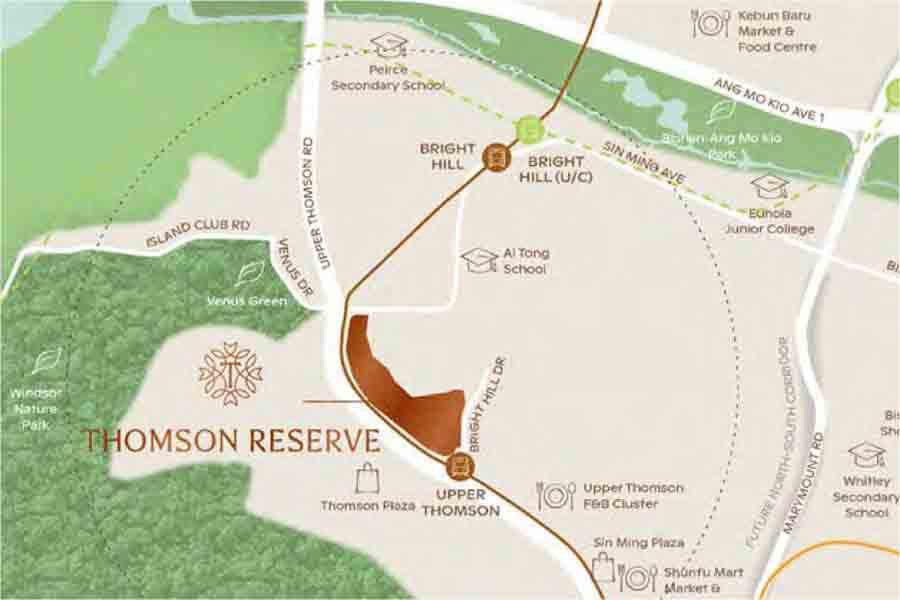
Thomson Reserve sits in a mature Upper Thomson / Bright Hill pocket, close to Upper Thomson MRT on the Thomson-East Coast Line, near Thomson Plaza, within 1km of Ai Tong School, and near the nature and lifestyle setting associated with MacRitchie Reservoir and Upper Thomson Road.
For many buyers, that combination will sound powerful: MRT access, school appeal, greenery, mature amenities, reputable developers and a rare large redevelopment site in a tightly held District 20 location.
But the real buyer question is not simply whether Thomson Reserve has strong location attributes.
It does.
The more important question is whether buyers can accept the trade-off between rare Upper Thomson fundamentals and the realities of a large 1,240-unit project: higher density, premium pricing expectations, internal resale competition, traffic sensitivity around Bright Hill Drive, and the need to choose the right unit carefully.
Personally, I think Thomson Reserve should not be evaluated only as a “near MRT and near Ai Tong” project.
It should be evaluated as a rare Upper Thomson mega-redevelopment where the strength of the location must be weighed against the density, price point and future exit behaviour of a very large private residential project.
That is where the real decision lies.
Explore the Full Thomson Reserve Analysis
This review forms part of the full Thomson Reserve project cluster:
- Thomson Reserve Price Guide – pricing logic, land-cost context, affordability analysis and comparable new launch positioning
- Thomson Reserve Floor Plan Analysis – unit mix, layout efficiency, stack considerations and liveability factors
- Thomson Reserve Showflat Guide – showroom visit preparation, viewing questions and buyer evaluation framework
Together, these articles provide a structured view of Thomson Reserve’s pricing, layout strategy, location trade-offs, showflat considerations and long-term buyer suitability.
Thomson Reserve may attract buyers because of its Upper Thomson location, MRT access and Ai Tong School proximity. But for serious buyers, the more important issue is whether the final pricing, stack choice, unit layout and long-term exit profile support a sensible holding decision.
If you are comparing Thomson Reserve with Chuan Park, Springleaf Residence, Lentor Gardens Residences, AMO Residence, Narra Residences or other central-north launches, it may help to evaluate the trade-offs properly before committing.
Key Details at a Glance
Thomson Reserve is best understood as a large-scale District 20 redevelopment in the Upper Thomson / Bright Hill area, combining MRT access, Ai Tong School proximity, mature-estate convenience and nature adjacency — but with density, pricing and exit-liquidity trade-offs that buyers should evaluate carefully.
| Key Point | Why It Matters |
|---|---|
| Location | Bright Hill Drive, District 20, within the Bishan Planning Area |
| Core Positioning | Large-scale Upper Thomson / Bright Hill redevelopment near MRT, school demand and mature amenities |
| Main Appeal | Upper Thomson MRT access, Ai Tong School within 1km, Thomson Plaza convenience and MacRitchie lifestyle appeal |
| Main Trade-Off | Around 1,240 units, which may create higher density and future internal resale competition |
| Likely Buyer Base | Families, central-north HDB upgraders, school-driven buyers, MRT-focused owner-occupiers and long-term holders |
| Investment Profile | More suited for long-term utility and own-stay demand than short-term speculative flipping |
| Key Buyer Question | Does the final price justify the rare location, large-site scale and future resale competition? |
Thomson Reserve Project Factsheet
| Project Detail | Information |
|---|---|
| Project Name | Thomson Reserve |
| Developer | UOL Group, Singapore Land Group and CapitaLand Development joint venture |
| Location | Bright Hill Drive |
| District | District 20 |
| Planning Area | Bishan Planning Area |
| Region | Rest of Central Region / Central-North |
| Tenure | 99-year leasehold |
| Site Type | Former Thomson View Condominium en bloc redevelopment |
| Site Area | Approximately 50,208 sqm / about 5 hectares |
| Plot Ratio | 2.1 |
| Residential Units | Approximately 1,240 units, subject to final approved plans |
| Development Type | Private residential condominium |
| Former Development Scale | 254 residential units plus one shop unit |
| Nearest MRT | Upper Thomson MRT, with Bright Hill MRT also relevant depending on eventual block position |
| Nearby Mall | Thomson Plaza |
| Nearby School Highlight | Ai Tong School within 1km, subject to official verification |
| Nearby Nature / Lifestyle | MacRitchie Reservoir, Upper Thomson dining stretch and Singapore Island Country Club surroundings |
| Unit Mix | To be confirmed |
| Estimated Launch Window | To be confirmed |
| Estimated TOP | Around 2032, subject to confirmation |
A Rare Large-Site Redevelopment in Upper Thomson
Thomson Reserve is likely to become one of the more closely watched central-north new launches because the site is unusual.
Upper Thomson is not a location where very large private residential plots appear frequently. Much of the surrounding area has already matured into a mix of landed housing, older private apartments, HDB estates, schools, nature areas, neighbourhood shops and long-established food spots.
This makes Thomson Reserve different from a typical GLS project in a newly forming precinct.
Buyers are not simply assessing another empty land parcel being added to a growth area. They are looking at the redevelopment of a former low-density private estate into a much larger modern condominium project within an already familiar neighbourhood.
That creates both appeal and tension.
On one hand, buyers may like the idea of entering a mature estate with existing amenities, MRT access, school appeal and greenery nearby.
On the other hand, the increase in density is significant.
The former Thomson View site had 254 residential units plus one shop unit. Thomson Reserve is expected to have approximately 1,240 residential units, subject to final plans. That is a major transformation for this Bright Hill Drive pocket.
This does not automatically make the project unattractive. Large projects can offer stronger facilities, better market visibility, broader resale transaction volume and more recognisable project identity.
But buyers should not ignore what the scale means.
A 1,240-unit development will behave differently from a boutique Upper Thomson project. It will likely have a larger internal buyer pool, more residents, heavier facility usage, more vehicular movement and more internal resale competition when owners eventually sell.
This is why Thomson Reserve should be analysed as a large-site utility asset, not a quiet boutique private enclave.
That distinction is important.
Location Context: Upper Thomson, Bright Hill and Bishan Planning Area
Thomson Reserve sits at Bright Hill Drive, within the Bishan Planning Area, but its buyer psychology will likely be shaped by several overlapping location identities.
These include:
- Upper Thomson lifestyle and dining convenience
- Bright Hill residential setting
- Bishan / Ang Mo Kio family-buyer catchment
- Ai Tong School proximity
- Thomson Plaza daily amenities
- Thomson-East Coast Line connectivity
- MacRitchie and nature-reserve adjacency
- future Bright Hill interchange relevance
This gives the project a strong location story, but it also means buyers should avoid reducing the project into one simple label.
Thomson Reserve is not just an “Upper Thomson condo”.
It is also not just an “Ai Tong School play”.
It is not purely a “nature-facing development” either.
A more accurate way to frame it is this:
Thomson Reserve is a large-scale mature-estate redevelopment in the Upper Thomson / Bright Hill area, supported by MRT connectivity, school-driven demand, nearby retail, and nature-lifestyle appeal.
That is a strong positioning.
But the strength of the location must still be matched with disciplined pricing and careful unit selection.
MRT Connectivity: Strong, But Buyers Should Check the Actual Route
One of Thomson Reserve’s strongest practical advantages is its proximity to Upper Thomson MRT on the Thomson-East Coast Line.
For many buyers, this matters.
The Thomson-East Coast Line gives residents direct access towards areas such as Orchard, Great World, Outram Park, Marina Bay and the East Coast corridor. For households that rely on public transport, this can reduce the need for feeder buses or car dependency.
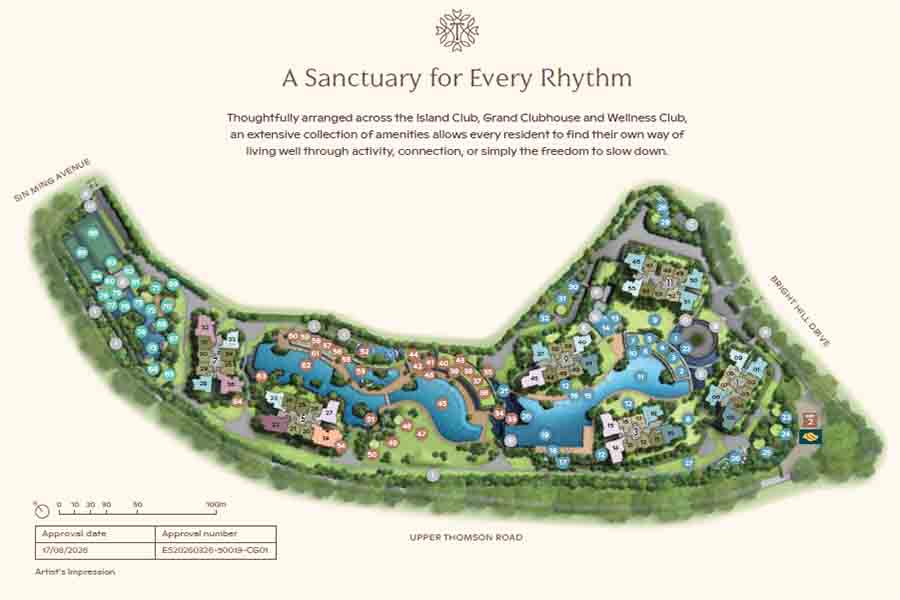
However, buyers should assess the MRT advantage carefully because Thomson Reserve sits on a large site.
Depending on the eventual block, entrance, pedestrian route and side of the development, the walking experience to Upper Thomson MRT may differ. Some stacks may feel much closer to Upper Thomson MRT, while other parts of the site may relate more naturally to Bright Hill MRT.
This nuance matters because marketing phrases such as “near MRT” can sometimes hide the actual daily experience.
For Thomson Reserve, buyers should eventually check:
- which block is closest to the main pedestrian exit
- whether the route to Upper Thomson MRT is sheltered
- whether the walk involves slope, crossings or unsheltered sections
- whether Bright Hill MRT becomes more practical for some blocks
- how the final site entrances are planned
- whether vehicular access creates bottlenecks during peak hours
The MRT story is genuinely strong, but the eventual block and route will matter.
That is where stack and block selection can become more important than many buyers initially expect.
Ai Tong School Proximity Will Likely Be a Major Buyer Driver
For family buyers, one of Thomson Reserve’s most important demand drivers is its reported location within 1km of Ai Tong School.
This is likely to attract attention from young families, preschool parents and buyers planning around primary-school registration.
In Singapore, school proximity can shape buyer behaviour very strongly. For projects near popular primary schools, demand is not always driven only by investment returns. It can also be driven by family planning, convenience, familiarity and long-term owner occupation.
That may support Thomson Reserve’s future buyer pool.
However, buyers should still verify final school-distance eligibility using official tools before relying on any school-related assumption. For a large site, the exact block and registered address may matter, especially where distance boundaries are tight.
For the article’s buyer logic, the point is simple:
Ai Tong School proximity gives Thomson Reserve a clear family-buyer hook, but it should not be the only reason to buy.
Families still need to evaluate:
- entry quantum
- 3-bedroom and 4-bedroom affordability
- layout practicality
- traffic flow during school peak hours
- stack facing and noise exposure
- future resale demand from similar family buyers
A school advantage can support demand, but it does not remove pricing risk.
Project Positioning: What Thomson Reserve Is — and Is Not
What Thomson Reserve Is
Thomson Reserve is likely to be positioned as a large-scale private residential development for buyers who want a mature central-north location with strong daily convenience.
It may appeal to:
- HDB upgraders from Bishan, Ang Mo Kio, Toa Payoh and nearby mature estates
- young families seeking Ai Tong School proximity
- buyers who value Upper Thomson MRT access
- families who want a mature area without moving into the city core
- right-sizers from nearby landed or older private housing areas
- buyers who like nature access but still want daily retail convenience
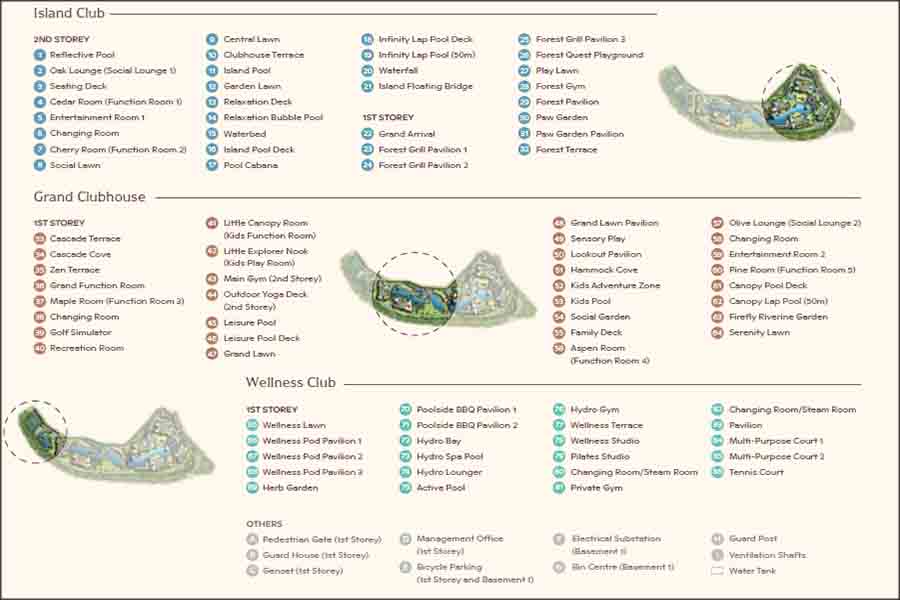
- long-term owner-occupiers who want a full-facility condominium lifestyle
The developer consortium also adds to buyer confidence.
UOL, Singapore Land Group and CapitaLand Development are established names, and this may reassure buyers who care about delivery quality, product planning, landscape design and long-term project perception.
What Thomson Reserve Is Not
Thomson Reserve is not likely to be a low-density boutique project.
It is also not likely to be a low-entry bargain launch.
Given the land cost, development scale, mature location and developer profile, buyers should expect pricing to reflect the site’s strengths.
It is also not a pure short-term flipping play.
A project with approximately 1,240 units may provide long-term liquidity because there are usually more transactions over time. But that same scale can also create internal resale competition if many similar units come onto the market around the same period.
Buyers should avoid evaluating Thomson Reserve through overly simple statements such as:
- “Near MRT means sure safe”
- “Ai Tong School means sure demand”
- “Big developers means no risk”
- “Upper Thomson supply is limited, so prices must rise”
- “Large project means easier exit”
Each of these points may contain some truth, but none of them is enough on its own.
The real decision depends on price, layout, stack, buyer profile and holding period.
Amenities Around Thomson Reserve
Transport Connectivity
Thomson Reserve’s transport appeal is one of its clearest advantages.
The key transport anchors include:
- Upper Thomson MRT on the Thomson-East Coast Line
- Bright Hill MRT, which may become relevant depending on block position and future commuting patterns
- bus services along nearby Upper Thomson and Bright Hill routes
- road access towards Bishan, Ang Mo Kio, Marymount, Thomson and the Central Expressway network
For residents who commute to town, the Thomson-East Coast Line may be a meaningful advantage. It connects directly into several major lifestyle, employment and interchange nodes without requiring a long bus transfer.
However, because the site is large and slightly elevated, the actual daily walking experience should be assessed later using the final site plan.
Shopping and Daily Convenience
Thomson Plaza is one of the most important nearby retail anchors.
It provides groceries, food options, services and daily conveniences that can support family living. Upper Thomson Road also has a long-established dining identity, with cafes, casual eateries and neighbourhood food options that many Singaporeans already recognise.
Nearby convenience points include:
- Thomson Plaza
- Upper Thomson dining stretch
- Sin Ming and Bishan amenities
- Ang Mo Kio town amenities
- neighbourhood shops and food centres within the wider area
This gives Thomson Reserve a more established daily-living profile compared with projects located in newer precincts that may still be waiting for amenities to mature.
Schools and Education
The education profile is likely to be one of the strongest family-buyer hooks.
Nearby schools commonly relevant to the wider area include:
- Ai Tong School
- Ang Mo Kio Primary School
- Catholic High School
- CHIJ St. Nicholas Girls’ School
- Marymount Convent School
- Peirce Secondary School
- Mayflower Secondary School
- Whitley Secondary School
- Raffles Institution / junior college section
- Nanyang Polytechnic
The strongest headline is Ai Tong School within 1km, but buyers should still verify official home-school distance before relying on this for registration planning.
Parks, Nature and Lifestyle
Thomson Reserve also benefits from its proximity to the nature and greenery context around MacRitchie Reservoir, Upper Thomson and Singapore Island Country Club.
This nature-adjacent identity may appeal to buyers who want more than just MRT convenience.
The lifestyle story is not the same as a city-core integrated development. It is more about mature-estate comfort, greenery, food, schools and daily practicality.
For families and long-term owner-occupiers, that may be attractive.
The Real Question Buyers Should Ask
The real question is not:
Is Thomson Reserve in a good location?
It is.
The better question is:
Does the final entry price make sense after factoring in the MRT access, Ai Tong School appeal, large-project density, future internal resale competition, and alternative choices across District 20, Lentor, Springleaf, Bishan and Ang Mo Kio?
This is where buyers need to be careful.
A strong location can still become difficult to exit if buyers enter at too high a price relative to the future resale audience.
For Thomson Reserve, the future resale pool may include:
- families who want Ai Tong School proximity
- HDB upgraders from nearby mature estates
- buyers who want a modern private condo near Upper Thomson MRT
- right-sizers from older private or landed homes
- renters or investors looking for TEL connectivity
- buyers comparing it against Chuan Park, Springleaf Residence and Lentor projects
That is a broad demand base.
But broad demand does not automatically mean every unit will perform equally.
In a large project, unit selection becomes especially important because future buyers may have many similar options within the same development.
This is why layout efficiency, stack facing, block position, floor level, noise exposure and price gap between unit types can matter significantly.
The Large-Project Density Trade-Off
The most interesting part of Thomson Reserve is also the most uncomfortable part.
The site is rare, but the project is large.
For some buyers, this is positive. A large development can offer:
- extensive facilities
- more landscaping
- stronger project recognition
- broader resale transaction volume
- potentially more active rental and resale markets
- better economies of scale in facilities and maintenance
But large developments also come with trade-offs.
Buyers should consider:
- facility crowding during weekends and school holidays
- vehicular congestion at drop-off points
- privacy between blocks
- noise from communal facilities
- internal competition at resale
- more similar units competing with one another
- higher resident density compared with the old Thomson View environment
This does not mean Thomson Reserve is a bad project.
It means buyers need to understand what they are buying.
If a buyer wants privacy, exclusivity and low-density living, Thomson Reserve may not be the most natural fit.
If a buyer wants a full-facility condominium in a mature location with MRT access, school proximity and strong daily convenience, the large scale may be acceptable — provided the price and unit choice make sense.
Buyer Suitability: Who Thomson Reserve May Suit
1. Mature-Estate HDB Upgraders
This is likely to be one of the most important buyer groups.
Thomson Reserve may attract HDB upgraders from Bishan, Ang Mo Kio, Toa Payoh, Sin Ming and nearby estates who want to move into private property without leaving the central-north region.
These buyers may value:
- familiar neighbourhood surroundings
- Upper Thomson MRT access
- nearby family amenities
- school proximity
- Thomson Plaza convenience
- long-term own-stay practicality
However, affordability will matter.
If 3-bedroom and 4-bedroom units are priced too aggressively, some upgrader demand may shift towards alternatives such as Lentor, Springleaf or other OCR / RCR fringe launches with lower entry quantum.
2. Young Families Planning Around Schools
Families with young children may be attracted by Ai Tong School proximity.
For this group, Thomson Reserve may not be evaluated purely as an investment. The decision may involve school planning, daily routines, transport convenience and long-term family stability.
This can create more resilient owner-occupier demand.
But these buyers should still avoid overpaying purely because of school proximity.
School appeal supports demand, but it does not guarantee future gains.
3. MRT-Focused Owner-Occupiers
Some buyers simply want convenience.
For them, access to the Thomson-East Coast Line may be a major advantage. The ability to travel towards Orchard, Outram, Marina Bay and other key destinations without relying heavily on driving can support both daily living and future resale appeal.
These buyers should eventually pay close attention to which blocks have the best practical MRT access.
4. Right-Sizers from Nearby Private and Landed Homes
Thomson Reserve may also attract right-sizers from nearby private housing and landed enclaves.
Some older residents may want to remain in the Upper Thomson / Bishan / Ang Mo Kio area while moving into a more manageable condominium setting with facilities, security and less maintenance.
For this group, developer reputation, lift access, facilities, landscaping, parking, privacy and practical layouts may matter more than pure investment yield.
5. Long-Term Investors Focused on Utility
Investors may be interested because Thomson Reserve has several utility anchors: MRT, schools, mature amenities and a recognisable location.
However, this is unlikely to be a simple high-yield investment story.
If entry pricing is high, rental yield may be compressed. Investors should focus on tenant profile, unit efficiency, maintenance costs, future competition and resale liquidity.
A unit can be easy to rent but still deliver modest returns if the purchase price is too high.
6. Buyers Who May Need to Think More Carefully
Thomson Reserve may be less suitable for buyers who strongly prioritise:
- low-density living
- maximum privacy
- boutique exclusivity
- short-term capital gains
- low entry quantum
- high rental yield
- very quiet surroundings
- minimal internal resale competition
These buyers may want to compare more carefully against smaller projects, lower-priced TEL corridor alternatives or resale options before committing.
Takeaway
Thomson Reserve is likely to become one of the most closely watched District 20 launches because it combines several powerful ingredients:
- Upper Thomson / Bright Hill mature-estate location
- close proximity to Upper Thomson MRT
- Ai Tong School within 1km
- Thomson Plaza and Upper Thomson lifestyle amenities
- nature adjacency near MacRitchie Reservoir
- reputable developers: UOL, Singapore Land Group and CapitaLand Development
- large site area of approximately 50,208 sqm
- rare redevelopment scale in a tightly held residential pocket
But the project is not automatically a straightforward buy.
Its strengths are clear, but so are its trade-offs.
The biggest buyer question is whether the final pricing will remain attractive enough after factoring in the 1,240-unit scale, higher density, future internal resale competition and affordability limits of the upgrader market.
Personally, I think Thomson Reserve’s key decision framework is:
MRT and school convenience versus large-project density, rare Upper Thomson location versus premium pricing expectations, and long-term utility demand versus internal resale competition.
If the pricing, layout mix and stack design are well-calibrated, Thomson Reserve could become a strong long-term choice for families and owner-occupiers who want mature-estate convenience in the central-north region.
If pricing becomes too stretched, buyers may need to compare more carefully against Chuan Park, Springleaf Residence, Lentor Gardens Residences, AMO Residence, Narra Residences and other alternatives before committing.
For buyers comparing Thomson Reserve against other new launches, the New Launch Condo Guide can also help clarify how pricing logic, buyer profile and holding intent differ across project types.
If you are considering Thomson Reserve, it may help to evaluate the pricing, layout choices, stack exposure and long-term exit potential properly before deciding.
FAQs (Decision-Stage)
1. Where is Thomson Reserve located?
Thomson Reserve is located at Bright Hill Drive in District 20, within the Bishan Planning Area. It is the upcoming redevelopment of the former Thomson View Condominium site. The project sits within the Upper Thomson / Bright Hill area, close to Upper Thomson MRT, Thomson Plaza and the wider MacRitchie nature-lifestyle environment. This gives it a mature-estate setting rather than a newly forming precinct identity.
2. Is Thomson Reserve near Upper Thomson MRT?
Yes, Thomson Reserve is close to Upper Thomson MRT on the Thomson-East Coast Line. However, because the site is large, the actual walking experience may vary depending on the eventual block, entrance, pedestrian route and whether the path is sheltered. Some parts of the site may also relate more naturally to Bright Hill MRT. Buyers should check the final site plan carefully instead of relying only on broad “near MRT” descriptions.
3. Is Thomson Reserve within 1km of Ai Tong School?
Thomson Reserve is expected to be within 1km of Ai Tong School, which is likely to be one of the strongest family-buyer drivers for the project. This may attract young families and buyers planning around primary school registration. However, buyers should verify the final home-school distance using official tools before relying on school eligibility. For large sites, block position and registered address may matter.
4. Is Thomson Reserve more for own-stay buyers or investors?
Thomson Reserve is likely to appeal more strongly to own-stay buyers, families and long-term holders than short-term speculative investors. Its core strengths are MRT access, school proximity, mature amenities and central-north location familiarity. Investors may still be interested, especially in efficient smaller units, but rental yield will depend heavily on entry pricing. A strong location can support rental demand, but high purchase prices may still compress returns.
5. What is the biggest risk for Thomson Reserve buyers?
The biggest risk is not location quality, but whether buyers overpay for the location story. Thomson Reserve has strong fundamentals, but it is also expected to be a large project with approximately 1,240 units. This means internal resale competition, density, facility usage and stack selection will matter. Buyers should assess whether the final pricing leaves enough room for future resale demand.
6. How does Thomson Reserve compare with Chuan Park?
Chuan Park and Thomson Reserve may both attract buyers looking at large-scale mature-estate redevelopments with MRT access, but the lifestyle positioning differs. Chuan Park is tied more closely to Lorong Chuan and Circle Line connectivity, while Thomson Reserve leans more towards Upper Thomson, Ai Tong School proximity, nature adjacency and TEL access. Buyers should compare not only psf, but also unit quantum, school needs, commuting routes, density comfort and future resale audience. The better choice depends on the household’s actual priorities.
7. How does Thomson Reserve compare with Lentor projects?
Lentor projects may offer a lower entry point for some buyers, especially those who prioritise affordability within the Thomson-East Coast Line corridor. Thomson Reserve, however, offers a more established Upper Thomson / Bright Hill location, Ai Tong School proximity and stronger mature-estate amenities. Buyers comparing the two should focus on whether the Thomson Reserve premium is justified by school appeal, location familiarity and daily convenience. For many upgrader families, the decision may come down to total quantum rather than headline psf alone.
8. Who is Thomson Reserve most suitable for?
Thomson Reserve may suit families, central-north HDB upgraders, MRT-focused owner-occupiers, school-driven buyers and long-term residents who value the Upper Thomson / Bright Hill location. It may also suit right-sizers who want a modern full-facility condominium while staying in a familiar mature area. However, buyers seeking low-density exclusivity, short-term gains or lower entry quantum may need to think more carefully. The project’s suitability will depend heavily on final pricing, unit layout and stack selection.
Pricing Logic: Why the Final Entry Price Matters
Official pricing has not been released.
However, Thomson Reserve’s land-cost context suggests that it is unlikely to be positioned as a low-entry launch.
The former Thomson View site was acquired by the UOL, Singapore Land Group and CapitaLand Development joint venture for S$810 million, with the land rate commonly referenced at approximately S$1,178 psf per plot ratio. Based on this land-cost background, market expectations are already forming around a premium launch positioning.
This is where buyers should be careful.
A project can have strong fundamentals and still become less attractive if the entry price leaves too little room for future resale demand.
For Thomson Reserve, the pricing question should be analysed through several layers:
- how much premium buyers are paying for Upper Thomson MRT access
- how much value buyers assign to Ai Tong School proximity
- whether the total quantum remains acceptable for family upgraders
- whether the price gap versus Chuan Park is reasonable
- whether the premium over Lentor and Springleaf alternatives is justified
- whether the project’s large scale improves liquidity or creates internal competition
- whether the future resale buyer pool can absorb similar units at higher prices
This is why buyers should not look only at headline psf.
A 3-bedroom unit may look acceptable on psf comparison but become challenging if the total quantum stretches beyond the comfort zone of the upgrader market.
A smaller unit may look more affordable, but investors still need to assess rental yield and future competition.
For Thomson Reserve, the better question is not simply:
What is the psf?
The better question is:
At this quantum, who will buy from me later?
That is the question serious buyers should keep in mind.
Land Cost, Developer Margin and Buyer Psychology
The S$810 million acquisition price confirms developer confidence in the site.
That confidence is understandable.
Thomson Reserve has several rare attributes:
- mature District 20 location
- large site size
- proximity to Upper Thomson MRT
- Ai Tong School within 1km
- nearby Thomson Plaza
- nature and lifestyle appeal
- limited large-scale new supply in the immediate area
But for buyers, land cost is not automatically a positive.
A meaningful land cost can also reduce pricing flexibility. If the developer has less room to price conservatively, buyers need to be more disciplined when comparing unit types, stack premiums and total purchase quantum.
This is especially important because the natural buyer pool likely includes many family upgraders.
Family buyers are often sensitive to total price.
They may accept a higher psf if the layout is efficient and the overall quantum remains manageable. But if the final price moves too far beyond affordability comfort, some buyers may shift towards other options.
This could include:
- Lentor projects
- Springleaf Residence
- Chuan Park
- AMO Residence resale / subsale context
- older resale condos in District 20
- other RCR / OCR fringe launches
Thomson Reserve does not need to be the cheapest option.
But it needs to justify its premium clearly.
URA Master Plan Context: Bishan, Central-North Uplift and What It Means
Thomson Reserve sits within the Bishan Planning Area, but buyers should interpret the URA planning story carefully.
The broader Bishan area has been identified for future strengthening as a sub-regional centre, with plans involving more office space, improved community amenities, walkability enhancements, better transport-node connectivity, more greenery and stronger links to surrounding park and river corridors.
This is positive for the wider Bishan / central-north region.
However, buyers should not overstate this as direct upside for Thomson Reserve.
Thomson Reserve’s immediate value drivers are still more specific:
- Upper Thomson MRT access
- Ai Tong School proximity
- Bright Hill / Upper Thomson mature-estate setting
- Thomson Plaza convenience
- nature adjacency
- developer reputation
- limited large-site new supply in the area
The Bishan Master Plan story is a supporting layer, not the whole investment thesis.
This distinction matters.
If buyers overpay purely because “Bishan is transforming”, they may miss the more practical questions:
- Is the actual block convenient to MRT?
- Is the layout efficient?
- Is the stack too exposed to internal noise?
- Is the total quantum still comfortable?
- Is the resale buyer pool broad enough?
- How does the project compare against nearby alternatives?
For Thomson Reserve, the strongest planning narrative is not dramatic transformation.
It is more about mature-estate relevance, transport convenience, school-driven demand and long-term central-north utility.
That is a more grounded way to view the project.
Exit Liquidity and Internal Competition
Thomson Reserve’s future exit profile is likely to be one of the most important decision areas.
Large projects can be liquid because more units create more transactions over time. Buyers and valuers have more comparable sales to refer to, which can help establish clearer price benchmarks.
This can be helpful.
However, large projects also create internal competition.
When several owners of similar units try to sell at the same time, buyers may compare:
- same unit type
- same facing
- similar floor level
- similar layout
- similar quantum
- different urgency between sellers
This can limit pricing power if sellers need to compete aggressively.
That does not mean large projects are bad investments. Some large projects perform well precisely because they are well-known, well-located and frequently transacted.
But buyers need to understand how exit works.
For Thomson Reserve, future resale strength may depend on:
- whether the entry price is disciplined
- whether selected stacks have clear differentiation
- whether family-sized units remain affordable to future buyers
- whether rental demand supports smaller units
- whether the project maintains a strong reputation after TOP
- whether the internal supply of resale units is manageable
- whether the surrounding area continues to appeal to families
In short, the exit story is not only about the location.
It is also about differentiation within the project.
Unit Type Strategy: What Buyers Should Watch When Floor Plans Are Released
The final unit mix is not available yet.
However, given the project scale and likely buyer profile, Thomson Reserve’s unit planning will be important.
Buyers should pay close attention to:
1. Two-Bedroom Layouts
Two-bedroom units may attract investors, singles, couples and smaller households trying to control quantum.
Key questions:
- Is the layout efficient?
- Is there wasted corridor space?
- Is the kitchen practical?
- Is the unit suitable for rental demand?
- Does the entry quantum support yield?
2. Three-Bedroom Layouts
Three-bedroom units may become the core family-upgrader product.
This is likely to be one of the most important unit types because many buyers considering Thomson Reserve may be family households.
Key questions:
- Is there a proper yard or utility space?
- Are bedrooms usable?
- Is the living and dining area practical?
- Does the layout work for young children?
- Is the quantum still within reach of HDB upgraders?
3. Four-Bedroom Layouts
Four-bedroom units may appeal to larger families, right-sizers and buyers upgrading from bigger homes.
Key questions:
- Is the unit too expensive relative to resale alternatives?
- Does the layout justify the premium?
- Is there enough privacy for multi-generational living?
- Does the stack have stronger facing or quieter exposure?
4. Stack and Block Selection
For Thomson Reserve, stack selection may matter more than usual because of the project’s scale and site conditions.
Buyers should eventually assess:
- proximity to MRT exits
- vehicular entrance and exit points
- internal-facing privacy
- facility noise
- road exposure
- afternoon sun
- block-to-block distance
- slope and walking route
- possible views towards greenery
- distance from common facilities
The best unit may not simply be the cheapest unit.
It may be the unit that has the right balance of price, layout, facing, privacy and future resale appeal.
Thomson Reserve Pros and Cons
Pros
1. Rare Upper Thomson / Bright Hill Large-Site Redevelopment
Thomson Reserve is located on a large former Thomson View site in a mature District 20 pocket where major new launch supply is not frequent. This gives the project stronger visibility than a typical smaller redevelopment.
2. Close to Upper Thomson MRT
The project benefits from proximity to Upper Thomson MRT on the Thomson-East Coast Line. This supports daily commuting convenience and may strengthen both owner-occupier and tenant appeal.
3. Within 1km of Ai Tong School
Ai Tong School proximity is likely to be one of the strongest family-buyer drivers. This may support demand from young families and school-focused local buyers.
4. Reputable Developer Consortium
The joint venture between UOL Group, Singapore Land Group and CapitaLand Development may give buyers confidence in execution, planning and long-term project perception.
5. Mature Amenities Nearby
Thomson Plaza, Upper Thomson dining options, nearby schools and established neighbourhood amenities support daily family living.
6. Nature and Lifestyle Appeal
The wider Upper Thomson / MacRitchie area gives the project a greener, more lifestyle-oriented identity compared with many dense urban launches.
7. Strong Central-North Buyer Catchment
Bishan, Ang Mo Kio, Toa Payoh, Thomson and Sin Ming provide a natural base of potential upgraders and long-term owner-occupiers.
Cons
1. Large-Scale Density
With approximately 1,240 units expected, Thomson Reserve will not offer the same privacy profile as a boutique development. Buyers should be comfortable with a larger residential community.
2. Internal Resale Competition
Large projects can be liquid, but they can also create internal resale competition when multiple similar units are listed at the same time.
3. Pricing Premium Risk
The location, school proximity, MRT access and developer branding may support premium pricing. Buyers need to assess whether the final price leaves enough room for future resale demand.
4. Bright Hill Drive Traffic Sensitivity
The large increase in residential units may place more pressure on local access roads, especially during peak hours. Final traffic flow, drop-off planning and ingress/egress design should be evaluated carefully.
5. Stack Selection Matters
Not all units are likely to have the same living quality. Differences in MRT access, privacy, slope, facing, internal noise and facility exposure may affect long-term liveability.
6. Not a Pure High-Yield Investment Story
The project may attract tenants due to MRT and location convenience, but high entry prices can compress rental yields. Investors should not assume strong rental demand automatically means strong investment returns.
Final Verdict: A Strong Utility Asset, But Not a Blind Buy
Thomson Reserve is likely to attract serious buyer attention because the fundamentals are strong.
The project combines:
- mature District 20 location
- Upper Thomson MRT access
- Ai Tong School proximity
- Thomson Plaza convenience
- nature and lifestyle appeal
- large-site redevelopment scale
- reputable developer backing
These are not weak ingredients.
But this is also not a project where buyers should simply buy because the location sounds good.
The 1,240-unit scale, likely premium pricing, density shift from the former Thomson View environment, and future internal resale competition all need to be assessed properly.
Personally, I see Thomson Reserve less as a speculative capital-gain play and more as a long-term utility asset.
Its strongest buyers are likely to be people who genuinely value the location for daily living: families, school-driven buyers, MRT users, central-north upgraders and long-term owner-occupiers.
For these buyers, Thomson Reserve could make sense if the final pricing and unit selection are reasonable.
For short-term investors, yield-focused buyers or those seeking low-density exclusivity, the decision may require more caution.
The real test will come when pricing, unit mix, floor plans and stack details are released.
That is when buyers can properly decide whether Thomson Reserve’s rare Upper Thomson fundamentals justify the eventual entry price.
Frequently Asked Questions About Thomson Reserve
1. What is Thomson Reserve?
Thomson Reserve is the upcoming redevelopment of the former Thomson View Condominium site at Bright Hill Drive in District 20. It is expected to be a 99-year leasehold private residential development with approximately 1,240 units, subject to final approval. The project is developed by a joint venture involving UOL Group, Singapore Land Group and CapitaLand Development. Its appeal comes from a rare combination of Upper Thomson location, MRT access, school proximity and large-site redevelopment scale.
2. Where is Thomson Reserve located?
Thomson Reserve is located at Bright Hill Drive, within the Bishan Planning Area in District 20. Its location is commonly associated with the Upper Thomson / Bright Hill residential pocket. The project sits near Upper Thomson MRT, Thomson Plaza, Ai Tong School and the wider MacRitchie nature-lifestyle environment. This gives it a mature-estate setting rather than a newly forming precinct identity.
3. Is Thomson Reserve near Upper Thomson MRT?
Yes, Thomson Reserve is close to Upper Thomson MRT on the Thomson-East Coast Line. However, because the site is large, the actual walking experience may vary depending on the eventual block, entrance, pedestrian route and shelter. Some blocks may feel closer to Upper Thomson MRT, while other parts of the site may relate more naturally to Bright Hill MRT. Buyers should check the final site plan before relying only on broad “near MRT” descriptions.
4. Is Thomson Reserve within 1km of Ai Tong School?
Thomson Reserve is expected to be within 1km of Ai Tong School, which is likely to be one of its strongest family-buyer drivers. This may attract young families, preschool parents and buyers planning around primary school registration. However, buyers should verify the final home-school distance using official tools before relying on school eligibility. For a large site, the exact block position and registered address may matter.
5. Who is Thomson Reserve most suitable for?
Thomson Reserve may suit families, central-north HDB upgraders, MRT-focused owner-occupiers, school-driven buyers and long-term residents who value the Upper Thomson / Bright Hill area. It may also appeal to right-sizers who want a modern full-facility condominium while staying near familiar amenities. The project is likely more suitable for buyers with a longer holding view than buyers seeking quick speculative gains. Final suitability will depend heavily on pricing, layout and stack selection.
6. Is Thomson Reserve more for own-stay buyers or investors?
Thomson Reserve is likely to appeal more strongly to own-stay buyers and long-term holders than yield-first investors. Its main strengths are MRT access, school proximity, mature amenities and central-north location familiarity. Investors may still consider efficient units because of the TEL connection and rental convenience, but yield will depend heavily on entry price. A strong location can support tenant demand, but high purchase prices may still compress returns.
7. Is Thomson Reserve a good buy?
Thomson Reserve may be a good fit for buyers who value Upper Thomson location, MRT convenience, school proximity and mature-estate living. However, whether it is a good buy depends on final pricing, layout efficiency, stack selection and holding horizon. A strong location does not automatically make every unit a safe purchase. Buyers should compare it against nearby alternatives before deciding.
8. What is the biggest risk for Thomson Reserve buyers?
The biggest risk is not location quality, but overpaying for the location story. Thomson Reserve has strong fundamentals, but it is also expected to be a large project with approximately 1,240 units. This means buyers must consider density, internal resale competition, facility usage and stack differentiation. The final entry price must leave enough room for future resale demand.
9. How does Thomson Reserve compare with Chuan Park?
Thomson Reserve and Chuan Park may both attract buyers looking at large-scale mature-estate redevelopments with MRT access. Chuan Park is tied more closely to Lorong Chuan and Circle Line connectivity, while Thomson Reserve is tied to Upper Thomson, Ai Tong School proximity, TEL access and nature adjacency. Buyers should compare not only psf, but also unit quantum, school needs, commuting patterns, density comfort and resale audience. The better choice depends on the household’s actual priorities.
10. How does Thomson Reserve compare with Lentor projects?
Lentor projects may appeal to buyers who want a lower entry point along the Thomson-East Coast Line corridor. Thomson Reserve, however, offers a more established Upper Thomson / Bright Hill setting, Ai Tong School proximity and stronger mature-estate amenities. Buyers comparing the two should ask whether the Thomson Reserve premium is justified by location familiarity, school appeal and daily convenience. For many families, the decision may come down to total quantum rather than headline psf alone.
11. How does Thomson Reserve compare with Springleaf Residence?
Springleaf Residence may appeal to buyers seeking a lower entry point along the TEL corridor and a quieter northern Thomson setting. Thomson Reserve is likely to command stronger attention because of its Upper Thomson location, Ai Tong School proximity, mature amenities and large-site redevelopment profile. The comparison is not simply about which project is cheaper. Buyers need to decide whether the Thomson Reserve premium provides enough practical and resale value.
12. Will Thomson Reserve have strong resale demand?
Thomson Reserve may have a broad future resale audience because of its MRT access, school proximity, mature location and developer profile. However, resale demand does not mean every unit will perform equally. In a large development, similar units may compete directly with one another when owners sell. Future resale strength will depend on entry price, unit selection, stack differentiation and overall project reputation after completion.
13. Will the large 1,240-unit scale be a problem?
The large scale is both a strength and a risk. It may support better facilities, stronger project recognition, more transaction visibility and broader liquidity over time. However, it may also create higher resident density, heavier facility usage and more internal resale competition. Buyers who want privacy and boutique exclusivity may need to think more carefully.
14. What should buyers check when floor plans are released?
Buyers should check layout efficiency, bedroom usability, kitchen design, yard provision, storage space and whether the unit fits the intended household profile. Stack position will also matter because the site is large and may have different walking routes, privacy conditions, facility exposure and road-facing issues. Buyers should not evaluate only the cheapest psf. The better unit is often the one with the strongest balance of price, layout, facing and future resale appeal.
15. What is the pricing concern for Thomson Reserve?
The pricing concern is whether the final launch price will stretch beyond what the natural upgrader market can comfortably absorb. The site has strong fundamentals, but the land cost and location strengths may support premium pricing. If the price moves too high, some buyers may compare Thomson Reserve against Chuan Park, Lentor, Springleaf, AMO Residence or older resale alternatives. Buyers should assess total quantum, not just psf.
16. What is the final verdict on Thomson Reserve?
Thomson Reserve looks like a strong long-term utility asset rather than a pure short-term speculative play. Its strengths are clear: Upper Thomson MRT access, Ai Tong School proximity, mature amenities, nature adjacency and reputable developer backing. Its trade-offs are also clear: large-project density, likely premium pricing and future internal resale competition. The project may suit buyers who genuinely value the location for long-term living, provided the final price and unit selection make sense.
If you are currently comparing Thomson Reserve against Chuan Park, Springleaf Residence, Lentor Gardens Residences, AMO Residence, older Upper Thomson resale condos or other central-north new launches, it may help to evaluate the project more carefully based on pricing, layout efficiency, MRT access, Ai Tong School proximity, stack selection, density trade-offs and long-term exit positioning before making a decision.