
Summary
Chuan Park is a large-scale 99-year leasehold condominium redevelopment in District 19, positioned immediately beside Lorong Chuan MRT on the Circle Line. Replacing a former low-rise estate, the project introduces 916 residential units on a sizeable land parcel within a mature and supply-constrained sub-market. Its appeal is not driven by lifestyle branding or novelty, but by an unusually rare combination of MRT adjacency, school catchment depth, and pent-up upgrader demand after more than a decade without a comparable new private launch in the Lorong Chuan area.
Market reception has been firm rather than exuberant. Buyers prioritising daily transit convenience, school access, and neighbourhood continuity within the Serangoon–Bishan corridor have largely accepted the project’s pricing premium. In contrast, value-sensitive buyers and yield-focused investors remain more selective, citing leasehold tenure, high unit density, and layout efficiency considerations. As a result, Chuan Park functions less as a speculative play and more as a long-horizon housing decision anchored in location utility.
The scale of the development is central to its positioning. Rather than relying on exclusivity, Chuan Park uses its land size to deliver full condominium facilities and extensive internal landscaping to offset density. This places it squarely in the category of practical, urban-convenience living, where everyday functionality matters more than boutique character or prestige signalling.
Chuan Park is best understood as a “location-over-everything” project, where immediate Circle Line access and neighbourhood scarcity have allowed pricing to stretch beyond typical OCR comfort levels — and where buyers have largely agreed, albeit selectively, that the trade-off is acceptable.
In practice, Chuan Park demonstrates how immediate MRT access and entrenched school demand can sustain buyer absorption even when pricing stretches OCR norms, provided buyers are entering with long-term, own-stay expectations rather than short-term return assumptions.
Chuan Park is a high-density, MRT-adjacent mega condominium designed for buyers who prioritise transit convenience and school access over tenure length, boutique living, or short-term capital upside.
For buyers assessing whether Chuan Park aligns with their financing comfort, holding horizon, and exit assumptions, a structured project breakdown covering entry positioning, pricing logic, stack considerations, and buyer suitability may provide additional clarity before arranging any viewing.
Key details (at a glance)
99-year leasehold | 916 residential units | Private residential with limited first-storey commercial
Located at Lorong Chuan | Immediate adjacency to Lorong Chuan MRT (Circle Line)
Expected TOP 2028 | District 19 (OCR / Serangoon Planning Area)
Project Factsheet
| Item | Details |
|---|---|
| Project Name | Chuan Park |
| Address | 240–250 Lorong Chuan |
| District | 19 |
| Planning Area | Serangoon |
| Region (NLR) | OCR |
| Tenure | 99-year lease commencing from 25 July 2024 |
| Site Type | En-bloc redevelopment (Former Chuan Park) |
| Developer | Kingsford Development & MCC Land Singapore |
| Development Type | Pure residential condominium with limited commercial |
| Site Area | 37,215.60 sqm |
| Plot Ratio | 2.1 |
| Residential Units | 916 |
| Commercial Component | 2 shops |
| Nearest MRT | Lorong Chuan MRT (Circle Line), immediate adjacency (walk) |
| Expected TOP | 31 December 2028 |
Location Context: Why Lorong Chuan Still Commands Attention
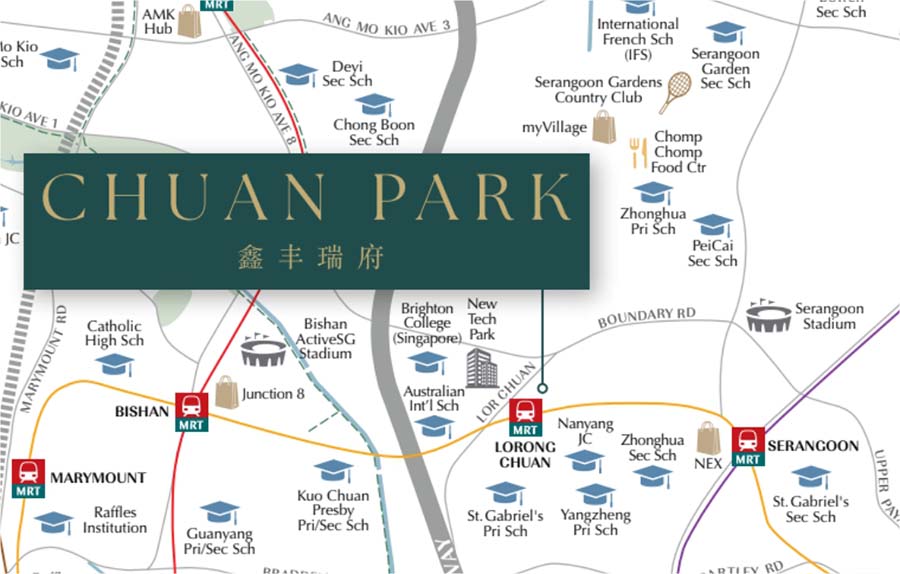
Lorong Chuan occupies a strategic but understated position within the North-East region, sitting between established residential nodes such as Serangoon, Bishan, and Ang Mo Kio. While not a commercial centre in its own right, it benefits from mature infrastructure, established schools, and direct Circle Line connectivity without the congestion typically associated with more heavily redeveloped hubs.
A defining characteristic of the Lorong Chuan micro-market is the prolonged absence of new private residential supply. For many years, residents seeking to upgrade within the same neighbourhood had limited options, creating a form of latent demand that Chuan Park is now absorbing. This dynamic explains why buyer interest has remained resilient despite pricing that challenges conventional OCR benchmarks.
Transport convenience plays an outsized role here. The Circle Line provides direct and efficient access to Bishan, Serangoon, and western employment nodes, reducing reliance on private vehicles in an area already sensitive to peak-hour traffic pressure. Retail and lifestyle needs are largely met through nearby hubs such as NEX and surrounding neighbourhood centres, reinforcing a pattern of practical, rather than lifestyle-led, urban living.
Project Positioning: What Chuan Park Is — and Is Not
Chuan Park is positioned as a functional, utility-driven residential development rather than a prestige or design-led statement. Its core value proposition rests on MRT adjacency, comprehensive on-site facilities enabled by land size, and proximity to a broad range of educational institutions.
What it is:
A modern, large-format condominium in a mature estate with immediate MRT access.
A long-term housing option optimised for commuting efficiency and family needs.
A school-oriented choice for buyers planning around enrolment cycles and neighbourhood continuity.
What it is not:
A low-density or boutique residential experience.
A tenure-scarcity or freehold-led investment thesis.
A short-term price appreciation or flipping opportunity.
This clarity of positioning has helped filter demand. Buyers seeking exclusivity or near-term upside tend to look elsewhere, while those prioritising convenience and livability show greater willingness to accept density and pricing trade-offs.
Scale, Density, and Facilities: How the Land Is Being Used
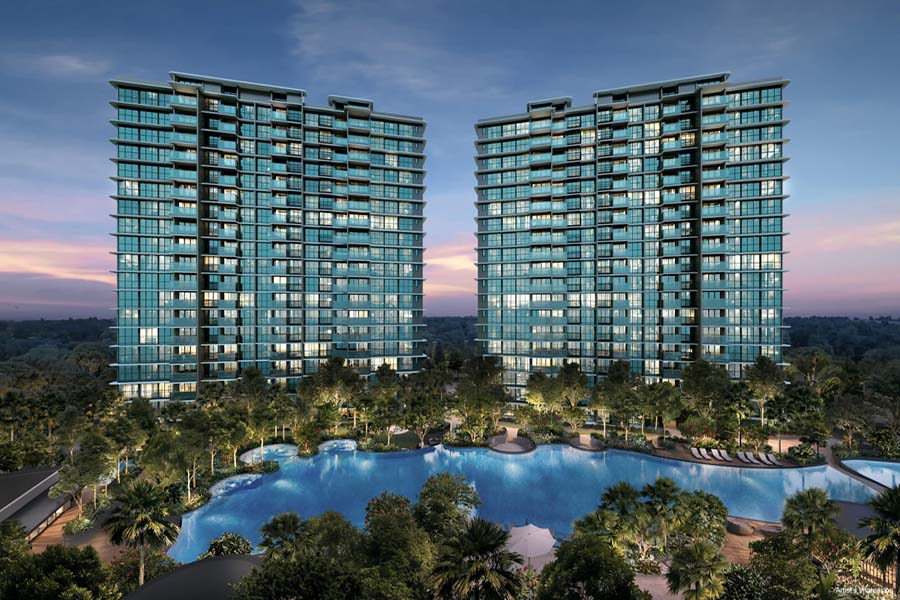
The redevelopment represents a significant intensification of land use compared to the former estate, increasing both unit count and verticality. To counterbalance this, the project relies heavily on internal landscaping, communal decks, water features, and varied tower heights to soften visual density and improve liveability within the site.
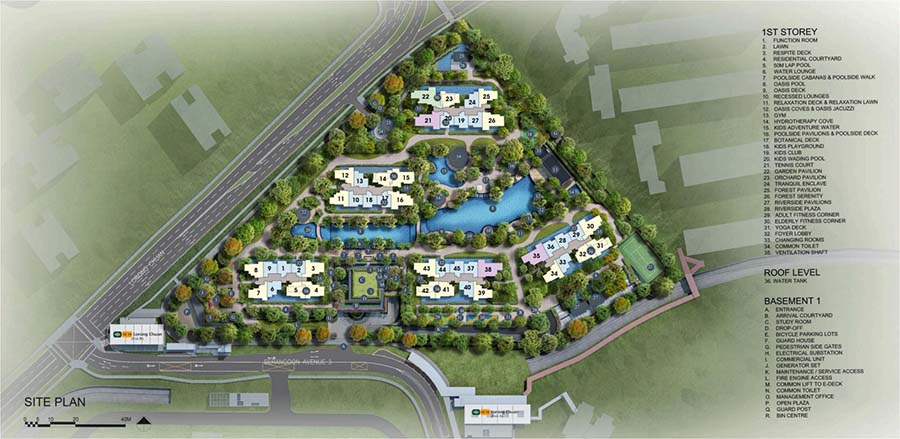
Facilities provision is one of Chuan Park’s strongest relative advantages within the Lorong Chuan vicinity. Surrounding private developments are generally older and constrained by smaller land plots, resulting in more limited amenity offerings. In contrast, Chuan Park delivers a full suite of contemporary facilities that appeal particularly to families and lifestyle-oriented upgraders who expect self-contained recreational spaces.
That said, density remains an unavoidable reality. Buyers who are sensitive to noise, privacy, or congestion need to pay close attention to stack orientation, proximity to main roads, and MRT-facing units, as these factors will materially affect day-to-day living experience.
Buyer Suitability: Who Chuan Park Works Best For
Chuan Park is most suitable for buyers with a clearly defined, long-term rationale tied to location utility rather than speculative intent.
It aligns best with:
HDB upgraders from Districts 19 and 20 who wish to remain within familiar school and social networks.
Families prioritising proximity to primary, secondary, and tertiary institutions within established catchments.
Multi-generational households seeking geographic continuity with nearby landed or older private homes.
It is less well suited to:
Investors focused on maximising rental yield per square foot.
Buyers seeking low-density, boutique living environments.
Those highly sensitive to perceived inefficiencies in internal layouts.
Pricing and scale naturally discourage speculative demand, which may contribute to more stable resale behaviour over time, particularly for units that combine MRT convenience with favourable orientation.
Buyers comparing Chuan Park against other upcoming launches may find it helpful to frame their decision using the New Launch Condo Guide, which outlines how pricing logic, buyer intent, and holding horizon differ across project types.
Takeaway
Chuan Park is a focused, location-driven development that leverages immediate MRT access and neighbourhood scarcity to justify pricing that stretches conventional OCR logic. It will not appeal to every buyer, but for those who value daily convenience, school access, and long-term livability over tenure length or speculative upside, it offers a clear and defensible proposition.
If Chuan Park is on your shortlist and being compared against nearby alternatives, a structured review of capital commitment differences, downside exposure scenarios, liquidity positioning, and realistic exit pool dynamics may help clarify the decision framework before any commitment is made.
FAQs (Decision-Stage)
1. Is Chuan Park considered expensive for an OCR project?
Chuan Park is priced above traditional OCR expectations, primarily due to its immediate MRT adjacency and lack of competing new supply in the Lorong Chuan area. Buyers are effectively paying a premium for daily convenience and long-term livability rather than near-term capital upside. Whether this represents value depends on how strongly a buyer prioritises transit access and school proximity.
2. How meaningful is the MRT adjacency in daily living?
Immediate proximity to Lorong Chuan MRT materially reduces dependence on private transport, especially during peak commuting hours. For households with multiple working adults or school-going children, this convenience compounds over time. It also underpins baseline resale liquidity, even if price appreciation remains measured.
3. Does the large unit count pose long-term risks?
A 916-unit development introduces potential congestion and resale clustering around TOP. However, large projects also benefit from deeper demand pools and stronger MRT-led liquidity. The key risk mitigant lies in careful unit and stack selection rather than unit count alone.
4. How does school proximity affect resale prospects?
School catchment remains one of the most durable demand drivers in Singapore’s housing market. Chuan Park’s proximity to multiple reputable schools supports family-driven resale demand, particularly around Primary 1 enrolment cycles. This dynamic tends to favour own-stay buyers with longer holding horizons.
5. Are layout efficiency concerns justified?
Some buyers perceive older planning-era layouts as less efficient compared to newer developments. While headline unit sizes may appear similar, perceived usable space can differ, influencing buyer sentiment over time. This becomes more relevant when future buyers compare Chuan Park against newer, post-harmonisation projects.
6. How much does the developer’s track record matter here?
Developer reputation has been raised as a concern by some buyers, though recent large-scale projects have shown improved execution. For most purchasers, the site’s attributes have outweighed brand considerations. Nevertheless, own-stay buyers should maintain realistic expectations and focus on unit-specific fundamentals.
7. Is Chuan Park suitable as a rental investment?
Rental demand is supported by MRT access and proximity to international schools, but yields are moderated by high entry prices. The project suits investors prioritising tenant stability and liquidity over yield maximisation. It is less suited to short-horizon rental plays.
8. What is the biggest decision risk buyers should consider?
The primary risk lies in overpaying for convenience if future resale buyers become more sensitive to density and perceived usable space. Buyers entering with a long-term, own-stay mindset and a clear exit strategy tied to schools or MRT convenience are better positioned to manage this risk.
Pricing Logic, Market Behaviour & Comparative Reality
Pricing Logic: Why Chuan Park Breaks OCR Comfort Zones
Chuan Park’s pricing does not follow conventional OCR benchmarks because it is not competing on the same variables. Buyers are not evaluating it purely against peripheral OCR launches, but against a narrower set of MRT-adjacent, school-driven alternatives within established residential corridors. In this context, proximity to the Circle Line compresses the perceived distance to central and city-fringe employment nodes, allowing buyers to mentally re-anchor value expectations.
Resistance emerges not at a single PSF number, but at quantum thresholds. Two-bedroom units face pushback once absolute prices move beyond what upgrader households are comfortable stretching for a secondary bedroom, while three-bedroom units encounter resistance when affordability crosses into multi-generational decision territory. This explains why larger units often transact at lower PSF levels despite higher absolute prices.
Importantly, pricing acceptance here is selective rather than uniform. Units with less favourable orientation, road exposure, or perceived layout inefficiencies experience slower absorption, reinforcing the view that Chuan Park’s demand is utility-led rather than speculative. Buyers are willing to pay for convenience, but not indiscriminately.
Density, Scale, and the Liquidity Trade-Off
With 916 residential units, Chuan Park introduces a scale that reshapes the Lorong Chuan micro-market. High density naturally raises concerns about congestion, privacy, and eventual resale competition when a large cohort of units reaches market simultaneously. These risks are real, but they are not unique; they must be weighed against the liquidity advantages that scale can provide.
Large MRT-adjacent projects tend to attract deeper buyer pools over time, particularly among families and upgraders who prioritise accessibility over exclusivity. While resale competition may be heightened in the early post-TOP years, demand driven by school cycles and transport convenience often absorbs supply more evenly than in boutique developments with narrower appeal.
The key determinant of resale performance will be unit differentiation rather than project-wide averages. Buyers who select quieter stacks, favourable orientations, and layouts perceived as more efficient are better positioned to outperform the project’s median outcomes.
Layout Efficiency and the “Usable Space” Question
One of the more persistent objections raised by buyers concerns perceived layout efficiency. Compared to newer developments designed under revised planning guidelines, Chuan Park’s units may feel less efficient on a like-for-like size comparison. While this does not negate actual livability, it does affect buyer psychology when future resale comparisons are made.
This becomes especially relevant when competing projects offer smaller headline sizes that feel more generous in practice. Over time, resale buyers are likely to become more discerning about usable space rather than absolute square footage. As a result, Chuan Park’s strongest resale candidates will be units where layout flow, window placement, and internal proportions offset this perception gap.
For own-stay buyers with long holding horizons, this issue is less immediate. For those considering exit timing and liquidity, it warrants careful consideration at the point of purchase.
Comparative Set: Why Buyers Look Beyond District Boundaries
Chuan Park is frequently compared against projects outside District 19, including city-fringe and integrated developments. This reflects buyer behaviour rather than marketing influence. When price points converge, buyers naturally widen their comparison set to include alternatives that offer different trade-offs.
Against integrated developments, Chuan Park competes on lower congestion within the development itself and quieter residential surroundings, albeit without retail integration. Against boutique freehold options, it competes on modern facilities and MRT proximity, while conceding on tenure and exclusivity. These comparisons highlight that Chuan Park’s appeal is strongest among buyers who value daily convenience over structural prestige.
Ultimately, its competitive position is defined less by district labels and more by functional equivalence. Buyers are deciding between convenience profiles rather than postcode status.
Risk Scenarios, Exit Strategy & Buyer Fit
Exit & Resale Dynamics: Timing Matters More Than Price
For Chuan Park, exit strategy is closely tied to timing rather than market cycles. School-driven demand remains one of the most reliable non-speculative resale drivers in Singapore, and projects within strong catchments tend to see liquidity peaks aligned with enrolment periods. This favours owners who plan exits around family-led demand rather than opportunistic pricing.
Conversely, attempting to exit during periods when a large volume of similar units enters the resale market may compress achievable prices. This risk is amplified in mega-developments, where competition is internal before it becomes external. Owners who hold through the initial resale wave are more likely to benefit from stabilised demand.
Rental Behaviour: Stability Over Yield
Rental demand for Chuan Park is underpinned by MRT access and proximity to international schools and employment nodes. However, high entry prices limit yield expansion, making the project less suitable for yield-maximisation strategies. Instead, it aligns better with investors seeking stable tenancy and lower vacancy risk.
Tenants drawn to the area typically prioritise accessibility and schooling over luxury finishes. This reinforces the project’s positioning as a practical housing solution rather than a lifestyle statement. Rental performance is therefore expected to be steady rather than exceptional.
Structural Risks to Monitor
Several structural risks warrant attention. Traffic congestion at site access points may worsen during peak hours, particularly as the surrounding area densifies. Noise exposure for stacks facing major roads or MRT tracks could affect long-term livability, especially for noise-sensitive households.
Additionally, as newer developments with more efficient layouts enter the market, resale buyers may become increasingly selective. This does not diminish Chuan Park’s core strengths, but it places greater emphasis on unit selection discipline at the point of entry.
Final Buyer Segmentation: Who Should — and Should Not — Buy
Chuan Park is best suited for buyers with clear priorities around convenience and continuity. Families planning long-term stays, school transitions, or multi-generational proximity are likely to extract the most value. Buyers seeking quick appreciation, boutique environments, or tenure-driven scarcity are less likely to find alignment here.
Understanding this fit is critical. The project rewards clarity of intent and penalises mismatched expectations.
FAQs
1. Does Chuan Park’s pricing leave room for future upside?
Chuan Park’s pricing already reflects a premium for MRT adjacency and neighbourhood scarcity. While this limits near-term upside, it also embeds a strong base of utility-driven demand. Long-term performance is more likely to track inflation and livability value rather than sharp capital gains.
2. How serious is the risk of resale competition from 916 units?
Resale clustering is a valid concern in the initial post-TOP period, as many owners may test the market simultaneously. However, MRT proximity and school demand tend to absorb supply more evenly over time. Unit differentiation and exit timing will play a larger role than headline unit count.
3. Will newer projects with more efficient layouts hurt resale value?
Future buyers are likely to compare usable space more critically as newer projects enter the market. This may place pressure on units with less intuitive layouts. Well-proportioned units with good orientation are better positioned to remain competitive.
4. Is Chuan Park more suitable for own-stay or investment?
The project aligns more naturally with own-stay buyers who value daily convenience and long-term livability. Investors focused on yield or short-term gains may find better opportunities elsewhere. It suits investors seeking stability rather than optimisation.
5. How important is MRT adjacency in long-term resale?
Immediate MRT access remains one of the strongest liquidity drivers in Singapore’s housing market. Even as preferences evolve, accessibility consistently underpins buyer interest. This provides a durable floor for demand, even if price growth moderates.
6. Does developer reputation materially affect resale outcomes?
Developer reputation can influence initial buyer sentiment, but long-term resale is more heavily driven by location and livability. Over time, the site’s attributes tend to outweigh brand considerations. Buyers still need to factor realistic expectations into their decisions.
7. What exit strategy works best for Chuan Park owners?
Exit strategies aligned with school enrolment cycles tend to outperform opportunistic timing. Families seeking proximity to schools create repeatable demand windows. Owners who plan exits around these periods may achieve better liquidity.
8. How sensitive is Chuan Park to broader market downturns?
Projects with strong utility attributes generally show more resilience during market slowdowns. While prices may soften, transaction volume tends to hold up better than in speculative developments. Chuan Park’s MRT access and family appeal provide some downside protection.
9. Does high density reduce long-term desirability?
High density can affect perceptions of privacy and congestion, but it does not automatically translate to poor resale outcomes. In MRT-adjacent locations, density is often an accepted trade-off. Buyer expectations, rather than density alone, determine satisfaction.
10. How should buyers think about absolute price versus PSF?
Absolute price often drives buyer resistance more than PSF metrics, especially for family-sized units. Buyers should evaluate affordability in terms of household cashflow rather than headline PSF. This perspective aligns better with long-term holding decisions.
11. Are road- and MRT-facing stacks a deal-breaker?
These stacks are not inherently unlivable, but they require careful assessment. Noise exposure and privacy vary significantly by height and orientation. Buyers sensitive to these factors should prioritise quieter internal-facing stacks.
12. How does Chuan Park compare to integrated developments?
Integrated projects offer convenience through retail and transport integration but often come with higher congestion and density. Chuan Park trades integration for a more residential environment while retaining MRT access. Buyer preference determines which trade-off is acceptable.
13. Is the lack of sheltered access to MRT a concern?
While sheltered access is a convenience, the extremely short walking distance reduces its practical impact. For most residents, the trade-off is minor. It becomes more relevant only for households with mobility-sensitive members.
14. What role do schools play in sustaining demand?
Schools remain one of the most stable demand drivers in Singapore’s private housing market. Proximity supports both own-stay decisions and resale liquidity. This factor underpins Chuan Park’s long-term relevance.
15. How should buyers think about holding period?
Chuan Park rewards longer holding periods that align with family life cycles. Short holding periods expose owners to pricing friction and resale competition. Buyers entering with patience are better positioned.
16. What is the single biggest mistake buyers could make here?
The biggest mistake is buying without a clear rationale beyond “it’s next to the MRT.” Convenience is powerful, but expectations must be realistic. Buyers who align purchase decisions with lifestyle and exit planning tend to have better outcomes.
If a structured discussion is preferred over WhatsApp, or if detailed floor plans, pricing breakdowns, or showflat arrangements are required, your details may be left below for a follow-up.