
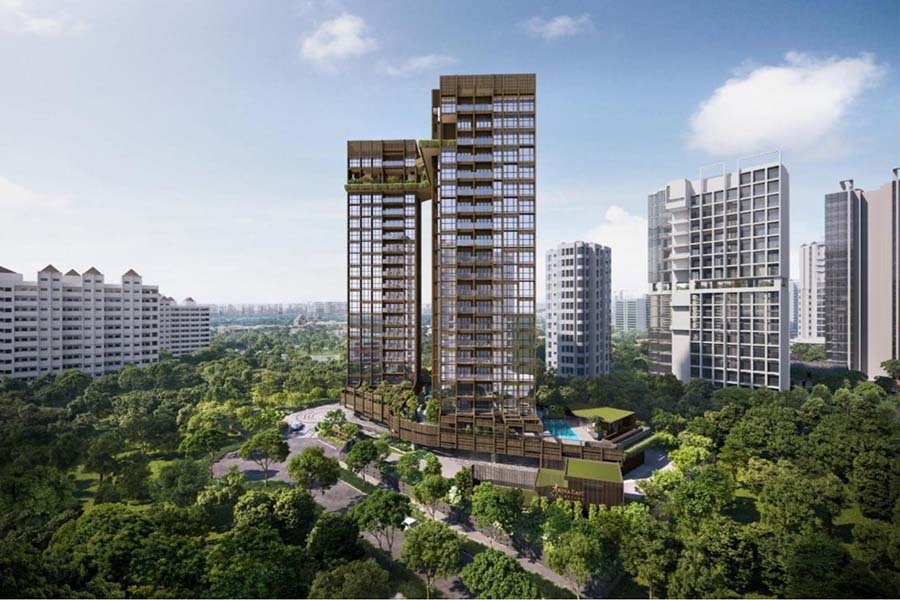
Summary
Arina East Residences is a freehold, low-density condominium located along Tanjong Rhu Road in District 15, positioned as a city-fringe alternative for buyers evaluating whether MRT access, tenure security, and long-term holding stability outweigh lifestyle-driven considerations.
Unlike traditional East Coast developments in Katong, Marine Parade, or Meyer Road, this project operates within a more functional micro-location where connectivity and commute efficiency play a larger role than neighbourhood identity or prestige.
Its key advantage lies in its proximity to Katong Park MRT on the Thomson–East Coast Line, which significantly improves daily accessibility to the CBD, Marina Bay, and Orchard. However, this comes with a clear trade-off — the surrounding environment is less lifestyle-oriented and lacks the same level of retail, dining, and heritage character typically associated with District 15.
As a result, Arina East Residences should not be evaluated as a prestige or lifestyle purchase. Instead, it functions as a structured entry into District 15 where location efficiency and tenure form the foundation of its value.
For buyers aligned with this positioning, the project offers a coherent long-term proposition. For those expecting East Coast charm or prestige-driven appreciation, it is likely to feel like a compromise.
Arina East Residences at a Glance
Best suited for:
Buyers seeking a freehold District 15 property with MRT connectivity and long-term holding stability
Less suitable for:
Buyers prioritising lifestyle environment, prestige enclaves, or East Coast identity
Core strength:
Freehold tenure combined with MRT accessibility in a city-fringe location
Key trade-offs:
Weaker lifestyle surroundings, limited retail cluster, and less emotional appeal
Investment profile:
Stability-driven rather than growth-driven, with gradual performance rather than rapid appreciation
Explore the Full Arina East Residences Analysis
This article is part of the full Arina East Residences cluster:
- Arina East Residences Price Guide – pricing logic, market positioning, and entry analysis
- Arina East Residences Floor Plan Analysis – layout efficiency, unit mix, and stack considerations
- Arina East Residences Showflat Guide – viewing strategy, project presentation, and on-site buyer evaluation approach
Together, these articles provide a structured analysis of the project’s positioning, pricing framework, layout strategy, and viewing considerations.
If you’re considering this project, you might want to check how it actually compares and what most buyers tend to overlook — before deciding.
Key details (at a glance):
Freehold | 107 units | 6C Tanjong Rhu Road | Katong Park MRT (TEL) nearby | City-fringe D15 entry alternative | Best fit: own-stay + long-horizon hold (not prestige-led Meyer/Amber lifestyle)
Project Factsheet
| Item | Details |
|---|---|
| Project Name | Arina East Residences |
| Address | 6C Tanjong Rhu Road |
| District | District 15 |
| Region | Rest of Central Region (RCR) |
| Developer | ZACD LV Development Pte. Ltd. |
| Tenure | Freehold |
| Total Units | 107 |
| Configuration | 1BR to 4BR Premium + Private Lift |
| Towers | 2 blocks, 20 storeys |
| Site Area | Approx. 47,012 sq ft |
| Plot Ratio | 2.1 |
| Estimated TOP | 2028 |
Arina East Residences is a city-fringe freehold District 15 development where MRT connectivity and long-term holding comfort matter more than East Coast lifestyle prestige.
Location Context: When District 15 Stops Feeling Like “East Coast”
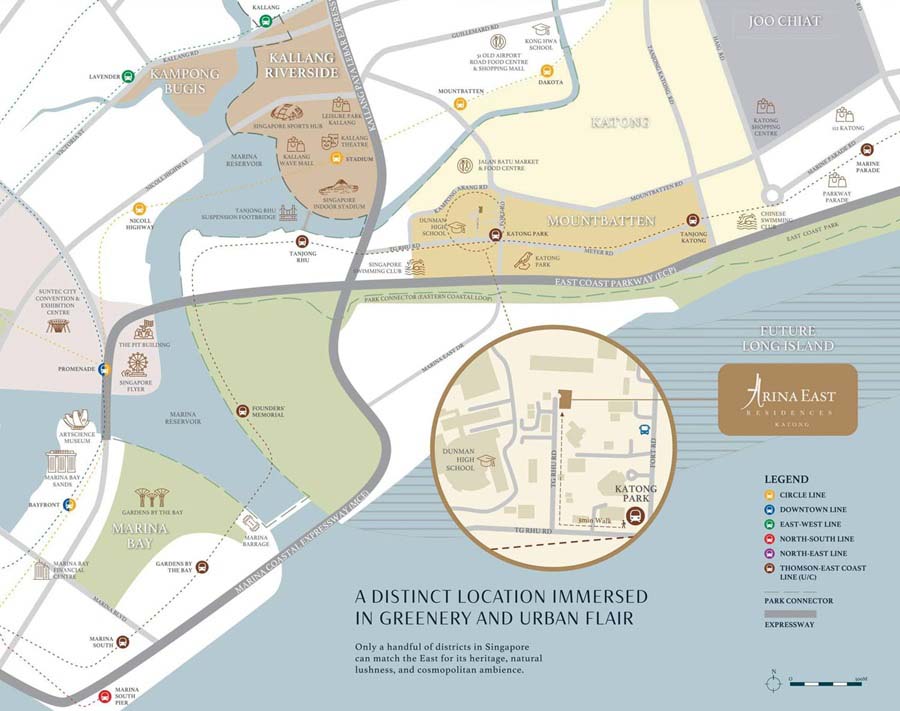
Arina East Residences sits along Tanjong Rhu Road, which places it in a very specific part of District 15 — one that behaves differently from how most buyers mentally picture the district.
When buyers think of District 15, they usually imagine Katong, Marine Parade, or Meyer Road. These areas carry a strong sense of identity — heritage shophouses, cafes, proximity to East Coast Park, and a neighbourhood “feel” that does a lot of emotional work in the buying decision.
Tanjong Rhu does not operate in the same way.
Instead, it behaves more like a city-fringe transition zone between the East Coast and the central region. The environment is more functional, less lifestyle-driven, and more influenced by infrastructure and connectivity than by neighbourhood culture.
This is where Arina East starts to make sense — or not — depending on how you look at it.
The strongest locational advantage is its proximity to Katong Park MRT. Within District 15, this is not common for freehold developments. That single factor shifts the project into a different category entirely.
For a buyer working in the CBD, Marina Bay, or even Orchard, the daily commute becomes significantly more efficient. This is not a marginal improvement — it is a structural difference in how the property functions day-to-day.
However, this comes with a trade-off.
The immediate surroundings do not deliver the same “arrival feeling” as Meyer Road or Katong. There is less of a defined lifestyle cluster, fewer walkable retail options, and a more mixed neighbourhood profile.
For some buyers, this is a deal-breaker.
For others, it is a non-issue.
The difference lies entirely in what you expect District 15 to provide.
Project Positioning: What It Is — And What It Is Not
Understanding Arina East Residences requires a clear framing.
What Arina East Residences Is
- A freehold entry into District 15 that does not require Meyer/Amber-level pricing
- A city-fringe development with MRT access, which is relatively uncommon in D15
- A low-density project (107 units) that avoids the scale and competition of mega launches
- A development that prioritises efficiency, ventilation, and practical layouts
What It Is Not
- Not a prestige-led East Coast address driven by neighbourhood charm
- Not a project where the surrounding environment carries the experience
- Not a lifestyle-driven purchase anchored by cafes, malls, or heritage identity
- Not a short-term appreciation play driven by hype or scarcity
This distinction is not just semantic — it directly affects buyer satisfaction.
If you buy Arina East expecting Meyer Road, you will feel compromised.
If you buy it as a rational D15 entry point with MRT access, it becomes coherent.
Amenities: What You Actually Get
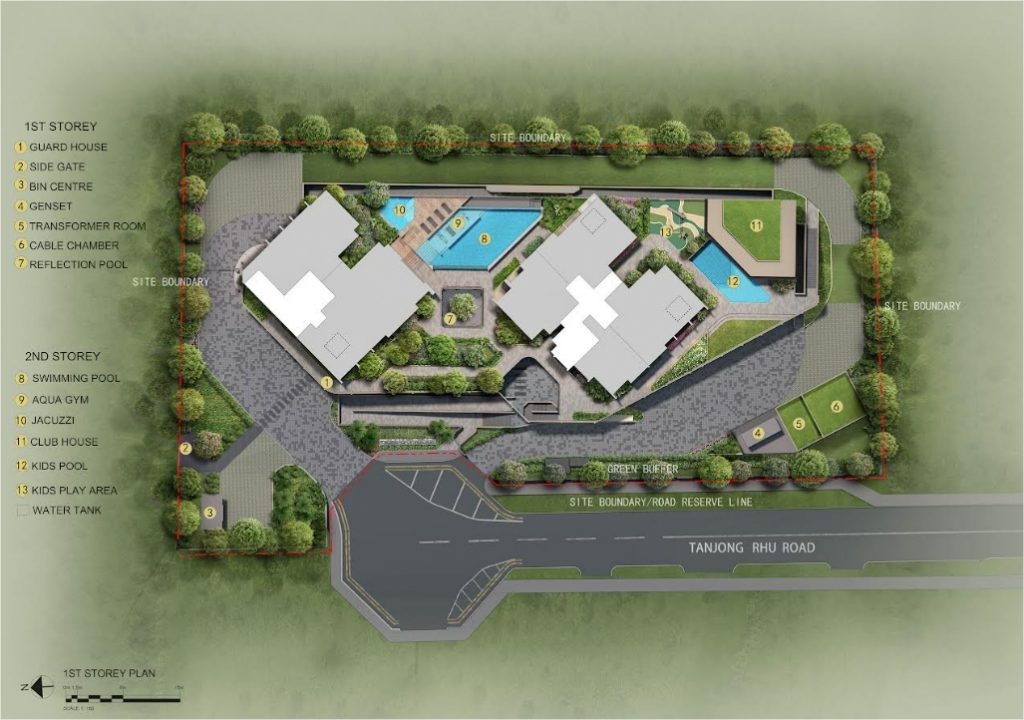
Arina East Residences is designed with a compact but functionally complete set of facilities, aligned with its low-density positioning rather than large-scale lifestyle offerings.
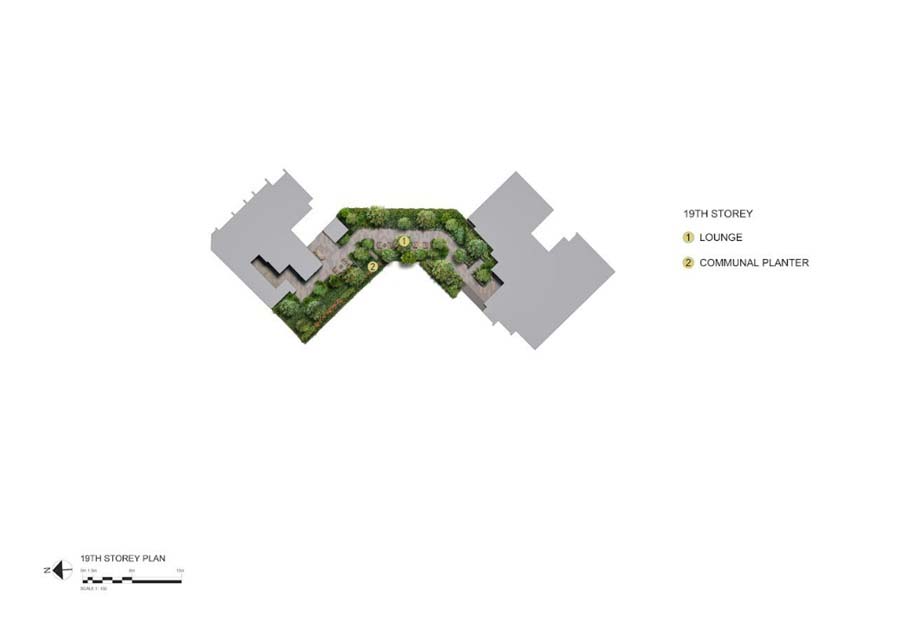
Facilities are distributed across multiple levels, including ground-level communal areas, elevated sky terraces, and rooftop spaces. This allows the development to maximise spatial experience despite a smaller land footprint.
Core Facilities Include:
- Swimming pool and pool deck
- Sky terraces with open views
- Rooftop garden and communal spaces
- Fitness areas
- Landscaped relaxation zones
Rather than competing on volume, the project focuses on usability. Facilities are sufficient for daily living but do not attempt to replicate the extensive offerings typically found in larger developments.
For buyers, the key consideration is not the number of facilities, but whether the environment feels complete for long-term use. Those expecting resort-style living may find the offering limited, while buyers prioritising privacy and lower density may find it appropriately scaled.
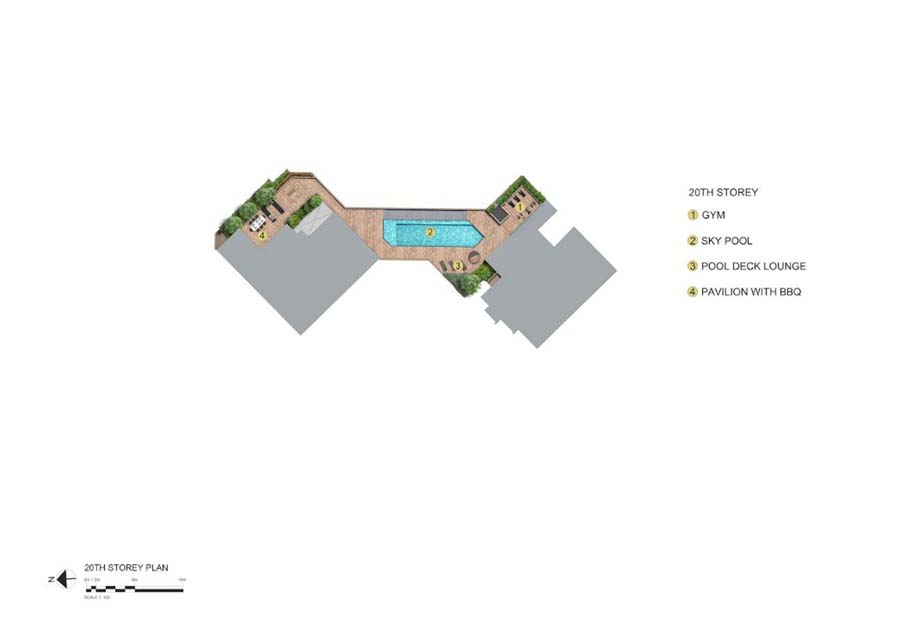
Arina East does not attempt to compete with large-scale developments offering dozens of facilities. Instead, it focuses on providing a complete but compact set of amenities that support daily use.
The inclusion of sky terraces and elevated facilities is a deliberate move. It allows the development to create a sense of space and openness without requiring a large land footprint.
For buyers, the key question is not “how many facilities are there?”
It is “does this feel complete enough for daily living?”
Buyer Suitability: Who This Actually Works For
Arina East Residences is a project where buyer fit matters more than usual.
Suitable Buyers
1. Rational D15 Entry Buyers
These are buyers who want a District 15 address but are unwilling to pay Meyer or Amber prices. They see Arina East as a practical compromise rather than a downgrade.
2. City-Focused Professionals
Buyers working in the CBD or Marina Bay who prioritise commute efficiency will find MRT proximity highly valuable.
3. Long-Hold Investors
Investors who prioritise stability over upside — rental demand, tenure, and long-term relevance — are more aligned with this project.
Less Suitable Buyers
1. Lifestyle-Driven Buyers
If your decision is driven by cafes, walkability, and East Coast ambience, this project will feel lacking.
2. Prestige-Oriented Buyers
Buyers who equate District 15 value with Meyer or Amber will struggle to reconcile the micro-location.
3. Short-Term Investors
There is no strong narrative here for rapid price acceleration.
Takeaway
Arina East Residences is not a project that sells itself emotionally. It requires the buyer to think clearly about what they are prioritising.
It works when you accept the trade-off:
- You gain freehold + MRT + city-fringe positioning
- You give up neighbourhood prestige and lifestyle intensity
For buyers who are comfortable with that equation, the project becomes coherent.
For those who are not, it will always feel like a compromise.
If you’re seriously considering this project, it’s worth checking how it actually compares and what most buyers tend to overlook — before deciding.
FAQs (Decision-Stage)
1) Is Arina East Residences considered a “prime” District 15 address?
Arina East Residences sits within District 15, but it is not located within traditional prestige enclaves such as Meyer or Amber Road. It functions more as a city-fringe location where connectivity and practicality take priority over neighbourhood identity. Buyers expecting a classic East Coast lifestyle may perceive a mismatch, while those focused on access and positioning may find it acceptable.
2) Does freehold tenure automatically mean better capital appreciation?
Freehold tenure supports long-term holding confidence and reduces lease decay concerns, but it does not guarantee stronger capital appreciation. Price performance still depends on entry level, demand at exit, and broader market conditions. For Arina East Residences, the appreciation profile is more likely to be steady rather than aggressive.
3) Is Arina East Residences more suitable for own-stay or investment?
Arina East Residences can work for both, but it aligns more naturally with own-stay buyers prioritising MRT access and investors with a long-term holding horizon. It is less suited for short-term investors seeking quick gains. The value proposition is more defensive than growth-oriented.
4) How important is MRT proximity for Arina East Residences’ value proposition?
MRT access is one of the most important factors supporting Arina East Residences’ positioning. Within District 15, developments with strong MRT connectivity are relatively limited. This enhances both daily convenience and rental demand potential.
5) What is the main reason buyers hesitate on Arina East Residences?
The main hesitation typically relates to micro-location perception. While the project carries a District 15 address, the surrounding environment does not reflect the same prestige or lifestyle intensity as more established East Coast areas. This creates a psychological gap for certain buyers.
6) What type of buyer is most likely to regret buying Arina East Residences?
Buyers who prioritise lifestyle ambience and expect a strong neighbourhood identity are most likely to feel misaligned. Arina East Residences is better suited for those who prioritise practicality and connectivity over emotional appeal.
7) Will rental demand be relevant for Arina East Residences?
Rental demand is likely to be supported by MRT proximity and city-fringe accessibility. Professionals working in central areas may find the location attractive, contributing to a relatively stable tenant pool over time.
8) Is Arina East Residences worth buying?
Arina East Residences makes sense for buyers who prioritise freehold tenure, MRT connectivity, and a city-fringe location over lifestyle and prestige factors. It is less suitable for those seeking strong emotional appeal or immediate upside. The decision ultimately depends on whether the buyer values function and long-term positioning over environment and identity.
Pricing, Positioning & URA Analysis
Pricing Behaviour: Why Buyers Feel Friction — Even When It’s Logical
Arina East Residences sits in what can be described as a “cognitive dissonance price zone.”
It is not priced low enough to trigger instinctive demand, and not prestigious enough to justify premium acceptance without explanation. This creates a situation where buyers need to think through the purchase, rather than react emotionally to it.
This is important.
Projects that require explanation tend to:
- Convert slower
- But produce more committed buyers
The Three Psychological Pricing Anchors
To understand how Arina East is perceived, you need to understand the three anchors buyers subconsciously use.
Anchor 1: “What I Can Get in OCR”
At a similar quantum, buyers could typically obtain:
- Larger units
- More extensive facilities
- Stronger perceived value
This creates immediate resistance.
The buyer’s internal question becomes:
“Why am I paying more for less space?”
The answer is:
Location compression + district positioning + MRT access
But this answer only works for buyers who value those factors.
Anchor 2: “What I Need to Pay for Meyer / Amber”
When buyers stretch slightly further, they start comparing with:
- Meyer Road
- Amber Road
- Marine Parade pockets
Here, the narrative flips.
Instead of feeling expensive, Arina East suddenly feels:
- More accessible
- More practical
- Less emotionally driven
The buyer’s question becomes:
“Do I really need that level of prestige?”
Anchor 3: “What Freehold Should Feel Like”
Freehold carries a strong psychological premium in Singapore.
Buyers expect:
- Long-term security
- Better value retention
- Reduced lease decay concerns
This creates a pricing floor.
Even if the location is less ideal, freehold prevents the project from being perceived as “cheap.”
Why Arina East Creates Split Buyer Reactions
This project consistently produces two types of reactions:
Reaction 1: Immediate Rejection
“Doesn’t feel like D15”
These buyers:
- Prioritise lifestyle
- Expect emotional satisfaction
- Compare against Katong / Meyer
They exit quickly.
Reaction 2: Rational Acceptance
“This is a workable entry”
These buyers:
- Prioritise function
- Understand trade-offs
- Evaluate logically
They convert — but only after thinking.
The Hidden Strength: It Filters Weak Buyers
Most projects try to appeal to everyone.
Arina East does not.
Its positioning naturally filters:
- Impulsive buyers
- Emotion-driven decisions
- Misaligned expectations
What remains is a smaller but higher-quality buyer pool.
This is actually beneficial for:
- Price stability
- Exit clarity
- Reduced volatility
Competitive Positioning: The Triangle Model
Arina East sits within a three-way competitive framework:
1. Prestige (Meyer / Amber)
- Strong identity
- Emotional appeal
- Higher pricing
2. Value (OCR Projects)
- Larger space
- Better facilities
- Lower entry
3. Function (Arina East)
Arina East occupies:
The functional middle ground
It wins on:
- Access
- Practicality
- Balance
It loses on:
- Emotion (vs Prestige)
- Space (vs OCR)
URA Master Plan: Why This Area Will Stay Relevant — But Not Transformational
The Tanjong Rhu / Kallang corridor is structurally important, but not symbolically dominant.
What Supports It
- Proximity to CBD
- Integration into TEL
- City-fringe positioning
These ensure:
- Continued relevance
- Stable demand
What It Lacks
- Strong lifestyle identity
- Cultural or heritage pull
- Destination-level appeal
This means:
It will function well — but not transform dramatically
The Final Pricing Truth
Arina East Residences is not:
- A bargain
- A prestige purchase
It is:
A justified compromise
And whether that is acceptable depends entirely on the buyer.
Exit Strategy, Risk Analysis, Buyer Segmentation & FAQs
Buyer Segmentation: Who This Project Actually Converts — And Who It Repels
Arina East Residences does not appeal broadly. Its demand profile is selective, and understanding this is critical to both entry and exit strategy.
1. The Rational D15 Entry Buyer
This group is primarily motivated by access to District 15 without paying premium enclave pricing. They are aware of the trade-offs and accept them consciously, viewing the project as a strategic positioning decision rather than an aspirational purchase. For these buyers, the absence of lifestyle prestige is not a flaw but a cost-saving mechanism.
2. The City-Centric Professional
These buyers prioritise daily efficiency over environmental character. MRT access, commute time, and connectivity into central business districts matter more than neighbourhood identity. For them, Arina East functions as a highly practical residential base, and the surrounding environment is secondary to accessibility.
3. The Long-Hold Defensive Investor
This segment focuses on stability rather than growth. They are attracted to the combination of freehold tenure and MRT proximity, which supports rental continuity and long-term holding confidence. Their expectations are calibrated toward resilience rather than upside, making the project align well with their strategy.
4. The Misaligned Lifestyle Buyer (Critical Risk Group)
This is the group most likely to regret purchasing. These buyers associate District 15 with Katong charm, East Coast leisure, and prestige micro-locations. When confronted with a more functional and less expressive environment, they experience a disconnect. This is not a flaw in the project itself, but a mismatch in expectation.
Exit Strategy: Understanding Your Future Buyer Pool
The exit narrative for Arina East Residences is not built on prestige, but on practicality.
Future buyers are likely to be:
- City-fringe upgraders seeking better connectivity
- Professionals prioritising MRT access
- Investors looking for stable rental positioning
Less likely buyers include:
- Prestige-driven purchasers
- Lifestyle-focused families
- Buyers seeking emotional or heritage-driven environments
This creates a filtered liquidity profile.
The project will not struggle to find buyers, but it will not appeal universally. Sellers must price and position the unit correctly to match the expectations of this narrower buyer pool.
Liquidity Profile: Stable but Selective
Arina East Residences is unlikely to experience illiquidity, but it will also not benefit from broad-based demand surges.
Liquidity is supported by:
- MRT proximity
- District 15 positioning
- Freehold tenure
However, it is constrained by:
- Micro-location perception
- Lifestyle limitations
- Competition from more established D15 enclaves
This results in a market behaviour that is:
Stable, but not aggressive
Risk Scenarios: What Happens Under Different Market Conditions
Scenario 1: Strong Market Conditions
In a rising market, freehold projects generally benefit from renewed demand due to long-term holding appeal. MRT accessibility further strengthens this position. Arina East is likely to see gradual appreciation, but not at the same pace as prestige-led developments.
Scenario 2: Neutral Market Conditions
In a balanced market, buyer selectivity increases. Micro-location becomes more important, and comparisons against Meyer or Amber become more frequent. Arina East is likely to maintain price stability, but transaction volume may slow.
Scenario 3: Weak Market Conditions
During downturns, buyers prioritise strongest locations and clearest value propositions. Projects with less established identity may face longer selling periods. Arina East’s buyer pool narrows further, although freehold tenure provides some psychological support.
Scenario 4: High Supply Environment
If competing District 15 projects enter the market, buyers gain more choice. This increases competition and places pressure on pricing. Arina East must rely on its MRT proximity and lower entry quantum relative to prestige enclaves to remain competitive.
The Core Risk (Most Important)
The single most important risk factor is:
Micro-location perception
This affects:
- Buyer psychology
- Exit demand
- Price ceiling
Everything else — pricing, tenure, facilities — is secondary to this.
Market Behaviour: Why This Project Converts Differently
Arina East does not follow typical new launch behaviour.
Typical New Launch Pattern
- Emotional attraction
- Quick decision
- Broad appeal
Arina East Pattern
- Initial hesitation
- Analytical evaluation
- Selective conversion
What This Means for You as a Buyer
If you feel uncertain about this project, that is normal.
This is not a “love at first sight” development.
It is:
A “make sense after thinking” project
And those tend to:
- Hold value better
- Attract more rational buyers
- Avoid speculative volatility
The Final Decision Framework
If you are deciding on Arina East Residences, the decision can be simplified to one question:
Which matters more to you?
Option A — Lifestyle + Prestige
- Meyer
- Katong
- Amber
Option B — Space + Value
- OCR developments
Option C — Location + Function + Tenure
- Arina East
If you hesitate between A and C → you are not ready
If you hesitate between B and C → you need to prioritise budget vs positioning
If you are clear on C → this project becomes very straightforward
FAQs (Decision-Stage Deep Dive)
1) Is Arina East Residences a good investment property in District 15?
Arina East Residences is more suitable as a long-term defensive investment than a high-growth or momentum-driven one. Its main strengths are freehold tenure, MRT proximity, and city-fringe accessibility, which support long-term relevance rather than rapid repricing. Investors expecting aggressive upside may find it underwhelming. Investors prioritising stability and holding comfort are more aligned.
2) Will Arina East Residences have good resale value?
Resale value is likely to be stable but selective rather than broadly aggressive. Demand will come mainly from buyers who value MRT convenience, freehold tenure, and city-fringe practicality rather than lifestyle prestige. This creates a narrower but more rational buyer pool. Resale performance depends heavily on pricing discipline and buyer alignment.
3) Is Arina East Residences fairly priced or overpriced?
Arina East Residences usually sits in a price zone that can feel logical but not emotionally compelling. It is not cheap enough to feel like obvious value, but not prestigious enough to command unquestioned premium acceptance. This creates friction during evaluation. Buyers who understand the trade-off between function and prestige are more likely to accept the pricing.
4) What are the main risks of buying Arina East Residences?
The biggest risks are micro-location perception, selective resale demand, and limited emotional pull compared with stronger District 15 enclaves. The project can make sense logically while still facing buyer hesitation at resale if expectations are misaligned. This means the risk is less about structural weakness and more about buyer psychology. Entry price and holding horizon therefore matter significantly.
5) How important is unit selection in Arina East Residences?
Unit selection is very important because not all units will carry the same resale or rental appeal. Factors such as facing, exposure, layout efficiency, and stack positioning can materially affect liveability and future buyer interest. In a smaller project, weaker units stand out more clearly. Good selection improves defensibility even if the broader project remains selective.
6) Will larger units be harder to sell in the future?
Larger units may face a narrower buyer pool because higher quantums reduce affordability and increase decision friction. Smaller units usually benefit from broader demand due to lower entry levels and greater rental flexibility. This does not mean larger units are bad, but they require more patience and more realistic pricing at exit. Quantum sensitivity matters more in selective projects like this.
7) How does Arina East Residences compare with Meyer or Amber Road projects?
Meyer and Amber Road projects are typically bought for prestige, environment, and established neighbourhood identity. Arina East Residences is bought more for practicality, MRT access, and freehold positioning at a relatively more workable entry level. Buyers choosing between them are really deciding between emotional value and functional value. They should not be treated as identical products just because they share District 15.
8) How does Arina East Residences compare with OCR alternatives at similar price levels?
OCR alternatives may offer more space, more facilities, and stronger perceived value at a similar quantum. Arina East Residences compensates through freehold tenure, city-fringe positioning, and MRT accessibility within District 15. The trade-off is clear: buyers are paying for location and tenure rather than scale or amenity volume. This makes the comparison highly dependent on whether they prioritise function or value optics.
9) Who is the likely future buyer pool for Arina East Residences?
The likely future buyers are city-fringe upgraders, professionals who prioritise MRT access, and long-horizon buyers who value freehold tenure. Prestige-driven buyers looking for classic East Coast identity are less likely to convert. This gives the project a filtered but understandable resale audience. Sellers will need to position the property toward practical rather than emotional buyers.
10) Will rental demand be strong enough to support investors?
Rental demand should be supported by city-fringe accessibility and MRT proximity, especially for tenants working in central areas. This creates a decent base of professional demand. However, rental appeal is driven more by functionality than lifestyle premium, so yields are likely to be moderate rather than exceptional. Investors should think in terms of resilience rather than optimisation.
11) Is Arina East Residences more defensive or aggressive as an investment?
It is clearly more defensive than aggressive. The project’s appeal comes from freehold tenure, transport efficiency, and long-term holding logic rather than speculative upside. It is better suited to investors who want stability and lower conceptual risk than those chasing fast appreciation. In that sense, it behaves more like a hold asset than a trading asset.
12) How does micro-location perception affect resale potential?
Micro-location perception is probably the single most important limiter on upside. Even if the project is logically sound, some buyers will still compare it against more established District 15 pockets and feel less emotionally drawn to it. That caps urgency and broad appeal. As a result, resale potential depends heavily on pricing and buyer expectation alignment.
13) Is Arina East Residences vulnerable to competition from future launches?
Yes, especially from projects with stronger lifestyle narratives or more recognisable micro-locations. Buyers in District 15 often compare beyond basic facts and respond strongly to identity and environment. This means Arina East Residences must continue to compete on practicality, MRT access, and tenure rather than narrative prestige. Future supply can therefore affect both perceived value and decision speed.
14) How does Arina East Residences perform in weaker market conditions?
In softer markets, buyer selectivity usually increases and emotionally weaker locations face more scrutiny. Arina East Residences may still hold interest because of freehold tenure and MRT access, but transaction speed can slow. It is more likely to maintain relevance than generate urgency. In weak conditions, it behaves as a stable but selective product rather than a broad-market winner.
15) What is the biggest mistake buyers make when buying Arina East Residences?
The biggest mistake is buying it for what they hope District 15 should feel like instead of what this project actually offers. Buyers who expect lifestyle prestige, East Coast character, or strong emotional appeal may feel underwhelmed. The project works best when bought as a practical city-fringe freehold asset with MRT support. Clear expectation alignment is the difference between confidence and regret.
16) Is Arina East Residences a strategic buy or just a compromise?
It can be either, depending on the buyer’s framework. For buyers anchored to lifestyle identity and neighbourhood charm, it will feel like a compromise. For buyers who value tenure, transport efficiency, and a more rational District 15 entry, it can be a strategic buy. The project rewards clarity of purpose more than emotional enthusiasm.
If you prefer a more structured walkthrough, you can leave your details below and we’ll follow up with you.