

Summary
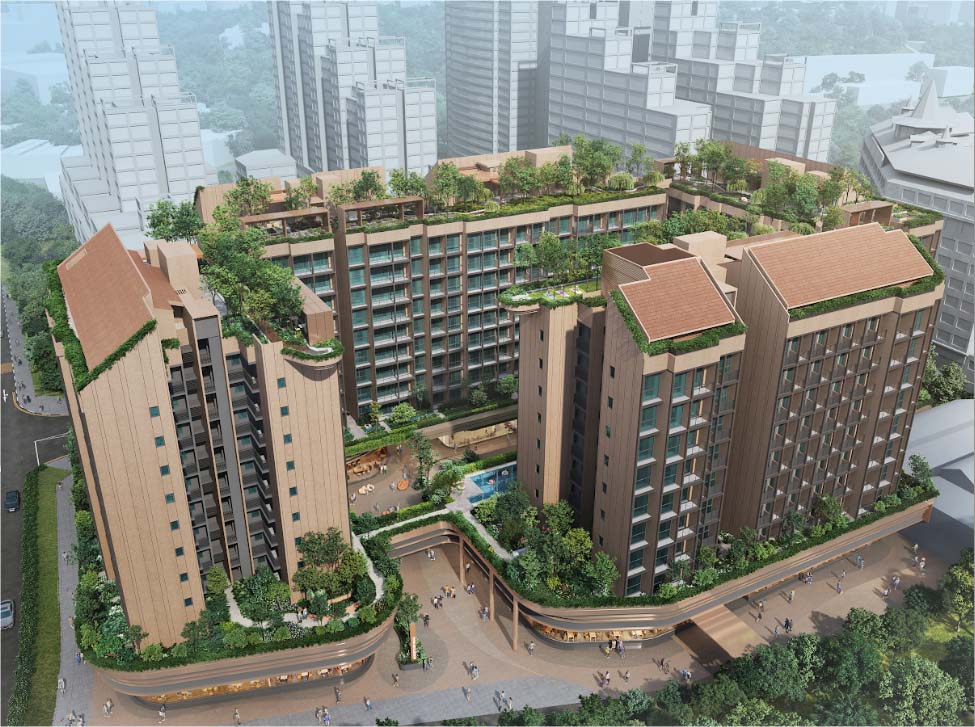
The Robertson Opus is a 999-year leasehold residential development located along Robertson Quay in District 9, within Singapore’s historic Singapore River precinct. Positioned in one of the city’s most established lifestyle corridors, the project targets buyers who value long-term tenure security, riverfront living, and central city relevance, rather than short-term pricing momentum or mass-market affordability.
Unlike many new launches that compete on entry pricing or short-term upside, The Robertson Opus is structured as a legacy-leaning city residence. Buyers here are effectively paying for tenure longevity, neighbourhood maturity, and scarcity of comparable 999-year riverfront supply, while accepting constraints such as a smaller site, limited unit count, and a price point that sits above mainstream RCR offerings.
This review assesses The Robertson Opus from a decision-stage perspective, focusing on who the project truly works for, who should eliminate it early, and how its positioning differs fundamentally from nearby 99-year and mixed-use alternatives.
The Robertson Opus is a 999-year leasehold residential project in District 9 designed for buyers prioritising long-term tenure security and riverfront city living over price accessibility or short-term gains. It suits legacy-oriented own-stay and capital-preservation buyers, while being less suitable for yield-driven or momentum-focused investors.
The Robertson Opus is a 999-year, District 9 riverfront residential development designed for long-term own-stay and legacy buyers who prioritise tenure security and neighbourhood permanence, but it is not positioned for short-term trading or entry-level affordability.
For buyers assessing whether The Robertson Opus aligns with their financing comfort, holding horizon, and exit assumptions, a structured project breakdown covering entry positioning, pricing logic, stack considerations, and buyer suitability may provide additional clarity before arranging any viewing.
Key Details (at a glance)
999-year leasehold | District 9 (CCR)
Riverfront living along Robertson Quay
Boutique-scale residential development
Targeted at own-stay and legacy-focused buyers
Project Factsheet
| Item | Details |
|---|---|
| Project Name | The Robertson Opus |
| Location | 11 Unity Street, Singapore |
| District / Region | District 9 (Singapore River Planning Area / Core Central Region) |
| Tenure | 999-year leasehold |
| Developer | Frasers Property & Sekisui House |
| Site Type | Redevelopment (former Robertson Walk) |
| Development Type | Mixed-Use Development (Residential with 26 retail units at 1st storey and part of Basement 1) |
| Site Area | Approximately 9,102.7 sqm |
| Plot Ratio | 3.37 |
| Total Units | 348 residential units |
| Nearest MRT | Fort Canning MRT (DT20) |
| Launch Status | Launched (19 July 2025) |
| Expected TOP | Q2 2030 (estimated) |
Location Context: Robertson Quay as a Mature Riverfront Enclave
The Robertson Opus sits within Robertson Quay, one of Singapore’s earliest and most established riverfront lifestyle precincts. Unlike emerging city-fringe zones, Robertson Quay is already fully formed—defined by low-rise riverfront residences, dining clusters, and a walkable connection to the CBD and Orchard corridor.
This maturity shapes buyer expectations. Residents are not buying into future transformation; they are buying into existing urban character, stability, and scarcity. The area’s appeal lies less in infrastructure announcements and more in the fact that there are very few remaining residential opportunities of this nature, particularly with long tenure.
Structural Value: 999-Year Tenure as a Long-Horizon Asset
The defining feature of The Robertson Opus is its 999-year tenure.
For its target buyer group, tenure is not a marketing label but a risk-mitigation tool:
It supports long holding periods without lease decay concerns
It aligns with capital preservation and inter-generational planning
It reduces dependency on exit timing
However, this same attribute pushes the project out of reach for value-seeking or price-sensitive buyers, and it should be evaluated accordingly.
Scale & Design Reality: Boutique Living with Structural Limits
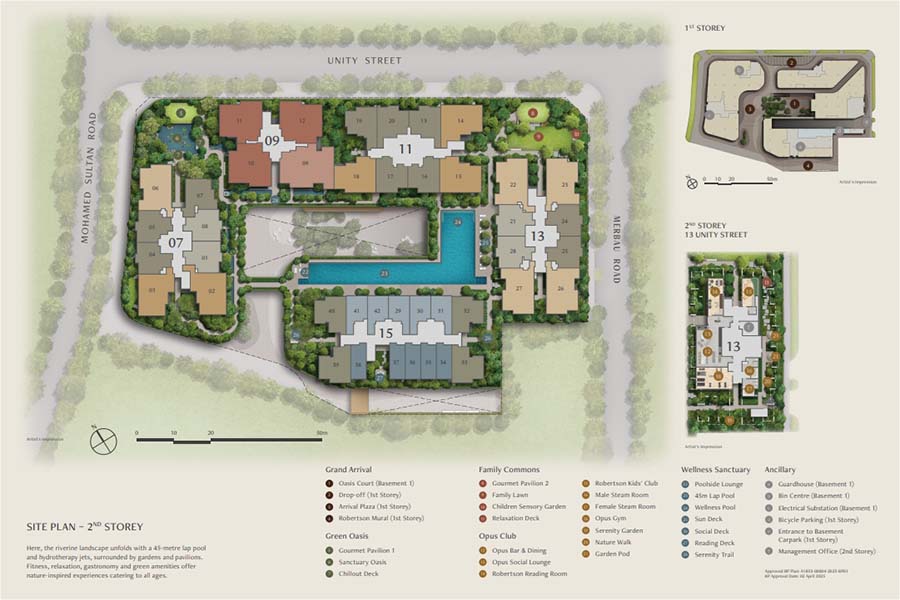
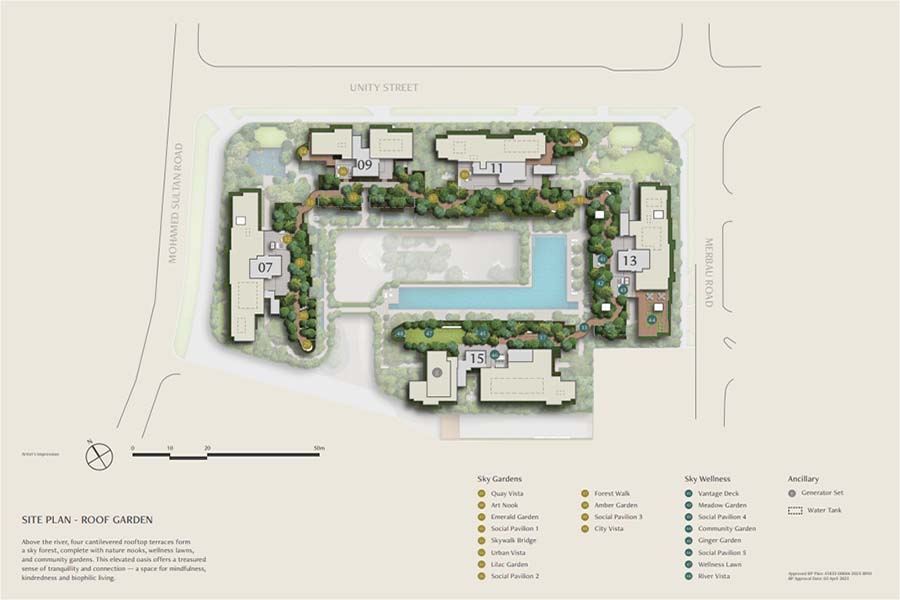
The Robertson Opus is a small-scale, boutique residential development.
This creates:
Greater privacy relative to large GLS projects
Lower resident turnover
A quieter internal environment
At the same time, buyers must accept:
Limited facilities compared to mega developments
Less flexibility in unit selection
Pricing that reflects scarcity rather than scale efficiencies
This is a deliberate positioning choice, not a shortcoming.
What The Robertson Opus Is — and Is Not
What it is
A long-tenure, riverfront residential project
Designed for own-stay and legacy buyers
Anchored in an already-mature lifestyle enclave
What it is not
Not an entry-price CCR opportunity
Not a yield-maximisation investment
Not a short-term trading or launch-momentum play
Not a large, amenity-heavy integrated development
Understanding this distinction is critical to avoiding misaligned expectations.
Buyer Suitability: Who This Project Works For
1. Legacy-Oriented Own-Stay Buyers
Buyers planning to hold long term, potentially across generations, and who value tenure certainty over short-term price movements.
2. CCR Buyers Seeking Neighbourhood Permanence
Those who prefer established riverfront living over emerging or transitional city zones.
3. Capital Preservation-Focused Buyers
Buyers prioritising downside protection and long-term relevance rather than aggressive upside.
Buyers Who Should Eliminate The Robertson Opus Early
The Robertson Opus should be eliminated early by buyers who:
Are price-sensitive or seeking mass-market value
Prioritise rental yield over tenure security
Expect strong short-term appreciation
Prefer large developments with extensive facilities
These limitations stem from the project’s structure and cannot be “fixed” through unit selection.
Buyers comparing The Robertson Opus against other upcoming launches may find it helpful to frame their decision using the New Launch Condo Guide, which outlines how pricing logic, buyer intent, and holding horizon differ across project types.
Takeaway
The Robertson Opus works best for buyers who value 999-year tenure, riverfront living, and long-term stability in a mature District 9 enclave, while it works poorly for buyers seeking entry pricing, high rental yields, or short-term upside.
If The Robertson Opus is on your shortlist and being compared against nearby alternatives, a structured review of capital commitment differences, downside exposure scenarios, liquidity positioning, and realistic exit pool dynamics may help clarify the decision framework before any commitment is made.
FAQs (Decision-Stage)
1) Is The Robertson Opus considered a luxury investment project?
The Robertson Opus is better understood as a legacy-oriented residential asset rather than a trading-style luxury investment. Its appeal lies in tenure longevity, riverfront positioning, and neighbourhood maturity, not rental yield optimisation or short-term price acceleration. Buyers approaching it as a momentum play are likely to be disappointed.
2) Is this project suitable for first-time private buyers?
In most cases, no. The price point, 999-year tenure, and boutique scale make it more suitable for buyers who already own property and are reallocating capital into long-term holdings. First-time buyers focused on affordability or leverage efficiency may find better alignment elsewhere.
3) How important is the 999-year tenure in practice?
For long-term holders, 999-year tenure meaningfully reduces lease decay concerns and exit timing pressure. It supports capital preservation and inter-generational holding strategies. For buyers with short holding horizons, however, the practical benefit is limited relative to the price premium.
4) Does Robertson Quay still have upside as a location?
Upside in Robertson Quay is expected to be steady rather than transformational. The precinct is already mature, with limited scope for large-scale redevelopment-driven repricing. Its value proposition is stability, scarcity, and lifestyle continuity rather than rapid appreciation.
5) Is rental demand strong for The Robertson Opus?
Rental demand exists due to the central riverfront location and proximity to the CBD. However, rental yield is unlikely to be the primary reason to buy, as entry prices are high relative to achievable rents. This is a tenure and own-stay driven project first.
6) How does it compare with 99-year CCR launches nearby?
99-year CCR launches typically offer lower entry prices and larger scale, but they come with lease decay considerations over time. The Robertson Opus differentiates itself through tenure longevity and neighbourhood permanence, which appeals to a different buyer mindset. The choice is structural rather than superficial.
7) Is this a quiet residential environment?
Relative to integrated or high-density city developments, yes, it offers a quieter residential feel. That said, it remains a city-centre location with dining and lifestyle activity nearby. Buyers should expect calm, not isolation.
8) Who is most likely to be satisfied owning this long term?
Buyers who prioritise tenure security, riverfront living, and long-term stability over financial optimisation are most likely to remain satisfied. It suits those thinking in decades, not cycles. Buyers driven by yield or exit timing will likely feel constrained.
Pricing Logic, URA Planning Intent & Buyer Segmentation
Summary
The Robertson Opus should be evaluated as a tenure-driven, legacy-oriented CCR asset, not as a momentum launch or yield-optimised investment. Its pricing behaviour reflects the scarcity of 999-year riverfront residential supply in a fully mature precinct, rather than future transformation or mass-market affordability. Buyers are effectively paying for tenure permanence, neighbourhood stability, and long-term relevance, while accepting a higher entry price and limited short-term upside.
Pricing Logic: Paying for Tenure Permanence, Not Entry Efficiency
Pricing Context (Confirmed Behaviour, Not Speculation)
The Robertson Opus launched with pricing that immediately positioned it above nearby 99-year CCR alternatives, reflecting:
999-year tenure (rare in current CCR supply)
Riverfront Robertson Quay address
Boutique project scale
Fully established lifestyle environment
At the same time, pricing already internalises clear constraints:
Limited rental yield expansion
Small unit count reducing liquidity velocity
Minimal scope for area-wide repricing catalysts
This places the project firmly in a capital-preservation band, rather than a growth-acceleration band.
How Pricing Actually Behaves Over Time
Pricing for projects like The Robertson Opus tends to behave structurally, not cyclically.
Typical characteristics include:
Lower sensitivity to short-term market sentiment
Slower price appreciation in bull markets
Stronger downside protection during corrections
This behaviour aligns with buyers who prioritise holding stability over timing precision.
Absolute Quantum vs PSF: The Relevant Lens
For The Robertson Opus, absolute quantum matters more than psf optics.
Reasons:
Buyers are typically cash-rich or asset-reallocating
Mortgage efficiency is secondary to capital placement
Comparison sets include freehold / long-tenure CCR stock
Buyers stretching affordability to “access CCR” are generally misaligned with this project.
Explicit Pricing Decision Rules
If you prioritise tenure security and riverfront permanence, pricing is coherent.
If you require strong rental yield or near-term upside, pricing will feel restrictive.
Buyers comparing purely on psf without tenure context are using the wrong benchmark.
URA Planning Intent: Conservation, Not Reinvention
URA’s planning direction for the Singapore River and Robertson Quay corridor emphasises:
Conservation of heritage and lifestyle character
Incremental public-realm enhancement
Controlled density and use stability
This matters because:
There is no expectation of dramatic uplift
Value comes from scarcity and preservation
Planning risk is low, but upside catalysts are limited
The Robertson Opus benefits from planning certainty, not transformation.
Buyer Segmentation: Who This Project Truly Serves
1. Legacy-Oriented Own-Stay Buyers (Primary Segment)
Profile
Long holding horizon (often decades)
Strong preference for tenure security
Value neighbourhood permanence
Why It Works
999-year tenure removes lease decay anxiety
Riverfront lifestyle already established
Minimal dependence on future changes
2. Capital Preservation Buyers (Secondary Segment)
Profile
Reallocating capital from other assets
Lower risk tolerance
Less sensitive to yield
Limitations
Opportunity cost versus growth assets
Liquidity is slower than mass-market condos
3. Yield-Driven Investors & Traders
Suitability: Low
Entry pricing compresses yields
Exit timing matters more
Better alternatives exist for income focus
Interim Assessment
The Robertson Opus should be viewed as:
A tenure-secure, riverfront CCR residence designed for long-term holding and capital stability — not a vehicle for financial optimisation or short-cycle returns.
PART 3 — Exit & Liquidity, Risk Scenarios, Pros & Cons, and Buyer FAQs
Summary
Exit outcomes for The Robertson Opus are shaped by buyer profile alignment rather than market momentum. Liquidity is selective but stable, supported by tenure-driven demand rather than broad market participation. Buyers who enter with appropriate expectations are far more likely to be satisfied over a full holding cycle.
Exit & Liquidity Analysis
Liquidity Profile of 999-Year Boutique CCR Projects
Typical characteristics:
Smaller but higher-quality buyer pool
Longer marketing periods
Less price volatility
Liquidity depends more on matching the right buyer, not chasing volume.
Unit Type Sensitivity
Smaller units attract broader demand but are yield-compressed
Larger units appeal to lifestyle buyers, not investors
River-facing units hold value better than inward-facing ones
Timing Sensitivity
More sensitive to:
Interest rate environment
Buyer confidence in CCR pricing
Less sensitive to:
Launch hype
Short-term market cycles
Risk Scenarios
Scenario 1: Prolonged High Interest Rates
Impact: Buyer pool narrows
Implication: Holding horizon becomes critical
Scenario 2: Strong CCR Market Rally
Impact: Underperforms momentum launches
Implication: Stability > acceleration
Scenario 3: Market Correction
Impact: Holds value relatively better
Implication: Tenure buffers downside
Scenario 4: Policy Tightening
Impact: Limited, as buyers are less leveraged
Implication: Defensive characteristics hold
Pros & Cons Summary
Pros
999-year tenure
Riverfront location
Mature lifestyle precinct
Strong capital preservation profile
Cons
High entry price
Lower rental yield
Limited short-term upside
Selective liquidity
FAQs
1) How is The Robertson Opus priced relative to other CCR projects?
The Robertson Opus is priced above most nearby 99-year CCR launches due to its 999-year tenure and riverfront location. The premium reflects long-term tenure security and scarcity rather than superior facilities or scale. Buyers should not expect it to compete on entry price efficiency.
2) Is The Robertson Opus expensive for Robertson Quay specifically?
Relative to older resale projects in Robertson Quay, pricing is higher due to new-build status and tenure length. However, when compared with other long-tenure or freehold riverfront assets, its positioning is consistent. Value depends heavily on how much buyers prioritise tenure permanence.
3) What affects pricing the most for this project?
Tenure length, riverfront positioning, unit size, and the boutique scale of the development are the primary price drivers. Broader CCR affordability conditions also influence buyer resistance. Short-term market sentiment plays a smaller role than structural factors.
4) Is this project suitable for short-term investment or flipping?
No. The Robertson Opus is not structured for short-term trading, as price movement tends to be gradual rather than momentum-driven. Transaction costs and buyer selectivity further reduce the viability of short holding periods.
5) How important is the 999-year tenure for long-term performance?
Tenure is the single most important differentiating factor for this project. It reduces lease decay risk and supports long holding horizons, which stabilises value over time. For buyers planning to hold across decades, this materially changes risk dynamics.
6) Does the boutique scale help or hurt resale liquidity?
Boutique scale improves exclusivity and privacy but narrows the resale buyer pool. Liquidity is therefore more selective, often requiring longer marketing periods. This is a trade-off rather than a flaw.
7) Is rental demand a meaningful support factor here?
Rental demand exists due to the central location and lifestyle appeal of Robertson Quay. However, yields are typically compressed by high entry prices. Rental income should be viewed as a secondary benefit, not the core investment thesis.
8) What is a realistic holding period for buyers?
A long-term holding period is most appropriate, often spanning a full property cycle or more. Buyers expecting to exit quickly may face timing risk due to selective liquidity. The project rewards patience rather than precision timing.
9) How does it compare with 99-year CCR launches overall?
99-year launches often prioritise entry pricing and larger scale, which can support liquidity and yield. The Robertson Opus trades those attributes for tenure security and neighbourhood permanence. The two appeal to fundamentally different buyer mindsets.
10) Will future riverfront upgrades significantly drive prices?
Riverfront enhancements improve lifestyle quality and long-term desirability, but they are unlikely to cause sharp repricing. The area is already mature, so improvements tend to reinforce stability rather than create new upside.
11) Is liquidity a concern for this project?
Liquidity is selective but not weak. The buyer pool is smaller and more specific, which can lengthen selling timelines. Sellers who price realistically and target the right buyer profile generally transact successfully.
12) Are larger units harder to exit than smaller ones?
Yes. Larger units appeal mainly to lifestyle and legacy buyers, which reduces the pool of potential purchasers. Smaller units typically move faster but still face yield constraints.
13) What is the biggest downside risk buyers should be aware of?
The main risk is overpaying relative to long-term holding expectations. Buyers using short-term benchmarks or speculative assumptions may find outcomes disappointing. Entry discipline is critical.
14) How does The Robertson Opus perform during market downturns?
Historically, long-tenure CCR assets tend to hold value better than short-lease alternatives. While prices may soften, tenure-driven demand provides some downside protection. Recovery is usually gradual rather than sharp.
15) Does new CCR supply materially affect resale prospects?
Additional CCR supply can affect buyer choices and price sensitivity, especially for 99-year projects. However, the 999-year tenure differentiates The Robertson Opus structurally, reducing direct competition. It is less substitutable than standard new launches.
16) Overall, how should buyers evaluate The Robertson Opus?
Buyers should evaluate it as a long-term, tenure-secure riverfront residence rather than a return-optimised investment. It works best for those prioritising stability, permanence, and lifestyle continuity over yield or short-term gains.
If a structured discussion is preferred over WhatsApp, or if detailed floor plans, pricing breakdowns, or showflat arrangements are required, your details may be left below for a follow-up.