

Summary
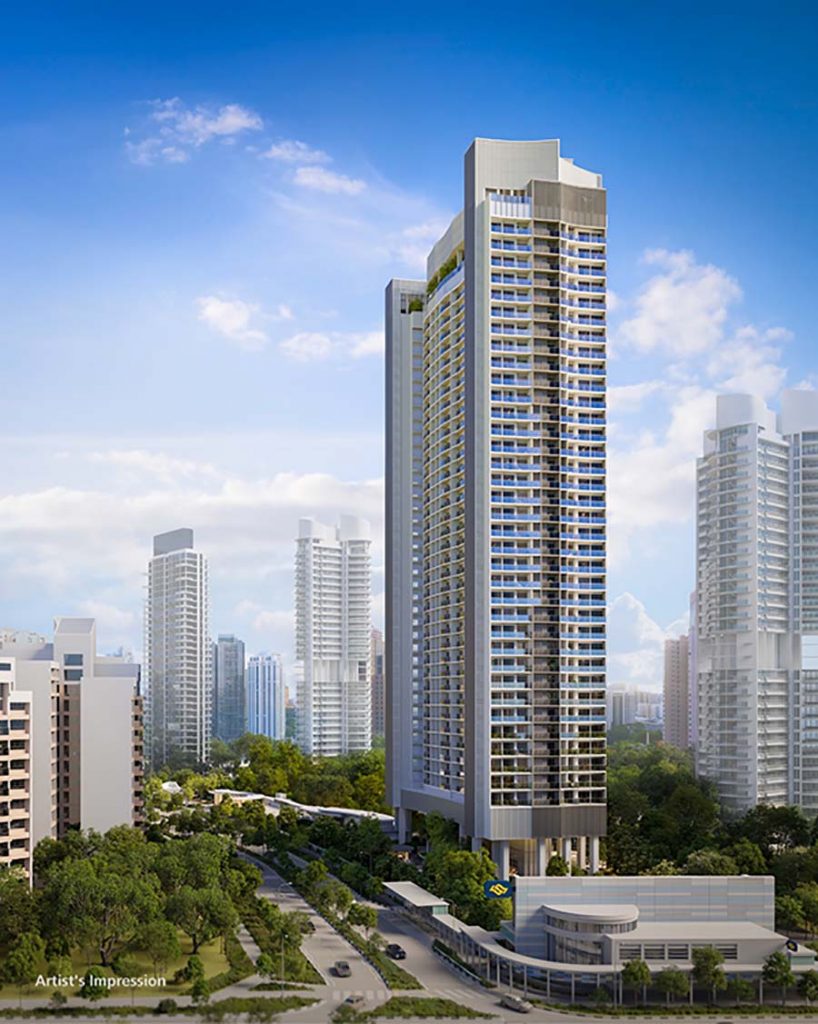
River Green is a 99-year leasehold new launch condominium in District 9 (River Valley), Singapore, directly connected to Great World MRT (Thomson-East Coast Line) and Great World City.
It is positioned as an MRT-integrated Core Central Region (CCR) development designed around connectivity, rental demand, and entry quantum efficiency rather than freehold tenure or large unit sizes.
Key highlights:
- Direct sheltered access to Great World MRT
- Within 1km of River Valley Primary School
- Located in River Valley (CCR)
- 524 units in a single high-rise tower
- Designed with GFA-harmonised compact layouts
From a decision standpoint, River Green is best suited for buyers prioritising MRT convenience, rental resilience, and long-term liquidity, rather than those seeking freehold ownership or expansive family layouts.
The key decision is whether its compact, high-density, MRT-driven model aligns with your holding horizon, capital comfort, and exit expectations.
## River Green Pricing and Entry Levels (District 9 New Launch)
River Green pricing reflects its positioning as an MRT-integrated Core Central Region (CCR) development rather than a traditional freehold District 9 project.
Entry pricing is primarily driven by:
- Direct MRT integration (Great World MRT)
- River Valley location within CCR
- Compact GFA-harmonised layouts
- Investor and rental-driven demand
In practical terms, buyers are paying for:
- Connectivity and walkability
- Rental resilience
- Lower absolute quantum compared to freehold alternatives
This means pricing should not be evaluated purely on psf, but on:
- Total purchase quantum
- Rental demand profile
- Exit liquidity within CCR
Buyers comparing River Green against other District 9 or CCR projects should assess whether MRT integration justifies the trade-off in space and tenure.
Explore the Full River Green Analysis
This article is part of the full River Green cluster:
- River Green Price Guide – project positioning, buyer suitability, and planning context
- River Green Floor Plan Analysis – layout efficiency, unit mix, and stack considerations
- River Green Showflat Guide – viewing strategy, location context, and buyer evaluation framework
Together, these articles provide a structured analysis of the project’s positioning, pricing framework, layout strategy, and viewing considerati
If you’re considering this project, you might want to check how it actually compares and what most buyers tend to overlook — before deciding.
Key details (at a glance)
99-year leasehold | 524 units | Private residential
Located at River Valley Green | District 9 (CCR / River Valley)
Direct sheltered access to Great World MRT (TEL) | Within 1km of River Valley Primary School
Est. TOP 2030
Project Factsheet
| Item | Details |
|---|---|
| Project Name | River Green |
| Address / Locality | 11 River Valley Green |
| District / Planning Area | District 9 / River Valley |
| Region (NLR) | CCR |
| Tenure | 99 years commencing 24 September 2024 |
| Site Type | GLS |
| Developer | Wing Tai Asia |
| Development Type | Private residential |
| Building Configuration | 1 × 36-storey residential block |
| Site Area | 9,293.3 sqm |
| Plot Ratio | 3.5 |
| Total Residential Units | 524 |
| Unit Mix | 1BR, 1BR + Study, 2BR, 2BR Premium, 2BR + Study, 3BR, 4BR |
| Nearest MRT | Great World MRT (TEL) — direct, sheltered access |
| Launch Status | Launched |
| Expected TOP | 30 June 2030 |
What River Green Is — and Is Not
River Green is fundamentally an urban efficiency play. It is designed around the idea that proximity to transport, retail, and schools can compensate for smaller internal spaces and leasehold tenure. Buyers here are purchasing convenience, not exclusivity.
What it is not is a low-density luxury enclave or a freehold legacy asset. The development does not attempt to compete with older River Valley freehold projects on space, privacy, or long-term tenure appeal. Instead, it positions itself as a contemporary, transit-integrated alternative with lower absolute entry quantum in a premium district.
This clarity of positioning helps explain why buyer response has been decisive rather than tentative. River Green filters for a specific buyer profile rather than attempting to appeal broadly.
Location Context: Great World as an Extension of Home
River Green’s most material advantage is its direct, sheltered connection to Great World MRT, coupled with weather-protected access to Great World City. For residents, this effectively collapses the boundary between home, transit, and retail.
Daily routines become less car-dependent, and reliance on feeder transport is largely eliminated. This matters not just for convenience, but also for resilience: MRT-linked projects tend to retain relevance across market cycles, particularly in high-density central locations.
Beyond transport, the development sits within a mature River Valley neighbourhood where amenities, schools, and lifestyle offerings are already established. Unlike fringe CCR projects that rely on future transformation narratives, River Green operates in a fully formed environment.
Although located within District 9, River Green should be assessed within the broader context of the Core Central Region (CCR), where pricing behaviour and buyer expectations differ materially from suburban and OCR developments.
School Catchment and Family-Driven Demand
Being within 1km of River Valley Primary School has been a significant demand driver. School-driven buying remains one of the most consistent non-speculative forces in Singapore’s property market, particularly in central districts where alternatives are limited.
For families, the combination of school proximity and sheltered MRT access reduces daily friction and supports long-term occupancy. This also contributes to resale liquidity, as school registration cycles create recurring pockets of demand independent of broader market sentiment.
Unit Design and GFA-Harmonised Trade-Offs
River Green adopts GFA-harmonised layouts, resulting in smaller headline sizes but higher usable efficiency. While a 4-bedroom at 980 sq ft appears compact by historical standards, buyers assess value based on internal usability rather than nominal area.
That said, this design approach introduces clear trade-offs. Compact kitchens, limited utility space, and the absence of traditional yard areas in some layouts reduce suitability for larger or multi-generational households. The project therefore skews toward smaller family units and investor-grade configurations.
These compromises are not hidden; they are integral to the project’s value proposition and absolute pricing strategy.
Density, Views, and Privacy Considerations
As a single 36-storey block within a high-density node, River Green faces inherent constraints around views and privacy, particularly on lower to mid floors. Surrounded by existing high-rise developments, many units do not enjoy open river or greenery vistas.
For buyers prioritising outlook and exclusivity, this is a meaningful limitation. For others, especially those focused on rental performance or daily convenience, view quality is secondary to location and connectivity.
Amenities & Facilities: Functional Urban Living
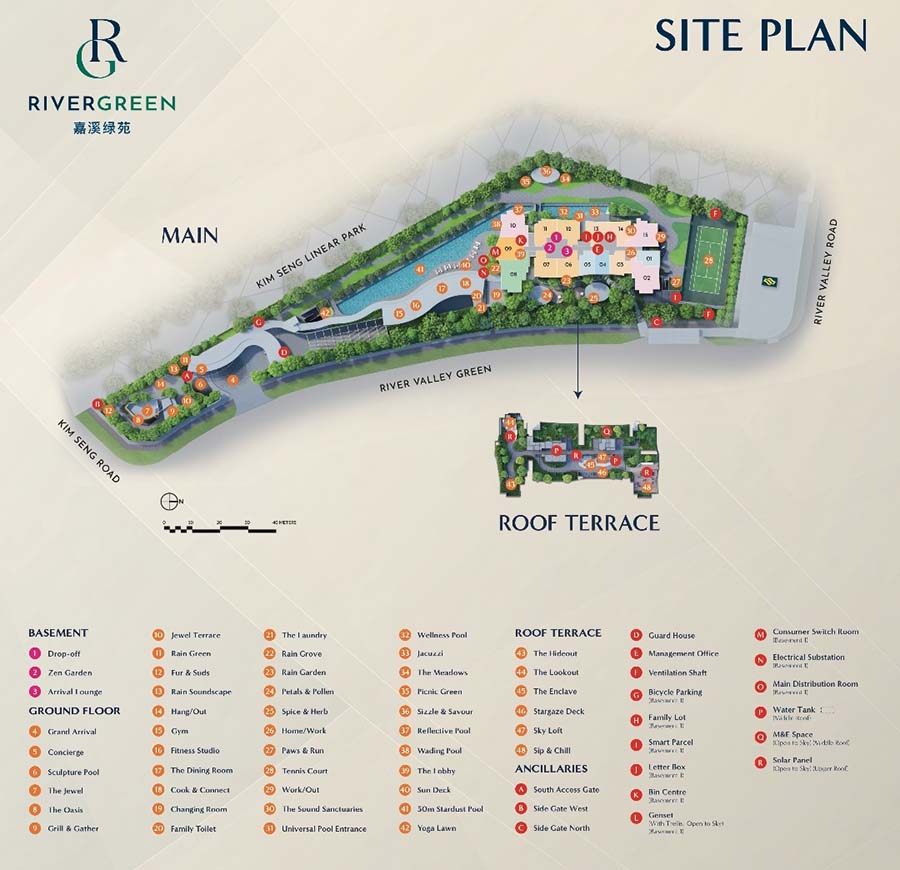
River Green offers approximately 48 facilities designed for daily usability rather than resort-style living.
Key facilities include:
- 50m lap pool and leisure pools
- Gymnasium and fitness studio
- Tennis court
- Sky terraces and roof-level spaces
- Function rooms and dining spaces
- Concierge and arrival lounge
The development incorporates Universal Design principles, supporting accessibility and long-term usability across different life stages.
Rather than competing on luxury facilities, River Green relies on external infrastructure — including Great World MRT, Great World City, and the River Valley neighbourhood — to function as an extension of the living environment.
This reflects a shift toward integrated urban living, where convenience replaces traditional lifestyle-driven amenities.
Buyer Suitability: Who Should Buy River Green — And Who Should Avoid It
Best suited for
River Green is best aligned with mass-affluent professionals and investor-leaning buyers who prioritise connectivity, convenience, and rental defensiveness over internal space. Buyers who value direct MRT integration, sheltered access to a major mall, and proximity to River Valley Primary School will find the project structurally hard to replace within District 9 at a similar quantum. These buyers typically have longer holding horizons and are comfortable trading absolute space for location efficiency and exit liquidity.
Suitable with trade-offs
Young families upgrading from HDBs or smaller RCR condos may find River Green workable if expectations around unit compactness and density are clearly managed. While layouts are GFA-harmonised and efficient, larger households will need to accept tighter kitchens, limited yard space, and a more vertical living environment. For buyers entering primarily for school proximity and lifestyle convenience, these compromises are often acceptable, but they must be intentional.
Not suitable for
River Green is not ideal for buyers seeking legacy freehold ownership, expansive family layouts, or low-density living within the CCR. The 99-year tenure, compact 3- and 4-bedroom configurations, and surrounding high-rise context may feel misaligned for ultra-high-net-worth buyers or those comparing directly with older freehold River Valley developments. Similarly, buyers looking for explosive capital appreciation rather than steady liquidity may find better risk-reward profiles elsewhere.
Buyers comparing River Green against other upcoming launches may find it helpful to frame their decision using the New Launch Condo Guide, which outlines how pricing logic, buyer intent, and holding horizon differ across project types.
Takeaway
River Green is not a project that wins on emotion or aspiration; it wins on functionality. Its appeal lies in how efficiently it integrates transport, retail, and schooling within a District 9 address, while keeping absolute entry prices within reach for mass-affluent buyers.
For buyers aligned with its trade-offs, the project offers a defensible long-term hold with strong rental fundamentals and predictable liquidity. For those seeking space, tenure, or traditional luxury cues, alternatives elsewhere in River Valley may be more suitable.
The key decision is not whether River Green is good or bad, but whether its convenience-driven, compact-living model aligns with how you intend to live, hold, and eventually exit the property.
If you’re seriously considering this project, it’s worth checking how it actually compares and what most buyers tend to overlook — before deciding.
FAQs (Decision-Stage)
1. Is River Green a good investment property in Singapore?
River Green can function as a rental-defensive asset due to its direct MRT integration, District 9 location, and proximity to Great World City. These factors support tenant demand and long-term liquidity. However, returns are likely to be stable rather than aggressive, as pricing already reflects its connectivity advantage. It is more aligned with investors seeking predictability than high-risk appreciation.
2. What is the pricing of River Green condo in District 9?
River Green pricing reflects its MRT-integrated positioning rather than freehold status. Buyers are effectively paying for connectivity, walkability, and central location within River Valley. Absolute quantum remains a key driver, particularly for smaller units. Pricing should be assessed against nearby CCR developments rather than suburban projects.
3. Is River Green suitable for own stay in Singapore?
River Green suits own-stay buyers who prioritise convenience, MRT access, and proximity to schools over internal space. The layouts are compact but efficient, making them more suitable for smaller households. Families must be comfortable with higher density living. It works best when expectations are aligned with its urban design.
4. How does River Green compare to other District 9 condos?
River Green differs from traditional District 9 projects by focusing on MRT integration and compact layouts rather than freehold tenure or large unit sizes. It competes more with newer CCR developments than older freehold condos. Buyers are choosing between convenience and legacy ownership. The comparison is therefore functional, not like-for-like.
5. Is River Green near Great World MRT?
Yes, River Green has direct sheltered access to Great World MRT (Thomson-East Coast Line). This significantly reduces commuting friction and enhances daily convenience. MRT integration is one of the project’s strongest structural advantages. It also supports rental demand and long-term liquidity.
6. Are River Green floor plans too small?
River Green adopts GFA-harmonised layouts, which means smaller sizes but higher internal efficiency. Some buyers may find kitchens and storage more compact. It is generally suitable for couples and smaller families rather than large households. Buyers should evaluate usability rather than just square footage.
7. Is River Green near River Valley Primary School?
Yes, River Green is within 1km of River Valley Primary School, which is a key demand driver. School proximity supports both own-stay demand and resale liquidity. This creates recurring buyer interest aligned with school registration cycles. It is particularly relevant for family buyers.
8. What are the main risks of buying River Green?
The main risks include compact layouts, high density, and competition from nearby CCR developments. Rental competition may increase upon TOP due to similar unit types. Buyers expecting traditional luxury or large spaces may find it misaligned. The key risk is expectation mismatch rather than location.
Pricing Logic, Planning Context & Market Absorption
Pricing Logic: Why River Green Reset CCR Leasehold Expectations
River Green’s pricing behaviour reflects structural repricing, not launch-phase exuberance. As one of the first MRT-integrated GLS developments in River Valley under post-2023 land and planning conditions, the project established a new benchmark for leasehold CCR living tied to infrastructure rather than tenure. Buyers accepted higher PSF levels because the value proposition was not framed around scarcity or prestige, but around functional replacement cost and future comparables.
Importantly, price resistance has emerged not as rejection but as segmentation. Smaller units continue to transact smoothly due to lower absolute quantum and rental defensiveness, while larger formats face more scrutiny as buyers compare them against older freehold options. This behaviour signals a market that is price-disciplined but not price-averse.
River Green does not compete with legacy CCR freehold projects on heritage or space. Instead, it anchors pricing around connectivity, efficiency, and exit liquidity, which aligns with modern CCR buyer behaviour.
Comparison Context: Competing on Integration, Not Prestige
Buyers frequently compare River Green with nearby developments such as Promenade Peak, Zyon Grand, and Irwell Hill Residences, but these comparisons are functional rather than aesthetic. The decision hinge is rarely architectural language or façade treatment; it is about how daily life is structured.
River Green’s defining edge is its direct, sheltered MRT and mall integration, which materially changes commuting patterns and daily convenience. While competing projects may offer larger layouts or perceived exclusivity, they often require trade-offs in walkability or reliance on transport modes beyond rail. As a result, buyers do not see River Green as a substitute for traditional CCR luxury — they see it as a different product category altogether.
This explains why River Green maintains momentum even as new supply enters the precinct. It is not chasing the same buyer motivations.
URA Planning Context: River Valley’s Shift Toward High-Intensity Urban Living
From a planning perspective, River Green sits squarely within URA’s long-term repositioning of the River Valley Planning Area as a high-density, transit-anchored residential corridor rather than a low-rise enclave. The introduction of multiple GLS plots around Great World and Havelock signals an intentional shift toward integrated, vertical living supported by MRT infrastructure.
URA’s emphasis in this precinct is not on dramatic transformation but on incremental intensification. New developments are expected to integrate retail at the podium level, improve pedestrian connectivity, and strengthen walk-cycle networks linking Orchard Road, the Singapore River, and surrounding residential nodes. River Green’s direct MRT and mall integration aligns closely with this planning intent.
Crucially, this planning framework reduces reliance on speculative upside. Buyers are not banking on future rezoning or redevelopment; they are purchasing into a completed transport and amenity ecosystem that is already functioning. This underpins the project’s absorption stability and long-term relevance.
Market Absorption: Demand Driven by Structure, Not Sentiment
River Green’s near sell-out status reflects structural demand, not sentiment-driven buying. Absorption has been led by investors and owner-occupiers who understand the project’s role as a liquidity anchor within the CCR rather than a trophy asset. This buyer base is less reactive to short-term market noise and more focused on defensiveness.
Sales velocity has remained resilient even as competing launches approach, suggesting buyers are actively locking in position before replacement costs move higher. However, the remaining inventory — typically higher-priced or less optimally oriented units — faces sharper scrutiny. This is consistent with a mature market where buyers are selective, not disengaged.
Buyer Segmentation, Exit Dynamics & Risk Scenarios
Buyer Segmentation: Who Is Driving Demand
River Green’s primary demand comes from local Singaporean investors and professionals who prioritise rental stability and MRT adjacency within the CCR. These buyers are typically comfortable with compact layouts and view the project as a yield-defensive asset rather than a lifestyle upgrade.
Secondary demand comes from young families targeting River Valley Primary School, where proximity functions as a resale and rental insurance mechanism. These buyers tend to accept density and layout trade-offs in exchange for location certainty. A smaller tertiary segment comprises PRs and eligible foreign buyers seeking a low-friction entry into District 9.
Exit & Liquidity: Predictable, Not Explosive
River Green’s exit profile is liquidity-driven rather than appreciation-led. MRT integration and mall adjacency ensure a consistent pool of future tenants and buyers, but price growth is more likely to track income growth and replacement cost than speculative spikes.
Resale differentiation will matter. Units with better orientation, higher floors, or more practical layouts are likely to transact more smoothly, while homogenous smaller units may face competition if multiple listings emerge simultaneously. This places a premium on entry discipline rather than timing.
Structural Risks & Constraints
The project’s compact layouts and high unit count introduce density-related risks, particularly for owner-occupiers sensitive to privacy and noise. Additionally, the concentration of investor-grade units increases the likelihood of rental competition upon TOP, which could cap short-term yields.
Macro-structurally, high ABSD for foreigners narrows the exit pool, reinforcing the need to view River Green as a domestic-liquidity asset. Buyers expecting international demand-led price surges may find those expectations misaligned with policy realities.
FAQs
1. What is the PSF of River Green compared to nearby CCR projects?
River Green’s psf should be assessed against newer Core Central Region projects rather than older resale benchmarks alone. Its pricing is supported by direct MRT integration, District 9 positioning, and proximity to Great World City, which makes it a different product from standalone projects without the same transport advantage. In practical terms, the psf may look strong, but buyers are paying for a highly functional location rather than freehold tenure or oversized layouts. The real question is whether that pricing is justified by your intended holding horizon and exit assumptions.
2. Will River Green face oversupply risk in River Valley?
River Green will face some level of future supply competition because the broader River Valley and Great World corridor continues to see redevelopment and new launch activity. However, not all supply is equal, and River Green’s sheltered MRT connection gives it a structural advantage that many nearby projects cannot replicate. Oversupply risk matters more for investor-grade units and resale competition after TOP than for the project’s immediate launch appeal. Buyers should therefore focus on how differentiated their chosen unit will be within future competing stock.
3. Is River Green better than freehold condos in District 9?
River Green is not automatically better or worse than nearby freehold condos; it simply serves a different buyer objective. Freehold projects generally appeal more to buyers prioritising legacy ownership, larger layouts, and long-term tenure defensiveness, while River Green appeals to those who value daily convenience, MRT access, and lower entry quantum into District 9. The decision is less about which category is superior in general and more about which trade-off structure suits your capital goals. Buyers comparing them directly should avoid assuming they are interchangeable products.
4. What type of buyers typically purchase River Green?
River Green tends to attract three main buyer groups: investors seeking rental resilience, professionals who prioritise central connectivity, and smaller families who value proximity to River Valley Primary School. These buyers are usually comfortable trading some space and privacy for a more connected daily lifestyle. The project is less naturally aligned with buyers seeking a low-density, legacy-style District 9 home. Its demand base is therefore relatively focused rather than broad-based across every household type.
5. How will River Green perform after TOP?
After TOP, River Green is likely to perform more as a liquidity-led project than a sharp appreciation story. Its MRT integration, Great World catchment, and District 9 location should support rental demand and steady resale relevance, but competition from similar-sized units may moderate upside if too many listings enter the market at the same time. Performance will depend heavily on unit selection, entry pricing, and broader supply conditions at the point of completion. Buyers should therefore plan around realistic exit depth rather than assuming automatic post-TOP uplift.
6. Is River Green suitable for rental yield or capital appreciation?
River Green is generally more convincing as a rental-defensive asset than as a pure capital appreciation play. Its strongest fundamentals come from transport access, central location, and tenant convenience, all of which support recurring rental demand. Capital growth can still happen, but it is more likely to be gradual and linked to replacement cost, income growth, and continued demand for connected CCR homes. Buyers entering purely for aggressive upside may find the risk-reward balance less compelling than those focused on stability.
7. Does River Green’s single-tower design create any concerns?
A single-tower format can create both strengths and trade-offs. On one hand, it concentrates the address into one recognisable block and gives the development a clear identity; on the other, it also means buyers need to pay closer attention to stack position, facing, and internal competition among similar unit types. In a project with 524 units, not every stack will feel equally differentiated. This makes careful unit selection more important than simply choosing the project name alone.
8. Will River Green face rental competition upon completion?
Yes, rental competition is a realistic consideration, especially because River Green includes many compact and investor-relevant layouts that may appeal to a similar tenant pool. If several landlords enter the market around the same time after TOP, smaller units could face more direct comparison on price and furnishing. However, the project’s MRT integration and Great World location still give it a stronger baseline than many less connected developments. The key is to view rental demand as resilient, but not immune to competition.
9. Is River Green more for investors or owner-occupiers?
River Green sits between both groups, but its structural strengths lean slightly toward investor and hybrid owner-investor demand. MRT access, central convenience, and smaller efficient layouts naturally support rental relevance, while school proximity and District 9 location also make it workable for selected owner-occupiers. It is not a pure family project, nor is it only an investor play. Its strongest fit is with buyers who value functional defensiveness more than emotional prestige.
10. How important is unit selection at River Green?
Unit selection is extremely important at River Green because the difference between stacks can meaningfully affect privacy, outlook, future resale appeal, and rental competitiveness. In compact urban projects, small variations in orientation, floor level, and proximity to neighbouring structures can have a larger impact than buyers initially expect. This means not all units should be judged equally even if they fall under the same bedroom category. Entry into the right unit matters more here than broad project-level enthusiasm alone.
11. Are larger units at River Green worth considering?
Larger units can make sense for buyers who want District 9 convenience but still need more functional family space than the smaller layouts provide. However, these units typically face greater price scrutiny because buyers may compare them against older freehold alternatives with more generous internal area. This creates a more selective buyer pool at both purchase and resale stages. As a result, larger units should be chosen for genuine own-stay suitability rather than assumed liquidity alone.
12. Is River Green a good project for families with children?
River Green can work for families, especially those prioritising River Valley Primary School, MRT accessibility, and car-lite living in a central location. However, it is better suited to smaller family structures rather than households that require helper rooms, large service areas, or more expansive common spaces. Families considering it should focus on actual day-to-day usability rather than simply the prestige of a District 9 address. The project works best when convenience is valued more highly than spaciousness.
13. How does River Green fit into the River Valley transformation story?
River Green fits into River Valley’s gradual intensification as a more connected, transit-supported urban residential corridor rather than a dramatic transformation zone. This is important because its appeal is based more on existing infrastructure and mature convenience than on speculative future change. In other words, buyers are purchasing into an already functioning location instead of relying on a future masterplan narrative to justify today’s pricing. That lowers certain types of uncertainty, but it also means upside should be assessed more conservatively.
14. Could future market conditions affect River Green’s resale performance?
Yes, River Green’s resale performance will still be influenced by broader interest rate conditions, buyer affordability, and competing supply in the central region. Even a well-located project cannot fully detach from macro conditions, especially in a market where buyers remain price-sensitive. What helps River Green is that MRT integration and District 9 relevance give it a more durable baseline than many generic projects. Even so, buyers should underwrite their purchase on realistic holding power rather than ideal market timing.
15. Is River Green a project to buy early or hold long term?
River Green generally makes more sense as a medium- to longer-term hold than as a short-term flipping story. Its appeal is rooted in connectivity, rental defensiveness, and central convenience, which are qualities that tend to compound value through occupancy relevance and liquidity over time. Short-term upside may be more limited if entry pricing is already efficient and nearby supply remains active. Buyers should therefore enter with patience rather than relying on quick repricing expectations.
16. What is the biggest mistake buyers make when assessing River Green?
The biggest mistake is evaluating River Green as though it were trying to be a freehold, low-density, luxury-style River Valley project. That creates the wrong benchmark and leads to disappointment over space, tenure, or exclusivity. River Green should instead be assessed as a compact, MRT-driven, liquidity-oriented District 9 development built around connectivity and practical urban convenience. Buyers who frame it correctly are far more likely to make a sound decision.
If you prefer a more structured walkthrough, you can leave your details below and we’ll follow up with you.