
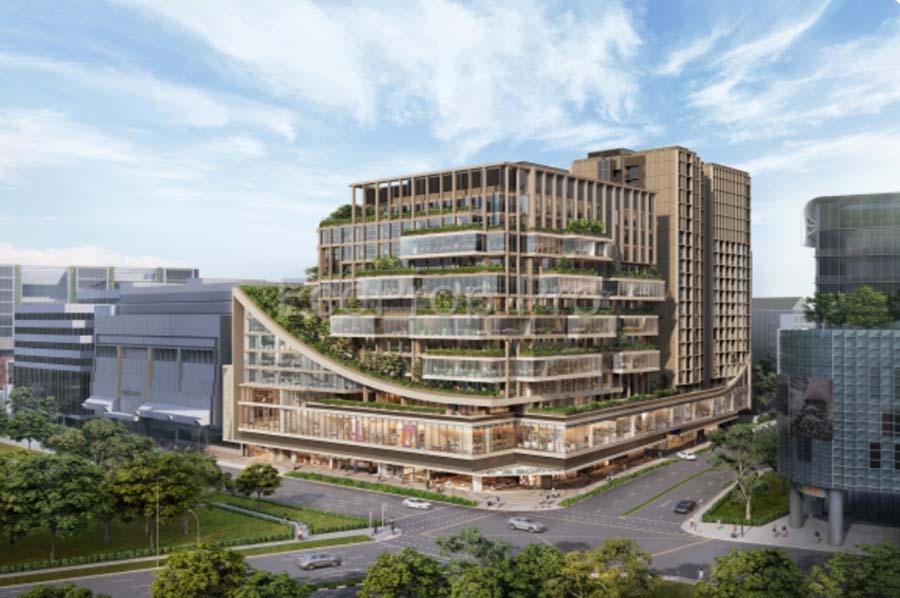
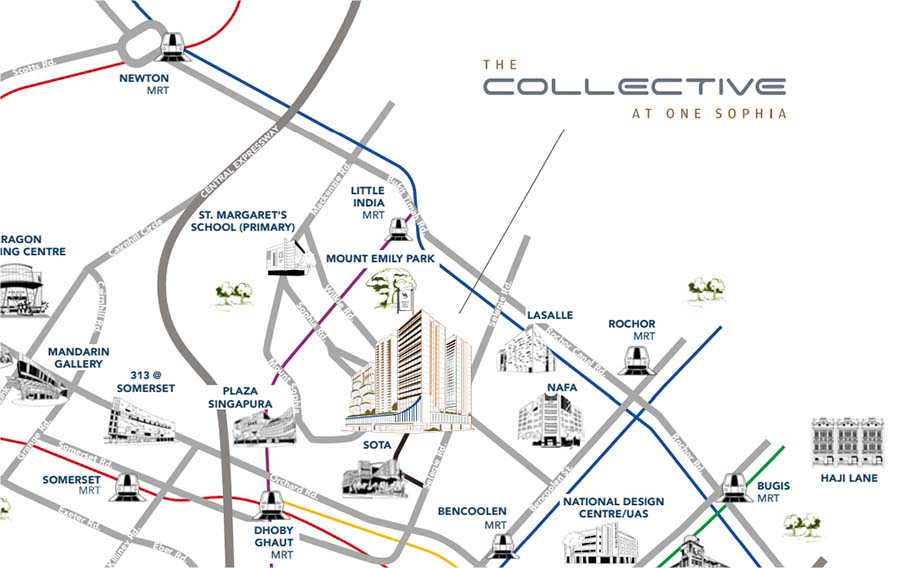
Summary
The Collective at One Sophia is a 99-year leasehold mixed-use development at 1A & 1B Sophia Road in District 9 (Core Central Region), redeveloped from the former Peace Centre and Peace Mansion via an en-bloc acquisition. Officially launched on 18 January 2025, the project comprises 367 residential units above a commercial and office podium, with an estimated TOP in December 2029.
This The Collective at One Sophia review assesses how pricing and demand behave for a high-activity mixed-use CCR node — including rental depth, tenant profile fit, and realistic exit liquidity — rather than viewing it as a tranquillity-led District 9 lifestyle residence.
This is not a boutique or tranquillity-led city residence. The Collective is best understood as an investor-tilted, convenience-first CCR project designed around walkability, transit access on largely flat terrain, and immediate proximity to malls, offices, and education institutions. Its appeal centres on rental relevance and quantum accessibility relative to many CCR peers—rather than views, serenity, or family-oriented living.
This review examines The Collective at One Sophia from a decision-stage perspective, focusing on who the project realistically suits, how its mixed-use positioning aligns with URA’s planning intent for the Orchard–Rochor area, and the practical trade-offs buyers should recognise—without relying on promotional narratives.
The Collective at One Sophia should be evaluated as a convenience-driven, investor-tilted Core Central Region (CCR) mixed-use development rather than a tranquillity-led District 9 residence. Located at Sophia Road within flat walking distance of Rochor and Dhoby Ghaut MRT stations, the project prioritises rental relevance, quantum accessibility, and daily walkability over privacy, views, or family-oriented living. Its pricing behaviour is anchored more by absolute entry quantum and tenant demand than by scarcity or prestige optics, resulting in steady but measured absorption rather than rapid momentum. Buyers considering The Collective are effectively trading serenity and low density for mixed-use convenience, high urban activity, and a deep rental catchment, making alignment with investor or city-centric usage expectations critical to long-term satisfaction.
For buyers assessing whether The Collective At One Sophia aligns with their financing comfort, holding horizon, and exit assumptions, a structured project breakdown covering entry positioning, pricing logic, stack considerations, and buyer suitability may provide additional clarity before arranging any viewing.
Key details (at a glance):
99-year leasehold | Mixed-use (residential + office + retail) | 367 units | Official launch 18 Jan 2025 | TOP Dec 2029 (est.) | Rochor MRT ~0.4 km / Dhoby Ghaut ~0.5 km (mostly flat walk) | Investor-tilted CCR convenience node
Project Factsheet
| Item | Details |
|---|---|
| Project Name | The Collective at One Sophia |
| Location | 1A & 1B Sophia Road, Singapore |
| District / Region | District 9 (CCR / Orchard–Rochor Planning Area) |
| Tenure | 99 years |
| Developer | SingHaiyi / Chip Eng Seng (CEL) / KSH Holdings (JV) |
| Site Type | En-bloc redevelopment (former Peace Centre & Peace Mansion) |
| Development Type | Mixed-use: residential + office + retail |
| Site Area | ~76,617 sq ft (≈7,118 sqm) |
| Plot Ratio | 4.2 |
| Residential Units | 367 |
| Unit Mix | Studios to 3-Bedroom units |
| Nearest MRTs | Rochor (~0.4 km) / Dhoby Ghaut (~0.5 km), largely flat walk |
| Official Launch | 18 Jan 2025 |
| Estimated TOP | Dec 2029 |
The Collective at One Sophia should be assessed as a high-activity urban node rather than a retreat-style CCR residence.
The Collective at One Sophia is a convenience-driven, investor-tilted CCR mixed-use project prioritising rental relevance and walkability over serenity, views, or family living.
Location Context: Sophia Road as a Convenience-Led Urban Node
Sophia Road sits between Orchard, Dhoby Ghaut, and Bugis, functioning as a connective urban strip rather than a hilltop enclave. A key differentiator versus nearby Sophia-area boutiques is terrain: access to MRT stations here is largely flat, reducing daily friction for residents and tenants.
The surrounding environment is amenity-dense. Malls such as Parklane Shopping Centre, PoMo, Sunshine Plaza and Sim Lim Square cluster nearby, while office blocks and a deep education catchment (arts schools, universities, and private institutions) generate consistent footfall. The residential block is positioned behind the office and retail components, which moderates—but does not eliminate—the area’s activity levels.
Importantly, buyers should calibrate expectations: while the building steps back from the main road, urban intensity resumes the moment residents step out. This is by design. The Collective trades quietness for immediacy.
From a broader lens, although the address is District 9, the project behaves like a CCR convenience asset—where accessibility and usage patterns matter more than address prestige alone.
Although located in District 9, The Collective at One Sophia should be evaluated within the broader Core Central Region (CCR) context, where buyer behaviour, pricing sensitivity, and exit dynamics differ materially from suburban launches.
Project Positioning: What The Collective at One Sophia Is — and Is Not
What It Is
-
An investor-tilted CCR mixed-use development
-
Quantum-accessible pricing relative to many CCR peers
-
Strong rental relevance for singles, couples, students, and professionals
-
Walkable access to MRTs, malls, offices, and institutions
What It Is Not
-
Not a tranquillity-focused residence
-
Not a boutique, low-density enclave
-
Not family-centric living
-
Not a views-driven project
This distinction matters. The Collective’s value proposition rests on convenience and utilisation, not lifestyle seclusion.
Amenities & Everyday Reality: Convenience Over Calm
Everyday life here is shaped by immediacy: groceries, food, transit, education, and work nodes are all close. That same proximity brings noise, foot traffic, and visual closeness to neighbouring buildings. Buyers who prioritise quiet surroundings or open vistas should recognise this as a structural trade-off—not a temporary condition.
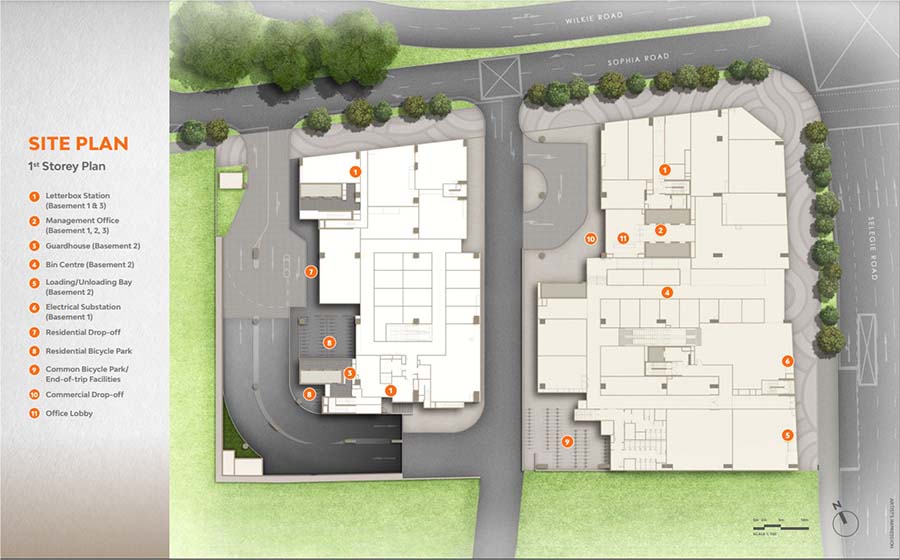
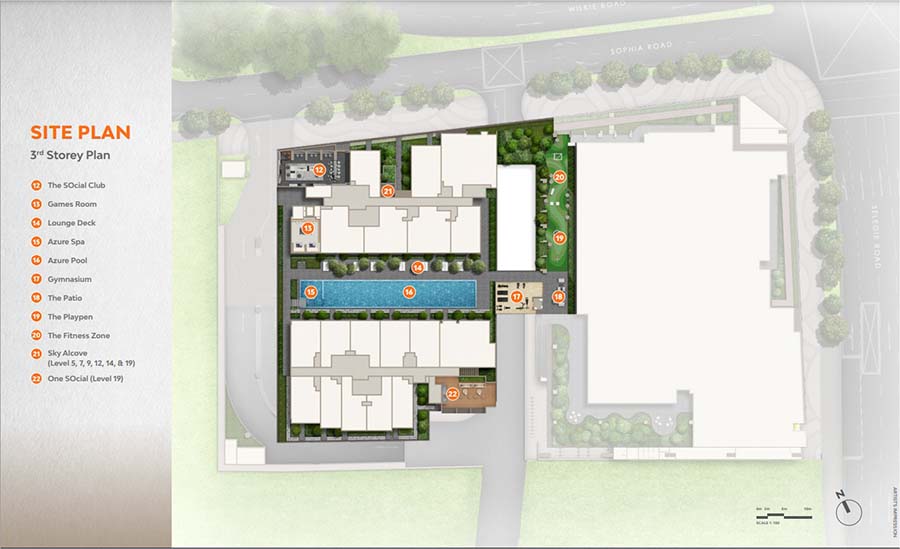
Buyer Suitability: Who The Collective at One Sophia Is For
1) Investor Buyers (Primary Segment)
-
Targeting low vacancy and consistent tenant demand
-
Comfortable with moderate yields rather than yield maximisation
-
Valuing flat-walk MRT access and education/office catchments
2) Singles & Couples Seeking City Convenience
-
Willing to trade serenity for access
-
Preferring smaller units with manageable quantums
3) Buyers Who May Want to Reconsider
-
Families seeking space and calm
-
Buyers prioritising views or greenery
-
Those expecting boutique-style privacy
For buyers comparing city projects with very different liveability trade-offs, framing decisions against a broader New Launch Condo Guide (project type, buyer intent, holding horizon) can be helpful.
Takeaway
The Collective at One Sophia is not a lifestyle sanctuary, and it does not pretend to be one. Its strengths lie in walkability, rental depth, and pricing that feels competitive even against some OCR options, despite a CCR address. The same features—density, mixed-use activity, limited views—define its constraints.
For investors and urban buyers who prioritise usage and access, the positioning is coherent. For those seeking serenity or family-oriented living, nearby hill-based Sophia projects offer a fundamentally different experience.
If The Collective At One Sophia is on your shortlist and being compared against nearby alternatives, a structured review of capital commitment differences, downside exposure scenarios, liquidity positioning, and realistic exit pool dynamics may help clarify the decision framework before any commitment is made.
FAQs (Decision-Stage)
1) Where exactly is The Collective at One Sophia located?
The Collective at One Sophia is located at 1A & 1B Sophia Road, redeveloped from the former Peace Centre and Peace Mansion, within District 9 (CCR) in the Orchard–Rochor planning area — close to Dhoby Ghaut, Bugis and Bras Basah.
2) Is The Collective at One Sophia considered “Mount Sophia living”?
Not really. While it’s within the broader Sophia area, it behaves differently from Mount Sophia / Mount Emily boutique projects. The Collective is a convenience-led urban node driven by mixed-use intensity and walkability, rather than a hilltop, tranquillity-first lifestyle pocket.
3) Is this project mainly for investors or own-stay buyers?
The Collective is structurally investor-tilted because its strongest demand driver is rental depth (offices, institutions, city conveniences) and quantum accessibility via smaller units. Own-stay buyers can still fit, but only if convenience outweighs serenity.
4) What’s the biggest trade-off buyers need to accept here?
Density and activity. Mixed-use projects trade calmness and privacy for access and utilisation. This is not a “quiet CCR home” — it’s a functional city-core convenience product.
5) Why is the “flat walk” to MRT a big deal?
Because it’s a practical daily advantage that many nearby CCR projects don’t have. Flat terrain lowers friction for tenants and residents — which often supports rental attractiveness and day-to-day usability more than “raw distance” alone.
6) Will mixed-use retail/office components help or hurt value?
It typically helps rental relevance and day-to-day convenience, but it limits lifestyle serenity. Buyers should treat it as a trade-off: stronger utilisation profile, weaker retreat-like living profile.
7) What should buyers check first when unit mix and pricing details are finalised?
Three key checks:
-
pricing-by-quantum (small units can look affordable even at higher psf)
-
noise/privacy stack selection
-
realistic resale pool (who buys in this micro-location later?)
This project rewards “stack and entry price discipline”.
8) Is this the kind of CCR project that appreciates fast?
Usually not. It tends to behave more like a steady utilisation asset than a prestige-led momentum product. Capital appreciation may happen, but it’s typically gradual and cycle-dependent.
Pricing Logic, URA Planning Intent & Buyer Segmentation
Summary
The Collective at One Sophia is not priced or positioned as a lifestyle-led or scarcity-driven CCR development. Its value logic is anchored in quantum accessibility, mixed-use convenience, and rental relevance, rather than views, serenity, or family-oriented living. As a high-density, mixed-use redevelopment on a prominent city site, its performance depends on pricing realism and investor acceptance, not emotional appeal.
This section evaluates whether The Collective’s positioning holds up once pricing structure, URA planning intent, and buyer segmentation are considered together, based on actual launch data and market response since January 2025.
Pricing Logic: Why The Collective Feels “Value” Despite a CCR Address
Launch Pricing vs Buyer Perception
At launch and through 2025, The Collective at One Sophia was priced broadly within a $2,700–$3,000+ psf band, with entry quantums starting from around $1.14M for studios and $1.35M for 1-bedroom units. As of 13 January 2026, remaining units are transacting within a similar range, from approximately $1.22M to $3.7M.
This pricing has led to a consistent buyer reaction:
-
Many visitors perceive prices as competitive—even relative to OCR launches
-
Entry quantums are seen as “reachable” for a CCR location
-
Price resistance exists mainly around larger units, not small formats
The key reason is not psf optics, but absolute quantum psychology.
Absolute Quantum vs PSF: The Real Decision Driver
For The Collective at One Sophia, absolute quantum matters far more than psf, especially for its dominant buyer groups:
-
Investors
-
Singles and couples buying for own use
-
Parents purchasing for children studying nearby
Key dynamics at play:
-
Small units reduce entry friction
-
CCR address legitimises higher psf without scaring buyers
-
Mixed-use convenience offsets lack of views or serenity
This explains why the project can feel “cheap” to some CCR buyers, even when psf is not objectively low.
Why Sales Are Steady but Slow
Despite competitive pricing perception, sales momentum has been measured rather than fast, with roughly 25% sold as of mid-January 2026.
This is structurally explainable:
-
367 units dilute scarcity
-
Buyer pool is investor-heavy and price-sensitive
-
Project does not benefit from emotional urgency
In short, The Collective requires rational acceptance, not excitement. It absorbs demand steadily, not explosively.
URA Planning Analysis: Mixed-Use Intensification, Not Residential Calm
Orchard–Rochor Planning Context
URA’s long-term vision for the Orchard–Rochor corridor emphasises:
-
Walkability and pedestrian connectivity
-
Mixed-use intensification
-
Integration of residential, office, retail, and lifestyle uses
-
Creation of an active, all-day urban environment
This planning intent aligns closely with what The Collective delivers: activity, access, and integration, not quiet residential retreat.
What Planning Supports — and What It Doesn’t
Planning supports:
-
Strong footfall
-
Rental demand
-
Mixed-use convenience
-
Urban vibrancy
Planning does not support:
-
Low-density living
-
Green buffer zones
-
Visual openness or long views
This distinction is important. The Collective is not misaligned with URA intent — it is a textbook implementation of it. Buyers seeking serenity are simply looking in the wrong segment.
Buyer Segmentation: Who The Collective at One Sophia Truly Serves
1. Investor Buyers (Primary Segment)
Profile
-
Focused on rental resilience, not yield maximisation
-
Comfortable with small units
-
Targeting tenants in Bugis, Suntec, CBD, Orchard
Why The Collective Works
-
Flat walk to MRTs
-
Proximity to offices and institutions
-
Deep tenant pool (professionals, students, educators)
Constraints
-
Yields capped by CCR entry prices
-
Capital upside likely incremental, not sharp
2. Singles & Couples Seeking City Convenience
Profile
-
Own-stay buyers prioritising access over environment
-
Willing to trade views and quiet for location
Why The Collective Works
-
Manageable entry quantum
-
Everything within walking distance
Trade-Offs
-
Noise and activity are part of daily reality
-
Privacy is limited compared to boutique developments
3. Family Buyers (Structurally Weak Fit)
Despite proximity to schools, The Collective is not family-oriented:
-
Unit sizes skew small
-
Surrounding environment is busy
-
Limited outdoor or green buffers
Families seeking stability and calm will find stronger alignment elsewhere.
4. Buyers Who May Want to Reconsider
-
Tranquillity-seeking own-stay buyers
-
Buyers prioritising views or greenery
-
Short-term traders expecting fast repricing
The Collective does not reward these expectations.
Interim Assessment
The Collective at One Sophia should be evaluated as:
A convenience-driven CCR asset designed for usage and rental depth, not for lifestyle retreat or speculative upside.
Its pricing logic works only if buyers accept what the project is — and what it is not.
Exit & Liquidity, Risk Scenarios, Pros & Cons, and Buyer FAQs
Summary
The Collective at One Sophia performs best as a rental-relevant, investor-oriented CCR project with steady but unspectacular liquidity. Its exit dynamics are shaped by unit size, pricing discipline, and market cycles rather than scarcity or emotional appeal.
Exit & Liquidity Analysis
Liquidity Profile of Investor-Tilted CCR Projects
For projects like The Collective:
-
Liquidity exists, especially for small units
-
Resale demand is price-sensitive
-
Volume, not rarity, defines behaviour
Studios and 1-bedroom units are expected to form the liquidity backbone, while larger units require more patience.
Exit Reality by Unit Type
-
Studios / 1BR: Most liquid; broad buyer pool
-
2BR: Selective; depends on pricing vs newer launches
-
3BR: Limited audience; exit patience required
This is consistent with current sales patterns.
Risk Scenarios
Scenario 1: Prolonged High Interest Rates
-
Investors become cautious
-
Smaller units continue to transact; larger units slow
Scenario 2: CCR Supply Increases
-
Competition intensifies
-
Pricing discipline becomes decisive
Scenario 3: Rental Market Softens
-
Vacancy risk rises slightly
-
Location still provides buffer
Scenario 4: Urban Living Demand Strengthens
-
Favourable scenario for The Collective
-
Supports both rental and resale liquidity
Final Investment & Own-Stay Assessment
The Collective at One Sophia works best when viewed as:
A practical CCR rental and city-living asset designed for consistency, not excitement.
Its strengths are structural:
-
Location and walkability
-
Mixed-use convenience
-
Rental depth
Its constraints are equally structural:
-
High density
-
Urban noise
-
Limited views
-
Gradual capital appreciation
Pros & Cons Summary
Pros
-
Competitive CCR entry quantums
-
Strong rental catchment
-
Flat walk to MRTs
-
Mixed-use convenience
Cons
-
High density (367 units)
-
Not tranquil or private
-
Limited view premium
-
Slow but steady absorption
Frequently Asked Questions
1. Is The Collective at One Sophia a good investment?
Yes, for rental resilience rather than fast capital gains.
2. Why do prices feel competitive compared to OCR projects?
Because CCR location and small-unit quantums change buyer benchmarks.
3. Will nightlife issues return after redevelopment?
The redevelopment resets tenant mix, but urban activity will remain.
4. Is this suitable for families?
No, it is not family-centric.
5. How strong is rental demand?
Likely stable, supported by offices and institutions nearby.
6. Are views a selling point?
No. Views are not a core value driver here.
7. How liquid will resale be?
Functional for smaller units; selective for larger ones.
8. Is this a prestige CCR project?
It is functional rather than prestige-led.
9. Does mixed-use help or hurt value?
It helps rental relevance, but reduces serenity.
10. Is pricing likely to rise quickly?
Unlikely; appreciation is expected to be gradual.
11. Should buyers wait for discounts?
Pricing adjustments may occur, but don’t expect sharp drops.
12. Is this suitable for own stay?
Yes, if convenience is the priority.
13. What holding period makes sense?
Medium to long term.
14. How should buyers evaluate this project?
Through rental math, location usage, and realistic exit expectations.
15. Does URA planning support long-term relevance?
Yes, for activity and connectivity.
16. Who should avoid this project?
Buyers seeking calm, space, or exclusivity.
If a structured discussion is preferred over WhatsApp, or if detailed floor plans, pricing breakdowns, or showflat arrangements are required, your details may be left below for a follow-up.