
Summary
Terra Hill is a freehold, low-rise private condominium located along Yew Siang Road in Pasir Panjang (District 5). It is designed primarily for buyers who prioritise privacy, permanence, and a calm residential environment, and who are comfortable trading off immediate MRT walkability, retail convenience, and headline price momentum. Rather than competing as a lifestyle hub or an integrated project, Terra Hill functions as a long-horizon own-stay asset where value is derived from land characteristics and tenure rather than short-term optics.
Terra Hill is best understood as a freehold, low-rise residential project designed for long-horizon own-stay buyers who prioritise privacy, environmental stability, and tenure permanence over immediate convenience or short-term price momentum. Located along Yew Siang Road in Pasir Panjang (District 5), the project sits within a quiet, low-density residential enclave where MRT access and retail amenities are available but not frictionless. Its value proposition is therefore anchored in land characteristics, freehold tenure, and neighbourhood consistency, with pricing and resale behaviour expected to be steady and selective rather than dynamic. Buyers considering Terra Hill should evaluate it through holding comfort, patience, and alignment with its trade-offs, rather than expectations of rapid appreciation or lifestyle-led vibrancy.
Key details (at a glance):
Freehold | Low-rise development | District 5 (RCR) | Near Pasir Panjang MRT (CC26) | Boutique scale | Nature-adjacent residential enclave
Project Factsheet
| Item | Details |
|---|---|
| Project Name | Terra Hill |
| Location | Yew Siang Road, Pasir Panjang |
| District / Region | District 5 / Rest of Central Region (RCR) |
| Tenure | Freehold |
| Developer | Hoi Hup Realty & Sunway Developments |
| Site Type | En-bloc (former Flynn Park) |
| Development | Low-rise residential blocks |
| Unit Count | Boutique-scale |
| Character | Private, low-density residential |
| Nearby MRT | Pasir Panjang MRT (CC26) |
| Environment | Elevated terrain, greenery-adjacent |
Terra Hill is a freehold, low-rise residential enclave for buyers who value long-term privacy and permanence over convenience, scale, or short-term price momentum.
Location Context: Pasir Panjang as a Residential Enclave, Not a Convenience Hub
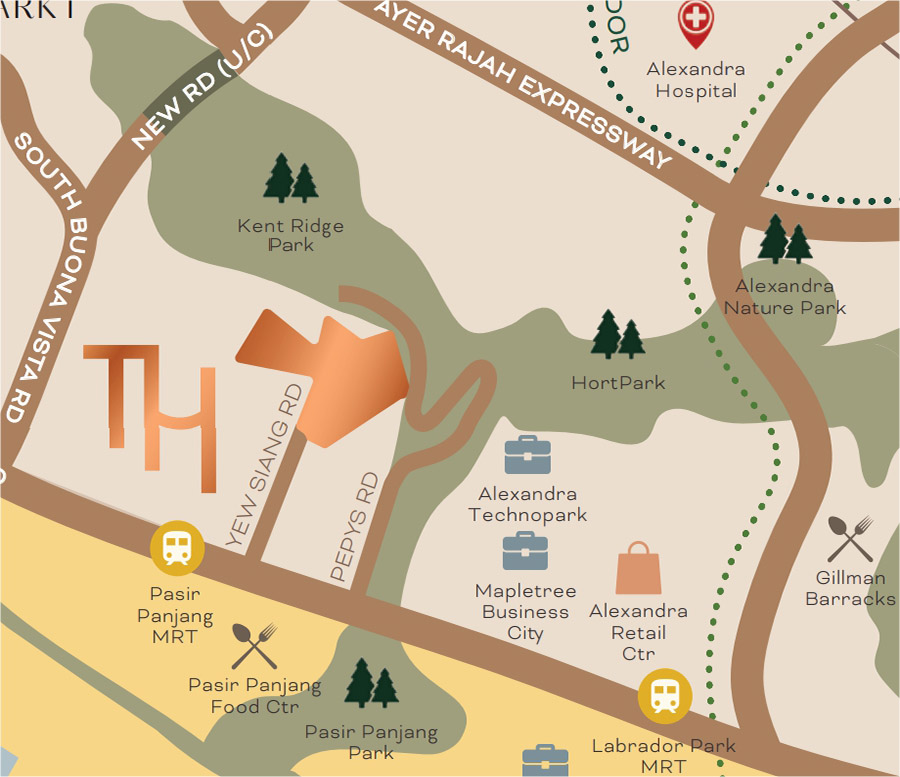
Pasir Panjang has never functioned as a convenience-first district, and Terra Hill does not attempt to change that narrative. The area is characterised by landed homes, low-rise developments, sloping terrain, and greenery, rather than retail clusters or transport interchanges.
The MRT (Pasir Panjang, CC26) is accessible, but not doorstep-close. For most residents, daily movement still assumes planned travel rather than spontaneous walk-outs. This immediately filters the buyer pool: those who require frictionless convenience tend to self-eliminate early, while buyers who value separation from commercial activity tend to lean in.
What the location offers instead is environmental consistency. Traffic flow is lighter than city-edge corridors, visual buffers are stronger, and the surrounding land use is unlikely to change dramatically. For own-stay buyers, this predictability is often more valuable than proximity to malls.
What Terra Hill Is — and Is Not
What It Is
A freehold, low-rise residential development
Designed for long-term own-stay and privacy-driven buyers
Anchored by land characteristics and tenure, not hype
A project where holding comfort matters more than entry timing
What It Is Not
Not an MRT-integrated or convenience-led project
Not a large-scale development with extensive facilities
Not a short-term trading or momentum-driven launch
Not suited for buyers who rely on walkable retail ecosystems
This distinction is central. Terra Hill’s strengths only surface over time; buyers expecting immediate validation from price movement or footfall convenience are likely to be misaligned.
Surrounding Amenities: Sufficient, but Intentional
Amenities around Terra Hill are adequate rather than abundant. Daily necessities are accessible with short drives or planned trips, while lifestyle amenities are spread across the Greater Southern Waterfront and HarbourFront belt rather than clustered at the doorstep.
For many residents, this is a feature rather than a flaw. The absence of heavy commercial activity reduces noise, traffic, and transient footfall, reinforcing Terra Hill’s identity as a residential sanctuary rather than a lifestyle destination.
Facilities: Low-Key, In Line With the Site
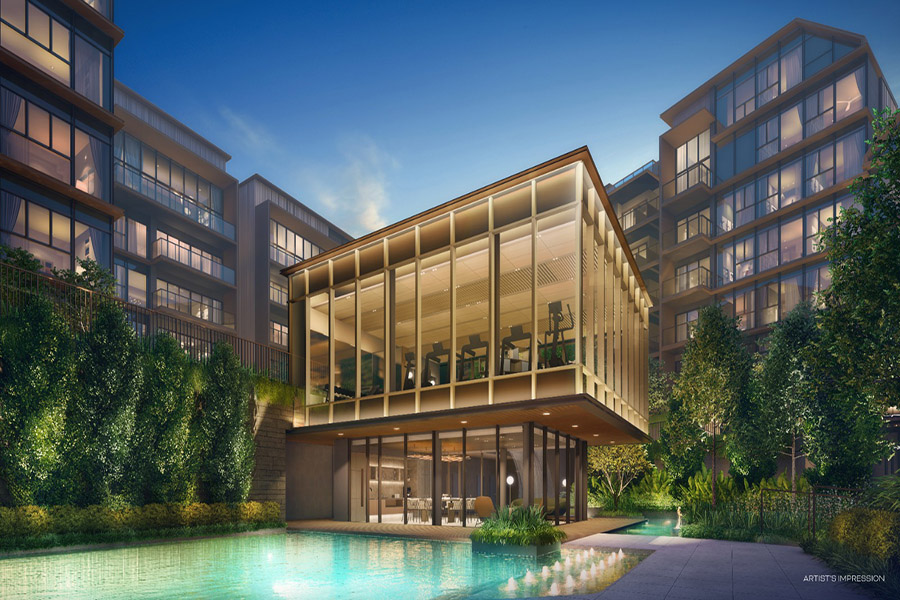
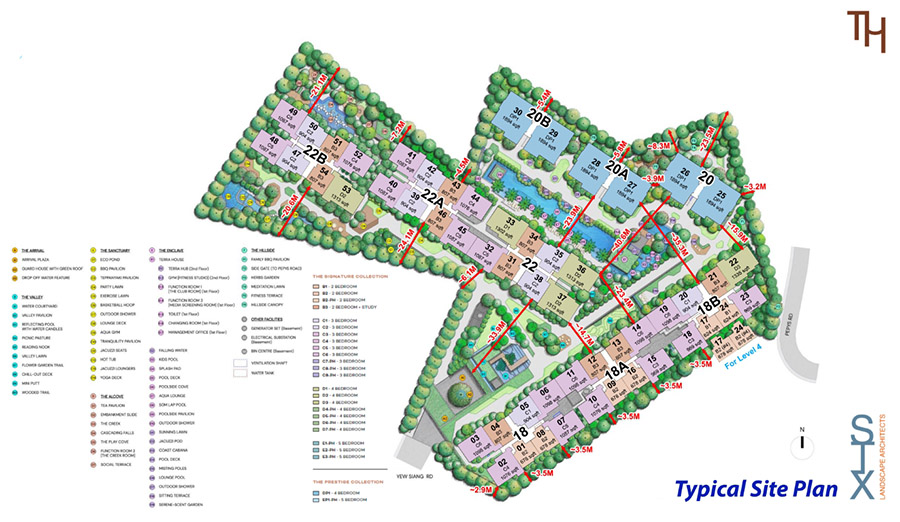
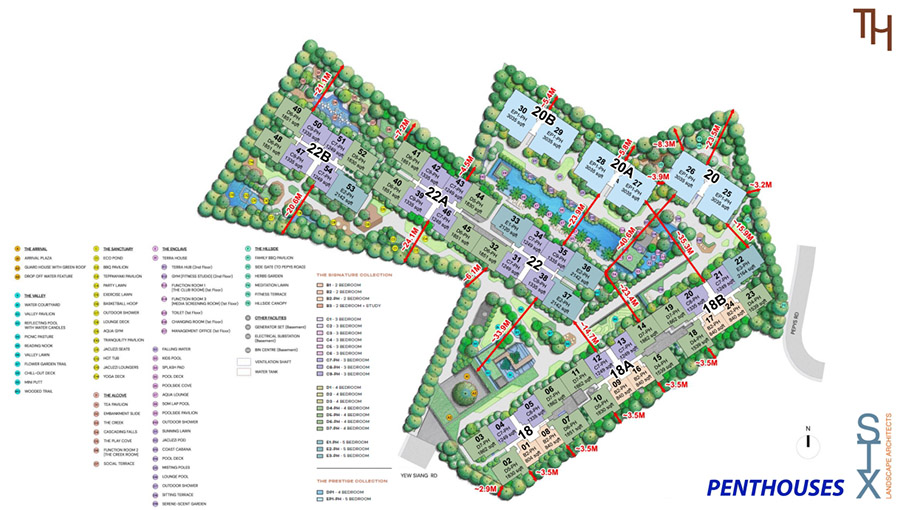
Terra Hill’s facilities reflect its low-rise, boutique positioning. They are designed to support daily living and light recreation, not to function as a selling spectacle.
Buyer Suitability: Who This Works For — and Who Should Exit Early
Buyers Most Aligned
1) Long-Term Own-Stay Buyers
Those planning to stay for many years and who value quiet, privacy, and permanence over short-term market signals.
2) Buyers Prioritising Freehold Tenure
Especially those concerned about lease decay in the long run and who are comfortable paying for stability rather than excitement.
3) Buyers Seeking Environmental Consistency
Residents who value low traffic, greenery, and a stable neighbourhood profile.
Buyers Who Should Eliminate Early
Buyers who require walkable MRT and retail convenience
Buyers focused on short-term appreciation or flipping
Buyers who prefer large-scale developments with extensive amenities
Early elimination avoids expectation mismatch.
Buyers who are comparing Terra Hill with other new launch options may find it helpful to step back and understand how tenure, scale, and location shape long-term outcomes. Our New Launch Condo Guide explains how OCR, RCR, and CCR projects differ structurally, and how freehold versus leasehold dynamics tend to influence holding behaviour over time.
Pricing Logic (How to Think About Value, Not Numbers)
Terra Hill’s pricing behaviour is best understood as paying for land quality and permanence, not for convenience or scale. Buyers are effectively accepting a quieter sales profile in exchange for lower volatility and stronger long-term holding comfort.
For this project, the decision framework is simple:
If you value long-term residential quality over short-term optics, the pricing logic tends to hold.
If you expect quick validation from price movement, the project will likely feel underwhelming.
Takeaway
Terra Hill is a freehold, low-rise project that rewards patience and long-term alignment, not urgency.
It is best suited for buyers who know what they are buying and what they are consciously giving up.
Many buyers reach this point understanding the project, but still feel uncertain because the trade-offs only become clear when compared against their own priorities or another specific project.
If you’re weighing this against one or two alternatives, or if you want to check the latest pricing guidance, indicative availability, or what to expect as the launch progresses, a short WhatsApp exchange usually helps clarify next steps. No registration or commitment is required.
1) Is Terra Hill mainly for own-stay buyers or investors?
It is primarily an own-stay project. Investors who enter typically do so with long holding horizons rather than short-term expectations.
2) Does the lack of MRT doorstep access hurt value?
It limits appeal for some buyers, but it also preserves the residential character. Value here is tied to privacy, not foot traffic.
3) Is freehold status meaningful in this location?
Yes, particularly for buyers planning to hold long term, as surrounding land use is unlikely to change drastically.
4) Are facilities a key selling point?
No. Facilities are functional, not a core value driver.
5) How does Terra Hill compare to integrated or mixed-use projects?
It trades convenience and scale for privacy and environmental stability.
6) Is this suitable for families with young children?
It can be, provided families value a quieter environment over immediate convenience.
7) Will prices move slowly compared to city-edge projects?
Typically yes. This is a steadier, lower-volatility profile.
8) Who should avoid Terra Hill altogether?
Buyers seeking immediate convenience, high activity, or short-term gains.
Pricing Logic, URA Planning Intent & Buyer Segmentation
Summary
Terra Hill should be evaluated as a land-driven, tenure-anchored residential asset, not a convenience-led or momentum-based project. Its pricing behaviour, buyer appeal, and long-term performance are shaped primarily by freehold tenure, low-rise form, and neighbourhood stability, while its constraints — distance from MRT, limited retail, and boutique scale — naturally cap speculative upside.
This section examines whether Terra Hill’s value logic holds once pricing behaviour, URA planning direction, and actual buyer absorption patterns are assessed together.
Pricing Logic: Paying for Land Quality, Not Activity
Terra Hill’s pricing does not behave like city-edge launches or integrated developments. Instead, it follows a land-quality premium model, where buyers are consciously paying for attributes that reduce change over time rather than accelerate it.
Buyers are effectively paying for three things:
1) Freehold Tenure as Time Insurance
Freehold status here functions less as a launch premium and more as long-term risk mitigation. As surrounding leasehold stock ages, the relative appeal of permanent tenure becomes clearer, particularly for buyers holding beyond one market cycle.
This is not about outperforming the market quickly; it is about avoiding erosion.
2) Low-Rise Form as Environmental Stability
Low-rise developments tend to attract a narrower but more consistent buyer pool. Density remains controlled, views are less volatile, and neighbourhood character is more predictable. These traits limit explosive upside, but they also reduce downside shocks.
3) Neighbourhood Permanence
Pasir Panjang’s land-use profile — landed homes, low-rise projects, limited commercial intrusion — is unlikely to change dramatically. Buyers are paying for predictability, not transformation.
What pricing does not reflect:
MRT doorstep convenience
retail footfall
lifestyle branding
short-term scarcity narratives
Understanding this prevents misaligned expectations.
Absolute Quantum vs PSF: Why Entry Price Matters More Here
For Terra Hill, absolute quantum matters more than headline psf.
Reasons:
Buyer pool is smaller and more intentional
Purchases are usually lifestyle- or legacy-driven
Holding periods are longer
Exit decisions are less time-sensitive
As a result:
Smaller and mid-sized units enjoy broader liquidity
Larger units depend on highly aligned buyers
Price movements are typically gradual rather than sharp
Decision rule:
If affordability comfort and holding peace of mind matter more than quick repricing, the pricing logic makes sense. If buyers expect strong early momentum, this project will feel slow.
Comparative Positioning Within the RCR
Within the RCR, Terra Hill occupies a quiet niche:
Not competing with city-fringe projects
Not positioned against integrated developments
Not driven by lifestyle density
Instead, it competes on:
tenure permanence
environmental calm
residential continuity
This explains why buyer response tends to be deliberate rather than urgent.
URA Planning Intent: Pasir Panjang as a Controlled Residential Zone
URA’s planning approach for Pasir Panjang emphasises measured evolution rather than aggressive redevelopment. While the Greater Southern Waterfront introduces long-term uplift to the broader region, its effects here are indirect and gradual.
Key implications for Terra Hill:
Surrounding land use remains largely residential
Traffic intensity unlikely to spike sharply
Lifestyle improvements accrue slowly
This planning intent supports long-horizon holding, not near-term price catalysts.
Buyer Segmentation: Who Absorbs Supply Over Time
1) Privacy-Driven Own-Stay Buyers (Primary)
Value quiet, greenery, and low density
Comfortable with planned travel
Long holding horizons
They form the most stable demand base.
2) Tenure-Focused Buyers (Secondary)
Prioritise freehold permanence
Less concerned with facilities or buzz
Often upgrading from landed or older freehold homes
They support mid- to long-term resale liquidity.
3) Selective Investors (Minority)
Focus on capital preservation
Accept modest yield
Prefer low volatility
They do not drive momentum, but they support downside stability.
Least Aligned Buyers
Convenience-first households
Facility-centric buyers
Short-term traders
Their absence defines the project’s sales and price behaviour.
Interim Assessment
Terra Hill performs best when viewed as:
A residential asset designed to age well, not to excite early.
Its appeal strengthens over time as surrounding leasehold stock matures and as buyers increasingly value environmental consistency.
Exit, Risk Scenarios & Buyer FAQs
Summary
Terra Hill’s exit behaviour is shaped less by market cycles and more by holding duration, tenure scarcity, and buyer alignment. It is not a project that rewards impatience, but one that tends to reward discipline.
Exit & Liquidity Behaviour
Short-Term (Pre-TOP to Immediate TOP)
Liquidity exists, but price discovery is conservative. Competition with new launches and developer stock limits upside. This phase favours holding rather than selling.
Mid-Term (5–10 Years Post-TOP)
This is typically the strongest exit window. Nearby leasehold projects begin to show age, while Terra Hill’s low-rise, freehold attributes become more distinct.
Long-Term (10+ Years)
Freehold land scarcity becomes more visible. Liquidity narrows, but buyers are more conviction-driven, often willing to pay for permanence and environment.
Risk Scenarios
Convenience trade-off: Distance from MRT limits buyer pool
Liquidity pacing: Sales and resales take time
Limited transformation: Area will not urbanise rapidly
These are not defects; they are the cost of stability.
Pros & Cons Snapshot
Pros
Freehold tenure
Low-rise, low-density environment
Neighbourhood stability
Long-term holding comfort
Cons
Not MRT-adjacent
Limited retail convenience
Modest short-term upside
Boutique-scale facilities
Frequently Asked Questions
1) Is Terra Hill mainly an own-stay or investment project?
It is primarily an own-stay project. Investors who enter typically do so for long-term capital preservation rather than yield or quick gains.
2) Does the distance from MRT hurt long-term value?
It limits appeal for convenience-driven buyers, but it also preserves the quiet residential character valued by Terra Hill’s core buyer group.
3) Is freehold tenure meaningful here?
Yes. In a low-rise residential zone, freehold tenure reinforces long-term value stability.
4) Are facilities a major value driver?
No. Facilities support daily living but are not a core reason buyers choose Terra Hill.
5) How does Terra Hill compare to integrated projects?
It trades convenience and activity for privacy and environmental calm.
6) Is this suitable for families with young children?
Yes, for families prioritising a quieter environment and long-term residence.
7) Will prices move slower than city-edge projects?
Typically yes. Terra Hill’s price behaviour is steadier and less volatile.
8) Is rental demand strong?
Rental demand exists but is selective, driven mainly by tenants seeking quiet residential living.
9) Are maintenance fees high?
They may be higher than large-scale projects due to limited economies of scale.
10) Which unit types are more liquid?
Smaller and mid-sized units tend to enjoy broader resale appeal.
11) Are larger units risky?
They require more patient buyers and longer holding periods.
12) How does URA planning affect Terra Hill?
Planning supports gradual improvement rather than dramatic change.
13) Is Terra Hill a hedge against lease decay?
Yes. Freehold tenure helps mitigate long-term lease erosion risks.
14) What is a realistic holding period?
Seven to twelve years or longer aligns best with the project’s strengths.
15) Is this suitable for short-term trading?
No. Terra Hill does not reward short-term strategies.
16) Who should avoid Terra Hill entirely?
Buyers who require immediate convenience, vibrant activity, or fast price appreciation.
If you’d prefer to arrange a showflat visit, receive floor plans, or continue the discussion later, you can leave your details below.