

Summary
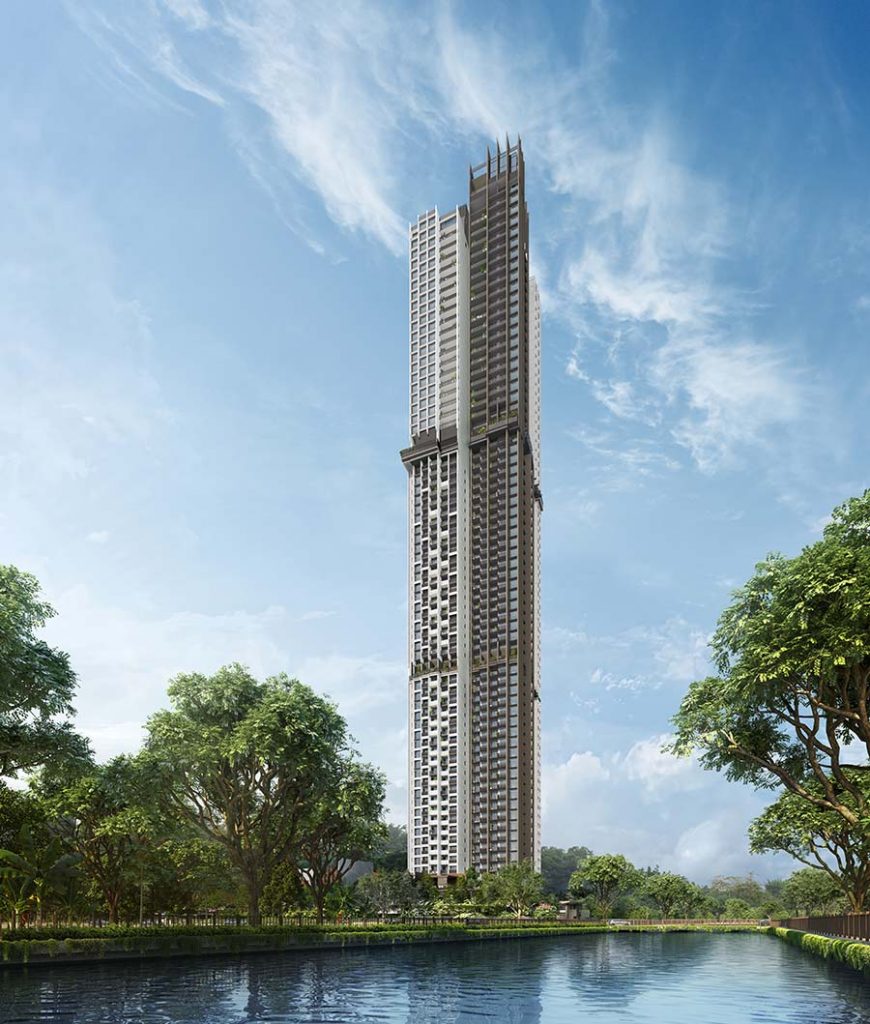
Promenade Peak is a high-density, 99-year leasehold riverfront condominium located along Zion Road in District 3, positioned at the edge of the Great Southern Waterfront (GSW) influence zone.
It is best suited for:
• City-fringe own-stay buyers prioritising proximity to Orchard and the CBD
• Buyers comfortable with high-rise density and urban traffic conditions
• Long-term holders aligned with gradual urban transformation
It is less suitable for:
• Buyers seeking low-density or boutique developments
• Buyers sensitive to traffic noise or congestion
• Investors expecting short-term price appreciation
From a decision-stage perspective, Promenade Peak functions as a location-driven project rather than a prestige-driven one — where value comes from connectivity and future planning alignment rather than exclusivity or tenure.
Is Promenade Peak Worth Buying?
Promenade Peak can make sense for buyers prioritising city-fringe accessibility, riverfront openness and long-term transformation potential.
However, it is not universally suitable.
Buyers who prioritise quiet environments, low density or freehold tenure may find better alternatives elsewhere.
From a decision perspective:
• It works when location and connectivity outweigh density concerns
• It does not work when lifestyle quietness or exclusivity is the priority
Whether Promenade Peak is “worth buying” depends less on price alone, and more on whether its positioning aligns with the buyer’s lifestyle and holding expectations.
Explore the Full Promenade Peak Analysis
- Promenade Peak Price Guide – pricing logic, market positioning, and entry analysis
- Promenade Peak Floor Plan Analysis – layout efficiency, unit mix, and stack considerations
- Promenade Peak Showflat Guide – viewing strategy and buyer evaluation framework
If you’re considering this project, you might want to check how it actually compares and what most buyers tend to overlook — before deciding.
Key Details (At a Glance)
99-year leasehold | Single-tower high-rise development
River-adjacent at Zion Road | District 3 (City Fringe / RCR)
Near Great Southern Waterfront influence zone
Targeting own-stay and long-term city-fringe buyers
Project Factsheet
| Item | Details |
|---|---|
| Project Name | Promenade Peak |
| Location | 1 Zion Promenade, Singapore |
| District / Region | District 3 (Rest of Central Region / Bukit Merah Planning Area) |
| Tenure | 99-year leasehold |
| Developer | Allgreen Properties Limited |
| Site Type | GLS (Government Land Sales) |
| Development Type | Private Residential Condominium |
| Site Area | Approximately 9,285.9 sqm |
| Plot Ratio | 5.6 |
| Total Units | 596 residential units |
| Nearest MRT | Havelock MRT (TE16) |
| Launch Status | Launched (1 August 2025) |
| Expected TOP | 2029 (estimated) |
Location Context: Zion Road at the Edge of the City Core
Promenade Peak sits along Zion Road — a transitional corridor connecting Orchard, River Valley and the CBD.
This is not a quiet enclave. It is an urban edge location, where accessibility takes priority over tranquillity.
Key realities:
• Strong proximity to Orchard Road and CBD
• Direct connection to Singapore River lifestyle belt
• Immediate exposure to arterial road traffic
The river frontage provides openness and long-term appeal, but day-to-day living remains firmly urban.
Buyers comparing city-fringe developments can refer to the New Launch Condo Guide to better understand how location positioning affects pricing and buyer suitability.
What Makes Promenade Peak Different from River Valley Projects?
Promenade Peak does not compete directly with traditional River Valley developments.
Key differences:
• Higher density (single tower vs smaller developments)
• More urban exposure (Zion Road vs inner residential streets)
• Stronger infrastructure positioning over lifestyle exclusivity
Where River Valley projects offer boutique, low-density living, Promenade Peak offers scale, skyline and connectivity.
GSW Narrative: Structural Upside, Not Immediate Lifestyle
Promenade Peak benefits from proximity to the Great Southern Waterfront (GSW) — but this must be interpreted correctly.
Reality:
• It sits within the influence zone, not the core redevelopment
• Transformation is gradual, not immediate
• Value uplift is long-term, not event-driven
Buyers expecting rapid appreciation purely from GSW positioning may find expectations misaligned.
Density & Design Reality: Single-Tower Living
Promenade Peak is defined by a single high-rise tower with 596 units.
Advantages
• Higher-floor units benefit from strong skyline and river views
• Efficient land use within a city-fringe site
• Clear architectural identity
Trade-offs
• Higher resident density
• Lift dependency
• Reduced exclusivity
This is not inherently negative — but it requires alignment with buyer expectations.
What Promenade Peak Is — and Is Not
What It Is
• City-fringe, river-adjacent residential project
• Designed for own-stay and long-term holding
• Location-driven value proposition
What It Is Not
• Not a boutique luxury development
• Not a freehold play
• Not a short-term flipping opportunity
Understanding this early prevents misaligned decisions.
Amenities & Daily Living Reality
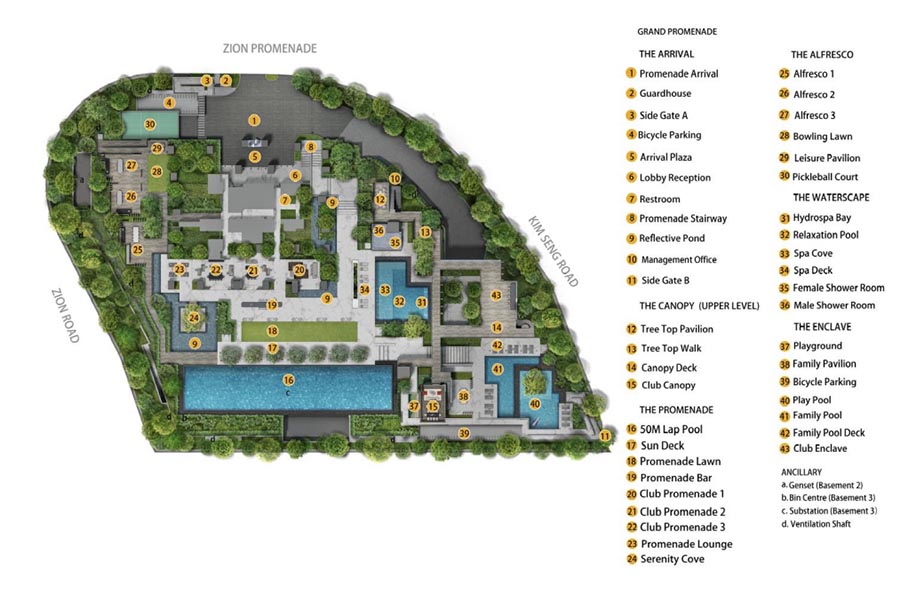
Promenade Peak’s facilities are structured around its high-rise, single-tower design, with multiple amenity decks distributed across different levels rather than concentrated at ground level.
From a buyer’s perspective, the key is not the number of facilities, but how they are experienced day-to-day.
What works:
• Sky-level facilities benefit from stronger openness and views
• Different decks help spread usage across levels
• Full suite of lifestyle amenities supports daily convenience
What to be aware of:
• Facilities are shared across a larger resident base
• Lift reliance is higher due to vertical layout
• Less ground-level greenery compared to low-density projects
Bottom line:
The facilities suit buyers comfortable with high-rise, shared living environments, but are less aligned with those seeking quiet, low-density or resort-style spaces.
Buyer Suitability: Who This Works For
1. City-Fringe Own-Stay Buyers
Those working in Orchard, CBD or Alexandra benefit from reduced commute time.
2. Long-Term Holders
Buyers aligned with gradual urban transformation rather than quick gains.
3. Lifestyle-Oriented Urban Buyers
Those who prioritise skyline views and connectivity over quiet surroundings.
Buyers Who Should Eliminate Promenade Peak Early
- Buyers prioritising low-density living
- Buyers sensitive to noise and traffic
- Buyers seeking freehold security
- Buyers expecting short-term price upside
These are structural mismatches — not negotiable trade-offs.
What Are the Main Downsides of Promenade Peak?
The key drawbacks are structural rather than temporary:
- High-density living environment
- Exposure to traffic and noise from Zion Road
- 99-year leasehold tenure
- Limited scarcity-driven upside
These factors should be considered upfront rather than after purchase.
Buyers comparing Promenade Peak against other upcoming launches may find it helpful to frame their decision using the New Launch Condo Guide, which outlines how pricing logic, buyer intent, and holding horizon differ across project types.
Takeaway
Promenade Peak is best understood as a city-fringe, connectivity-driven project.
It works when:
- Buyers prioritise proximity to Orchard and CBD
- Buyers are comfortable with density
- Buyers are aligned with long-term holding
It does not work when:
- Quiet living is a priority
- Exclusivity is expected
- Short-term gains are the objective
If you’re seriously considering this project, it’s worth checking how it actually compares and what most buyers tend to overlook — before deciding.
FAQs (Decision-Stage)
1) Is Promenade Peak considered a prime district project?
Promenade Peak is not classified as a prime district project, even though it is close to Orchard Road and the CBD. It is located in District 3, which falls under the Rest of Central Region (RCR). Buyers should evaluate it based on city-fringe positioning rather than prestige or exclusivity typically associated with District 9 or 10. This distinction affects pricing expectations, buyer profile and long-term appreciation behaviour.
2) How significant is the river frontage?
The river frontage is one of Promenade Peak’s key strengths, particularly for higher-floor units with open views. It enhances liveability by providing visual space and reducing the sense of density. However, not all units benefit equally, especially those with limited orientation towards the river. Buyers should assess whether their specific unit captures this advantage rather than assuming uniform benefit across the project.
3) Is this project more suitable for own-stay or investment?
Promenade Peak is more aligned with own-stay buyers due to its location convenience and lifestyle positioning. While rental demand may exist given its proximity to the CBD, it is not structured for strong yield or short-term gains. Investors looking for faster price movement or higher rental returns may find better alternatives. Suitability depends on whether the buyer prioritises daily living convenience or financial performance.
4) Does the Great Southern Waterfront materially change its outlook?
The Great Southern Waterfront contributes to long-term positioning rather than immediate transformation. Its impact is gradual and tied to infrastructure rollout and broader planning timelines. Buyers should not expect rapid price appreciation purely from this narrative. Instead, it supports structural value over a longer holding period.
5) Is the single-tower density a concern?
The single-tower design results in higher density, which can affect exclusivity and shared facility usage. However, it also allows for stronger vertical views and a clearer architectural identity. Whether this is a concern depends on the buyer’s tolerance for high-rise living and shared environments. It is a structural characteristic that should be accepted upfront rather than adjusted to later.
6) How does Promenade Peak compare to River Valley projects?
River Valley projects generally offer lower density, quieter surroundings and a more residential feel. Promenade Peak, in contrast, prioritises connectivity and urban positioning along a main arterial road. The trade-off is between exclusivity and accessibility rather than direct price comparison. Buyers should choose based on lifestyle alignment rather than perceived prestige differences.
7) Is traffic noise an issue?
Traffic noise is a realistic consideration due to the project’s location along Zion Road. Lower-floor units and those facing the main road are more affected than higher-floor or inward-facing units. This makes stack and floor selection particularly important. Buyers should evaluate noise exposure early rather than assuming it can be mitigated later.
8) Who is most likely to be satisfied living here?
Buyers who value proximity to Orchard, the CBD and city-fringe convenience are most likely to be satisfied. This includes professionals and households comfortable with urban density and a faster-paced environment. Those who prioritise views and accessibility over quiet living tend to align well with the project. It is less suitable for buyers seeking low-density or neighbourhood-style living.
Pricing Logic, URA Planning Intent & Buyer Segmentation
Summary
Promenade Peak’s pricing behaviour is shaped less by its district label and more by its city-fringe adjacency, riverfront positioning, and Great Southern Waterfront influence. It does not compete as a traditional River Valley boutique project nor as a mass-market RCR launch. Instead, it sits in a middle band where buyers are effectively paying for location access and future urban structure, while accepting density, tenure, and traffic trade-offs. This section examines how pricing is likely to behave, how URA’s planning intent affects long-term outcomes, and which buyer segments are structurally aligned with the project.
Pricing Logic: Paying for Location Adjacency, Not Exclusivity
Pricing Context: Launched Pricing and Market Positioning
Promenade Peak entered the market at price levels that reflect:
River adjacency and skyline potential
Proximity to Orchard Road, the CBD, and the southern city fringe
Future-facing positioning linked to the Great Southern Waterfront narrative
At the same time, pricing also implicitly acknowledges:
99-year leasehold tenure
High-density, single-tower configuration
Exposure to a busy arterial road environment
As a result, pricing does not behave like a low-density River Valley project, nor does it sit at mass-market RCR affordability levels. Buyers are paying a city-edge premium, but not a prestige premium.
Pricing Behaviour: Structural, Not Momentum-Driven
Promenade Peak’s pricing behaviour is expected to be structural and time-based, rather than driven by launch momentum or short-term scarcity.
Key characteristics include:
Slower but steadier appreciation expectations
Less sensitivity to launch-day absorption optics
Greater reliance on long-term urban transformation narratives
Because the project is not boutique in scale, pricing upside is unlikely to be explosive. Instead, performance is more likely to track broader city-fringe demand and infrastructure maturity.
Absolute Quantum vs PSF: How Buyers Actually Decide
For Promenade Peak, absolute quantum matters as much as psf, particularly for own-stay buyers.
Reasons include:
Larger unit sizes magnify total price sensitivity
Buyers compare alternatives across RCR and fringe CCR options
Monthly affordability and holding comfort matter more than headline psf
If pricing stretches too far relative to comparable city-fringe options, buyer resistance increases quickly, regardless of river views or branding.
Explicit Pricing Decision Rules
If your priority is living near Orchard and the CBD with riverfront openness, the pricing logic is understandable.
If you are expecting boutique density or tenure-led value retention, pricing will feel misaligned.
Buyers prioritising short-term price momentum should recalibrate expectations early.
URA Planning Intent: City Fringe & Great Southern Waterfront
URA’s planning direction for the southern city fringe emphasises:
Decentralisation of employment and amenities
Activation of waterfront corridors
Gradual transformation rather than instant redevelopment
Promenade Peak sits within the influence zone, not the core redevelopment parcels. This matters because:
Planning uplift is real but gradual
Lifestyle change lags infrastructure delivery
Value accrual is more structural than speculative
The project benefits from alignment with long-term planning, but buyers should not overprice near-term transformation.
Buyer Segmentation: Who Promenade Peak Truly Serves
1. City-Fringe Own-Stay Buyers (Primary Segment)
Profile
Work in Orchard, CBD, or Alexandra corridor
Value reduced commute times
Comfortable with urban density
Why It Works
Strong location adjacency
River openness mitigates density perception
Long-term holding aligns with planning timelines
2. Long-Horizon Buyers with Moderate Yield Expectations
Profile
Willing to hold through multiple cycles
Less focused on short-term gains
Accept leasehold trade-offs
Limitations
Yield expectations should remain conservative
Exit relies on broader market conditions
3. Lifestyle-Oriented Urban Buyers (Selective)
Profile
Value views and city-edge living
Less sensitive to traffic noise
Not seeking quiet enclave environments
4. Short-Term Traders & Boutique Seekers
Suitability: Low
Density limits scarcity-driven upside
Single-tower format reduces exclusivity
Price performance unlikely to spike quickly
Interim Assessment
Promenade Peak should be understood as:
A city-fringe, river-adjacent own-stay project designed for structural, long-term value rather than short-term excitement.
Exit & Liquidity, Risk Scenarios, Pros & Cons, and Buyer FAQs
Summary
Promenade Peak’s exit profile is shaped by density, tenure, and location dynamics. Liquidity is expected to be steady but selective, with resale outcomes driven more by affordability and city-fringe demand than by project scarcity. This section evaluates exit behaviour, downside risks, and realistic holding expectations.
Exit & Liquidity Analysis
Liquidity Profile of High-Density City-Fringe Projects
For projects like Promenade Peak:
Resale demand is consistent but price-sensitive
Liquidity depends on broader city-fringe demand cycles
Buyer pool skews toward own-stay rather than investors
This results in reliable but unspectacular liquidity.
Unit-Type & Floor Sensitivity
Exit outcomes are influenced by:
Floor height and view quality
Noise exposure from Zion Road
Unit orientation and stack selection
Higher-floor river-facing units typically hold liquidity better.
Timing Sensitivity
Exit performance is more sensitive to:
Interest rate environment
RCR affordability conditions
Competing city-fringe supply
Less sensitive to:
Launch marketing narratives
Short-term sentiment swings
Multi-Scenario Risk Analysis
Scenario 1: Prolonged High Interest Rates
Impact: Affordability pressure
Implication: Entry price discipline becomes critical
Scenario 2: Slower GSW Rollout
Impact: Delayed sentiment uplift
Implication: Hold period must lengthen
Scenario 3: Strong City-Fringe Demand
Impact: Stable resale and rent support
Implication: Project performs as intended
Scenario 4: Oversupply of High-Density Projects
Impact: Competitive pressure
Implication: Differentiation rests on views and pricing
Pros & Cons Summary
Pros
Strong city-fringe adjacency
Riverfront openness
Alignment with long-term planning
Suitable for own-stay buyers
Cons
High density
99-year tenure
Traffic and noise considerations
Limited speculative upside
FAQs
1) Is Promenade Peak a good investment?
Promenade Peak is not positioned for short-term investment gains. Its pricing and structure suggest more moderate, long-term appreciation tied to city-fringe demand rather than scarcity-driven upside. Investors looking for quick flipping opportunities may find limited momentum here. However, buyers with a longer holding horizon may still benefit from gradual value growth.
2) What is the biggest downside of Promenade Peak?
The main downside is its high-density configuration within a single tower. This reduces exclusivity and can impact both living experience and long-term price differentiation. In addition, its location along Zion Road introduces traffic and noise considerations. These factors should be evaluated upfront rather than treated as minor trade-offs.
3) Is Zion Road a good location to live?
Zion Road offers strong connectivity to Orchard, the CBD and River Valley, making it highly convenient for city-based lifestyles. However, it is an urban arterial road rather than a quiet residential street. Buyers should expect higher traffic flow and a more active environment. Suitability depends on whether convenience outweighs the desire for tranquillity.
4) Does density affect long-term appreciation?
Density does not eliminate appreciation, but it can moderate the rate of price growth. High-density developments rely more on broader market demand rather than scarcity. This typically results in steadier but less aggressive price movement. Buyers should align expectations with gradual appreciation rather than sharp upside.
5) What type of buyer is Promenade Peak best suited for?
Promenade Peak is best suited for city-fringe own-stay buyers who prioritise convenience, proximity to Orchard and the CBD, and long-term liveability. It also suits longer-term holders who are comfortable with density and an urban setting. Buyers seeking boutique exclusivity or a quiet neighbourhood feel may find it less suitable. Fit matters more than headline location appeal.
6) How important is the river frontage for long-term appeal?
The river frontage enhances openness, selected views and overall lifestyle appeal, particularly for higher-floor units. It helps the project feel less compressed despite its density. However, the benefit is not uniform across all stacks and floors. Long-term appeal depends heavily on whether the chosen unit genuinely captures this advantage.
7) Will the Great Southern Waterfront significantly impact prices?
The Great Southern Waterfront may support long-term value, but it should not be viewed as a short-term pricing catalyst. Its influence is gradual and depends on broader redevelopment progress over time. Buyers who over-rely on this narrative may misjudge realistic appreciation timelines. It is better understood as structural support rather than immediate upside.
8) Is Promenade Peak expensive for what it offers?
That depends on what the buyer values most. Buyers prioritising proximity to Orchard, the CBD and riverfront openness may find the pricing understandable, while buyers focused on exclusivity, tenure or lower density may find it less compelling. The project sits in a middle ground where location drives value more than prestige. This makes buyer alignment critical.
9) Does the single-tower design affect resale value?
A single-tower design reduces exclusivity compared to smaller developments, which can affect long-term differentiation. At the same time, it gives the project a clearer skyline identity and may support better views for selected units. Resale outcomes are therefore likely to vary more meaningfully by stack and floor. Buyers should focus on unit-level selection rather than assume all units perform equally.
10) How important is unit selection at Promenade Peak?
Unit selection is very important because floor height, orientation, road exposure and view quality can materially affect liveability and resale appeal. Higher-floor units with stronger openness typically hold broader buyer appeal. Lower-floor or road-facing units may face more resistance. At this project, micro-level differences matter more than branding alone.
11) What is the expected holding period for Promenade Peak?
A medium- to long-term holding period is generally more appropriate for Promenade Peak. Its value proposition is tied to gradual urban transformation and city-fringe demand rather than quick repricing. Buyers expecting strong movement over a short window may be disappointed. The project makes more sense when viewed over multiple market cycles.
12) Will future supply affect resale prices?
Yes, future city-fringe supply can influence resale competition and pricing behaviour. High-density projects are generally more sensitive to competing launches and nearby alternatives because buyers have more options to compare. This does not mean Promenade Peak cannot perform, but entry price discipline matters. Broader supply conditions should always be part of the evaluation.
13) Is rental demand likely to be strong here?
Rental demand should exist because of the project’s proximity to Orchard, River Valley and the CBD. However, it is not best evaluated as a pure yield-driven investment play. Tenant appeal is likely to come more from convenience and location access than from exclusivity. Buyers focused mainly on rental optimisation may still want to compare alternatives carefully.
14) Are families well suited to Promenade Peak?
Families may consider Promenade Peak, but suitability depends on their priorities. Those who value city access and are comfortable with a denser, more urban environment may find it workable. However, families prioritising quieter surroundings, a stronger neighbourhood feel or a more family-centric development may prefer other options. It is not a universal family-oriented project.
15) What is the biggest mistake buyers can make with Promenade Peak?
The biggest mistake is evaluating it through the wrong lens. Buyers who treat it like a boutique River Valley project or expect fast speculative upside may end up disappointed. Promenade Peak needs to be assessed based on city-fringe connectivity, density comfort and long-term holding logic. Misalignment of expectations is the main risk.
16) How should buyers evaluate Promenade Peak overall?
Promenade Peak should be evaluated based on lifestyle fit, density tolerance, holding horizon and sensitivity to traffic exposure. It works best for buyers who prioritise location, convenience and long-term positioning over exclusivity or tenure. It is less suitable for buyers seeking scarcity-driven upside or a quiet residential feel. The right decision depends on whether the trade-offs are acceptable from the start.
If you prefer a more structured walkthrough, you can leave your details below and we’ll follow up with you.