
Summary
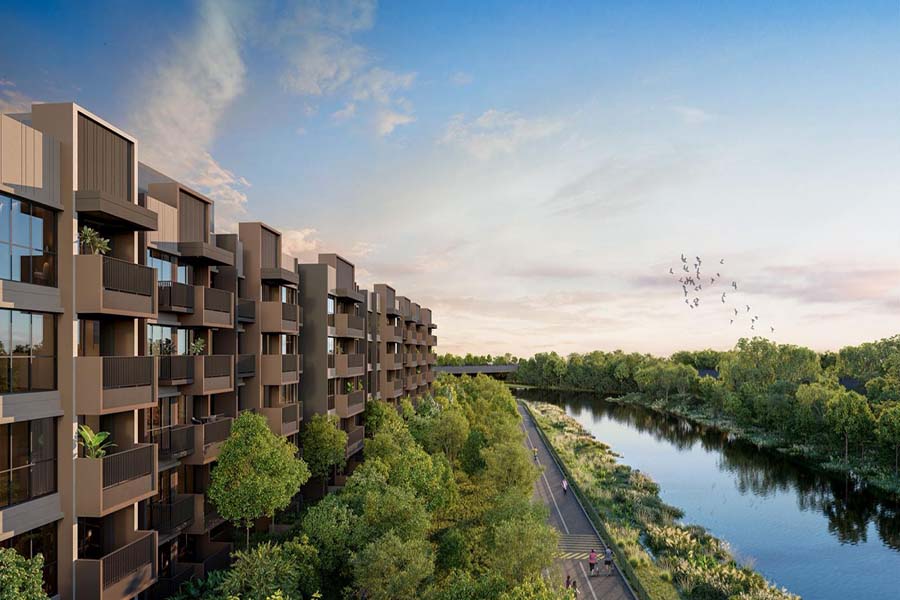
Faber Residence is a 99-year leasehold, low-rise residential development along Faber Walk in District 5, positioned within the Clementi Planning Area. Comprising nine five-storey blocks and 399 units, the project differentiates itself not through transport integration or urban convenience, but through a rare combination of low density, river adjacency, and proximity to a top-tier primary school.
Unlike high-rise launches concentrated around Clementi Central and Jurong East, Faber Residence targets a narrower buyer segment: family-oriented owner-occupiers who prioritise a quieter living environment, nature access, and long-term schooling considerations over immediate MRT convenience. Its pricing strategy—deliberately set below Clementi’s high-rise benchmarks—allowed it to achieve a strong initial take-up, clearing the bulk of its family-sized inventory early.
Faber Residence works best as a niche, low-rise OCR option: it appeals to buyers who value a quieter landed-adjacent environment, river/park-connector access, and school-driven liveability more than MRT-adjacent convenience. The trade-off is clear—daily transport friction and potentially higher running costs typical of landscaped, low-density projects.
For buyers assessing whether Faber Residence aligns with their financing comfort, holding horizon, and exit assumptions, a structured project breakdown covering entry positioning, pricing logic, stack considerations, and buyer suitability may provide additional clarity before arranging any viewing.
Key details (at a glance)
99-year leasehold | 399 units | Private residential (low-rise, 5-storey blocks)
Located at Faber Walk | District 5 (OCR / Clementi Planning Area)
Near Ulu Pandan Park Connector and Sungei Ulu Pandan | Not immediately next to an MRT station
Est. TOP Q1 2029 | 2–5 Bedroom mix (family-weighted)
Project Factsheet
| Item | Details |
|---|---|
| Project Name | Faber Residence |
| District / Region | District 5 / OCR / Clementi Planning Area |
| Address | 54–70 Faber Walk |
| Developer | GuocoLand, Hong Leong Holdings & TID |
| Tenure | 99 years commencing 24 Feb 2025 |
| Site Type | GLS New Launch |
| Development | 9 blocks of 5-storey residential buildings |
| Total Units | 399 units |
| Plot Ratio | 1.4 |
| Site Area | ~277,600 sqft |
| Unit Mix | 2BR to 5BR (family-centric) |
| Estimated TOP | Q1 2029 |
Faber Residence is a low-density, school-anchored waterfront condominium designed for family owner-occupiers who value space, privacy, and long-term liveability over MRT adjacency.
Location Context: Quiet Enclave Within a Mature Clementi Estate
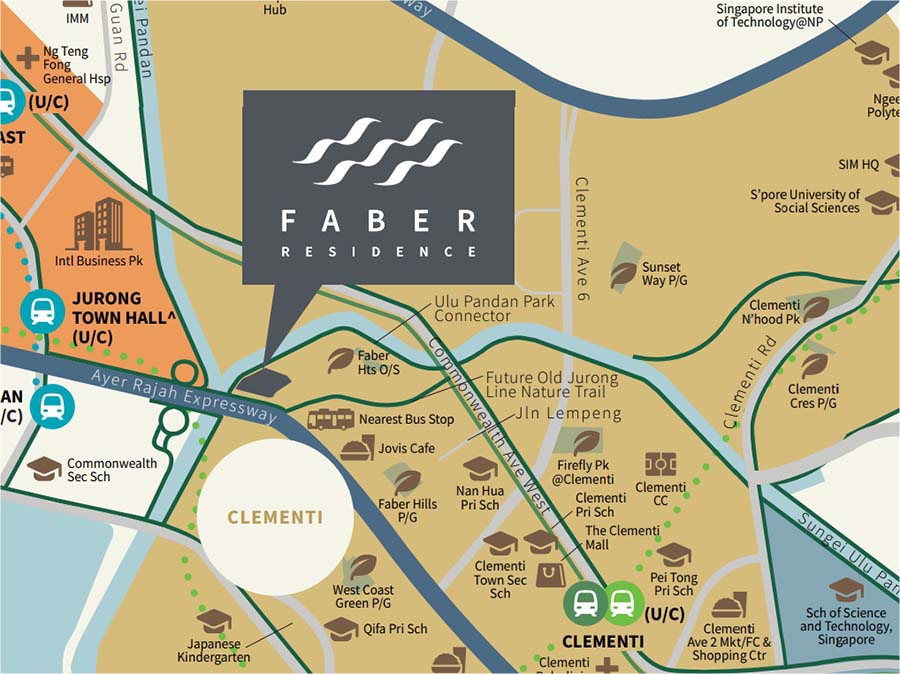
Faber Residence is situated within the Faber landed enclave, an area defined by low-rise housing, limited through-traffic, and direct adjacency to Sungei Ulu Pandan. Unlike projects along Clementi Avenue 1 or Commonwealth Avenue West, the site is intentionally insulated from commercial activity, reinforcing its residential character.
While the development is not immediately next to an MRT station, daily needs are supported by Clementi Central and the West Coast cluster via bus or private transport. The future Jurong Town Hall MRT station on the Jurong Region Line introduces a medium-term uplift narrative, but buyers should treat this as a secondary benefit rather than a core driver of value.
Project Positioning: Low-Rise Typology as the Primary Differentiator
The defining feature of Faber Residence is its five-storey, low-rise configuration—a typology that has become increasingly rare in Clementi due to land scarcity and rising plot ratios. This design choice preserves privacy, reduces visual density, and creates a living environment closer to landed housing than to typical OCR condominiums.
However, this also introduces trade-offs. Lower density and extensive landscaping often translate into higher per-unit maintenance costs, and the absence of integrated retail or transport amenities places greater reliance on private mobility. Buyers are effectively choosing lifestyle alignment over urban efficiency.
Amenities & Facilities Overview
The development is oriented around landscaped communal spaces and the riverfront, with internal circulation prioritised for pedestrians rather than vehicular dominance.
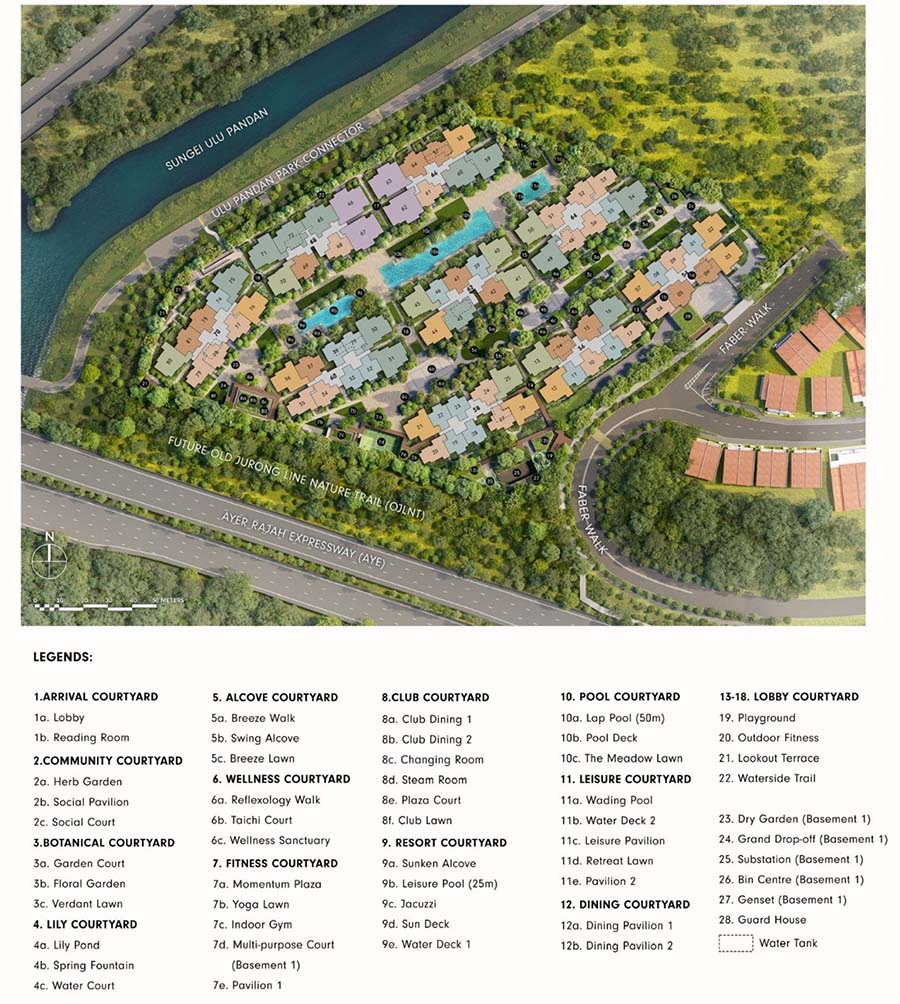
Facilities are designed to support family use and everyday leisure rather than high-traffic, resort-style programming. This aligns with the project’s owner-occupier skew and low-rise identity.
Buyer Suitability: Who Faber Residence Is — and Is Not — For
Best Suited For
Families prioritising Nan Hua Primary School (within 1km) for long-term schooling certainty
Owner-occupiers seeking quiet, low-density living within a mature OCR estate
Buyers upgrading from HDB or older condos who value space, privacy, and nature access
Less Suitable For
Buyers who require immediate MRT adjacency for daily commuting
Investors focused on short-term capital appreciation or yield compression
Households sensitive to higher maintenance costs typical of landscaped, low-density projects
Buyers comparing Faber Residences against other upcoming launches may find it helpful to frame their decision using the New Launch Condo Guide, which outlines how pricing logic, buyer intent, and holding horizon differ across project types.
Takeaway
Faber Residence succeeds by narrowing its audience rather than broadening it. In a market dominated by high-rise, transit-oriented developments, it offers a fundamentally different proposition—low-rise, riverside living anchored by school proximity and long-term liveability.
For family owner-occupiers aligned with its lifestyle trade-offs, the project presents a defensible entry into Clementi at a price point below the urban core. For buyers seeking convenience or aggressive appreciation, its constraints are structural rather than temporary.
If Faber Residence is on your shortlist and being compared against nearby alternatives, a structured review of capital commitment differences, downside exposure scenarios, liquidity positioning, and realistic exit pool dynamics may help clarify the decision framework before any commitment is made.
FAQs (Decision-Stage)
1. Is Faber Residence suitable for long-term family living?
Yes, the project is explicitly designed around family living rather than investor turnover. Larger unit sizes, low-rise density, and proximity to Nan Hua Primary School support longer holding periods and stable occupancy. Buyers should, however, be comfortable with a quieter, less connected location.
2. How important is the 1km Nan Hua Primary School factor?
The school proximity is one of the project’s strongest demand anchors. Historically, properties within 1km of oversubscribed primary schools demonstrate more resilient resale demand during downcycles. This acts as a defensive buffer rather than a speculative upside driver.
3. Does the lack of nearby MRT reduce long-term value?
The absence of immediate MRT access introduces daily commuting friction, especially for rail-dependent households. While future JRL connectivity may improve accessibility, buyers should assess the project based on current transport realities. Its value proposition rests more on lifestyle scarcity than transit convenience.
4. How does low-rise density affect maintenance costs?
Low-rise developments with extensive landscaping typically incur higher per-unit maintenance fees compared to mega-condos. While this enhances living quality, it raises holding costs over time. Budget-sensitive buyers should factor this into long-term affordability assessments.
5. Is the 99-year leasehold a concern in a freehold enclave?
The leasehold status introduces long-term comparative pressure when surrounded by freehold landed homes. However, most buyers in this segment focus on 10–15 year holding horizons tied to schooling and family needs. Beyond that window, lease decay considerations become more relevant.
6. How does Faber Residence compare to high-rise Clementi launches?
High-rise launches offer stronger MRT proximity and urban convenience but at significantly higher density and price points. Faber Residence trades those attributes for privacy, space, and environmental quality. Buyers are choosing between fundamentally different living experiences rather than direct substitutes.
7. Is this a suitable investment property?
As a pure investment, the project requires selectivity. Smaller family units may see consistent rental demand from Jurong Lake District professionals, but yields are unlikely to outperform high-density, transit-linked alternatives. It is better suited as a hybrid lifestyle-plus-defensive asset.
8. What is the main risk buyers should be aware of?
The primary risks are structural rather than cyclical: limited MRT access, higher maintenance costs, and leasehold positioning within a freehold enclave. These factors do not disappear with market cycles and should be accepted upfront as part of the project’s trade-offs.
Pricing Logic, Planning Context, and Market Absorption
Pricing Logic: Why Faber Residence Cleared Early — Then Slowed
Faber Residence’s pricing success was not driven by momentum or speculative narratives, but by intentional under-positioning relative to Clementi’s high-rise core. By anchoring entry prices materially below nearby high-density launches, the project created an immediate perception of value for buyers who wanted access to Clementi amenities without accepting vertical density.
Early absorption was strongest in the 2- and 3-bedroom segments, where absolute quantum remained within reach for HDB upgraders. These buyers were less concerned about MRT adjacency and more focused on school access, environment, and long-term liveability. As a result, sales velocity reflected conviction-led demand, not promotional urgency.
As prices approached the upper bands of OCR tolerance, resistance began to emerge. This resistance manifested not as rejection, but as slower decision cycles, particularly for larger 4- and 5-bedroom units where leasehold tenure becomes a more explicit consideration.
Comparison Context: Why Buyers Did Not Treat Faber Residence as a High-Rise Substitute
Buyers rarely compared Faber Residence directly with projects like ELTA or other Clementi core towers on a like-for-like basis. Instead, the decision frame was binary: high-rise convenience versus low-rise lifestyle. Once buyers mentally exited the “urban tower” category, Faber Residence effectively stood alone.
Resale benchmarks such as Waterfront @ Faber served as valuation anchors, but buyers recognised that those older developments lacked modern layouts, facilities, and landscaping. This allowed Faber Residence to command a meaningful premium without triggering immediate rejection.
Crucially, the project was not priced to compete with RCR or city-fringe narratives. Its competitive set remained tightly defined within OCR family-oriented housing, which reduced volatility and supported steady absorption.
Planning Context: Low-Rise Scarcity as a Structural Advantage
From a planning perspective, Faber Residence benefits from structural scarcity rather than future transformation stories. The planning controls limiting height to five storeys are unlikely to change, which caps future competing supply of similar typology within the Clementi/Faber enclave.
Environmental buffers along Sungei Ulu Pandan and the park connector further restrict redevelopment intensity. These constraints reduce the risk of future overbuilding and support the project’s long-term positioning as a low-rise residential pocket rather than a transition zone.
This planning reality reinforces the project’s appeal to buyers seeking stability, privacy, and predictability — qualities that are increasingly rare in mature OCR estates.
Buyer Segmentation, Exit Dynamics, Risks, and Suitability
Buyer Segmentation: Who Faber Residence Works Best For
Demand at Faber Residence is dominated by family-centric owner-occupiers, particularly those prioritising Nan Hua Primary School eligibility and a quieter residential environment. These buyers typically have longer holding horizons and lower sensitivity to short-term price movements, which contributes to more stable post-launch behaviour.
A secondary cohort consists of upgraders from within Clementi, West Coast, and Jurong East who value familiarity with the area. Investor participation exists, but is selective and focused mainly on mid-sized family units rather than yield-maximisation strategies.
Buyers seeking immediate MRT convenience or aggressive capital appreciation are generally filtered out early, reducing mismatch risk.
Exit and Liquidity: Stable, But Segment-Dependent
Liquidity prospects are strongest for 3-bedroom family-sized units, where school proximity and low-rise scarcity create a reliable resale audience. These units are likely to transact within a defined price band rather than experience sharp appreciation spikes.
Larger 4- and 5-bedroom units face a narrower resale pool due to higher absolute quantum and leasehold tenure within a predominantly freehold landed enclave. While they benefit from lifestyle appeal, exit timelines may be longer and more price-sensitive.
Overall, exit dynamics favour predictability over acceleration, aligning with the project’s original buyer base.
Structural and Market Risks to Monitor
The absence of immediate MRT adjacency remains the most persistent friction point, especially as transport expectations continue to rise. While the future Jurong Region Line improves optionality, it should be viewed as a supplementary benefit rather than a core value driver.
Maintenance costs may also trend higher due to extensive landscaping and water features across a relatively low unit count. Buyers must factor this into long-term holding costs, particularly if rental yield is a priority.
Finally, leasehold tenure within a freehold-dominated enclave places a natural ceiling on long-term appreciation. This does not negate value, but it requires buyers to enter with realistic expectations.
FAQs
1) Who is Faber Residence best suited for?
Faber Residence is best suited for family owner-occupiers who value a quieter, low-rise environment over “doorstep MRT” convenience. It also fits buyers who want to stay within the Clementi catchment but prefer a more residential enclave feel. The trade-off is daily transport friction if the household is fully public-transport dependent. Buyers who need immediate rail convenience as a non-negotiable tend to be a poorer fit.
2) Is the low-rise, 5-storey format a real advantage or just a “nice-to-have”?
For many own-stay buyers, low-rise living is a structural advantage because it reduces perceived crowding, lift reliance, and high-density wear-and-tear. It also changes the day-to-day experience: quieter corridors, fewer neighbours per stack, and a more “estate-like” feel. The downside is that low-rise projects can feel less “city-fringe convenient” and may require stronger stack selection to optimise privacy. In short: it’s a meaningful differentiator, but it only matters if your lifestyle is aligned to it.
3) How important is Nan Hua Primary School proximity to demand?
Nan Hua Primary functions as a persistent demand anchor because school-driven buyers often prioritise eligibility and routine convenience over broader market narratives. This tends to support resale interest for family-sized units, especially when buyers plan their move around schooling milestones. However, it does not automatically make any price “safe” — value still depends on quantum and unit suitability. Treat it as demand support, not a guarantee.
4) Does the lack of immediate MRT access materially weaken resale liquidity?
It narrows the buyer pool to those comfortable with feeder connectivity, driving, or mixed-mode commuting. That said, family buyers in mature OCR estates often accept non-MRT adjacency if the overall environment is strong and schools are favourable. Resale liquidity is therefore likely to be “stable but selective,” rather than broad-based. Stack choice and unit type will matter more than headline distance.
5) How should buyers think about the future Jurong Region Line in decision-making?
It should be treated as optional upside rather than a justification for overpaying today. If future rail access improves convenience, it can widen buyer and tenant interest, but the project should still stand on its own current liveability and daily routines. Buyers should assess whether they are comfortable with today’s commuting reality first. Any future improvement should be viewed as additive, not essential.
6) What is the main risk of buying a 99-year leasehold home in a predominantly freehold enclave?
The main risk is long-term relative perception: freehold neighbours can become the default benchmark for “legacy value,” which places a ceiling on how aggressively a leasehold asset can be priced in later years. This does not mean leasehold cannot perform; it means the story must remain grounded in liveability, demand drivers, and relative pricing discipline. Buyers should avoid paying a “freehold-like premium” simply because the enclave feels prestigious. The correct framing is value-for-lifestyle, not tenure superiority.
7) Which unit types are likely to be the easiest to exit later?
The 3-bedroom formats typically sit in the broadest demand band for family buyers, balancing quantum, practicality, and resale audience. They appeal to both upgraders and school-driven households, which supports liquidity. Two-bedders can also transact well if priced sensibly, but competition is usually heavier across the market. Larger 4- and 5-bedroom units tend to be more selective because fewer buyers can absorb high absolute quantums in a leasehold project.
8) Are 4- and 5-bedroom units here a “good buy” or a tougher exit?
They can be excellent for own-stay households that genuinely need space and plan to hold long-term, because low-rise family living is rare in new stock. But exit can be tougher because the resale audience is smaller and more price-sensitive, especially for leasehold high-quantum homes. Buyers should treat larger units as lifestyle purchases first, and investment instruments second. The right approach is to buy only if the layout and daily function justify the premium.
9) Will maintenance fees likely be higher in a low-rise, landscaped project?
Low-density projects with extensive landscaping often result in higher per-unit maintenance contributions because fewer owners share fixed costs. That does not automatically make it “bad value,” but it does affect holding cost and rental yield calculations. Buyers should treat maintenance as part of affordability, not an afterthought. If the household is budget-sensitive, this becomes a material decision variable.
10) How significant is AYE noise, and how should buyers manage it?
Expressway noise risk is stack-dependent and floor-dependent, and it can affect sleep quality and balcony usability for some households. The practical solution is not to generalise the whole project, but to be disciplined on stack selection and internal orientation. Buyers should prioritise quieter-facing stacks if they are sensitive sleepers or plan for work-from-home. Noise is manageable if you buy correctly, but it is costly if you ignore it.
11) Does the narrow access along Faber Walk create daily bottlenecks?
A cul-de-sac style access road can concentrate peak-hour traffic, especially during school-run periods and weekend arrival waves. The impact is usually felt most at the entry/exit pinch points rather than throughout the internal estate. This is less of a concern for buyers with flexible schedules and more relevant for daily commuters who drive during standard peak windows. It is a liveability friction, not a structural deal-breaker — but it should be acknowledged upfront.
12) How does Faber Residence compare to older resale condos nearby?
Resale options can offer larger internal areas and lower maintenance, but they may lag on layout efficiency, facilities freshness, and landscape quality. Faber Residence’s value proposition is “new-build low-rise” — a product type that is scarce, not merely “another condo in Clementi.” The correct comparison is not only PSF; it is also lifestyle, environment, and the trade-offs buyers are willing to accept. For own-stay buyers, the experience difference can be substantial.
13) Is Faber Residence a good choice for investors?
It can work for investors who prioritise stable tenant demand and are comfortable with a more lifestyle-driven tenant pool rather than a pure MRT-driven one. However, yields may be moderated by maintenance costs and the absence of immediate MRT adjacency, which affects tenant convenience. Investor success here is more dependent on buying the right unit type and avoiding overpaying on entry. It is better suited to selective, disciplined investors than mass-market yield chasing.
14) What kind of tenant demand is most realistic for this location?
Tenant demand is most realistic from professionals in western employment nodes and households that value a quieter environment over transit immediacy. Family tenants may be attracted by schools and the low-rise living experience, but they will be price-sensitive and convenience-aware. The location leans toward “liveable residential pocket” rather than “doorstep CBD commuting.” Investors should underwrite demand based on practicality, not headline district positioning.
15) How should buyers think about pricing resistance and long-term value?
Long-term value here is more likely to be driven by scarcity of comparable low-rise supply and persistent family demand, rather than dramatic market-driven repricing. That also means buyers should avoid anchoring expectations to high-rise benchmarks or assuming the market will pay any premium simply for being “new.” Pricing discipline matters: entry must make sense on quantum and function, not just narrative. A well-bought unit can be defensible; an overpaid one becomes hard work at resale.
16) Who should avoid Faber Residence?
Buyers who require immediate MRT adjacency as a hard rule should avoid it, because daily commuting friction will feel persistent rather than temporary. Buyers who want maximum short-term price acceleration may also be mismatched, because the project’s strengths are lifestyle and scarcity, not momentum. Households highly sensitive to road noise should avoid stacks likely exposed to the AYE. Finally, buyers who dislike low-rise “estate living” and prefer vertical convenience will likely be happier elsewhere.
If a structured discussion is preferred over WhatsApp, or if detailed floor plans, pricing breakdowns, or showflat arrangements are required, your details may be left below for a follow-up.