
Summary
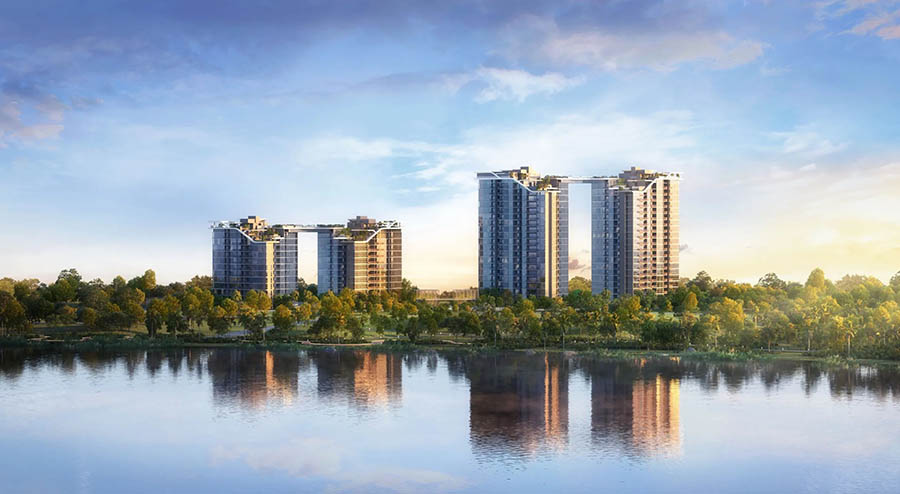
SORA is a 440-unit, 99-year leasehold condominium located along Yuan Ching Road in District 22, within the Jurong Lake District transformation zone.
It is best understood as a low-density, lake-adjacent residential project designed for buyers prioritising long-term district growth and lifestyle environment over immediate MRT convenience.
SORA is most suitable for:
• Owner-occupiers seeking quieter living environments
• Long-horizon buyers aligned with Jurong’s development
• Buyers comfortable with car-based or flexible commuting
SORA is less suitable for:
• MRT-dependent buyers
• Short-term investors
• Buyers prioritising immediate convenience or liquidity
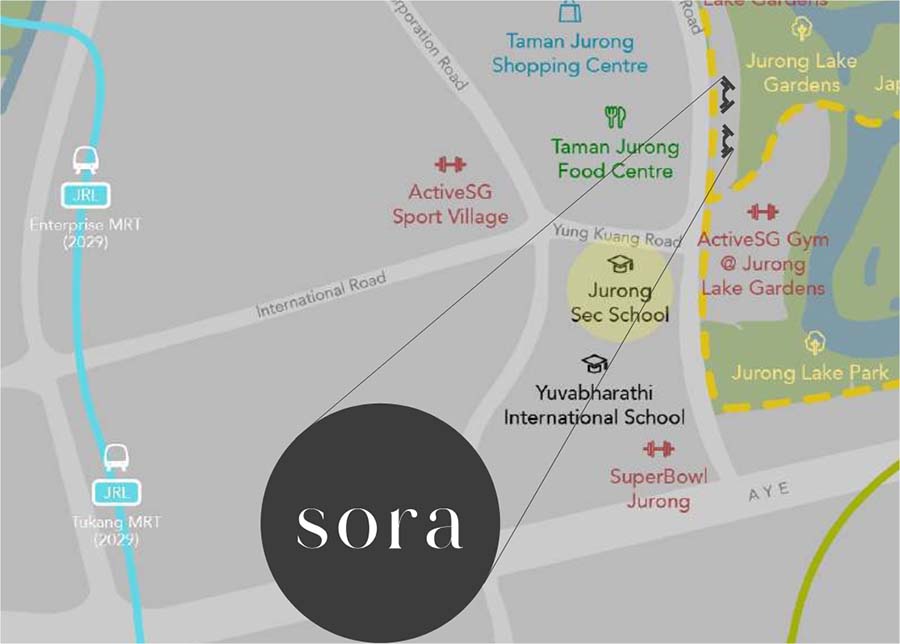
Connectivity and amenities remain functional rather than frictionless. The nearest MRT stations—Chinese Garden and Lakeside—are not within short walking distance, reinforcing reliance on private transport, shuttle arrangements, or lifestyle trade-offs. As such, SORA is best evaluated as a lifestyle-anchored residential choice with a long development arc, rather than a momentum-driven growth play.
SORA is a low-density, lake-adjacent OCR condominium designed for long-horizon buyers who value future district transformation and calmer living over immediate MRT-centric convenience.
Explore the Full SORA Analysis
This review forms part of a complete project cluster:
• SORA Price Guide – pricing structure, entry quantum, and buyer positioning
• SORA Floor Plan Analysis – layout efficiency, dual-key strategy, and unit mix
• SORA Maxwell Showflat Guide – showroom location and what buyers should evaluate during a viewing
Together, these provide a structured framework for evaluating pricing, layouts, and real-world usability before making a decision.
Buyers often review the pricing and layout analysis first to determine whether the project fits their budget and usage requirements before visiting the showflat.
If you’re considering this project, you might want to check how it actually compares and what most buyers tend to overlook — before deciding.
Key Details (At a Glance)
99-year leasehold | Low-density private residential development
Jurong Lake District, District 22 (Outside Central Region)
Lake-facing orientation with lifestyle-led positioning
Best suited for owner-occupiers and patient, long-term holders
Project Factsheet
| Item | Details |
|---|---|
| Project Name | SORA |
| Location | 72, 74, 76, 78 Yuan Ching Road, Singapore |
| District / Region | District 22 (Outside Central Region / Jurong East Planning Area) |
| Tenure | 99-year leasehold |
| Developer | CEL Development (Chip Eng Seng), SingHaiyi Group, KSH Holdings |
| Site Type | En-bloc redevelopment (former Park View Mansion) |
| Development Type | Private residential condominium |
| Site Area | Approx. 17,834.8 sqm |
| Plot Ratio | 2.1 |
| Total Units | 440 residential units |
| Nearest MRT | Chinese Garden MRT (EW25) ~1,201 m; Lakeside MRT (EW26) ~1,212 m |
| Launch Status | Launched |
| Expected TOP | 2028 |
Location Context: Jurong Lake Today vs Tomorrow
SORA sits along Yuan Ching Road, bordering the western edge of the Jurong Lake District rather than its commercial core. This distinction matters. Unlike developments closer to Jurong East Central or integrated transport nodes, SORA’s surroundings today are defined more by openness, water frontage, and arterial road access than by dense retail or office activity.
From a liveability standpoint, this translates into a quieter residential environment with fewer immediate conveniences. Daily retail, food options, and schools are accessible but not at doorstep level, requiring travel rather than casual walking. For buyers accustomed to city-fringe or MRT-integrated living, this represents a clear trade-off.
From a planning perspective, however, Jurong Lake District remains one of Singapore’s most structurally significant long-term growth zones outside the Central Region. Its transformation is policy-anchored rather than speculative, but the pacing of that transformation is gradual. SORA therefore sits in a zone where future potential is clear, but present-day lifestyle completeness is intentionally deferred.
Connectivity reflects this transitional state. Chinese Garden MRT (East-West Line) and Lakeside MRT (East-West Line) are operational and provide connectivity across the western region and towards the city, although the walking distance places them beyond typical doorstep-MRT expectations. As a result, SORA functions more comfortably for households with private transport or those willing to accept shuttle-style mobility solutions.
Jurong Lake District Narrative: Structural Upside, Not Immediate Activation
SORA benefits from proximity to the Jurong Lake District, but it is important to frame this correctly. The project is adjacent to, rather than embedded within, the most intensive commercial and transport nodes of the district.
What this means in practice:
Long-term uplift is driven by employment decentralisation and district maturation
Immediate lifestyle transformation is incremental, not instant
Value appreciation is more likely to be structural and time-based, rather than event-driven
Buyers expecting near-term vibrancy, heavy foot traffic, or rapid repricing tied to singular announcements may find expectations misaligned. Conversely, buyers who view Jurong Lake District as a multi-cycle evolution rather than a quick catalyst may find SORA’s positioning more coherent.
Pricing Context (Decision-Stage Orientation)
Buyers searching for SORA pricing are typically trying to understand whether it offers value compared to other Jurong or OCR projects.
SORA entered the market positioned as a differentiated OCR offering, emphasising lake adjacency and lower density rather than transit immediacy or integrated convenience. Early pricing logic reflected this differentiation, aiming to attract buyers who prioritise environment and future district relevance over short-term yield optimisation.
As the sales cycle progresses, buyer scrutiny naturally shifts. Decisions are no longer anchored solely on narrative or entry positioning, but on relative value versus nearby OCR alternatives, including newer MRT-centric projects and established resale options. At higher pricing bands, buyers tend to benchmark more critically against developments that offer stronger immediate connectivity or more mature surroundings.
This evolution highlights a key decision-stage consideration: SORA’s pricing logic works best when evaluated through a long-horizon lens. Buyers aligned with patience and lifestyle trade-offs may find the value proposition coherent, while those seeking near-term catalysts or tight exit optionality may face higher friction. As such, pricing should be evaluated relative to lifestyle alignment rather than purely against connectivity-driven benchmarks.
What SORA Is — and Is Not
What It Is
A low-density, lake-adjacent residential project
Positioned for long-term owner-occupiers and patient holders
A lifestyle-driven alternative within Jurong Lake District
Designed for buyers comfortable with deferred district maturity
What It Is Not
Not an MRT-integrated or transit-first development
Not a high-density, mass-market OCR project
Not structured for short-term trading dynamics
Not a convenience-led urban lifestyle proposition
Understanding this distinction early helps prevent expectation mismatch. This is not a project designed for buyers prioritising immediate MRT convenience, dense retail environments, or short-cycle price movement.
Amenities: What You Actually Get
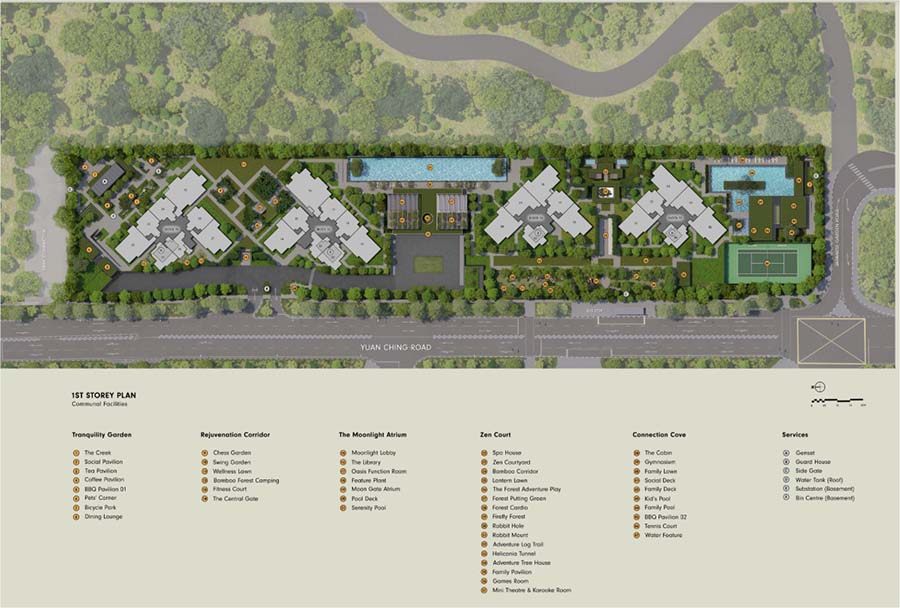
SORA’s facilities are designed to support a quieter, lifestyle-oriented residential environment rather than high-density activity.
The project emphasises space, greenery, and communal zones, which aligns with its lower-density positioning and proximity to Jurong Lake Gardens.
Facilities are distributed across the site to create separation between activity areas and more private residential spaces. This reduces crowding and reinforces the overall calm living environment.
This is not a project designed around high-energy social interaction or resort-style density. Instead, it caters to residents who prioritise daily liveability, open space, and a less congested environment.
Buyers expecting highly activated facilities or heavy social usage may find it more subdued compared to typical OCR developments.
Buyer Suitability: Who This Project Works For
1. Owner-Occupiers Seeking Quieter Living
Households that value lake views, lower density, and a calmer residential environment may find SORA appealing, especially if daily commuting is not heavily MRT-dependent.
2. Long-Horizon Buyers Aligned with Jurong’s Evolution
Buyers who believe in Jurong Lake District’s long-term decentralisation thesis—and are prepared to wait through multiple development phases—fit the project’s risk-reward profile more naturally.
3. Buyers Comfortable with Private Transport Reliance
Given the MRT distance, SORA works best for households with cars or flexible mobility expectations.
Who Should Eliminate SORA Immediately
SORA should be ruled out early if:
• Daily MRT commuting is essential
• Immediate amenities and retail convenience are required
• Short-term capital appreciation is the primary goal
• There is discomfort with developing neighbourhood environments
These are structural mismatches, not negotiable trade-offs.
Buyers comparing SORA against other upcoming launches may find it helpful to frame their decision using the New Launch Condo Guide, which outlines how pricing logic, buyer intent, and holding horizon differ across project types.
Takeaway
SORA is not a momentum play. It is a deliberate, lower-density residential choice anchored to Jurong Lake District’s long-term transformation rather than immediate urban convenience. For buyers aligned with patience, quieter living, and future district maturity, the proposition can make sense. For others, restraint is the more rational decision. The project works best when lifestyle alignment and holding horizon are already clear, rather than explored during the buying process.
SORA works when the buyer profile is already clear.
- It does not work as a project to “figure things out after buying”.
- If your priority is environment, space, and long-term positioning, it can make sense.
- If your priority is convenience, liquidity, or short-term upside, eliminating it early is the more rational decision.
If you’re seriously considering this project, it’s worth checking how it actually compares and what most buyers tend to overlook — before deciding.
FAQs (Decision-Stage)
1) Is SORA suitable for buyers who rely heavily on MRT commuting?
SORA is less suitable for buyers who require short, direct walks to MRT stations as part of their daily routine. While Chinese Garden and Lakeside MRT stations are accessible, the walking distance introduces consistent daily friction. Buyers who prioritise MRT-first convenience may find this trade-off difficult to sustain over time.
2) How does SORA differ from other Jurong Lake District projects?
SORA differentiates itself through lower density and proximity to the lake rather than transport integration or commercial adjacency. Unlike projects closer to Jurong East Central, it emphasises quieter living and open surroundings over immediate retail or office access. This makes it more lifestyle-oriented and less momentum-driven.
3) Does Jurong Lake District guarantee future price growth?
No district transformation guarantees price outcomes. Jurong Lake District provides structural planning support, but actual performance depends on entry price, supply timing, and buyer holding horizon. SORA should be evaluated as a long-term positioning play rather than a certainty-based growth bet.
4) Is SORA more suitable for own-stay or investment?
SORA aligns more naturally with owner-occupiers who value environment, space, and longer holding periods. Investment outcomes are more sensitive to entry pricing and patience, as the project is not structured for short-cycle trading or immediate yield optimisation. Buyers expecting quick exits may face higher friction.
5) How important is unit selection within SORA?
Unit selection is critical and can materially affect both liveability and long-term appeal. Factors such as orientation, proximity to the lake, and distance from major roads influence noise exposure, views, and resale interest. Poor unit selection may underperform even if the broader district matures as planned.
6) Will future Jurong developments improve convenience for SORA residents?
Over time, district maturation is expected to improve amenity depth and employment density. However, these improvements are gradual and should not be assumed to immediately transform daily convenience. Buyers should be comfortable with current conditions rather than relying on future upgrades alone.
7) Is SORA considered high-risk due to pacing of development?
Risk depends on the buyer’s time horizon. For long-horizon buyers, pacing risk is manageable and largely priced into expectations. For buyers seeking short-term certainty or rapid value realisation, the extended development timeline increases exposure to uncertainty.
8) Who should avoid SORA altogether?
Buyers who prioritise doorstep MRT access, dense retail convenience, or short-term capital appreciation should eliminate SORA early. The project’s strengths lie in long-term positioning and lifestyle trade-offs, not immediate gratification. Eliminating mismatched options early helps prevent expectation misalignment.
Pricing Logic, Jurong Lake District Planning Intent & Buyer Segmentation
Summary
This section examines how SORA is priced relative to its positioning, how Jurong Lake District’s planning intent affects long-term outcomes, and which buyer segments are genuinely driving interest versus those staying sidelined.
Pricing Logic: Lifestyle Premium vs Connectivity Trade-Off
SORA’s pricing logic is best understood as a lifestyle-anchored OCR proposition, rather than a transport-led or convenience-driven one. Unlike MRT-integrated projects that rely on frictionless commuting to justify higher entry levels, SORA’s value narrative leans on lower density, lake adjacency, and a quieter residential setting within a future growth district.
At entry levels, this positioning tends to attract buyers who are less sensitive to daily travel friction and more focused on living environment. However, as pricing moves higher, buyer scrutiny shifts. Comparisons are no longer limited to nearby OCR projects, but extend to alternatives that offer stronger immediate connectivity or more established amenity ecosystems.
This introduces a natural pricing resistance zone, where buyers begin weighing whether the lifestyle premium sufficiently offsets the absence of MRT-first convenience. At this stage, unit-specific attributes—orientation, distance from traffic corridors, and openness—become decisive rather than the project narrative alone.
The implication is clear: SORA’s pricing coherence is strongest when evaluated through a long-horizon, own-stay lens. Buyers seeking tight entry-exit spreads or short-cycle upside may find pricing friction harder to reconcile.
Relative Positioning Within OCR West
Within the western OCR landscape, SORA occupies a distinct niche. It sits between two broad categories:
Transit-centric OCR projects, where MRT proximity drives demand and liquidity
Established resale estates, where pricing is anchored by maturity rather than future planning
SORA differentiates itself by offering something neither category fully provides: lower density, lake adjacency, and proximity to a long-term employment and leisure district that is still forming. This differentiation, however, comes with trade-offs—most notably in daily convenience and immediate vibrancy.
As a result, buyer response tends to be polarised. Those aligned with the project’s lifestyle thesis engage meaningfully, while buyers anchored to convenience metrics often eliminate it early.
URA Planning Intent: Jurong Lake District as a Long-Arc Transformation
Jurong Lake District is planned as a major decentralised employment and lifestyle node outside the Central Region. The planning intent emphasises:
employment decentralisation away from the traditional CBD,
integration of work, leisure, and residential components over time, and
phased delivery rather than immediate activation.
For SORA, this means structural support exists at a policy level, but benefits accrue sequentially rather than immediately. Amenities, job concentration, and district vibrancy are designed to scale with population and commercial uptake, not precede them.
This planning approach rewards patience but penalises short-term expectations. Buyers who interpret planning intent as a near-term catalyst risk disappointment; those who see it as a multi-cycle framework are better aligned with reality.
Buyer Segmentation: Who Is Actually Buying — and Who Isn’t
Primary Segment: Owner-Occupiers with Lifestyle Priorities
These buyers value quieter surroundings, lower density, and proximity to open space. MRT distance is acknowledged as a compromise rather than a deal-breaker, particularly for households with private transport.
Secondary Segment: Long-Horizon Buyers with JLD Conviction
This group views SORA as a strategic position within Jurong’s long-term evolution. They are less focused on immediate yield or exit optionality and more on holding through district maturation.
Limited Participation: Short-Cycle Investors
Buyers seeking rapid capital appreciation or strong near-term liquidity tend to remain cautious. The absence of MRT integration and the extended development arc reduce short-term catalysts.
Exit & Liquidity, Risk Scenarios, Pros & Cons, FAQs
Summary
This section evaluates realistic exit dynamics, structural risks, and practical upside constraints, before consolidating SORA’s strengths and limitations for final decision-stage clarity.
Exit & Liquidity: Unit Selection and Holding Horizon Matter
Exit outcomes for SORA are likely to be highly unit-dependent. Smaller and well-oriented units typically enjoy broader appeal, particularly among owner-occupiers seeking lifestyle benefits without committing to large quantum.
Liquidity risk increases for units that combine higher absolute pricing with weaker differentiation, especially in an OCR context where buyers have multiple alternatives. As nearby developments mature or resale supply grows, competition for attention may intensify.
The most resilient exits are likely to occur when:
holding periods align with broader district maturity, and
unit attributes clearly reinforce the lifestyle thesis.
Key Risk Scenarios Buyers Should Acknowledge
1. Connectivity Trade-Off Risk
MRT distance is not a temporary issue. Buyers must accept ongoing reliance on private or flexible transport solutions.
2. Pricing Compression Risk
If competing OCR projects offer stronger convenience at similar price points, pricing pressure may emerge for less differentiated units.
3. District Pacing Risk
Jurong Lake District’s transformation is deliberate and phased. Delays or slower-than-expected activation affect sentiment more than fundamentals.
4. Buyer Pool Narrowing
SORA’s appeal is selective. This enhances lifestyle coherence but reduces exit universality.
Pros and Cons Summary
Key Strengths
Lower density relative to surrounding OCR projects
Proximity to Jurong Lake and open space
Clear long-term planning support
Lifestyle-led positioning distinct from MRT-centric developments
Key Limitations
No short-walk MRT access
Reliance on future district maturity
Exit liquidity dependent on unit quality
Not suited for short-term trading strategies
FAQs
1. Is SORA a good investment?
SORA is not structured as a short-term investment. It is better suited for buyers with a longer holding horizon who are aligned with Jurong Lake District’s gradual development. Returns are more likely to be time-based rather than driven by immediate catalysts or launch momentum.
2. Is SORA worth buying?
SORA can make sense if the buyer prioritises environment, lower density, and long-term district positioning. It is less suitable for buyers who prioritise MRT convenience, short-term upside, or immediate lifestyle completeness. The decision depends on alignment rather than absolute value.
3. What are the main risks of buying SORA?
The key risks include MRT distance, slower district activation, and pricing competition from more convenient developments. These factors can affect both liveability and resale performance. The primary risk is expectation misalignment rather than structural weakness.
4. Will SORA have good resale value?
Resale performance is likely to be highly dependent on unit selection and market timing. Units with better orientation, openness, and efficient layouts are more likely to retain demand. However, the buyer pool is narrower compared to MRT-centric developments.
5. Is SORA more suitable for own stay or investment?
SORA is more aligned with owner-occupiers who value environment and are comfortable with longer holding periods. Investment outcomes are less predictable in the short term due to the absence of strong immediate catalysts.
6. How does SORA compare to MRT-integrated projects?
MRT-integrated projects typically offer stronger liquidity, broader buyer demand, and more immediate convenience. SORA trades these advantages for lower density, quieter surroundings, and proximity to the lake. The choice depends on buyer priorities rather than which is objectively better.
7. Will Jurong Lake District guarantee price growth?
No district transformation guarantees price performance. Jurong Lake District provides long-term planning support, but actual outcomes depend on supply, demand, and broader market conditions. Buyers should not rely on planning narratives alone.
8. Are larger units at SORA riskier?
Larger units generally carry higher risk due to higher absolute pricing and a smaller buyer pool. They rely more heavily on owner-occupier demand, which is more selective. Smaller units typically offer more flexibility in resale and rental scenarios.
9. How important is timing when exiting SORA?
Exit timing plays a meaningful role. Selling during later stages of Jurong Lake District’s development may improve demand and perception. Early exits may face stronger competition from newer launches or more convenient alternatives.
10. Is rental demand strong for SORA?
Rental demand is expected to be selective rather than broad-based. It may appeal to tenants who value quieter environments and proximity to green spaces, but it is not a yield-driven project.
11. Will future infrastructure significantly improve SORA’s appeal?
Future developments may improve overall accessibility and amenity depth, but they are unlikely to fundamentally change SORA’s positioning. It will remain a lifestyle-oriented project rather than a convenience-led one.
12. Is SORA suitable for wealth preservation?
SORA is not typically considered a defensive or preservation-focused asset. Its leasehold tenure and selective buyer pool make it less aligned with ultra-conservative strategies. It functions more as a lifestyle-driven holding.
13. What type of units are more liquid in SORA?
Smaller, well-designed units with good orientation tend to be more liquid due to lower quantum and broader demand. Larger or less efficient units may face slower resale movement.
14. How does supply in the west affect SORA?
Supply in the western OCR can create competition, especially among projects targeting similar buyer segments. This increases the importance of pricing discipline and unit differentiation.
15. What is the biggest mistake buyers make with SORA?
The biggest mistake is assuming that future development will compensate for current trade-offs. Buyers should be comfortable with the present conditions rather than relying on future improvements.
16. Who should be most cautious about buying SORA?
Buyers who prioritise MRT convenience, short-term capital appreciation, or immediate lifestyle vibrancy should approach with caution. The project is designed for long-term positioning rather than immediate results.
If you prefer a more structured walkthrough, you can leave your details below and we’ll follow up with you.