

Summary
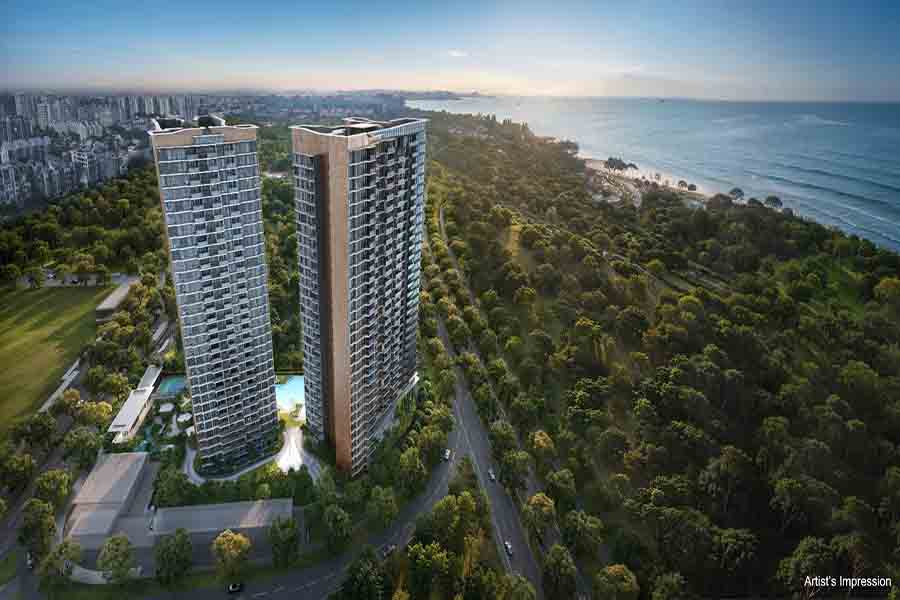
Vela Bay is a 99-year leasehold private condominium located along Bayshore Road in District 16, developed by SingHaiyi Group under the Government Land Sales (GLS) programme. As the first private development in the new Bayshore precinct, Vela Bay occupies a strategically significant position—both geographically and in terms of pricing logic—within a master-planned, car-lite waterfront town that will eventually comprise approximately 10,000 homes.
Directly adjacent to Bayshore MRT (TE29) on the Thomson–East Coast Line, Vela Bay offers a rare combination of doorstep MRT access, proximity to East Coast Park, and long-term alignment with the Bayshore and Long Island transformation plans. Its appeal lies less in short-term headline pricing and more in early entry into a precinct where subsequent land parcels are likely to be priced higher as infrastructure, amenities, and population density mature.
With 515 residential units and launch completed, Vela Bay is best understood as a premium master-plan pioneer rather than an affordability-driven or speculative project.
This review evaluates Vela Bay from a decision-stage perspective, focusing on real buyer fit, planning context, and structural trade-offs—rather than promotional narratives or unreleased pricing claims. Following its launch, Vela Bay has moved from preview positioning into an active decision phase where pricing, unit selection and stack positioning become the primary evaluation factors.
Vela Bay is now in its active sales phase, where buyer decisions are driven less by anticipation and more by actual pricing, unit selection and stack positioning.
At this stage, the key question is no longer whether the project is attractive in theory, but whether specific units make sense relative to pricing, facing and long-term positioning within the Bayshore precinct.
Explore the Full Vela Bay Analysis
This review forms part of the full project cluster:
- Vela Bay Price Guide – pricing structure, launch positioning, and expected price ranges
- Vela Bay Floor Plan Analysis – unit mix, layout efficiency, and stack considerations
- Vela Bay Showflat Guide – showroom location, viewing process, and what buyers should evaluate during a visit
Together, these articles provide a structured analysis of the project’s pricing framework, layout strategy, showroom viewing considerations, and buyer decision factors.
If you’re considering this project, you might want to check how it actually compares and what most buyers tend to overlook — before deciding.
Key Details (at a glance)
99-year leasehold | 515 units | Bayshore MRT (TE29) doorstep | District 16 (Bayshore / Bedok Planning Area) | First private launch in Bayshore precinct | TOP December 2030
Project Factsheet
The following summarises the key project details for Vela Bay, including location, developer, and estimated launch timeline.
| Item | Details |
|---|---|
| Project Name | Vela Bay |
| Location | Bayshore Road, Singapore |
| District / Region | District 16 / OCR / East Region (Bedok Planning Area) |
| Tenure | 99-year leasehold |
| Developer | SingHaiyi Group |
| Site Type | GLS – Bayshore Road |
| Development Type | Private Condominium |
| Site Area | ~10,497.3 sqm |
| Plot Ratio | 4.2 |
| Estimated Units | 515 residential units |
| Nearest MRT | Bayshore MRT (TE29) – Thomson–East Coast Line |
| Sales Status | Launched |
| Estimated TOP | December 2030 |
Vela Bay should be viewed as a pure residential, MRT-integrated waterfront project, not a mixed-use or town-centre development.
Vela Bay Unit Mix and Layout Positioning
Vela Bay’s unit mix provides a clearer indication of its intended buyer profile than pricing or marketing positioning alone.
Based on current information, the development comprises 515 units across a full range of configurations from 1 Bedroom + Study to 5 Bedroom and Penthouse units.
The distribution is notably weighted towards mid-sized layouts:
- 2 Bedroom Premium units form the largest segment
- 3 Bedroom and 3 Bedroom Premium units collectively anchor the family segment
- Larger 4 Bedroom and 5 Bedroom units are comparatively limited
This suggests that Vela Bay is not structured as a heavily investor-driven project, but rather as a balanced own-stay development with a strong upgrader and family focus.
For buyers, this has several implications:
- Resale demand is likely to be concentrated around 2 Bedroom Premium and 3 Bedroom units
- Larger units may offer stronger long-term own-stay value but with a narrower exit pool
- Entry-level 1 Bedroom units are limited, which may reduce rental-driven supply pressure
This alignment between unit mix and buyer profile reinforces the project’s positioning as a long-horizon residential development rather than a short-term trading opportunity.
Location Context: Bayshore as a New Coastal Town, Not “Old East Coast”
Vela Bay sits within the first phase of the Bayshore precinct, a new car-lite residential town planned between East Coast Parkway (ECP) and Upper East Coast Road. Unlike older East Coast developments that evolved incrementally, Bayshore is being built top-down, with transport, green corridors, and community infrastructure designed upfront.
The defining locational advantage is Bayshore MRT (TE29), located directly beside the site. This delivers a one-seat rail connection to Marina Bay, Orchard, and Upper Thomson, materially changing commuting dynamics for District 16. Older East Coast condominiums typically rely on feeder buses or driving; Vela Bay does not.
Equally important is the waterfront adjacency. The southern frontage faces East Coast Park and the future Long Island coastline, while the northern frontage connects into established Bedok and Siglap residential catchments, including reputable schools. This “double-frontage” positioning gives the project both lifestyle appeal and practical family relevance.
Project Positioning: What Vela Bay Is — and Is Not
What Vela Bay Is
A first-mover private development in a new master-planned coastal town
A doorstep MRT project aligned with car-lite, transit-first living
A premium own-stay and long-horizon hold, anchored by planning transformation
A pure residential enclave, not diluted by retail or transport interchanges
What Vela Bay Is Not
Not an entry-level or affordability-led OCR launch
Not a short-term momentum or flipping project
Not a traditional low-density boutique development
Not a mixed-use, mall-integrated site
This distinction matters. Vela Bay trades short-term excitement and retail convenience for exclusivity, planning clarity, and early positioning within a long-term transformation zone.
Amenities & Site Planning: What Actually Matters
Vela Bay’s amenities should be understood through how the site is planned, not just what facilities are listed.
Based on the current site plan, the development appears to follow a centralised facilities layout, where key communal areas are grouped within a main zone. This typically improves accessibility and makes daily use more practical, especially for own-stay residents.
From a stack perspective, the site plan introduces a clear trade-off that buyers should evaluate early:
- Inward-facing stacks are typically closer to facilities and communal zones, offering convenience but with higher activity levels
- Outward-facing stacks may provide better privacy, openness and potentially stronger long-term appeal depending on surrounding plots
This distinction becomes especially important at Vela Bay, where surrounding land is still being developed. Stack positioning today may influence both immediate liveability and future resale dynamics.

For buyers, this site plan is where the real differences start to show.
Stacks facing inward towards the facilities tend to have more activity and shorter walking distances to amenities, which may suit families prioritising convenience. Outward-facing stacks, particularly those oriented towards East Coast Park or more open plots, are likely to offer better privacy, airflow and long-term desirability.
At Vela Bay, stack selection is not just about view — it directly affects liveability, noise exposure and eventual resale positioning. This is one of the key areas where buyers tend to adjust their shortlist after seeing the layout in person.
If you’re narrowing down stacks, this is usually the stage where a quick walkthrough helps — some layouts look similar on paper but feel very different on site.
Buyer Suitability: Who Vela Bay Is Really For
1. East-Side HDB Upgraders (Core Segment)
Families from Bedok and Marine Parade seeking a private upgrade without leaving the East, prioritising MRT access and long-term planning upside.
2. Downsizers / Right-Sizers
Owners from nearby landed enclaves who value sea views, security, and lift access, without the upkeep of a landed home.
3. Long-Horizon Local Investors
Buyers focused on first-mover advantage within Bayshore and future demand driven by TEL connectivity, Changi-related employment, and coastal transformation.
4. Buyers Who May Want to Reconsider
Those seeking immediate retail convenience, low pricing, or short-term resale velocity may find better alignment elsewhere.
Buyers comparing Vela Bay against other upcoming launches may find it helpful to frame their decision using the New Launch Condo Guide, which outlines how pricing logic, buyer intent, and holding horizon differ across project types.
Takeaway
Vela Bay is not a mass-market East Coast launch. Its relevance lies in being first, not cheapest; planned, not opportunistic; and connected, not car-dependent.
For buyers who understand the value of entering a new coastal town early—especially one anchored by MRT connectivity and long-term URA planning—Vela Bay’s positioning is coherent and defensible. For those seeking instant gratification or speculative upside, expectations should be calibrated carefully.
Following launch, buyers evaluating Vela Bay are typically comparing pricing, layout selection and stack positioning before committing to a showflat visit.
Vela Bay Showflat Location & Viewing
Buyers who prefer to evaluate the development in person may visit the Vela Bay showflat located at 105 Eunos Avenue 3 opposite Hafary Building in Singapore.
The showroom allows prospective buyers to view the development model and explore the unit layouts during the current sales phase.
As the preview period approaches, showflat visits typically become the primary stage where buyers assess layout efficiency, spatial proportions, and project positioning alongside indicative pricing.
The unit mix further reinforces this segmentation, with a higher proportion of 2 Bedroom Premium and 3 Bedroom units supporting upgrader demand, while limited smaller units reduce purely rental-driven positioning.
Buyers who wish to understand the showroom location, viewing process, and what to evaluate during a visit may refer to the Vela Bay Showflat Guide.
If you’re seriously considering this project, it’s worth checking how it actually compares and what most buyers tend to overlook — before deciding.
FAQs (Decision-Stage)
1) Is Vela Bay considered a waterfront project?
Vela Bay sits directly along the East Coast Park frontage, which gives it a genuine coastal adjacency rather than a distant “near the sea” positioning. While it does not function as a resort-style beachfront enclave, the uninterrupted park connection and planned Long Island transformation reinforce its long-term waterfront relevance. Buyers should view this as lifestyle and planning upside, not short-term view monetisation.
2) How important is Bayshore MRT to Vela Bay’s value?
Bayshore MRT is a defining feature of Vela Bay’s positioning, as true doorstep MRT access is rare within the East Coast area. This materially improves daily convenience, reduces reliance on driving, and supports long-term resale liquidity. Over time, MRT proximity tends to become more important at exit than at entry. This makes it a structural advantage rather than a short-term selling point.
3) What does the unit mix at Vela Bay indicate about its positioning?
Vela Bay’s unit mix is weighted towards 2 Bedroom Premium and 3 Bedroom configurations, which indicates a stronger focus on own-stay buyers and upgraders rather than purely investors. Smaller units form a limited portion of the development, reducing rental-driven supply pressure. This supports more stable long-term demand dynamics. Buyers should therefore evaluate it as a residential-led project rather than a yield-driven one.
4) Is Vela Bay suitable for families?
Vela Bay can suit families who prioritise MRT access, proximity to schools, and long-term planning potential over immediate retail convenience. The presence of larger 3-bedroom and 4-bedroom configurations supports family living needs. However, the surrounding precinct is still developing, which means amenities will take time to mature. Families should therefore assess it as a longer-term living environment rather than an immediately fully-formed estate.
5) Is this an investment or own-stay project?
Vela Bay is primarily positioned as an own-stay and long-horizon hold rather than a short-term investment play. Its value is anchored in MRT accessibility and long-term coastal transformation rather than immediate rental yield or quick resale gains. Investors with shorter holding expectations may find the timeline less aligned. Buyers should therefore approach it with a medium- to long-term perspective.
6) Will future GLS sites compete with Vela Bay?
Future GLS sites in Bayshore will introduce additional supply, but they are also likely to be launched at higher land costs as the precinct develops. This creates a structured supply progression rather than direct price competition. Early projects like Vela Bay may benefit from lower entry benchmarks relative to later launches. Buyers should view future supply as both competition and validation of the precinct.
7) Is the lack of immediate retail a concern?
In the short term, the lack of immediate retail amenities may be noticeable, as the Bayshore precinct is still in its early phase. Residents will likely rely on nearby areas such as Bedok or Siglap for daily conveniences. However, this also contributes to a quieter and less congested living environment. Over time, planned amenities within the precinct are expected to improve overall convenience.
8) What holding period makes sense for Vela Bay?
A holding period of around 8–12 years or longer is generally more aligned with Vela Bay’s planning timeline. This allows time for MRT usage patterns to stabilise and for the Bayshore precinct to mature. Shorter holding periods may face more limited upside due to ongoing development in the area. Buyers should therefore align expectations with a medium- to long-term horizon.
Pricing Logic, URA Planning Intent & Buyer Segmentation
Summary
Vela Bay should not be assessed as a momentum-driven East Coast launch or a short-cycle coastal trade. Its value logic is anchored in transport-led accessibility (Bayshore MRT), long-horizon coastal transformation (Long Island Project), and controlled supply sequencing within the Bayshore precinct. Pricing outcomes will be shaped more by entry discipline and holding horizon than by launch-day demand spikes.
This section evaluates whether Vela Bay’s positioning holds up once pricing behaviour, URA planning intent, and real buyer absorption patterns are considered together.
Pricing Logic: What Buyers Are Really Paying For
Vela Bay’s pricing logic is not driven by traditional East Coast lifestyle narratives alone. Instead, buyers are effectively paying for three structural attributes:
1) MRT-Led Accessibility as a Long-Term Equaliser
Direct access to Bayshore MRT places Vela Bay in a different behavioural category from older East Coast condominiums. Over time, MRT proximity tends to compress lifestyle trade-offs, especially for households that want East Coast living without car dependency. This supports both own-stay convenience and resale liquidity across cycles.
Importantly, MRT adjacency tends to matter more at exit than at entry, which is why it acts as a long-term value stabiliser rather than a launch-day premium trigger.
The relatively higher proportion of mid-sized units also supports pricing resilience, as demand is anchored by owner-occupiers rather than purely investor-driven segments.
2) Future Coastal Transformation, Not Immediate Lifestyle
The Long Island Project reframes East Coast living from a “park-and-beach” lifestyle into a multi-decade coastal resilience and land creation strategy. Vela Bay benefits from alignment with this planning intent, but buyers must understand that the upside is gradual and structural, not immediate or cosmetic.
Pricing therefore reflects optionality—buyers are paying to be positioned early, not to enjoy finished outcomes on day one.
3) Controlled Supply Sequencing in Bayshore
Unlike fragmented East Coast infill developments, Bayshore is being released in phases. Early projects like Vela Bay benefit from lower land cost bases compared to future GLS parcels, which are likely to be tendered at higher benchmarks once MRT operations and precinct momentum are clearer.
This sequencing tends to support pricing floors, even if upside is measured.
Buyers who want a clearer breakdown of expected launch pricing, psf positioning, and entry quantum scenarios may refer to the Vela Bay Price Guide, which analyses the development’s land cost, pricing benchmarks, and likely launch positioning ahead of preview.
Absolute Quantum vs PSF: The Correct Lens
For Vela Bay, absolute quantum matters more than headline PSF.
Why:
Buyer pool skews toward own-stay households and long-horizon holders
Monthly affordability and holding comfort dominate decisions
Coastal and MRT attributes support value retention more than speculative repricing
Decision rule:
If entry quantum remains within realistic affordability for East Coast upgraders, pricing logic holds.
If pricing drifts into “prestige coastal” territory without matching immediate lifestyle delivery, resistance will surface.
URA Planning Intent: Bayshore as a Long-Cycle Coastal District
URA’s planning intent for Bayshore is evolutionary, not explosive.
Key characteristics:
Transit-oriented residential growth anchored by the Thomson–East Coast Line
Gradual introduction of amenities, community nodes, and green connectors
Long Island Project reshaping the coastline over decades, not years
What this supports:
Long-term residential relevance
Environmental resilience
Steady perception uplift
What it does not support:
Rapid price re-rating
Short-term flipping narratives
Lifestyle completeness in the early years
This distinction is critical. Vela Bay aligns with URA’s long-cycle planning, not short-term market hype.
Buyer Segmentation: Who Vela Bay Truly Serves
1) East Coast Own-Stay Families (Primary Segment)
Value MRT access and school networks
Comfortable with gradual precinct build-out
Prioritise long-term living over immediate retail density
These buyers anchor long-term demand and resale stability.
2) Long-Horizon Lifestyle Investors (Secondary Segment)
Focus on capital preservation and future relevance
Less yield-driven, more resilience-focused
Comfortable holding through planning cycles
This group supports steady absorption but does not drive fast sales spikes.
3) Buyers Who May Want to Reconsider
Short-term traders
Buyers needing immediate town-centre convenience
Those expecting instant coastal “resort living”
Their absence explains why Vela Bay’s performance should be steady, not explosive.
Interim Assessment
Vela Bay should be evaluated as:
A coastal, MRT-anchored residential project designed to age well — not to impress early.
Its strengths and constraints are structural, not cosmetic, which is precisely why expectation alignment matters more here than in hype-driven launches.
Exit, Risk Scenarios, Pros & Cons, Buyer FAQs
Summary
Vela Bay performs best as a medium- to long-term hold. Exit outcomes are shaped by MRT accessibility, precinct maturity, and future coastal transformation rather than launch momentum or scarcity narratives.
Exit & Liquidity Behaviour
Short-Term (Launch to Pre-TOP)
Liquidity exists but upside is limited. Sellers compete with developer inventory and future Bayshore supply. Best suited for portfolio rebalancing, not profit capture.
Mid-Term (Post-TOP, 2031–2036)
This is the strongest exit window. MRT usage is embedded, nearby projects age, and precinct amenities become more tangible. Liquidity improves, especially for well-positioned stacks and practical unit sizes.
Long-Term (10+ Years)
Coastal transformation and land-use changes begin to matter. Exit liquidity becomes selective but resilient, favouring buyers who entered with realistic pricing and patience.
Risk Scenarios
Transformation Lag
Long Island and Bayshore upgrades take time. Buyers expecting visible change too early may feel misaligned.Pricing Sensitivity
If entry pricing overshoots affordability thresholds, resale liquidity narrows.Supply Visibility
Future Bayshore GLS launches create choice, but also reinforce the precinct narrative. This is a double-edged sword.
These are conditions to price in, not hidden flaws.
Pros & Cons Snapshot
Pros
Direct MRT access (Bayshore)
Alignment with long-term coastal planning
Lower early land-cost base vs future sites
Strong own-stay relevance
Cons
Limited immediate retail convenience
Long gestation for full precinct maturity
Not suited for short-term trading
Frequently Asked Questions
1) How liquid will resale be?
Resale liquidity is expected to be functional rather than aggressive, particularly during the early years before the precinct fully matures. Units with practical layouts and reasonable quantum are likely to see broader demand. MRT proximity supports baseline liquidity, especially after TOP. However, pricing discipline at entry remains critical.
2) Does the Long Island Project guarantee price upside?
The Long Island Project supports long-term coastal resilience and land creation, but it does not guarantee price appreciation. Its impact is gradual and structural rather than immediate. Buyers should view it as a long-term planning tailwind rather than a short-term catalyst. Expectations should remain grounded in broader market conditions.
3) Is Vela Bay suitable for retirees?
Vela Bay may suit retirees who prioritise MRT accessibility, quieter surroundings, and proximity to green spaces like East Coast Park. However, the lack of immediate retail and healthcare amenities within walking distance may be a consideration. The suitability depends on lifestyle preferences and mobility needs. It is not positioned as a convenience-first retirement location.
4) How important is unit orientation?
Unit orientation plays a significant role in both liveability and long-term resale performance. Factors such as sun exposure, openness, and surrounding developments can materially affect comfort and desirability. Not all stacks will perform equally even within the same project. Buyers should evaluate orientation alongside layout and price.
5) Is rental demand expected to be strong?
Rental demand is expected to be steady rather than yield-maximising. MRT access and coastal proximity support tenant interest, particularly among working professionals. However, the absence of a mature surrounding ecosystem may limit immediate rental premiums. Investors should assess it as a stability-driven rather than yield-driven asset.
6) What is the biggest risk buyers overlook?
One of the most common risks is underestimating how long the Bayshore precinct will take to fully mature. While the master plan is clear, the timeline for amenities and infrastructure to be realised is gradual. Buyers expecting immediate transformation may face misaligned expectations. Patience is a key requirement for this project.
7) How does MRT proximity affect long-term value?
MRT proximity tends to support long-term value by improving accessibility and broadening the buyer pool. Over time, this reduces reliance on private transport and enhances resale appeal. The effect is typically more pronounced at exit rather than at launch. This makes it a structural advantage rather than a short-term pricing driver.
8) Are larger units harder to exit?
Larger units generally face a narrower buyer pool due to higher absolute quantum. While they may offer better liveability for own-stay, resale liquidity can be more selective. Demand for such units depends heavily on market conditions and buyer affordability. Buyers should weigh space requirements against exit flexibility.
9) Are smaller units more liquid?
Smaller units typically attract a broader buyer pool due to lower entry quantum and affordability. This can support stronger resale liquidity, especially in uncertain market conditions. However, their performance also depends on overall supply and rental demand. Buyers should consider both entry price and long-term positioning.
10) How does Vela Bay compare within the OCR segment?
Vela Bay differs from typical OCR projects due to its MRT adjacency and coastal positioning. While it may command a higher price point, it also offers structural advantages not commonly found in suburban developments. Buyers should evaluate it within its specific context rather than direct OCR comparisons. It occupies a hybrid positioning.
11) Does early entry provide a meaningful advantage?
Early entry can provide a relative pricing advantage compared to future launches within the same precinct. As infrastructure and demand strengthen, subsequent GLS sites may be priced higher. However, this advantage depends on disciplined entry pricing. It is not guaranteed and should be evaluated carefully.
12) How important is stack selection at Vela Bay?
Stack selection is critical, particularly in a developing precinct where surrounding plots may change over time. Factors such as openness, facing, and proximity to infrastructure can affect both liveability and resale appeal. Not all stacks will perform equally. Buyers should assess stack positioning carefully before committing.
13) Will future development affect views?
Future developments within Bayshore may impact views depending on stack positioning and surrounding land use. As the precinct is still evolving, long-term sightlines cannot be fully guaranteed. Buyers should treat current views as indicative rather than permanent. Stack selection becomes especially important in this context.
14) Is Vela Bay sensitive to pricing at launch?
Yes, pricing sensitivity is an important factor given its positioning as a premium OCR project. If entry pricing exceeds affordability thresholds, demand may become more selective. Conversely, disciplined pricing can support stronger absorption and long-term resilience. Buyers should evaluate value rather than headline pricing alone.
15) How does Vela Bay fit into long-term planning trends?
Vela Bay aligns with broader planning trends such as transit-oriented development and coastal resilience. These factors support long-term relevance and liveability. However, their impact unfolds gradually rather than immediately. Buyers should align expectations with long-term urban planning timelines.
16) Who should avoid Vela Bay?
Vela Bay may not be suitable for short-term traders or buyers who require immediate retail and lifestyle convenience. It also may not align with those seeking the lowest entry pricing within the East region. The project is better suited for buyers comfortable with gradual development. Expectation alignment is key.
If you prefer a more structured walkthrough, you can leave your details below and we’ll follow up with you shortly.