
Summary
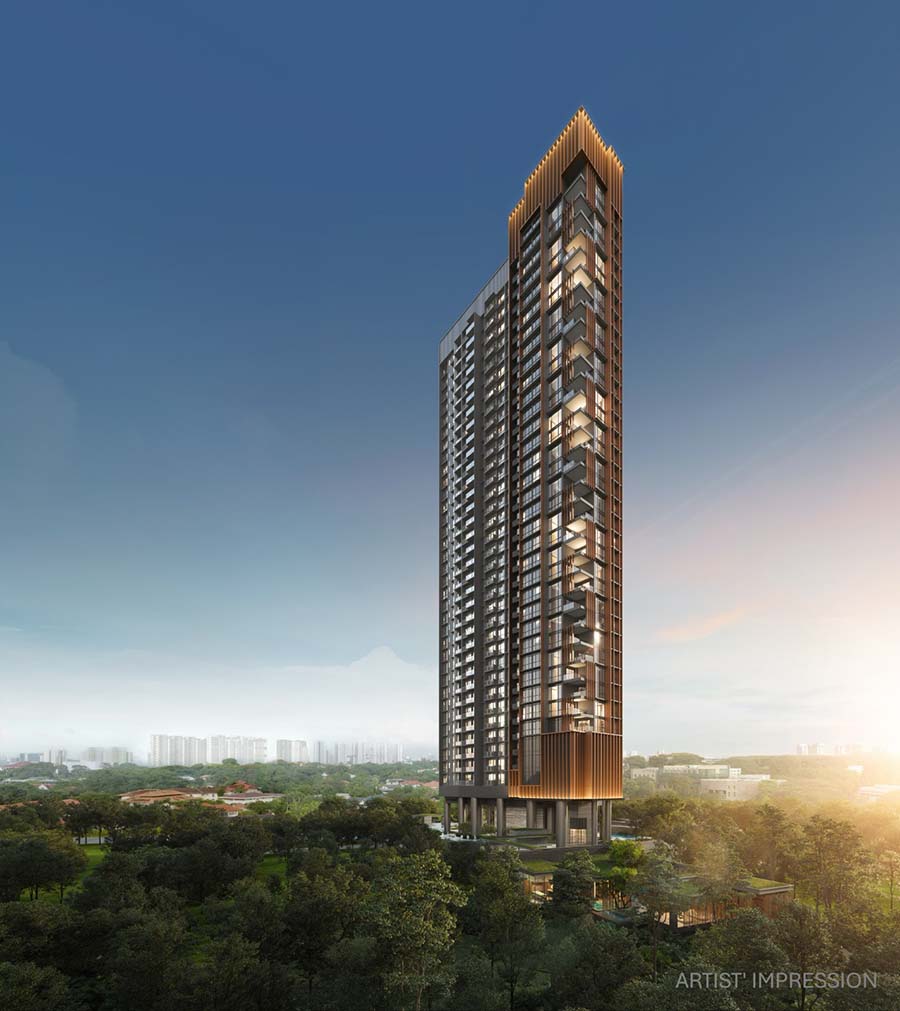
UPPERHOUSE at Orchard Boulevard is a 99-year leasehold private residential development located at 22 Orchard Boulevard in District 10, jointly developed by UOL Group Limited and Singapore Land Group under the Government Land Sales (GLS) programme. The project comprises 301 residential units housed within a single 35-storey tower, with limited commercial components at the first storey.
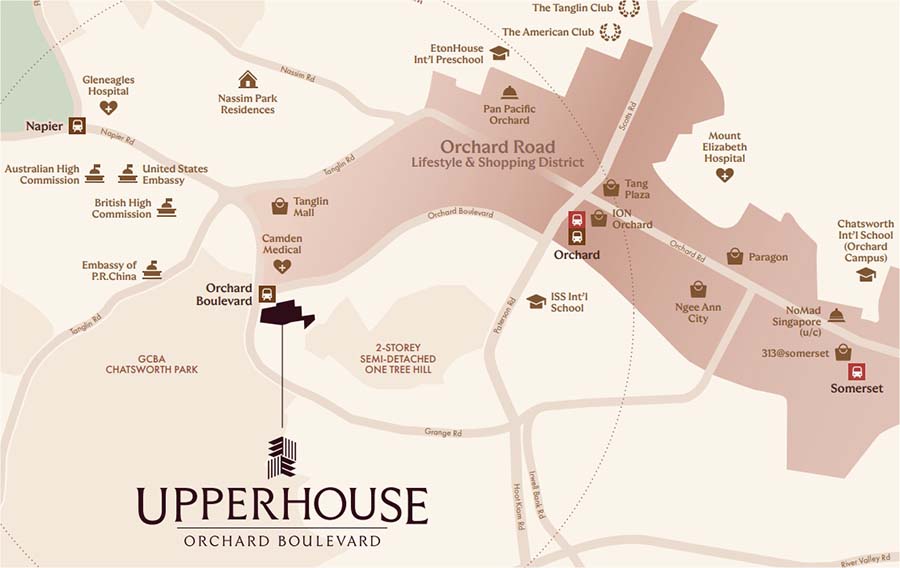
The defining differentiator for UPPERHOUSE is its direct, sheltered access to Orchard Boulevard MRT (TE13) on the Thomson–East Coast Line. In a Core Central Region context where most developments rely on walking proximity rather than integration, this materially alters daily liveability, tenant appeal, and long-term exit behaviour.
Rather than a tenure-led or ultra-luxury freehold proposition, UPPERHOUSE should be assessed as an address- and connectivity-driven CCR project. Its appeal is strongest for buyers who value Orchard proximity, car-lite living, and functional convenience, while accepting 99-year leasehold dynamics, CCR pricing discipline, and supply competition.
This review evaluates UPPERHOUSE from a decision-stage perspective, focusing on buyer fit and structural trade-offs rather than promotional narratives.
UPPERHOUSE at Orchard Boulevard is a 99-year leasehold, GLS-acquired mixed-use residential development in District 10 (CCR) that primarily appeals to buyers who prioritise direct MRT integration and Orchard Boulevard address convenience over freehold tenure, large-scale facilities, or short-term price momentum. Its value proposition centres on connectivity, location efficiency, and day-to-day liveability, while key trade-offs include leasehold tenure considerations, CCR supply competition, and relatively higher ongoing holding costs.
UPPERHOUSE should be assessed as an address- and connectivity-driven CCR project.
For buyers assessing whether UPPERHOUSE at Orchard Boulevard aligns with their financing comfort, holding horizon, and exit assumptions, a structured project breakdown covering entry positioning, pricing logic, stack considerations, and buyer suitability may provide additional clarity before arranging any viewing.
Key Details (at a glance)
99-year leasehold | ~301 units | Orchard Boulevard MRT (TE13) doorstep
District 10 (CCR / River Valley Planning Area)
GLS site | Mixed-use (residential with 1st-storey commercial)
Launched July 2025 | ~76–77% sold (as of Feb 2026) | Est. TOP 2029
Project Factsheet
| Item | Details |
|---|---|
| Project Name | Upperhouse at Orchard Boulevard |
| Location | Orchard Boulevard, Singapore |
| District / Region | District 10 (Core Central Region) |
| Tenure | 99-year leasehold |
| Developer | UOL Group Limited & Singapore Land Group |
| Site Type | GLS (Government Land Sales) |
| Development Type | Private Residential (with commercial at 1st storey) |
| Site Area | Approx. 7,031.4 sqm |
| Plot Ratio | 3.5 |
| Total Units | 301 units (single tower) |
| Nearest MRT | Orchard Boulevard MRT (TE13) |
| Launch Status | Launched (July 2025) |
| Expected TOP | 30 June 2029 |
Location Context: Orchard Boulevard Without Orchard Road Intensity
UPPERHOUSE sits along Orchard Boulevard, a quieter residential stretch that functions as a buffer between Orchard Road’s retail spine and the River Valley enclave. Unlike developments embedded directly within the shopping belt, this location offers centrality without constant foot traffic or commercial congestion.
The project’s defining locational advantage is direct MRT integration. Orchard Boulevard MRT provides a one-line connection to Shenton Way, Marina Bay, and the CBD, materially changing commuting dynamics for District 10 residents. Daily conveniences are supported by nearby Orchard and Tanglin-area amenities, while Orchard Road remains easily accessible without being intrusive.
This location profile explains why buyer demand skews toward high-income professionals and owner-occupiers who value efficiency, privacy, and transit convenience over lifestyle buzz.
Buyers comparing UPPERHOUSE against other prime developments may find it helpful to contextualise its positioning within the broader Core Central Region (CCR) new launch landscape, where tenure, density, and buyer intent differ materially across projects.
Structural Value: Address-Driven Pricing Under a 99-Year GLS Model
The defining structural attribute of UPPERHOUSE is not tenure, but its Orchard Boulevard address combined with direct MRT integration.
As a GLS-acquired 99-year project, pricing discipline is anchored by land bid economics rather than redevelopment scarcity. Buyers are paying for location selectivity, transport efficiency, and a quieter residential environment within the Orchard belt — not for tenure-based capital preservation.
This means value justification depends heavily on entry pricing realism and own-stay alignment. Leasehold considerations become increasingly relevant over longer holding periods, particularly for buyers sensitive to exit optionality beyond the medium term.
Scale & Design Reality: Exclusivity Comes With Limits
UPPERHOUSE is a single-tower, low-unit-count CCR development, which delivers:
Greater privacy
Lower resident turnover
A more controlled residential environment
At the same time, buyers must accept:
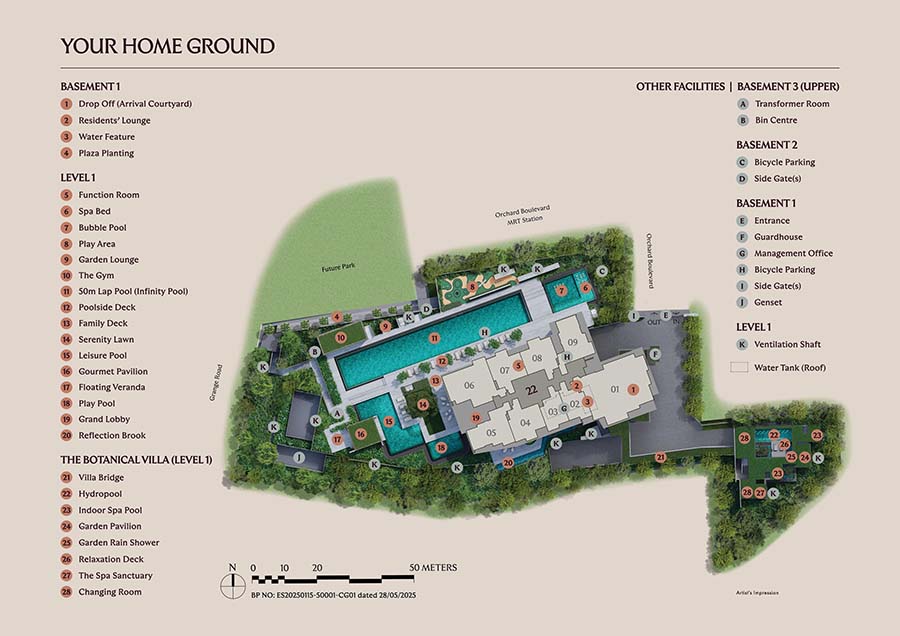
A limited range of shared facilities
Fewer layout permutations compared to mega projects
Less lifestyle programming than larger CCR developments
This is a conscious design trade-off, not an oversight. Scale here prioritises restraint and privacy, but it does not offset leasehold dynamics or appeal to buyers seeking amenity-heavy living.
Project Positioning: What UPPERHOUSE Is — and Is Not
What UPPERHOUSE Is
A 99-year GLS CCR residential project
Address- and connectivity-driven
Suited for own-stay buyers prioritising Orchard proximity and MRT access
What UPPERHOUSE Is Not
Not a freehold or tenure-led capital preservation asset
Not a lifestyle-heavy or amenity-driven mega development
Not a short-term trading or yield-optimised investment
Clarity here prevents misaligned expectations.
Buyer Suitability: Who UPPERHOUSE Is Really For
Most suitable for
High-income professionals seeking MRT-integrated CCR living
Owner-occupiers prioritising Orchard convenience over scale
Buyers willing to trade freehold prestige for functional connectivity
Buyers who should reconsider
Legacy or multi-generational buyers fixated on freehold tenure
Yield-focused investors sensitive to maintenance costs
Short-term or momentum-driven buyers
These constraints are structural, not temporary.
Buyers Who Should Eliminate UPPERHOUSE Early
UPPERHOUSE should be eliminated early by buyers who are tenure-sensitive or legacy-focused, particularly those who benchmark District 10 purchases primarily on freehold permanence or multi-generational holding value. In a historically freehold-heavy enclave, the 99-year leasehold structure remains a real psychological and resale consideration over longer horizons.
Yield-focused investors should also approach with caution. While MRT integration supports rental demand, higher CCR entry pricing, ongoing supply competition, and relatively elevated maintenance fees limit yield optimisation and compress net returns compared to non-CCR or newer growth corridors.
Finally, buyers seeking large-scale lifestyle developments, extensive facilities, or short-term price momentum are likely to find better alignment elsewhere. UPPERHOUSE is intentionally restrained in scale and activation, and its value proposition is built around connectivity and address efficiency, not excitement or speculative upside.
Buyers comparing UPPERHOUSE against other upcoming launches may find it helpful to frame their decision using the New Launch Condo Guide, which outlines how pricing logic, buyer intent, and holding horizon differ across project types.
Takeaway
UPPERHOUSE at Orchard Boulevard should be viewed as a connectivity-first, address-driven CCR residence, not as a tenure-led freehold substitute.
For buyers who value direct MRT access and Orchard Boulevard proximity, its positioning is coherent and defensible. For those seeking freehold security, strong yields, or short-cycle upside, expectations should be calibrated early.
If UPPERHOUSE at Orchard Boulevard is on your shortlist and being compared against nearby alternatives, a structured review of capital commitment differences, downside exposure scenarios, liquidity positioning, and realistic exit pool dynamics may help clarify the decision framework before any commitment is made.
FAQs (Decision-Stage)
1) Is UPPERHOUSE considered a luxury investment project?
UPPERHOUSE sits below the ultra-luxury freehold tier in District 10. Its appeal is driven more by connectivity and location efficiency than bespoke luxury positioning. Buyers should view it as functional prime living rather than a trophy asset.
2) How significant is the direct MRT access in practice?
Direct, sheltered access to Orchard Boulevard MRT is a major differentiator in the CCR. It improves daily convenience, broadens tenant appeal, and supports long-term liquidity compared to projects that rely on walking distance alone.
3) Does the 99-year leasehold tenure pose a long-term risk?
Leasehold tenure is a valid consideration, especially in a historically freehold district. Buyers should be comfortable with holding-period assumptions and recognise that resale dynamics may differ from neighbouring freehold projects over time.
4) Who is the typical buyer profile for UPPERHOUSE?
Freehold tenure improves long-term holding optionality and reduces lease decay concerns. However, resale outcomes still depend on pricing discipline and market conditions. Tenure is a buffer, not a guarantee.
5) Is UPPERHOUSE suitable for rental investment?
Rental demand is supported by MRT access and proximity to the CBD. However, higher maintenance fees and CCR supply competition mean yields are unlikely to be exceptional.
6) How does it compare with nearby freehold projects?
Freehold alternatives offer tenure permanence but typically come at much higher entry prices. UPPERHOUSE competes by offering a lower quantum entry into the Orchard Boulevard address with superior transit integration.
7) Are maintenance fees a concern?
Estimated monthly maintenance fees of roughly $400–$700 add to holding costs. This is more relevant for yield-sensitive buyers than long-term owner-occupiers.
8) Should buyers expect strong short-term price appreciation?
UPPERHOUSE is not structured as a momentum-driven launch. Performance is more likely to be steady and usage-driven rather than speculative.
Pricing Logic, URA Planning Intent & Buyer Segmentation
Summary
UPPERHOUSE at Orchard Boulevard should be assessed as a 99-year, address-driven CCR residence, not as a momentum launch or yield-focused investment. Its pricing logic reflects Orchard Boulevard scarcity, direct MRT integration, and boutique scale under a GLS framework, rather than tenure premium or lifestyle activation. Buyers are paying for connectivity, location efficiency, and liveability, while accepting leasehold tenure dynamics, limited facilities, and more selective exit behaviour.
Pricing Logic: Address and Connectivity First, Everything Else Second
Pricing Context (Launched, Observed Behaviour)
UPPERHOUSE’s pricing reflects Orchard Boulevard address positioning and direct MRT integration within the Core Central Region, anchored by GLS land economics rather than redevelopment or tenure scarcity.
Entry pricing internalises:
Orchard-adjacent CCR location
Direct, sheltered MRT access (TEL)
Boutique, low-density single-tower configuration
Quiet residential frontage away from Orchard Road’s retail spine
At the same time, pricing does not benefit from freehold tenure and must be evaluated against other 99-year CCR alternatives, including newer integrated or larger-scale projects. As a result, upside potential is more constrained, and exit performance depends more on buyer alignment and usability than market momentum.
How Pricing Behaves Over Time
Projects like UPPERHOUSE typically show:
Lower volatility relative to mass-market launches
Muted upside during strong bull runs compared to momentum-led projects
Greater price stickiness during corrections due to own-stay demand
This behaviour is consistent with buyer profiles driven by usage, convenience, and address relevance, rather than speculative trading.
Absolute Quantum vs PSF: The Correct Evaluation Lens
For UPPERHOUSE, absolute quantum matters more than psf optics.
Why:
Buyers are often reallocating wealth or upgrading within CCR
Mortgage efficiency is not the primary decision factor
Comparable alternatives include other CCR homes competing on address and convenience
Using psf alone often leads to false comparisons with larger 99-year developments that offer scale or amenities but lack MRT integration or Orchard Boulevard positioning.
Explicit Pricing Decision Rules
If you value Orchard Boulevard proximity and direct MRT access, pricing is internally consistent.
If you expect rapid price appreciation or yield-driven performance, pricing will feel restrictive.
Buyers comparing purely on psf, facilities, or tenure prestige should eliminate this project early.
URA Planning Intent: Enhancement, Not Repricing
URA’s planning direction for the Orchard and River Valley Planning Areas focuses on:
Improved green connectivity and pedestrian comfort
Incremental public-realm enhancements
Maintaining Orchard Boulevard as a residential buffer rather than a retail hub
There are no large-scale redevelopment catalysts expected to materially reprice the immediate area. UPPERHOUSE benefits from planning certainty and liveability enhancement, not transformation-driven upside.
Buyer Segmentation: Who This Project Really Serves
1. CCR Owner-Occupiers (Primary Segment)
Profile
Medium- to long-term holding horizon
Strong preference for MRT convenience and central accessibility
Less facilities-driven, more usability-focused
Why It Works
Direct MRT access supports daily living efficiency
Orchard Boulevard remains structurally relevant
Boutique scale suits long-term own-stay use
2. Lifestyle-Light Capital Allocators (Secondary Segment)
Profile
Asset reallocation rather than yield chasing
Lower leverage, moderate risk tolerance
Preference for prime location usability
Limitations
Opportunity cost versus growth-oriented markets
Liquidity speed is not a key strength
3. Yield-Driven Investors / Traders
Suitability: Low
Entry pricing compresses yields
Ongoing CCR supply caps rental upside
Better alternatives exist for income-optimised strategies
Interim Assessment
UPPERHOUSE should be viewed as:
A 99-year, MRT-integrated CCR residence designed for long-horizon own-stay use and address efficiency, rather than yield optimisation or tenure-led capital preservation.
Exit & Liquidity, Risk Scenarios, Pros & Cons, and Buyer FAQs
Summary
UPPERHOUSE’s exit behaviour is governed by buyer selectivity rather than market momentum. Liquidity exists, but it is narrower and slower than mass-market CCR projects. Buyers who enter with realistic expectations around holding period, leasehold dynamics, and resale positioning are far more likely to be satisfied.
Exit & Liquidity Analysis
Liquidity Profile of Boutique 99-Year CCR Projects
Typical characteristics:
Smaller but more targeted buyer pool
Longer resale timelines
Less speculative price movement
Success depends on pricing discipline and buyer fit, not urgency.
Unit Type Sensitivity
Smaller units transact more consistently due to broader demand
Larger units appeal mainly to own-stay buyers
Floor height and orientation influence exit speed more than facilities
Timing Sensitivity
More sensitive to:
Interest-rate environment
CCR affordability sentiment
Less sensitive to:
Launch-day hype
Short-term policy noise
Risk Scenarios
Scenario 1: Prolonged High Interest Rates
→ Buyer pool narrows; holding horizon becomes more important
Scenario 2: Strong CCR Rally
→ Underperforms momentum-led mega developments
Scenario 3: Market Correction
→ Price support driven by own-stay demand rather than tenure
Scenario 4: Oversupply in CCR
→ Selectivity increases; differentiation via MRT integration matters
Pros & Cons Summary
Pros
Direct MRT integration (rare in CCR)
Orchard Boulevard address
Boutique, low-density living
Strong own-stay usability
Cons
99-year leasehold tenure
Limited facilities
Narrow buyer pool
Slower resale velocity
FAQs
1) How is UPPERHOUSE priced relative to other District 10 projects?
Pricing reflects Orchard Boulevard positioning and MRT integration rather than tenure or facilities scale. It sits below ultra-luxury freehold benchmarks but above entry-level CCR alternatives. Value depends on buyer alignment rather than headline psf.
2) Is UPPERHOUSE expensive for Orchard Boulevard?
Relative to other 99-year CCR projects, pricing is within expectations given MRT integration. Relative to older resale freehold stock, entry costs are higher but offer superior connectivity.
3) What affects pricing the most for this project?
Address relevance, MRT access, unit size, and CCR affordability conditions dominate. Short-term sentiment plays a secondary role.
4) Is this suitable for short-term investment?
No. The project is not designed for quick resale or momentum-based strategies.
5) Does MRT integration materially improve resale prospects?
Yes, MRT access supports liquidity and tenant demand, though it does not eliminate leasehold considerations over time.
6) Is rental demand strong?
Rental demand exists due to connectivity and central location, but yields are moderated by entry pricing and maintenance costs.
7) How long should buyers realistically hold?
A medium- to long-term holding period aligns best with the project’s structure and buyer profile.
8) Does the small scale help or hurt liquidity?
It improves exclusivity but reduces transaction volume, slowing resale velocity.
9) How does it compare with integrated CCR projects?
Integrated projects offer convenience and activity; UPPERHOUSE prioritises privacy and efficiency. Buyer preference is key.
10) Is Orchard Boulevard still relevant long term?
Yes, as a residential buffer to Orchard Road with strong transport relevance.
11) What is the main downside risk?
Overpaying while expecting tenure-led capital preservation or short-term performance.
12) How does it perform in downturns?
Performance is supported by own-stay demand but recovery may be gradual.
13) Are larger units harder to exit?
Yes, buyer pool is narrower and more selective.
14) Will future Orchard upgrades materially lift prices?
They enhance liveability more than pricing.
15) Is CCR supply a concern?
Yes, supply affects choice and resale competition.
16) How should buyers evaluate UPPERHOUSE overall?
As a connectivity-first, own-stay-oriented CCR home, not a return-optimised or tenure-driven asset.
If a structured discussion is preferred over WhatsApp, or if detailed floor plans, pricing breakdowns, or showflat arrangements are required, your details may be left below for a follow-up.