
Explore the Full The SEN Analysis
• The SEN Review
• The SEN Price Guide
• The SEN Floor Plan Analysis
• The SEN Showflat Guide
Buyers who are still learning how Singapore new launches are typically evaluated may also find the New Launch Condo Guide helpful before comparing individual projects.
The SEN is the kind of project where floor plans matter as much as price. Buyers who choose it are usually accepting weaker MRT convenience in exchange for a more manageable District 21 entry point, a quieter environment, and practical own-stay value. That means the home itself has to work. Bedroom usability, internal flow, and day-to-day practicality matter more here than glossy marketing language.
A sensible floor plan review should therefore focus on whether each layout type genuinely suits the buyer it is meant for, whether the rooms are properly usable, and which categories are likely to remain the most defensible later from both a liveability and resale standpoint.
The SEN Unit Mix
| Unit Type | Size Range | Number of Units |
|---|---|---|
| 1 Bedroom | 452 sqft | 10 |
| 2 Bedroom | 678–732 sqft | 110 |
| 2 Bedroom + Study | 764–775 sqft | 57 |
| 3 Bedroom | 872–1,109 sqft | 90 |
| 3 Bedroom Prestige | 1,259 sqft | 40 |
| 4 Bedroom + Study Prestige | 1,453 sqft | 40 |
The mix shows that the project’s centre of gravity sits in the two-bedroom and three-bedroom range. The one-bedroom units are too few to define the development. The larger prestige layouts add depth for more established families, but the main demand is likely to come from households looking for practical homes rather than trophy units.
Breakdown of Layout Types
At a broad level, the layouts fall into three tiers.
The first is the compact own-stay tier, made up of the one-bedroom and standard two-bedroom units. These are best suited to singles, couples, or small households entering private housing.
The second is the flexible family tier, made up of the two-bedroom-plus-study and standard three-bedroom units. These are likely to attract the broadest owner-occupier demand because they provide more adaptability without jumping too quickly into very high quantums.
The third is the long-horizon family tier, made up of the three-bedroom prestige and four-bedroom-plus-study prestige units. These are more selective, but they offer stronger separation, storage, and privacy for established households.
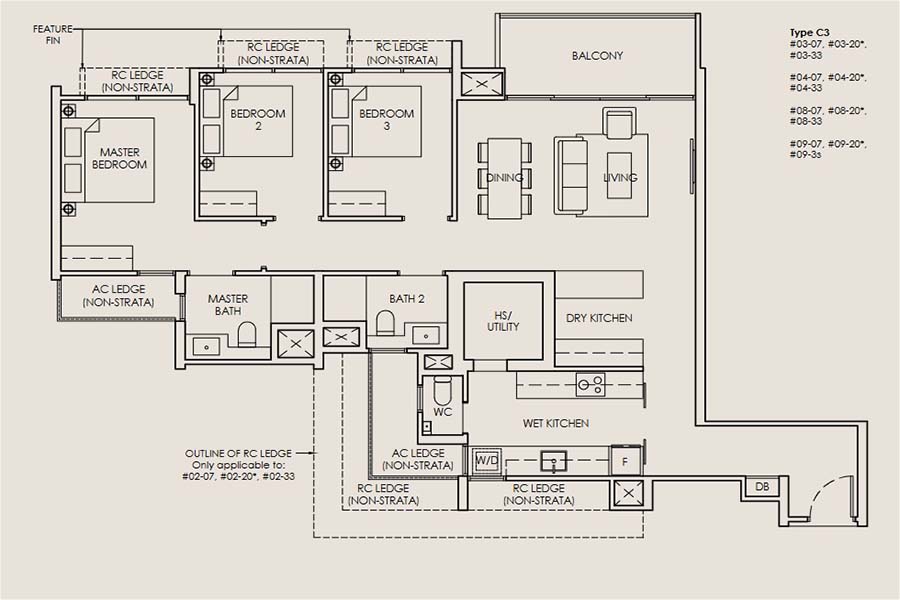
3-Bedroom Analysis
The three-bedroom category is likely to be the most important part of The SEN’s floor plan story. In many family-oriented projects, this is the segment that best balances affordability, practicality, and future resale depth. The same applies here.
A workable three-bedroom layout should do more than provide three enclosed rooms. It should create a sensible relationship between the living-dining area, kitchen, and bedroom zone so that the home feels practical during everyday use. Buyers should look carefully at whether the secondary bedrooms can genuinely support children, guests, or study use without feeling token. They should also assess whether the main communal area is large enough for regular family activity rather than just visual presentation.
For The SEN specifically, the three-bedroom units matter because they fit the project’s buyer profile most directly. Households considering this development are often not buying for prestige alone. They are buying because they want a usable District 21 home at a lower entry point than some nearby alternatives. That makes three-bedroom functionality central to the project’s overall coherence.
4-Bedroom + Study Analysis
The largest layouts at The SEN serve a narrower but still important buyer group. These units are not simply bigger versions of the smaller formats. They are for households that want clearer separation between communal and private spaces, more storage capacity, and a higher degree of flexibility.
The additional study matters because it expands how the home can function. For some buyers it becomes a work-from-home room. For others it may serve as a guest room, helper’s room, or quiet study area for older children. That flexibility is valuable in longer-term homes, especially when household needs evolve over time.
Buyers should still be realistic. Larger prestige layouts generally come with a narrower resale pool later. They can be strong own-stay purchases, but they are usually better suited to households with a longer holding horizon and less dependence on fast exit liquidity.
What Buyers Should Evaluate in Floor Plans
When reviewing The SEN layouts, buyers should focus on a few practical filters.
Bedroom usability
A bedroom count only matters if the rooms work in real life. Buyers should imagine standard beds, desks, and wardrobes rather than relying on showroom styling.
Living-dining flow
The shared zone should feel comfortable for daily living, not just tidy on paper. Awkward furniture placement or cramped circulation can reduce long-term satisfaction.
Kitchen practicality
Counter space, movement flow, and storage all matter, especially for households that cook regularly.
Flexibility
Layouts with a study or adaptable room arrangement usually hold up better over time because household needs rarely stay static.
Privacy and zoning
A better home separates noisier communal areas from sleeping areas effectively. This becomes more important in family units and prestige layouts.
Choosing the Right Layout
For most buyers, the strongest balance is likely to sit in the two-bedroom-plus-study and three-bedroom categories. These units align well with the project’s owner-occupier positioning and provide practical flexibility without immediately entering the highest quantum range.
Standard two-bedroom units may suit smaller households that still want a District 21 address and a more manageable entry price.
The three-bedroom prestige and four-bedroom-plus-study prestige units make more sense for established households who expect to stay longer and want greater comfort, privacy, and adaptability.
Conclusion
The SEN’s floor plans make the most sense when judged as practical owner-occupier layouts rather than investor products. The project is trying to provide usable homes for households that want a Bukit Timah planning area address at a more accessible entry point.
That makes layout quality especially important. Buyers should focus less on the label of each unit type and more on whether the internal arrangement genuinely supports how they live. In a project like The SEN, the right floor plan choice can matter just as much as the entry price itself.
If you would like help narrowing down which The SEN layouts may best suit your household size, financing comfort, and holding horizon, message us before arranging a viewing.