

Summary
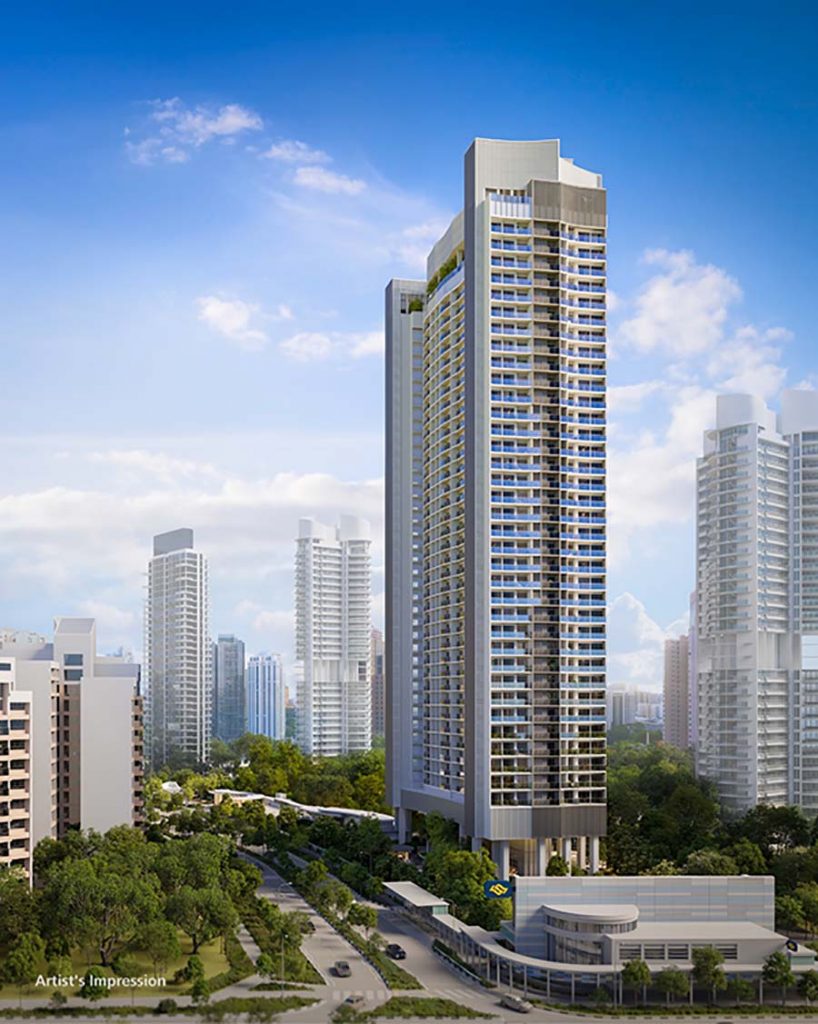
River Green is a 99-year leasehold private residential development at River Valley Green, positioned as a high-connectivity, urban-centric home for buyers who prioritise transit access, daily convenience, and school proximity over expansive unit sizes or freehold tenure. Its defining characteristic is functional integration: direct, sheltered access to Great World MRT on the Thomson-East Coast Line and weather-protected connectivity to Great World City, effectively extending everyday living beyond the development boundary.
The project’s near sell-out performance reflects a market acceptance of compact, GFA-harmonised layouts in exchange for absolute quantum control and location efficiency in a Core Central Region context. While unit sizes and leasehold tenure remain key points of contention, demand has been sustained by school-driven buyer interest, strong rental fundamentals, and the scarcity of comparable MRT-integrated options in River Valley.
In practice, River Green demonstrates how connectivity, school catchment and daily usability can outweigh traditional CCR expectations around tenure and space, particularly for buyers entering with long-term hold or rental-led objectives rather than legacy ownership assumptions.
River Green is a connectivity-first, MRT-integrated District 9 development designed for buyers who value daily efficiency, school access, and absolute quantum discipline over unit size and tenure prestige.
For buyers assessing whether River Green aligns with their financing comfort, holding horizon, and exit assumptions, a structured project breakdown covering entry positioning, pricing logic, stack considerations, and buyer suitability may provide additional clarity before arranging any viewing.
Key details (at a glance)
99-year leasehold | 524 units | Private residential
Located at River Valley Green | District 9 (CCR / River Valley)
Direct sheltered access to Great World MRT (TEL) | Within 1km of River Valley Primary School
Est. TOP 2030
Project Factsheet
| Item | Details |
|---|---|
| Project Name | River Green |
| Address / Locality | 11 River Valley Green |
| District / Planning Area | District 9 / River Valley |
| Region (NLR) | CCR |
| Tenure | 99 years commencing 24 September 2024 |
| Site Type | GLS |
| Developer | Wing Tai Asia |
| Development Type | Private residential |
| Building Configuration | 1 × 36-storey residential block |
| Site Area | 9,293.3 sqm |
| Plot Ratio | 3.5 |
| Total Residential Units | 524 |
| Unit Mix | 1BR, 1BR + Study, 2BR, 2BR Premium, 2BR + Study, 3BR, 4BR |
| Nearest MRT | Great World MRT (TEL) — direct, sheltered access |
| Launch Status | Launched |
| Expected TOP | 30 June 2030 |
What River Green Is — and Is Not
River Green is fundamentally an urban efficiency play. It is designed around the idea that proximity to transport, retail, and schools can compensate for smaller internal spaces and leasehold tenure. Buyers here are purchasing convenience, not exclusivity.
What it is not is a low-density luxury enclave or a freehold legacy asset. The development does not attempt to compete with older River Valley freehold projects on space, privacy, or long-term tenure appeal. Instead, it positions itself as a contemporary, transit-integrated alternative with lower absolute entry quantum in a premium district.
This clarity of positioning helps explain why buyer response has been decisive rather than tentative. River Green filters for a specific buyer profile rather than attempting to appeal broadly.
Location Context: Great World as an Extension of Home
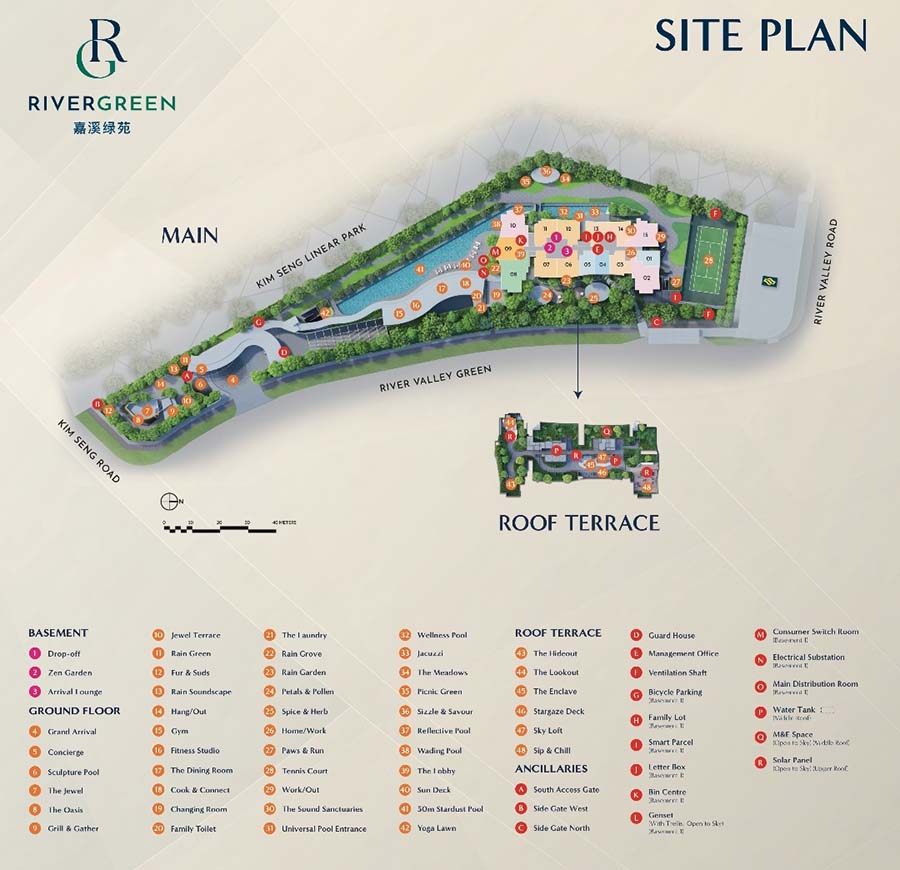
River Green’s most material advantage is its direct, sheltered connection to Great World MRT, coupled with weather-protected access to Great World City. For residents, this effectively collapses the boundary between home, transit, and retail.
Daily routines become less car-dependent, and reliance on feeder transport is largely eliminated. This matters not just for convenience, but also for resilience: MRT-linked projects tend to retain relevance across market cycles, particularly in high-density central locations.
Beyond transport, the development sits within a mature River Valley neighbourhood where amenities, schools, and lifestyle offerings are already established. Unlike fringe CCR projects that rely on future transformation narratives, River Green operates in a fully formed environment.
Although located within District 9, River Green should be assessed within the broader context of the Core Central Region (CCR), where pricing behaviour and buyer expectations differ materially from suburban and OCR developments.
School Catchment and Family-Driven Demand
Being within 1km of River Valley Primary School has been a significant demand driver. School-driven buying remains one of the most consistent non-speculative forces in Singapore’s property market, particularly in central districts where alternatives are limited.
For families, the combination of school proximity and sheltered MRT access reduces daily friction and supports long-term occupancy. This also contributes to resale liquidity, as school registration cycles create recurring pockets of demand independent of broader market sentiment.
Unit Design and GFA-Harmonised Trade-Offs
River Green adopts GFA-harmonised layouts, resulting in smaller headline sizes but higher usable efficiency. While a 4-bedroom at 980 sq ft appears compact by historical standards, buyers assess value based on internal usability rather than nominal area.
That said, this design approach introduces clear trade-offs. Compact kitchens, limited utility space, and the absence of traditional yard areas in some layouts reduce suitability for larger or multi-generational households. The project therefore skews toward smaller family units and investor-grade configurations.
These compromises are not hidden; they are integral to the project’s value proposition and absolute pricing strategy.
Density, Views, and Privacy Considerations
As a single 36-storey block within a high-density node, River Green faces inherent constraints around views and privacy, particularly on lower to mid floors. Surrounded by existing high-rise developments, many units do not enjoy open river or greenery vistas.
For buyers prioritising outlook and exclusivity, this is a meaningful limitation. For others, especially those focused on rental performance or daily convenience, view quality is secondary to location and connectivity.
Buyer Suitability: Who River Green Is (and Is Not) For
Best suited for
River Green is best aligned with mass-affluent professionals and investor-leaning buyers who prioritise connectivity, convenience, and rental defensiveness over internal space. Buyers who value direct MRT integration, sheltered access to a major mall, and proximity to River Valley Primary School will find the project structurally hard to replace within District 9 at a similar quantum. These buyers typically have longer holding horizons and are comfortable trading absolute space for location efficiency and exit liquidity.
Suitable with trade-offs
Young families upgrading from HDBs or smaller RCR condos may find River Green workable if expectations around unit compactness and density are clearly managed. While layouts are GFA-harmonised and efficient, larger households will need to accept tighter kitchens, limited yard space, and a more vertical living environment. For buyers entering primarily for school proximity and lifestyle convenience, these compromises are often acceptable, but they must be intentional.
Not suitable for
River Green is not ideal for buyers seeking legacy freehold ownership, expansive family layouts, or low-density living within the CCR. The 99-year tenure, compact 3- and 4-bedroom configurations, and surrounding high-rise context may feel misaligned for ultra-high-net-worth buyers or those comparing directly with older freehold River Valley developments. Similarly, buyers looking for explosive capital appreciation rather than steady liquidity may find better risk-reward profiles elsewhere.
Buyers comparing River Green against other upcoming launches may find it helpful to frame their decision using the New Launch Condo Guide, which outlines how pricing logic, buyer intent, and holding horizon differ across project types.
Takeaway
River Green is not a project that wins on emotion or aspiration; it wins on functionality. Its appeal lies in how efficiently it integrates transport, retail, and schooling within a District 9 address, while keeping absolute entry prices within reach for mass-affluent buyers.
For buyers aligned with its trade-offs, the project offers a defensible long-term hold with strong rental fundamentals and predictable liquidity. For those seeking space, tenure, or traditional luxury cues, alternatives elsewhere in River Valley may be more suitable.
If River Green is on your shortlist and being compared against nearby alternatives, a structured review of capital commitment differences, downside exposure scenarios, liquidity positioning, and realistic exit pool dynamics may help clarify the decision framework before any commitment is made.
FAQs (Decision-Stage)
1. Is River Green suitable for long-term own-stay buyers?
River Green suits own-stay buyers who prioritise connectivity and school access over internal space. The development’s design supports efficient daily living rather than expansive home layouts. Long-term suitability depends on household size and tolerance for compact planning.
2. Does the 99-year leasehold tenure pose a concern in District 9?
Leasehold tenure is a psychological hurdle in a traditionally freehold-heavy district, but River Green’s pricing reflects this trade-off. Buyers are effectively exchanging tenure for integration and quantum control. Market response suggests this compromise is acceptable to its target audience.
3. How important is the MRT integration to resale value?
Direct MRT access is one of the strongest contributors to resale and rental liquidity. It provides enduring functional relevance even as market conditions change. This is especially important in high-density central locations.
4. Are the unit sizes too small for families?
Some families may find the compact layouts challenging, particularly larger households. The project is better suited to smaller families or couples with one child. Buyers should assess layout usability rather than bedroom count alone.
5. Will nearby new launches affect River Green’s performance?
Upcoming launches will increase competition, especially for investor-grade units. However, River Green’s first-mover advantage and established connectivity help anchor demand. Relative pricing discipline will remain critical.
6. Is River Green more of an investor or own-stay project?
The buyer mix leans investor-heavy due to rental demand from MRT connectivity and the Great World catchment. Nonetheless, school proximity also attracts own-stay families. The project straddles both segments with a slight tilt toward investment use.
7. How does River Green compare to freehold alternatives nearby?
Freehold projects typically offer larger units and stronger legacy appeal at higher absolute prices. River Green competes by lowering entry quantum and enhancing daily convenience. The choice depends on whether buyers value tenure or functionality more.
8. What is the biggest risk buyers should be aware of?
The primary risk is expectation mismatch. Buyers expecting traditional CCR luxury may be disappointed, while those aligned with River Green’s efficiency-driven positioning are more likely to be satisfied over the long term.
Pricing Logic, Planning Context & Market Absorption
Pricing Logic: Why River Green Reset CCR Leasehold Expectations
River Green’s pricing behaviour reflects structural repricing, not launch-phase exuberance. As one of the first MRT-integrated GLS developments in River Valley under post-2023 land and planning conditions, the project established a new benchmark for leasehold CCR living tied to infrastructure rather than tenure. Buyers accepted higher PSF levels because the value proposition was not framed around scarcity or prestige, but around functional replacement cost and future comparables.
Importantly, price resistance has emerged not as rejection but as segmentation. Smaller units continue to transact smoothly due to lower absolute quantum and rental defensiveness, while larger formats face more scrutiny as buyers compare them against older freehold options. This behaviour signals a market that is price-disciplined but not price-averse.
River Green does not compete with legacy CCR freehold projects on heritage or space. Instead, it anchors pricing around connectivity, efficiency, and exit liquidity, which aligns with modern CCR buyer behaviour.
Comparison Context: Competing on Integration, Not Prestige
Buyers frequently compare River Green with nearby developments such as Promenade Peak, Zyon Grand, and Irwell Hill Residences, but these comparisons are functional rather than aesthetic. The decision hinge is rarely architectural language or façade treatment; it is about how daily life is structured.
River Green’s defining edge is its direct, sheltered MRT and mall integration, which materially changes commuting patterns and daily convenience. While competing projects may offer larger layouts or perceived exclusivity, they often require trade-offs in walkability or reliance on transport modes beyond rail. As a result, buyers do not see River Green as a substitute for traditional CCR luxury — they see it as a different product category altogether.
This explains why River Green maintains momentum even as new supply enters the precinct. It is not chasing the same buyer motivations.
URA Planning Context: River Valley’s Shift Toward High-Intensity Urban Living
From a planning perspective, River Green sits squarely within URA’s long-term repositioning of the River Valley Planning Area as a high-density, transit-anchored residential corridor rather than a low-rise enclave. The introduction of multiple GLS plots around Great World and Havelock signals an intentional shift toward integrated, vertical living supported by MRT infrastructure.
URA’s emphasis in this precinct is not on dramatic transformation but on incremental intensification. New developments are expected to integrate retail at the podium level, improve pedestrian connectivity, and strengthen walk-cycle networks linking Orchard Road, the Singapore River, and surrounding residential nodes. River Green’s direct MRT and mall integration aligns closely with this planning intent.
Crucially, this planning framework reduces reliance on speculative upside. Buyers are not banking on future rezoning or redevelopment; they are purchasing into a completed transport and amenity ecosystem that is already functioning. This underpins the project’s absorption stability and long-term relevance.
Market Absorption: Demand Driven by Structure, Not Sentiment
River Green’s near sell-out status reflects structural demand, not sentiment-driven buying. Absorption has been led by investors and owner-occupiers who understand the project’s role as a liquidity anchor within the CCR rather than a trophy asset. This buyer base is less reactive to short-term market noise and more focused on defensiveness.
Sales velocity has remained resilient even as competing launches approach, suggesting buyers are actively locking in position before replacement costs move higher. However, the remaining inventory — typically higher-priced or less optimally oriented units — faces sharper scrutiny. This is consistent with a mature market where buyers are selective, not disengaged.
Buyer Segmentation, Exit Dynamics & Risk Scenarios
Buyer Segmentation: Who Is Driving Demand
River Green’s primary demand comes from local Singaporean investors and professionals who prioritise rental stability and MRT adjacency within the CCR. These buyers are typically comfortable with compact layouts and view the project as a yield-defensive asset rather than a lifestyle upgrade.
Secondary demand comes from young families targeting River Valley Primary School, where proximity functions as a resale and rental insurance mechanism. These buyers tend to accept density and layout trade-offs in exchange for location certainty. A smaller tertiary segment comprises PRs and eligible foreign buyers seeking a low-friction entry into District 9.
Exit & Liquidity: Predictable, Not Explosive
River Green’s exit profile is liquidity-driven rather than appreciation-led. MRT integration and mall adjacency ensure a consistent pool of future tenants and buyers, but price growth is more likely to track income growth and replacement cost than speculative spikes.
Resale differentiation will matter. Units with better orientation, higher floors, or more practical layouts are likely to transact more smoothly, while homogenous smaller units may face competition if multiple listings emerge simultaneously. This places a premium on entry discipline rather than timing.
Structural Risks & Constraints
The project’s compact layouts and high unit count introduce density-related risks, particularly for owner-occupiers sensitive to privacy and noise. Additionally, the concentration of investor-grade units increases the likelihood of rental competition upon TOP, which could cap short-term yields.
Macro-structurally, high ABSD for foreigners narrows the exit pool, reinforcing the need to view River Green as a domestic-liquidity asset. Buyers expecting international demand-led price surges may find those expectations misaligned with policy realities.
FAQs
1. Is River Green suitable for long-term own stay?
River Green can suit long-term own-stay buyers who prioritise MRT access, walkability, and daily convenience over internal space. The compact layouts and high-density environment align more closely with urban, car-lite lifestyles than traditional family living. Buyers entering with realistic expectations around space tend to value the integration with transit and retail. However, households seeking low-density living or larger internal layouts may find the trade-offs less suitable over time.
2. How does the 99-year tenure affect River Green’s long-term value?
Tenure remains a consideration in District 9, particularly when compared with nearby freehold developments. River Green mitigates this through pricing, connectivity, and functional relevance rather than legacy appeal. Demand is driven more by usability and liquidity than tenure purity. Buyers with multi-decade holding horizons should still recognise that freehold assets retain stronger long-term defensiveness.
3. Does River Green’s high unit count create overcrowding risks?
With 524 units on a relatively compact site, density is a structural characteristic of the development. Common facilities and shared spaces are therefore designed for efficient turnover rather than exclusivity. For residents accustomed to high-rise urban living, this is a manageable trade-off. Buyers seeking quieter, resort-style environments may perceive this density as a limitation.
4. Are the unit sizes too small for families?
The unit mix is skewed towards smaller configurations, with even larger units prioritising efficiency over expansiveness. This suits smaller households, couples, and professionals more than multi-generational families. Families with domestic helpers or storage-heavy lifestyles may find the layouts restrictive. As a result, the long-term buyer pool remains skewed toward compact-living households.
5. How does River Green perform as a rental asset?
Rental demand is supported by MRT adjacency, mall integration, and proximity to the CBD. These factors provide a consistent tenant pool, particularly among expatriates and professionals. However, the concentration of similar unit types may limit rental upside during periods of peak supply. Rental performance is therefore expected to be stable rather than aggressive.
6. Will River Green face rental competition after TOP?
Rental competition is likely due to overlapping completions from nearby developments within a similar timeframe. While connectivity provides baseline demand, comparable unit profiles may compress rental premiums. Owners relying on differentiation through layout or orientation may fare better. Rental assumptions should therefore remain conservative rather than growth-led.
7. Is River Green priced for capital appreciation?
River Green is priced around capital preservation rather than speculative appreciation. Buyers are paying for certainty of use, transit integration, and predictable exit demand. Price growth is more likely to track replacement costs and income growth than sentiment-driven spikes. This positioning favours steady holders over momentum investors.
8. How does River Green compare to freehold alternatives nearby?
Freehold projects offer tenure permanence but often at higher absolute prices and weaker connectivity. River Green competes on functional advantages such as MRT integration and retail adjacency. Buyers typically treat these as different value propositions rather than direct substitutes. The choice depends on whether usability or tenure longevity is prioritised.
9. Does the project’s density affect resale liquidity?
High density increases transactional volume, which can support liquidity rather than suppress it. A larger pool of comparable units also creates more price transparency in the resale market. However, this reduces scarcity-driven pricing power. Liquidity is therefore supported, but upside differentiation is limited.
10. How important is the MRT and mall integration to buyer demand?
The integration with MRT and retail is the project’s primary demand driver. It reshapes daily routines by reducing reliance on cars and external transport. This functional advantage anchors buyer interest across both owner-occupier and investor segments. Without this integration, the project’s value proposition would be materially weaker.
11. Does URA planning support River Green’s long-term relevance?
URA planning emphasises higher-density, transit-oriented living within the River Valley area. This aligns closely with River Green’s design and positioning. Improvements in walkability and connectivity reinforce its functional relevance over time. However, planning also introduces competing supply, which limits scarcity-based upside.
12. Is River Green suitable for families focused on primary school access?
Proximity within 1km of River Valley Primary School supports consistent family demand. This provides a degree of demand stability during Primary 1 registration cycles. However, internal unit sizes may still constrain long-term suitability for growing families. School access supports liquidity, not universal suitability.
13. How does GFA harmonisation affect livability?
GFA harmonisation improves usable internal efficiency by excluding non-habitable spaces from saleable area. This benefits buyers who value functional layouts over headline square footage. However, it does not change absolute room dimensions. Buyers should assess layouts holistically rather than relying on size metrics alone.
14. Are lower-floor units disadvantaged?
Lower-floor units may experience greater enclosure due to surrounding developments. This can affect privacy and outlook, particularly in a dense precinct. Pricing typically reflects these trade-offs. Buyers prioritising outlook may prefer higher floors despite higher entry prices.
15. Who should avoid buying River Green?
Buyers seeking large internal spaces, low-density environments, or legacy freehold assets may find River Green misaligned with their priorities. The project is optimised for convenience rather than exclusivity. Entering with mismatched expectations increases dissatisfaction risk. Suitability is therefore highly lifestyle-dependent.
16. What type of buyer is River Green best suited for?
River Green best suits mass-affluent professionals, investors prioritising rental stability, and families focused on connectivity and school access. These buyers value predictability and functional efficiency. The project filters out speculative demand naturally. As a result, its buyer profile remains relatively stable across cycles.
If a structured discussion is preferred over WhatsApp, or if detailed floor plans, pricing breakdowns, or showflat arrangements are required, your details may be left below for a follow-up.