
Summary
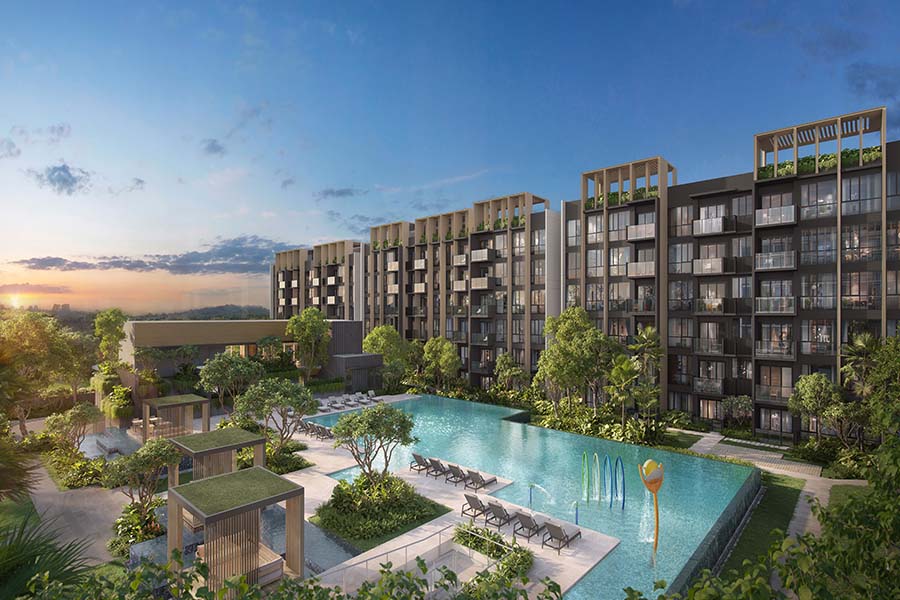
Narra Residences is a 99-year leasehold residential development in District 23, located along Dairy Farm Walk, off Upper Bukit Timah, within a low-density enclave bordered by established greenery and nature parks. Positioned as a nature-centric family development, Narra Residences appeals to buyers who value quiet surroundings, human-scale living, and long-term own-stay comfort, while remaining connected to the city via the Downtown Line and major expressways.
This Narra Residences review assesses expected pricing logic, layout/liveability trade-offs, and who the project is realistically designed for — especially OCR upgrader families and first-time private buyers who prioritise nature, quiet surroundings, and long-term own-stay comfort over MRT-at-doorstep convenience.
Launched on 31 January 2026, Narra Residences entered the market with approximately 27% take-up during its preview phase, reflecting measured demand rather than momentum-driven absorption — consistent with its positioning as a family-oriented, own-stay project rather than a speculative launch.
Post-launch pricing behaviour indicates that buyer interest is driven primarily by absolute quantum affordability and family suitability, rather than PSF comparisons or short-term upside expectations.
This review examines Narra Residences from a decision-stage perspective, focusing on who the project is designed for, how its nature-centric positioning aligns with URA planning intent, and what buyers should realistically expect, rather than promotional narratives.
Narra Residences is a 99-year leasehold, family-oriented condominium located along Dairy Farm Walk in District 23, positioned for long-term own-stay buyers who prioritise greenery, lower-density surroundings, and absolute affordability over MRT-at-doorstep convenience. Launched in January 2026 with measured take-up, its pricing logic focuses on keeping total purchase quantum accessible for HDB upgraders rather than driving short-term resale momentum. The project aligns closely with URA’s low-density planning intent for the Upper Bukit Timah and Dairy Farm precinct, offering stable liveability and environmental consistency, but buyers should be comfortable with longer holding horizons, moderate liquidity, and competition from nearby Dairy Farm cluster developments.
For buyers assessing whether Narra Residences aligns with their financing comfort, holding horizon, and exit assumptions, a structured project breakdown covering entry positioning, pricing logic, stack considerations, and buyer suitability may provide additional clarity before arranging any viewing.
Key details (at a glance):
99-year leasehold | Est. 540 units + 4 shops | Hillview MRT (DT3) ~0.9 km | Launched 31 Jan 2026 | Preview take-up ~27% | TOP 20 Jan 2030 | Nature-first low-density enclave (Dairy Farm / Upper Bukit Timah)
Project Factsheet
| Item | Details |
|---|---|
| Project Name | Narra Residences |
| Location | 50–64 Dairy Farm Walk, Singapore |
| District / Region | District 23 (Outside Central Region) |
| Tenure | 99 years from 1 July 2025 |
| Developer | Santarli Realty & APEX Asia & Partner Consortium |
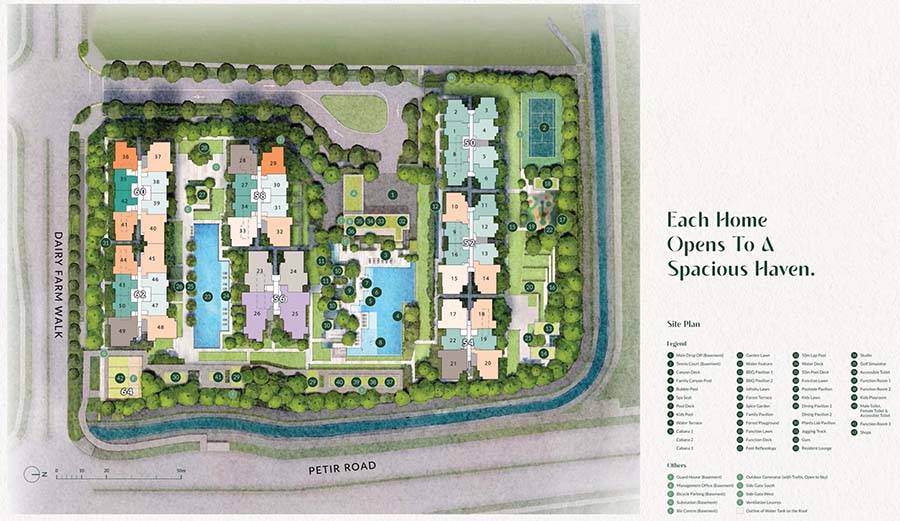
| Site Area | Approx. 21,881.1 sqm |
| Total Units | 540 residential units + 4 retail shops |
| Building Configuration | 3 blocks (6 storeys), 2 blocks (13 storeys), 2 blocks (16 storeys) |
| Unit Mix | 1- to 5-Bedroom units + retail |
| Nearest MRT Station | Hillview MRT (Downtown Line) |
| Expected TOP | 20 January 2030 |
| Launch Status | Launched 31 January 2026 (pricing used as launch reference; not real-time availability) |
Narra Residences is best understood as a nature-centric, family-oriented OCR development designed for long-term own-stay living rather than short-term trading.
Location Context: Living Within a Nature-First Enclave
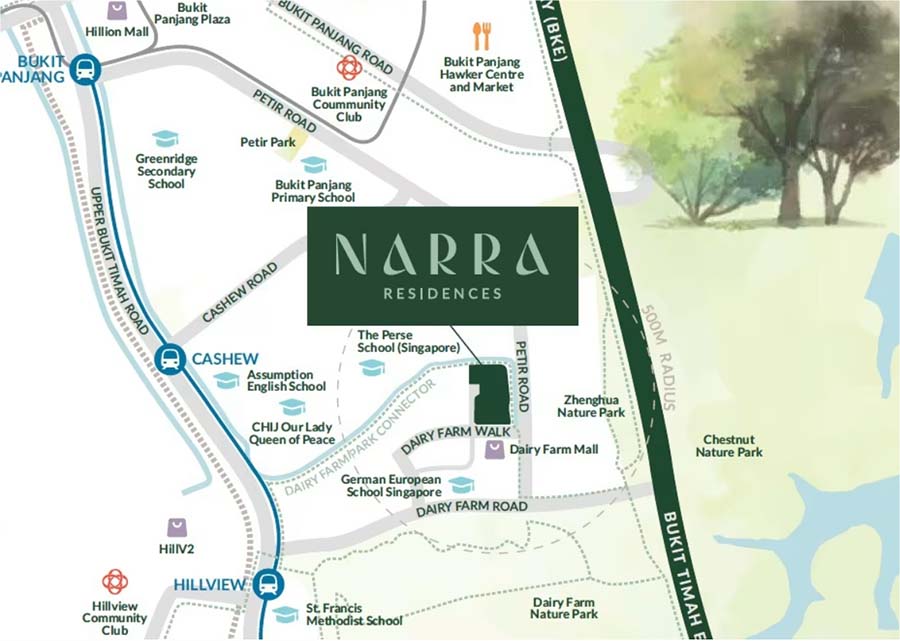
Dairy Farm Walk sits within a distinct planning pocket of Upper Bukit Timah, where residential development is intentionally buffered by greenery, nature parks, and low-density surroundings. Unlike many OCR locations driven primarily by transport hubs or commercial clusters, this area’s appeal is rooted in environmental quality and liveability — a theme that is consistent across several projects in the West Region new launch condos.
URA’s long-term planning intent for the Dairy Farm / Upper Bukit Timah precinct also emphasises:
Integration with surrounding nature reserves
Low-density, human-scale residential environments
Enhanced pedestrian and cycling connectivity
Sensitive design that preserves views, buffer zones, and greenery
This places Narra Residences within a quieter residential enclave rather than a high-intensity growth corridor — a distinction that shapes both its buyer profile and value proposition.
Project Positioning: What Narra Residences Is — and Is Not
What Narra Residences Is
A family-oriented OCR development with a strong nature-living narrative
Positioned for long-term own-stay buyers, not short-term investors
Designed to align with low-density planning principles around Dairy Farm
A relatively accessible entry point for a 2026 new launch, compared with many peers
What Narra Residences Is Not
Not a transit-fronting, MRT-at-doorstep project
Not a high-density, urban lifestyle development
Not a yield-first investment play
Not suited for short-term flipping strategies
- Not positioned to outperform neighbouring Dairy Farm cluster projects on short-term resale metrics
This clarity matters. Narra Residences trades immediacy and urban buzz for peace, space, and environmental quality.
Amenities Around Narra Residences
Narra Residences benefits from a self-contained neighbourhood ecosystem anchored by Dairy Farm Mall, complemented by nearby schools, parks, and nature reserves. Amenities here support family routines and outdoor lifestyles, rather than city-core convenience.
Public Transport Connectivity
Hillview MRT (DT3) – approx. 1.0–1.2 km (walking distance varies by block)
Bef Chestnut Ave (Bus: 966, 972M, 973) – approx. 0.2 km
Aft Chestnut Ave (Bus: 966, 972M, 973) – approx. 0.2 km
Supermarkets & Daily Conveniences
FairPrice (Dairy Farm Mall) – approx. 0.1 km
Cold Storage (Rail Mall) – approx. 1.2 km
Giant (256 Bangkit Road) – approx. 1.4 km
Sheng Siong (Fajar Shopping Centre) – approx. 1.9 km
Shopping & Retail Nodes
Dairy Farm Mall – approx. 0.1 km
HillV2 – approx. 1.2 km
The Rail Mall – approx. 1.2 km
Hillion Mall – approx. 1.8 km
Bukit Panjang Plaza – approx. 1.9 km
Fajar Shopping Centre – approx. 1.9 km
Primary & Secondary Schools
CHIJ Our Lady Queen of Peace – approx. 0.8 km
Bukit Panjang Primary School – approx. 0.9 km
Zhenghua Primary School – approx. 1.6 km
Beacon Primary School – approx. 1.9 km
Assumption English School – approx. 0.9 km
Assumption Pathway School – approx. 1.0 km
Greenridge Secondary School – approx. 1.4 km
Tertiary & International School
Jurong Pioneer Junior College – approx. 3.1 km
Ngee Ann Polytechnic – approx. 3.8 km
German European School Singapore – approx. 0.2 km
Food Centres
Bukit Panjang Hawker Centre – approx. 1.1 km
Senja Hawker Centre – approx. 2.0 km
Parks, Nature & Lifestyle
Dairy Farm Adventure Centre – approx. 0.6 km
Zhenghua Park – approx. 0.6 km
Bukit Panjang Park – approx. 0.8 km
Chestnut Nature Park – approx. 0.9 km
Buyer Suitability: Who Narra Residences Is For
1. OCR Upgrader Families
Families upgrading from HDBs or older OCR projects who prioritise space, greenery, and a quieter environment — and who plan to stay long-term.
2. Nature- and Greenery-Centric Buyers
Buyers who actively use parks and trails, prefer low-density surroundings, and are willing to accept slightly longer travel time in exchange for daily liveability.
3. HDB Upgraders
For buyers navigating their first private purchase, Narra Residences’ relatively accessible entry pricing makes it a realistic step-up option. If you’re weighing affordability, grants, loan structure, and what “good value” looks like at launch, start with the New Launch Condo Guide before comparing projects.
4. Investors
Investor interest exists primarily as a defensive, longer-horizon hold — often linked to family or international school–driven rental profiles — rather than yield expansion or exit-driven strategies.
Takeaway
Narra Residences is not positioned as a fast-moving, momentum-driven launch. Its relevance lies in:
Alignment with low-density, nature-integrated planning intent
Family-oriented liveability within a green enclave
Relatively accessible entry pricing for an early-2026 new launch
A clear long-term own-stay proposition
Buyers evaluating Narra Residences using short-term speculative metrics may miss its intent. Those assessing it through a family lifestyle and long-horizon lens are more likely to find its positioning coherent.
Post-launch behaviour reinforces that Narra Residences is being evaluated as a “defensive own-stay choice” rather than a headline-grabbing launch. Buyers who align with its pricing logic, density trade-offs, and longer holding horizon are more likely to find the project coherent; those seeking fast absorption or near-term upside may find the surrounding supply dynamics constraining.
If Narra Residences is on your shortlist and being compared against nearby alternatives, a structured review of capital commitment differences, downside exposure scenarios, liquidity positioning, and realistic exit pool dynamics may help clarify the decision framework before any commitment is made.
FAQs (Decision-Stage)
1) Where exactly is Narra Residences located?
Narra Residences is located along Dairy Farm Walk (Upper Bukit Timah) in District 23, within a low-density residential pocket bordered by nature parks and greenery buffers. It sits in a distinctly quieter enclave compared to typical OCR launches that are centred around transport hubs or town centres.
2) Is Narra Residences closer to Hillview MRT or Cashew MRT?
In practical walking terms, Narra Residences is generally considered closer to Hillview MRT (Downtown Line), though actual walking time will still depend on the chosen route, stack location, and gate access points. Buyers should evaluate the “last-mile” experience rather than purely distance numbers.
3) Is Narra Residences more like a “quiet nature condo” or an MRT convenience project?
It is clearly a quiet nature-centric project, not an MRT-at-doorstep development. The project’s core value proposition is environmental quality, lower-rise living character, and long-term own-stay comfort — not city-fringe convenience.
4) What is the main trade-off buyers must accept with Narra Residences?
The trade-off is straightforward:
You gain peace, greenery, and lower-density surroundings
You give up immediate MRT access and town-centre intensity
Buyers who want a nature-first lifestyle tend to see this as a structural advantage, not a compromise.
5) Who should avoid Narra Residences (even if pricing looks attractive)?
Buyers who depend heavily on MRT for daily commuting, prefer being near a major mall/transport interchange, or prioritise “city energy” and high convenience may not be aligned. If you already know you dislike quieter and more secluded precincts, this may not be the right fit.
6) Is Narra Residences more suitable for own-stay buyers or renters/investors?
Narra is primarily an own-stay project. Rental relevance exists (especially for family/expat profiles), but it is not designed as a yield-first or short-hold investor product. Buyers should evaluate it as a home first, asset second.
7) What should buyers watch for when pricing and floor plans are released?
Three key checks matter most:
Entry pricing discipline vs OCR comparables
Layout efficiency (especially 2–3 bedders for family liveability)
Noise/privacy/facing given the site’s relationship to roads and surrounding greenery buffers
For Narra, stack selection will matter meaningfully for long-term comfort.
8) Does “nature view” actually hold value long-term in Singapore?
It often does — particularly in precincts where URA planning controls help preserve low-density character and greenery buffers. However, buyers should still differentiate between:
true long-term protected greenery edges
vsviews that may change due to future parcels or roadworks
This is where planning context matters.
Narra Residences: Pricing Logic, URA Planning Intent & Buyer Segmentation
Summary
Narra Residences is not priced or positioned as a momentum-driven launch. Its value logic is anchored in entry affordability for early 2026, family-sized layouts, and alignment with URA’s low-density, nature-integrated planning framework for Dairy Farm and Upper Bukit Timah. This section examines whether Narra’s positioning holds up once pricing logic, planning controls, and buyer segmentation are evaluated together.
Pricing Logic: Why Narra Residences Is an “Entry-Accessible” 2026 Launch
Entry Pricing Context (Launch Reference)
Launch Reference Pricing (31 Jan 2026):
1 Bedroom + Study (517 sq ft): From SGD 998,000 (~SGD 1,930 psf)
2 Bedroom (560–721 sq ft): From ~SGD 1.17M (~SGD 2,089 psf)
3 Bedroom (818–1,023 sq ft): From ~SGD 1.6M (~SGD 1,956 psf)
4 Bedroom (1,152–1,378 sq ft): From ~SGD 2.4M (~SGD 2,083 psf)
5 Bedroom (1,658 sq ft): From ~SGD 3.8M (~SGD 2,292 psf)
Used for positioning context; not real-time availability or pricing promise.
For a 540-unit OCR development launching in early 2026, these entry levels place Narra Residences among the lower absolute quantum new launches expected in the market at that time.
Absolute Quantum vs PSF: The More Relevant Lens Here
For family-oriented OCR projects, absolute quantum matters more than headline PSF.
Key reasons:
Buyers are predominantly own-stay families, not traders
Mortgage servicing and monthly affordability drive decisions
Larger unit sizes amplify total price sensitivity
Narra’s pricing strategy appears calibrated to:
Stay below key psychological thresholds for HDB upgraders
Offer genuine family-sized units without forcing buyers into extreme leverage
Compete more directly with resale OCR condos than with CCR launches
This makes Narra Residences less dependent on speculative demand and more resilient to shifts in sentiment.
Post-Launch Pricing Behaviour: What the Market Is Actually Responding To
- Sub-SGD 1M psychological anchor: The sub-SGD 1M 1-bedroom pricing acts as a strong psychological entry point for HDB upgraders.
- Wider nature-view premium (12–15%): Stacks facing greenery command a noticeably wider premium than typical OCR projects.
- GFA harmonisation = “real space” perception: Buyers perceive units as more liveable due to reduced non-usable space.
Where Narra Sits Relative to the OCR Market
Within the OCR landscape, Narra Residences occupies a specific niche:
Not the cheapest OCR new launch (pure suburban mass-market projects still exist)
Not priced at the upper end of “branded lifestyle” OCR developments
Positioned as value-through-livability, not value-through-density
This positioning relies on buyers recognising that:
Lower density
Larger green buffers
Strong school catchment
Nature adjacency
…are structural attributes, not marketing features.
URA Planning Analysis: Why Density Matters More Than Location Here
Dairy Farm / Upper Bukit Timah as a Controlled Planning Zone
URA’s planning framework for Dairy Farm and Upper Bukit Timah is deliberately restrictive, particularly when compared to other OCR corridors.
Key planning principles include:
Low-density, human-scale development
Height controls (commonly 4–6 storeys in buffer zones)
Protection of natural hydrology and greenery
Integration with existing parks and nature reserves
Emphasis on pedestrian and cycling connectivity
These controls are not temporary — they are structural constraints that shape supply.
Narra Residences Within This Framework
Narra Residences benefits from:
A site large enough to deliver full facilities while respecting planning limits
A block configuration that balances height with openness
Proximity to green buffers that are unlikely to be removed or intensified
In practical terms, this means:
Future competing supply nearby is likely to be similar or lower density
High-rise, high-plot-ratio developments are structurally constrained
The “green enclave” character is preserved by policy, not marketing promise
Long-Term Context: Bukit Timah Turf City & Beyond
Longer-term plans for Bukit Timah Turf City reinforce this planning philosophy:
Integration of housing with a new nature park
Strong green buffers and heritage-sensitive development
Amenities added without overwhelming density
For Narra Residences, this suggests incremental enhancement, not disruptive transformation — favourable for own-stay buyers who value environmental stability.
Buyer Segmentation: Who Narra Residences Truly Serves
1. OCR Upgrader Families (Primary Buyer Group)
Profile
Families upgrading from HDBs or older OCR condos
Seeking space, greenery, and long-term stability
Sensitive to total price, not speculative upside
Why Narra Works
Entry pricing within realistic affordability bands
Family-sized layouts are not marginalised
School and preschool density supports daily routines
2. Nature-First Lifestyle Buyers
Profile
Buyers who actively use parks, trails, and outdoor spaces
Prefer quieter, less congested living environments
Willing to trade immediate MRT proximity for quality of surroundings
Why Narra Works
Proximity to Chestnut Nature Park, Zhenghua Park, Dairy Farm Nature Park
URA-enforced buffer zones protect the environment long-term
Living experience is consistent, not transitional
3. HDB Upgraders Entering Private Housing
Profile
First-time private buyers
Budget-conscious but lifestyle-aware
Planning to stay for 7–10 years or longer
Why Narra Works
Lower entry quantums relative to many 2026 launches
Manageable unit sizes with functional layouts
Full facilities without extreme density
4. Investors
Profile
Long-horizon investors
Comfortable with moderate rental yields
Focused on family or expatriate tenant profiles
Limitations
Not a yield-maximisation project
Rental upside is steady, not aggressive
Liquidity depends more on market cycle than hype
Structural Strengths vs Structural Constraints
Structural Strengths
Entry-accessible pricing for early 2026
Family-centric layouts in an OCR setting
Low-density planning framework protects long-term liveability
Strong alignment with URA nature-integration themes
Structural Constraints
Not MRT-at-doorstep
Slower capital appreciation compared to speculative launches
Appeals to a defined (not mass) buyer segment
Understanding these constraints is essential — they are not weaknesses, but design choices.
Interim Assessment
Narra Residences should be evaluated as:
A long-horizon, family-oriented OCR home designed for stability, not speculation.
Its success will not be measured by:
Immediate resale premiums
Short-term booking rates
Headline PSF comparisons
But by:
Sustained own-stay demand
Livability over a full property cycle
Alignment with long-term planning controls
Narra Residences: Exit & Liquidity, Risk Scenarios, Pros & Cons, and Buyer FAQs
Summary
Narra Residences is best assessed as a family-oriented OCR home with a long holding horizon, rather than a short-cycle trading asset. Its performance characteristics are shaped by entry affordability, low-density planning controls, and nature-adjacent positioning, which together create stability but also define its liquidity profile. This section evaluates Narra Residences through exit dynamics, multi-scenario risk analysis, and concludes with clear suitability signals supported by 16 AEO-optimised FAQs.
Exit & Liquidity Analysis
Liquidity Profile of Family-Oriented OCR Developments
In the OCR, liquidity behaves very differently from CCR or investor-heavy launches.
For projects like Narra Residences:
Exit demand is primarily family-driven, not speculative
Transaction volume tends to be steady, not spiky
Liquidity depends more on affordability and livability than marketing momentum
This results in moderate but reliable liquidity, provided pricing remains realistic relative to household incomes.
Buyers should also be aware that this micro-location will see elevated competing supply from The Botany and Dairy Farm Residences, making exit outcomes more sensitive to total quantum than relative newness.
Unit-Type Liquidity Considerations
Based on typical OCR resale behaviour:
1-Bedroom + Study
Liquidity: Moderate
Buyer pool: Singles, couples, selective investors
Observation: Not the core strength of the project
2-Bedroom & 2-Bedroom + Study
Liquidity: Strong
Buyer pool: Young families, HDB upgraders
Observation: Likely to be the most resilient exit segment
3-Bedroom Units
Liquidity: Strong and stable
Buyer pool: Core family market
Observation: Most aligned with Narra’s positioning
4- & 5-Bedroom Units
Liquidity: Selective
Buyer pool: Higher-income own-stay families
Observation: Requires patience, but not discount-driven exits
Overall, family-sized units form the backbone of resale demand.
Timing Matters More Than Entry PSF
For Narra Residences, exit outcomes are more sensitive to:
Broader OCR affordability conditions
Interest rate cycles
Household income growth
They are less sensitive to launch PSF comparisons, reinforcing the need for realistic holding expectations.
Comparative Risk Positioning
Narra Residences vs MRT-Fronting OCR Projects
MRT-fronting projects
Higher immediate demand
Stronger short-term pricing support
Greater exposure to cyclical pricing swings
Narra Residences
Lower immediate demand
Stronger long-term livability
More stable pricing behaviour over full cycles
Neither is objectively “better” — but they serve very different buyer intents.
Narra Residences vs High-Density OCR Launches
High-density OCR launches rely on:
Volume-driven take-up
Narrow pricing bands
Faster resale churn
Narra Residences, by contrast:
Trades density for environment
Filters buyers through lifestyle alignment
Reduces oversupply risk within its immediate micro-location
Multi-Scenario Risk Analysis
Scenario 1: Prolonged High Interest Rates
Impact
Affordability-driven market
Reduced speculative activity
Implication for Narra
Entry pricing becomes a relative advantage
Own-stay demand remains the stabiliser
Scenario 2: OCR Market Correction
Impact
Price sensitivity increases
Weak projects face sharper adjustments
Implication for Narra
Family demand cushions downside
Low-density, nature-adjacent positioning limits oversupply pressure
Scenario 3: Strong Residential Recovery
Impact
Broad-based price appreciation
Momentum favours transport-led launches
Implication for Narra
Participates in upside, but unlikely to lead the market
Performance remains steady rather than explosive
Scenario 4: Lifestyle & Nature Premium Strengthens
Impact
Growing preference for quieter, greener homes
Post-pandemic lifestyle trends persist
Implication for Narra
This is Narra’s most favourable scenario
Demand depth improves without relying on speculation
Final Investment & Own-Stay Assessment
Narra Residences works best when viewed as:
A family-first OCR home designed for consistency, not excitement.
Its strengths are structural:
Entry accessibility for early 2026
Alignment with URA’s low-density planning framework
Strong family and nature appeal
Limited risk of disruptive overdevelopment nearby
Its limitations are equally structural:
Slower price acceleration
Selective investor appeal
Liquidity tied to family demand cycles
Pros & Cons Summary
Pros
One of the lower entry-price new launches for early 2026
Family-oriented layouts and environment
Strong nature and park adjacency
URA-enforced low-density surroundings
Stable own-stay demand base
Cons
Not MRT-at-doorstep
Limited short-term upside
Not suitable for speculative strategies
Larger units require longer holding patience
Frequently Asked Questions
1. Is Narra Residences suitable for first-time private buyers?
Yes — particularly for HDB upgraders who prioritise absolute affordability, family-sized layouts, and a quieter living environment. Narra Residences is structured to keep entry quantum within reach for first-time private buyers, but it assumes a longer holding horizon rather than short-term flexibility.
2. Is this a good project for short-term investment?
No. Narra Residences is not designed for short-term trading. Surrounding supply, non-MRT-fronting location, and family-led demand mean exit performance is driven by market cycles and affordability, not launch momentum.
3. How important is the nature aspect to long-term value?
The nature aspect matters most for liveability stability rather than price acceleration. URA planning controls in the Dairy Farm and Upper Bukit Timah area help preserve greenery and lower density, which supports long-term residential desirability, but it does not guarantee premium resale pricing.
4. Does distance from MRT hurt resale potential?
It moderates resale demand rather than eliminating it. Buyers who rely heavily on MRT convenience may exclude the project, but family buyers who value space, environment, and pricing remain the core resale audience.
5. Which unit types are most liquid?
Historically, 2- and 3-bedroom units tend to offer the best balance of affordability and buyer pool depth in OCR projects like Narra Residences. Larger units are more selective and typically require longer holding periods.
6. Is pricing competitive for a 2026 launch?
Pricing is competitive in terms of absolute quantum rather than headline psf. Narra Residences positions itself as an entry-accessible 2026 launch, especially for families comparing against newer OCR projects with higher density or smaller layouts.
7. Will future developments dilute the environment?
Significant environmental dilution is unlikely. URA planning controls in this precinct emphasise low-density development and green buffers, limiting the risk of high-rise or high-plot-ratio projects encroaching on the immediate surroundings.
8. Is Narra more suitable for own-stay or rental?
Primarily own-stay. Rental demand exists, especially for family or international school–related profiles, but yields are likely to be stable rather than aggressive due to nearby competing supply.
9. How does Narra compare with other OCR projects?
Narra Residences prioritises environment and lower density over transport convenience. Compared with MRT-fronting OCR projects, it trades short-term demand intensity for long-term liveability consistency.
10. Are schools a meaningful factor here?
Yes, particularly for family buyers planning longer stays. School proximity supports daily routines, but it should be viewed as a supporting factor rather than the primary value driver.
11. Will capital appreciation be slow?
Capital appreciation is more likely to be steady than rapid. Narra Residences is structured around affordability and own-stay demand, which tends to produce gradual, cycle-aligned growth rather than sharp spikes.
12. Is the project over-sized at 540 units?
The unit count is balanced by site size and planning controls. While the surrounding area has multiple projects, Narra’s layout and inter-block spacing mitigate the feeling of congestion within the development itself.
13. Are larger units risky to exit?
They are selective rather than inherently risky. Larger units appeal to a narrower buyer pool and generally require longer holding periods, but exits are not typically discount-driven if priced realistically.
14. Is this suitable for retirees?
Potentially, for retirees who value greenery, quieter surroundings, and full facilities. However, reliance on driving or shuttle transport should be considered.
15. What is a realistic holding period?
A realistic holding period is 7–12 years or longer. The project’s strengths are most evident when evaluated across a full property cycle rather than a short window.
16. How should buyers evaluate Narra Residences overall?
Buyers should evaluate Narra Residences through affordability, liveability, and long-term planning alignment — not launch hype, headline psf, or short-term resale expectations.
If a structured discussion is preferred over WhatsApp, or if detailed floor plans, pricing breakdowns, or showflat arrangements are required, your details may be left below for a follow-up.