
Summary
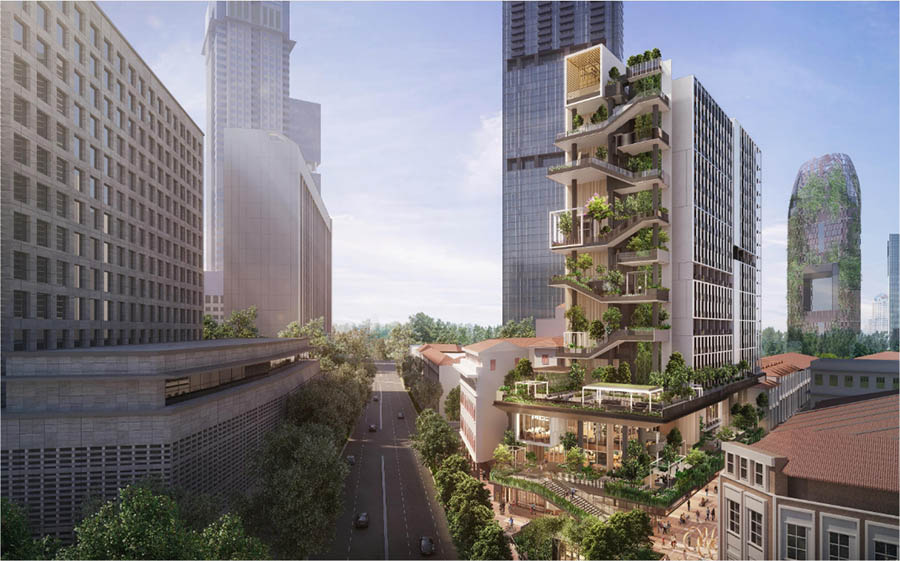
TMW Maxwell is a 99-year leasehold mixed-use redevelopment located at 31 Tras Street in District 2, within Singapore’s Core Central Region and the Outram Planning Area. Redeveloped from the former Maxwell House via an en-bloc acquisition, the project consists of a single 20-storey residential tower sitting above a multi-storey commercial podium, reflecting a high-density CBD redevelopment model rather than a conventional residential estate.
This positioning is critical. Buyers are not purchasing space or tenure strength, but access, proximity, and rental relevance within the CBD.
The project’s defining structural differentiators are its immediate adjacency to Maxwell MRT on the Thomson–East Coast Line and its integrated retail and F&B podium. Combined with a high approved plot ratio of 5.95, TMW Maxwell adopts a compact, vertical living format that prioritises transport convenience, walkability, and rental relevance over internal space, privacy, or long-term land scarcity.
TMW Maxwell should be evaluated as a high-density, MRT-adjacent CBD residential product, where value is driven by location efficiency and rental relevance rather than space, privacy, or long-term tenure optionality.
As a result, TMW Maxwell suits a narrow buyer profile. It aligns best with singles, investor-owners, and CBD-based professionals who value location efficiency and lifestyle convenience. It is structurally unsuited for families, HDB upgraders, or buyers seeking long-hold legacy value, quieter living environments, or flexible unit layouts.
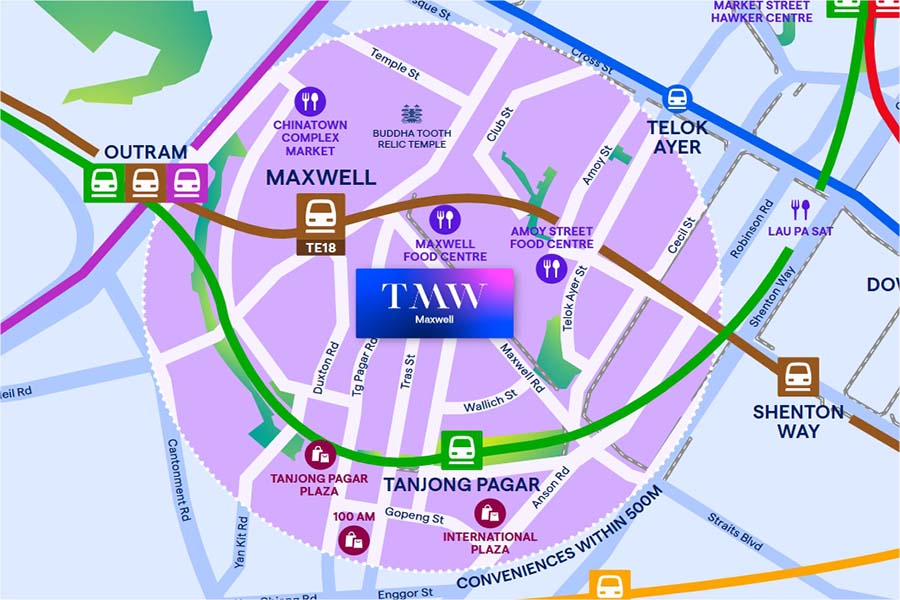
Directly beside Maxwell MRT (TE18) on the Thomson–East Coast Line, TMW Maxwell offers one-line connectivity to Orchard and the CBD spine. Surrounded by dense commercial and dining activity, it represents a niche CBD product where buyers consciously trade space, tenure longevity, and privacy for connectivity and urban immediacy.
TMW Maxwell is a 99-year leasehold mixed-use redevelopment in Singapore’s District 2, positioned directly beside Maxwell MRT within the Core Central Region. Designed as a high-density CBD living product, it caters primarily to singles and investors prioritising transport access and rental relevance over space, privacy, or long-term tenure optionality.
TMW Maxwell is a high-density, 99-year leasehold CBD redevelopment built for buyers who consciously prioritise MRT-adjacent CBD convenience over space, privacy, and long-term tenure optionality.
Explore the Full TMW Maxwell Analysis
This review forms part of a complete project cluster:
• TMW Maxwell Price Guide – pricing structure, entry quantum, and buyer positioning
• TMW Maxwell Floor Plan Analysis – layout efficiency, dual-key strategy, and unit mix
• TMW Maxwell Showflat Guide – showroom location and what buyers should evaluate during a viewing
Together, these provide a structured framework for evaluating pricing, layouts, and real-world usability before making a decision.
Buyers often review the pricing and layout analysis first to determine whether the project fits their budget and usage requirements before visiting the showflat.
If you’re considering this project, you might want to check how it actually compares and what most buyers tend to overlook — before deciding.
Key Details (at a glance)
99-year leasehold | District 2 (CCR)
High-density mixed-use CBD redevelopment
At 31 Tras Street, next to Maxwell MRT (TE18)
Primarily suited for singles and investor-owners prioritising location over space
Project Factsheet
| Item | Details |
|---|---|
| Project Name | TMW Maxwell |
| Location | 31 Tras Street |
| District / Region | District 2 / Core Central Region |
| Tenure | 99-year leasehold |
| Developer | Chip Eng Seng, SingHaiyi & Chuan Investments (JV) |
| Site Type | En-bloc redevelopment (former Maxwell House) |
| Development Type | Mixed-use (residential with commercial podium) |
| Site Area | ~3,883.3 sqm |
| Plot Ratio | 5.95 |
| Total Units | 324 residential units |
| Nearest MRT | Maxwell MRT (TE18) |
| Launch Status | Launched; actively selling |
| Expected TOP | Q1 2027 |
Pricing Context (Decision-Stage Orientation)
Buyers here are paying for CBD location efficiency and direct MRT access rather than land tenure longevity or internal liveability. The pricing logic reflects lifestyle positioning and rental relevance more than family-driven resale depth or long-term scarcity value.
Location Context: Maxwell / Tras Street CBD Core
Directly beside Maxwell MRT (TE18), TMW Maxwell offers one-line rail connectivity to Orchard, the CBD spine, and the northern city corridor via the Thomson–East Coast Line. This places the project squarely within the CBD’s daily commuter and professional catchment, reinforcing its rental and own-stay relevance for city-based occupiers.
At ground level, the development sits within the Tras Street and Duxton Hill enclave, characterised by dense F&B offerings, nightlife activity, and office foot traffic. While this enhances convenience and lifestyle vibrancy, it also introduces higher noise levels and human traffic compared to residential estates or city-fringe neighbourhoods.
Buyers comparing TMW Maxwell against other prime developments may find it helpful to contextualise its positioning within the broader Core Central Region (CCR) new launch landscape, where tenure, density, and buyer intent differ materially across projects.
Structural Value
As a 99-year leasehold en-bloc redevelopment in the CBD, TMW Maxwell’s value proposition is structurally different from GLS city-fringe projects or freehold core-area launches. Buyers are effectively purchasing efficient land use, MRT adjacency, and integrated urban convenience rather than long-term land optionality.
In District 2, where freehold alternatives exist nearby, tenure becomes a more meaningful consideration. TMW Maxwell therefore performs best as a medium-term hold or rental-driven asset rather than a legacy or intergenerational property.
Scale & Design Reality
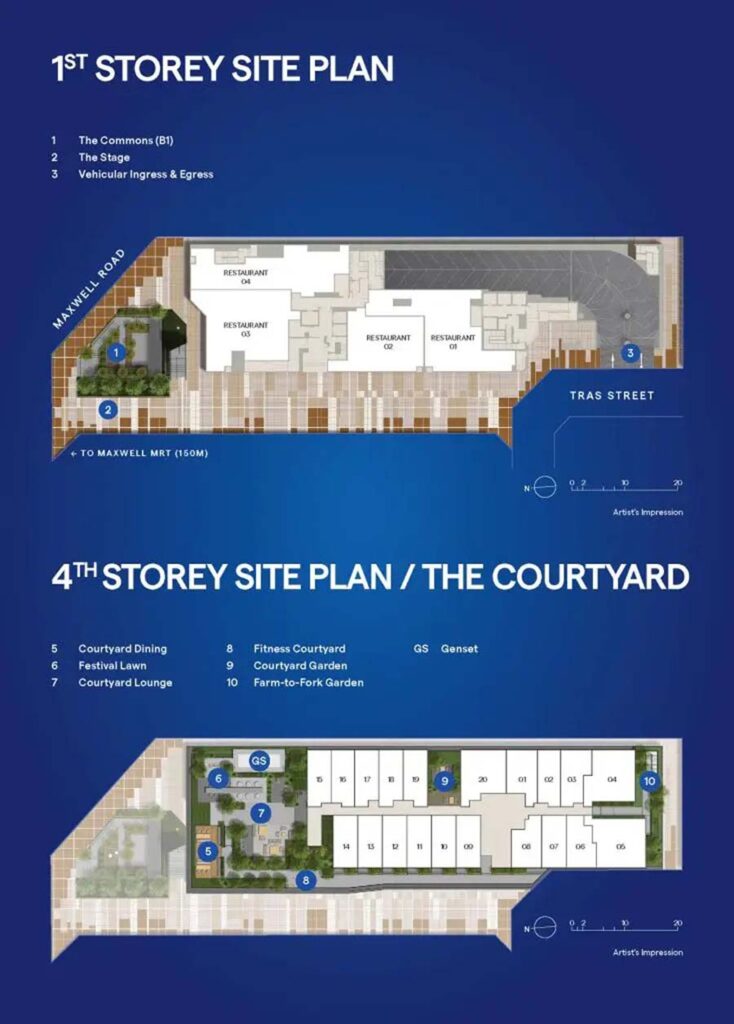
The project’s single-block, high-rise format allows 324 residential units to be accommodated on a compact site through vertical density. This supports integrated amenities and urban efficiency but comes with clear trade-offs.
As a high-density CBD redevelopment, unit layouts prioritise space efficiency over flexibility, resulting in more standardised configurations that limit post-purchase adaptability for buyers seeking extensive customisation.
Project Positioning: What TMW Maxwell Is — and Is Not
TMW Maxwell IS
A MRT-adjacent CBD mixed-use redevelopment
Designed for singles, professionals, and investor-owners
Oriented toward rental relevance and city-centre convenience
TMW Maxwell IS NOT
A family-oriented or upgrader-friendly residence
A low-density or privacy-led development
A long-tenure legacy or wealth-preservation asset
Buyer Suitability
Most suitable for
Single professionals working in the CBD or city fringe
Investor-owners targeting expatriate or professional tenants
Buyers prioritising MRT access, walkability, and lifestyle convenience
Buyers who should reconsider
Families or buyers needing larger layouts
HDB upgraders seeking long-term own-stay stability
Buyers sensitive to noise, density, or privacy constraints
Buyers Who Should Eliminate Early
Buyers requiring three-bedroom layouts, flexible interior reconfiguration, or quiet residential surroundings should eliminate TMW Maxwell early, as these constraints are structural rather than cosmetic.
Buyers comparing TMW Maxwell against other upcoming launches may find it helpful to frame their decision using the New Launch Condo Guide, which outlines how pricing logic, buyer intent, and holding horizon differ across project types.
Takeaway
TMW Maxwell is a purpose-built CBD product that makes sense only when evaluated through a location-efficiency lens. For buyers aligned with its urban density, leasehold structure, and rental-driven positioning, it offers clarity and convenience; for everyone else, the compromises are fundamental and difficult to mitigate.
If you’re seriously considering this project, it’s worth checking how it actually compares and what most buyers tend to overlook — before deciding.
FAQs (Decision-Stage)
1) Is TMW Maxwell considered a CBD residential project?
Yes. It sits within District 2 in the Core Central Region and directly beside Maxwell MRT, placing it firmly within the CBD living environment. Its density and mixed-use format reflect a true urban product rather than a residential enclave. Buyers should evaluate it as a city-centre asset, not a city-fringe alternative.
2) Who is TMW Maxwell primarily designed for?
The project is primarily designed for singles, investor-owners, and CBD-based professionals. Its compact layouts and high-density structure align with rental demand and urban convenience rather than family living. Buyers outside this profile often find it structurally unsuitable. This makes buyer fit especially important.
3) How important is Maxwell MRT to this project’s appeal?
Maxwell MRT is a core value driver because it provides direct connectivity to Orchard and the CBD spine. This significantly improves daily convenience and rental attractiveness. However, it supports demand within a niche buyer pool rather than expanding it broadly. It strengthens usability more than it guarantees resale depth.
4) Does the mixed-use podium improve liveability?
It improves convenience by integrating F&B and retail options within the development. However, it also increases activity levels, noise, and foot traffic around the site. Buyers must be comfortable with a more urban and active environment. This trade-off is structural and not temporary.
5) Is the 99-year tenure a concern in District 2?
Yes, particularly because freehold alternatives exist nearby. Over time, tenure becomes more visible in resale comparisons. Buyers should align their holding horizon and expectations accordingly. This project performs better as a medium-term or rental-driven asset.
6) Are the units suitable for long-term own-stay use?
They can work for singles or couples, but are not designed for evolving lifestyle needs. Space, flexibility, and storage are limited compared to non-CBD developments. Over time, these constraints become more noticeable. Buyers planning long-term occupation should evaluate carefully.
7) How does project density affect daily living?
High density increases shared usage of facilities and reduces overall privacy. It also contributes to a more active and urban living environment. While this supports vibrancy, it may not suit buyers seeking quiet residential conditions. This is a structural characteristic of CBD developments.
8) What should buyers realistically expect for resale demand?
Resale demand is likely to remain niche, concentrated among investors and CBD professionals. The absence of family-oriented layouts limits broader buyer appeal. This does not eliminate liquidity but reduces its depth. Buyers should not expect mass-market deman
Pricing Logic, URA Planning Intent & Buyer Segmentation
Summary
TMW Maxwell’s pricing behaviour cannot be understood through typical city-fringe or family-oriented benchmarks. As a 99-year leasehold, en-bloc, mixed-use redevelopment in the CBD core, its value logic is anchored in location efficiency, MRT adjacency, and rental relevance, rather than tenure scarcity or long-term upgrader demand.
This makes the project highly sensitive to buyer expectations. When priced as a lifestyle-centric CBD product, it faces resistance; when evaluated as a transport-anchored rental asset, its positioning becomes clearer, albeit still niche.
Pricing Logic: What Actually Drives Value Here
At its core, TMW Maxwell is priced on three structural drivers:
Immediate MRT adjacency (Maxwell MRT, TEL)
CBD location efficiency (District 2, CCR)
Mixed-use convenience with integrated commercial podium
Buyers are not paying for land scarcity, long-term tenure optionality, or family liveability. They are paying for time savings, walkability, and tenant relevance in a dense CBD environment.
This explains why pricing resistance emerges quickly once buyers compare it against:
Freehold CBD alternatives (where tenure carries weight), or
Larger RCR projects (where space and family demand dominate).
Pricing Context (Relative, Not Numeric)
TMW Maxwell sits in a psychologically difficult comparison set.
On one side, buyers see freehold District 2 developments offering stronger long-term holding narratives. On the other, they see RCR or city-fringe projects with larger layouts and broader resale appeal at similar absolute price levels.
As a result, buyers who focus on per-square-foot justification tend to push back, while buyers who focus on absolute quantum and rental logic are more receptive.
This is a key reason sales velocity has remained selective rather than broad-based.
How Pricing Is Likely to Behave Over Time
TMW Maxwell’s pricing trajectory is unlikely to follow the classic “family upgrader curve.”
Instead:
Early buyers tend to be niche-aligned investors or owner-occupiers who value CBD proximity.
Mid-cycle demand depends heavily on rental market conditions and interest rate environment.
Late-stage demand is likely to remain limited, as the project does not suddenly become more suitable for families or long-term own-stay buyers.
Price growth, if any, is more likely to be incremental and rental-supported, rather than driven by broad resale competition.
Absolute Quantum vs PSF: The Real Buyer Decision Rule
For TMW Maxwell, absolute quantum matters more than PSF.
Most buyers who seriously consider the project anchor on:
“Can I justify this as a CBD foothold?”
“Does the rental income narrative make sense?”
Buyers who fixate on PSF comparisons against non-CBD or freehold projects typically self-eliminate early. This is not a pricing flaw so much as a buyer-product mismatch.
Explicit Pricing Decision Rules
TMW Maxwell tends to make sense only if at least two of the following are true:
You work in or near the CBD and value daily commute efficiency.
You are comfortable with a rental-led or medium-term holding strategy.
You accept higher density and smaller layouts as structural trade-offs.
If your decision framework prioritises land tenure, family resale depth, or long-term capital appreciation first, this project will likely feel mispriced regardless of headline numbers.
URA Planning Intent: Why This Project Exists Here
From a URA perspective, TMW Maxwell fits squarely into the CBD rejuvenation and mixed-use intensification strategy.
Key planning signals include:
Encouraging residential use within the CBD to support a live-work-play environment.
Increasing land efficiency through higher plot ratios and vertical development.
Integrating commercial activity at lower levels to maintain street vibrancy.
The uplifted plot ratio reflects this intent. The outcome is a high-density, highly functional urban node, not a low-rise residential enclave.
Buyers should therefore evaluate the project as a planning-driven product, not a conventional condominium.
Buyer Segmentation: Who Actually Buys TMW Maxwell
1) Urban Owner-Occupiers (Singles / Couples)
Typically professionals working in the CBD who prioritise:
MRT access
Walkability
Short commutes
They accept smaller layouts in exchange for time savings and location.
2) Rental-Focused Investors
Usually targeting:
Expatriate professionals
Corporate tenants
Medical or finance sector tenants nearby
Yield logic matters more than capital appreciation narratives.
3) Niche Foreign Buyers
Often seeking:
A CBD pied-à-terre
Convenience over size
Low management friction
This group is sensitive to absolute price rather than PSF comparisons.
Interim Assessment
TMW Maxwell is priced and planned as a function-first CBD product. It will never appeal to the mass market, and it does not need to. Its success depends on attracting the right buyers, not more buyers.
Understanding this distinction is critical before moving on to exit and risk analysis.
Exit & Liquidity, Risk Scenarios, Pros & Cons, Buyer FAQs
Summary
Exit outcomes for TMW Maxwell are structurally constrained by its narrow buyer pool. While this does not automatically make it a poor purchase, it does mean buyers must be realistic about liquidity, resale competition, and timing sensitivity.
This is not a project where “holding longer fixes everything.” Strategy matters.
Exit & Liquidity Analysis
Resale liquidity for TMW Maxwell is likely to remain selective rather than deep.
The absence of family-sized units and upgrader appeal limits the pool of future buyers. Most resale demand is expected to come from:
Other investors
Single professionals
Buyers seeking CBD convenience
This creates a thinner secondary market compared to RCR or family-oriented projects.
Unit Type Sensitivity
Smaller, more efficient units generally enjoy:
Easier rental take-up
Faster resale within the niche pool
Larger units do not necessarily enjoy proportionally stronger demand, as the project does not transition into a family product at any size tier.
Timing Sensitivity
Exit outcomes are sensitive to:
Interest rate cycles
Expatriate demand
CBD office occupancy trends
Selling into a weak rental or employment environment may materially affect outcomes, even if broader residential prices are stable.
Risk Scenarios
1) Prolonged High Interest Rate Environment
Rental yields may struggle to offset financing costs, narrowing the investor buyer pool.
2) Oversupply of CBD Residential Options
Future CBD or city-fringe launches could dilute demand for compact CBD units.
3) Tenant Preference Shift
If tenants prioritise larger living spaces post-pandemic, demand for ultra-compact layouts may soften.
4) Leasehold Perception Risk
As the lease decays, buyer sensitivity to tenure may increase relative to freehold alternatives nearby.
Pros & Cons Summary
Pros
Direct MRT adjacency
Strong CBD location relevance
Clear rental and own-stay niche
Integrated mixed-use convenience
Cons
Narrow resale buyer pool
High density and reduced privacy
Limited layout flexibility
Weaker long-term tenure narrative
FAQs
1) Is TMW Maxwell suitable for long-term capital appreciation?
Capital appreciation is likely to be gradual and dependent on rental demand and market cycles. The project lacks broad upgrader appeal, which limits strong price acceleration. It performs better as a functional CBD asset than a growth-led investment. Buyers expecting strong appreciation may find outcomes underwhelming.
2) Who will typically buy these units on resale?
Resale buyers are likely to be investors, singles, and CBD professionals. Family buyers are largely absent due to layout constraints. This creates a narrower but consistent demand segment. Liquidity exists, but it is not broad-based.
3) Does MRT adjacency guarantee resale demand?
No, it supports baseline demand but does not guarantee strong liquidity. MRT access improves usability and rental appeal but does not expand the buyer pool significantly. The project remains niche. Connectivity is a support factor, not a solution.
4) Are larger units safer from an exit perspective?
Not necessarily. Larger units do not convert the project into a family-oriented product. The buyer pool remains similar, but with higher quantum constraints. This can reduce liquidity rather than improve it.
5) How sensitive is TMW Maxwell to interest rate cycles?
It is relatively sensitive because many buyers rely on rental justification. Higher interest rates reduce investment appetite and compress yields. This directly affects demand. The project’s positioning amplifies this sensitivity.
6) Is rental demand reliable in this location?
Rental demand is generally stable due to CBD proximity. However, it is closely tied to employment conditions and expatriate inflows. Demand can fluctuate with macroeconomic shifts. It is reliable, but not immune to cycles.
7) Does the mixed-use concept improve long-term value?
It improves convenience and rental attractiveness. However, it does not materially expand resale demand. The benefit is functional rather than capital-driven. Buyers should not overstate its impact.
8) How does tenure affect exit strategy here?
Leasehold tenure becomes more visible over time, especially in a district with freehold alternatives. Buyers may become more price-sensitive as the lease decays. This affects long-term positioning. Holding strategy must account for this.
9) Can this project appeal to HDB upgraders in future?
Unlikely. Layout size, density, and environment are not aligned with upgrader expectations. This limits demand expansion over time. The buyer pool remains structurally defined.
10) How does CBD competition affect resale?
New launches in the CBD or city fringe can divert attention. Buyers will compare price, layout, and tenure closely. This increases competition for resale units. Differentiation becomes harder over time.
11) Does holding longer improve outcomes?
Not automatically. Market cycles and exit timing matter more than duration. Holding longer does not expand the buyer pool. Strategy is more important than time.
12) What happens if rental demand weakens?
Investor demand reduces and resale becomes more challenging. Pricing becomes more sensitive. This is one of the key risks of a rental-driven asset. Buyers should plan for this scenario.
13) Is this comparable to city-fringe developments?
No. Buyer motivations and usage differ significantly. City-fringe projects attract families and upgraders, while this does not. Comparisons often lead to incorrect conclusions.
14) What is the biggest exit risk?
The biggest risk is assuming broad resale demand. The project’s niche positioning limits buyer diversity. Misaligned expectations create pricing pressure. This is a structural constraint.
15) Is this suitable for legacy or long-hold planning?
No. The leasehold tenure and niche buyer pool make it less suitable for intergenerational holding. It is better aligned with medium-term strategies. Buyers seeking legacy value should look elsewhere.
16) How should buyers evaluate TMW Maxwell overall?
As a function-first CBD product focused on location efficiency and rental relevance. It is not a lifestyle-led or tenure-driven purchase. Alignment with its intended use case is critical. Without that, it is difficult to justify.
If you prefer a more structured walkthrough, you can leave your details below and we’ll follow up with you.